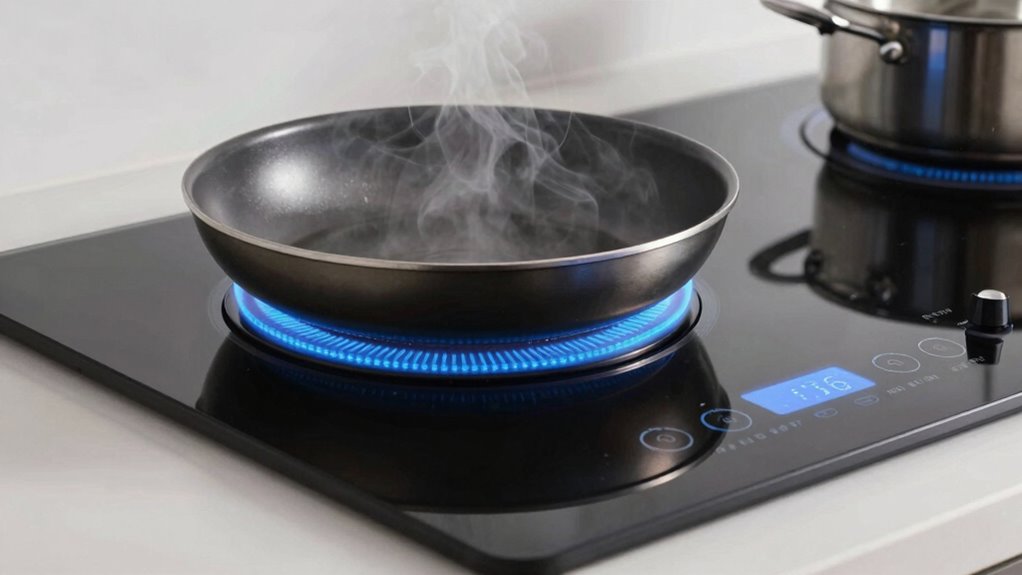
Induction cooking heats food quickly because it uses electromagnetic fields to transfer energy directly to compatible cookware, providing precise temperature control and less heat loss. It’s efficient and safer, as the cooktop surface stays cooler, reducing burn risks. However, it won’t work with non-magnetic pots like aluminum or glass. If you want to discover what makes induction fast or when it’s less effective, keep exploring how this advanced cooking method works.
Key Takeaways
- Induction heats cookware directly through electromagnetic fields, enabling faster and more precise cooking.
- Compatibility with ferrous cookware is essential; incompatible materials won’t heat, causing delays or no response.
- Properly flat and full-contact cookware maximizes energy transfer, ensuring quick heating and efficiency.
- Disrupted power supply or poor contact can slow down induction heating or cause uneven cooking.
- Safety features and modern design reduce risks, but magnetic interference may affect medical devices.
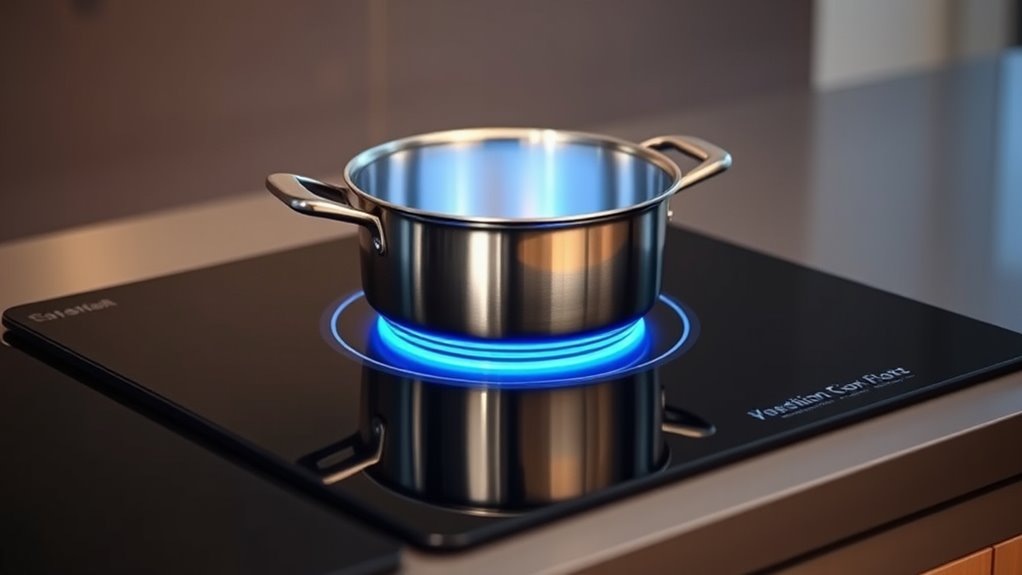
Have you ever wondered how induction cooking heats your food so quickly and efficiently? Unlike traditional methods that rely on open flames or heated coils, induction cooktops use electromagnetic fields to directly transfer energy to your cookware. This method results in faster heating times and precise temperature control. But with this innovative technology come important safety considerations. Since the cooktop surface itself remains relatively cool—only heating up through the cookware—there’s less risk of burns or accidental fires. This makes induction cooking safer, especially in households with children or elderly family members. However, you should still exercise caution. The electromagnetic fields can interfere with certain medical devices like pacemakers, so it’s advisable to check compatibility before using an induction stove. Additionally, cookware compatibility is crucial; only ferrous materials like cast iron and certain stainless steels work effectively. Non-magnetic cookware, such as aluminum or glass, won’t heat on an induction surface and may cause frustration or improper operation.
Energy efficiency is another major advantage of induction cooking. Because energy is transferred directly to the cookware, there’s minimal heat loss compared to traditional stoves. This means you use less electricity or gas to achieve the same cooking results. The precise control over heat levels also reduces waste, allowing you to simmer or boil with minimal energy expenditure. When your cookware makes full contact with the surface, the system operates at maximum efficiency, giving you quicker cooking times and less energy consumption overall. This efficiency not only saves you money on utility bills but also reduces your household’s environmental impact. Plus, because less heat escapes into the kitchen environment, your space stays cooler, which can be especially beneficial during warmer months or in small kitchens. Modern induction cooktops also often include advanced safety features that automatically shut off in case of overheating or accidental contact, further enhancing their safety profile.
While induction cooking offers significant benefits, it’s important to recognize when it doesn’t heat as expected. If you use incompatible cookware, you won’t see the quick response and efficiency that induction provides. Also, if your cookware isn’t flat or doesn’t make proper contact with the surface, heat transfer becomes inefficient, leading to slower cooking times or uneven heating. In some cases, power fluctuations or electrical issues can interfere with the system’s performance, so ensuring a stable power supply helps maintain ideal operation. Overall, understanding these safety considerations and the energy efficiency benefits helps you make the most of induction cooking. It’s a modern, safe, and eco-friendly way to prepare meals, but knowing its limitations ensures you avoid frustration and maximize its advantages.

CAROTE 14Pcs Pots and Pans Set Non Stick, Cookware Sets Induction Cookware Granite Cooking Set with Frying Pans, Saucepans, Saute Pan, Extra Large Casserole
Reinforced die-cast aluminum construction ensures long-term durability and reliability while maintaining a lightweight design, bringing convenience to your…
As an affiliate, we earn on qualifying purchases.
As an affiliate, we earn on qualifying purchases.
Frequently Asked Questions
Can Induction Cooktops Be Used Outdoors or in RVS?
Yes, you can use induction cooktops outdoors or in RVs, but with some precautions. For outdoor cooking, guarantee the surface is stable and protected from rain or moisture. When using as RV appliances, choose models designed for portability and safety. Keep in mind that induction cooktops need a power source, so verify your RV’s electrical setup. Proper use allows you to enjoy fast, efficient cooking anywhere you go.
How Safe Are Induction Cooktops for Children and Pets?
Induction cooktops are generally safe for children and pets because they only heat cookware directly, reducing burn risks. Child safety is enhanced with proper supervision and using safety features like auto shut-off. Pet safety is also improved since the cooktop remains cool to the touch, minimizing accidental burns. However, always keep an eye on kids and pets around the stove, and use safety locks or covers to prevent accidental activation.
Do Induction Stoves Work With All Types of Cookware?
Induction stoves work only with cookware that has magnetic properties, making cookware compatibility essential. You need to check if your pots and pans are made of ferrous metal, like cast iron or certain stainless steels. If they attract a magnet, they’ll work; if not, they won’t heat on an induction cooktop. So, always test your cookware with a magnet before cooking to confirm proper compatibility.
Are There Health Concerns Related to Electromagnetic Fields From Induction Cooking?
Think of electromagnetic fields as gentle ripples in a pond—generally safe, but some worry about electromagnetic exposure and health risks. Current research shows that induction cooking produces low-level electromagnetic fields, which most experts consider safe for everyday use. However, if you have pacemakers or other electronic implants, it’s wise to consult your doctor. Overall, the health risks are minimal, making induction a safe, efficient cooking method.
How Energy-Efficient Are Induction Cooktops Compared to Gas or Electric?
You’ll find induction cooktops highly energy-efficient compared to gas or traditional electric stoves, thanks to their direct heating method. This leads to significant energy savings because less heat escapes into the environment, reducing your carbon footprint. Plus, they heat up quickly and respond faster to adjustments, making cooking more convenient. Overall, induction cooktops have a lower environmental impact while helping you save energy and reduce utility costs.

Fruikit Stainless Steel Cookware Set – 20 PCS Pots and Pans Set with 3-Ply Stainless Steel Frying Pan, Professional Kitchen Cooking Set, Induction Compatible, Oven & Dishwasher Safe
【20-PCS STAINLESS STEEL COOKWARE SET】Fruikit's 20-piece stainless steel cookware set includes 5QT and 7QT soup pots, plus 2QT…
As an affiliate, we earn on qualifying purchases.
As an affiliate, we earn on qualifying purchases.
Conclusion
Think of induction cooking like a skilled dancer who moves swiftly and precisely, delivering heat exactly where it’s needed. When you understand its rhythm, you can cook faster and more efficiently. But just like a dancer needs the right shoes, your cookware must be compatible. Embrace this dance, and you’ll find yourself twirling through meals with ease—fast, responsive, and in perfect harmony. Master the steps, and your kitchen becomes a stage for culinary performance.

WAATFEET 1700W Portable Induction Cooktop,Electric Induction Cooker and Burner,Countertop Hot Plate with 10-Level Adjustment,3-Hour Timer,Smart Touch Cooktop,and Safety Lock Feature,Black
【Minimalist Design】 This 1700W induction cooktop delivers the right power for your needs, whether you're brewing tea, boiling…
As an affiliate, we earn on qualifying purchases.
As an affiliate, we earn on qualifying purchases.

ChangBERT Induction Cooktop NSF Certified Professional Chef Edition Stove, 1800W Commercial Induction Burner with Schott Glass, Large Heating Coil Electric Hot Plate for Restaurant Hotel Food Station
HIGH EFFICIENCY AND NO HOT KITCHEN. Induction technology delivers energy directly to the cookware—with 83% energy efficiency rating,…
As an affiliate, we earn on qualifying purchases.
As an affiliate, we earn on qualifying purchases.