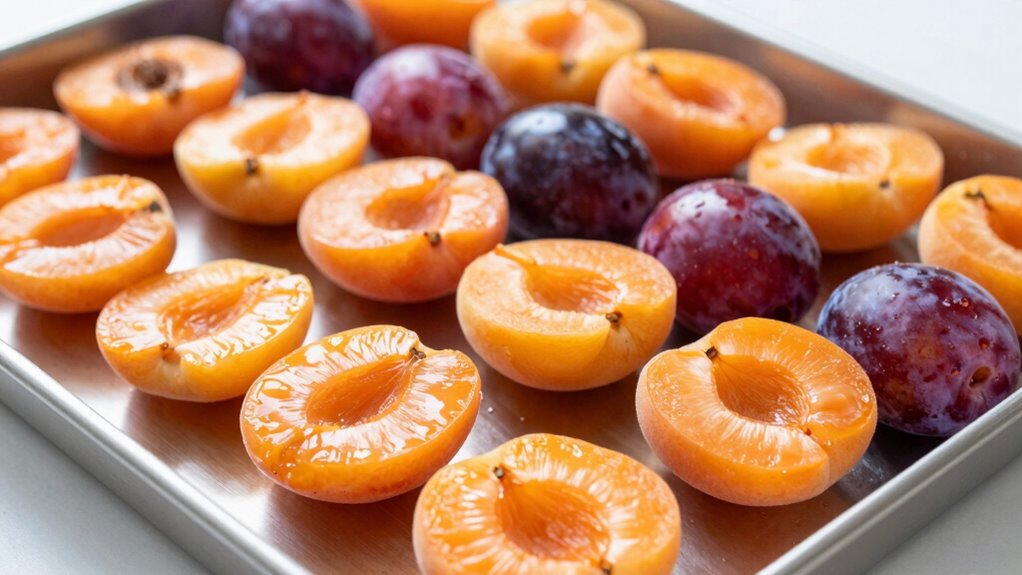
When you dehydrate food, you remove enough moisture to lower its water activity level, which prevents bacteria, molds, and yeasts from growing. This low moisture environment effectively stops spoilage, extending your food’s shelf life and preserving its flavor, texture, and nutritional value. Understanding the moisture math behind dehydration helps you control the drying process for better results. If you want to know the science behind how moisture levels target spoilage, there’s more to discover.
Key Takeaways
- Removing moisture lowers water activity, preventing bacteria, molds, and yeasts from growing and causing spoilage.
- Proper dehydration reduces the food’s moisture content to a safe level, ensuring long-term preservation.
- Different foods require specific moisture levels; over-drying or under-drying can affect safety and quality.
- Controlled dehydration techniques maintain consistent moisture removal, ensuring effective microbial inhibition.
- Proper storage in airtight, cool, dark environments prevents moisture re-entry, maintaining low water activity and preventing spoilage.
Food Dehydration
Have you ever wondered how to preserve fruits, vegetables, or herbs for longer periods? If so, you’re not alone. Preserving food is essential to reduce waste, save money, and enjoy seasonal produce year-round. One of the most effective ways to do this is through food dehydration, a process that removes moisture to prevent spoilage. When you understand the science behind dehydration and the various preservation techniques, you gain a powerful tool in your kitchen arsenal. Dehydration methods work by lowering the water activity in foods, making it difficult for bacteria, molds, and yeasts to thrive. Without enough moisture, these microorganisms can’t grow, which substantially extends the shelf life of your food.
Preserve foods longer by understanding dehydration and moisture control techniques.
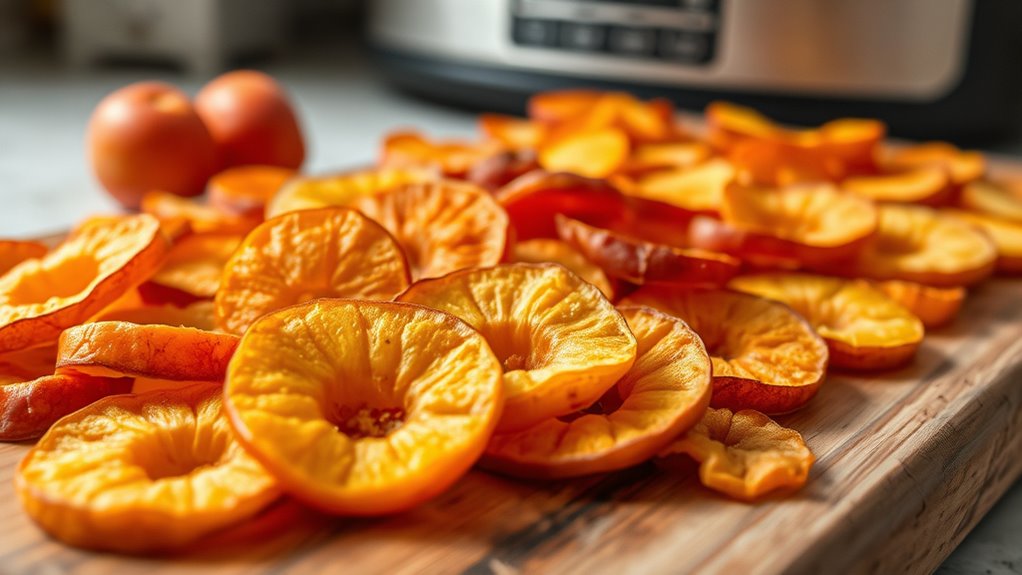
To get started, you’ll want to explore different dehydration techniques suited to your needs and equipment. Air drying is a traditional method, ideal for herbs and thinly sliced fruits or vegetables. It involves hanging or laying out your produce in a warm, dry space with good airflow. Electric food dehydrators, on the other hand, offer a more controlled environment, allowing you to set precise temperatures and drying times. These devices are especially handy if you’re dehydrating larger batches or items with higher moisture content, like thick slices of fruit or cooked vegetables. Oven drying is another option, though it requires careful temperature control to prevent overcooking or burning. Whichever method you choose, the goal remains the same: remove enough moisture to keep your food safe and flavorful for months or even years.
As you experiment with dehydration, you’ll discover that different foods require different approaches. For example, herbs dry quickly and can be stored as whole sprigs or crushed leaves. Fruits like apple slices or berries might need a lower temperature and longer drying times to preserve their texture and sweetness. Vegetables such as peppers or carrots benefit from blanching before dehydration to maintain color and flavor. The key is to monitor moisture levels carefully; once your food feels leathery or brittle, it’s ready to be stored in airtight containers. Proper storage is just as important as the dehydration process itself—keep your dried foods in cool, dark places to maximize shelf life. Understanding moisture control techniques can help you achieve consistent results and prevent spoilage.
Understanding preservation techniques through dehydration methods empowers you to take control of your food supply. It’s a simple, natural way to enjoy your favorite produce whenever you want, without relying on additives or preservatives. Plus, dehydrated foods are lightweight and portable, perfect for camping trips, emergency kits, or quick snacks. So, next time you’re faced with an abundance of fresh produce, consider using dehydration methods to turn excess into long-lasting, flavorful treats. You’ll not only reduce waste but also develop a new appreciation for the science of moisture and spoilage.

4500 Sq.Ft Energy Star Most Efficient 2025 Dehumidifier with Pump, AEOCKY Max 80 Pint/Day Smart Compressor Dehumidifier with Drain Hose, Intelligent Humidistat,for Basement,Bedroom,Home (White)
【The Undisputed Champion — Industry‑Leading Dehumidifier Brand】When you choose AEOCKY, you get double market validation. In 2025, AEOCKY...
As an affiliate, we earn on qualifying purchases.
Frequently Asked Questions
How Long Does Dehydration Typically Take for Different Foods?
Dehydration times vary based on the food’s moisture content and thickness. Typically, fruits take 6-12 hours, while vegetables might need 4-8 hours. Thicker or juicier foods require longer dehydration times to reduce moisture content effectively. Keep an eye on the texture and moisture level, and remember, thinner slices dry faster. Adjust your dehydration process accordingly for ideal preservation and shelf life.
What’s the Best Temperature Setting for Dehydrating Various Items?
You should set your dehydrator to the recommended temperature for each food type to guarantee ideal temperature control and dehydration efficiency. For fruits, aim for 135°F (57°C); vegetables typically need around 125°F (52°C), and meats require 145°F (63°C) or higher. Adjust the temperature based on thickness and moisture content. Consistent temperature control prevents spoilage, preserves nutrients, and speeds up the dehydration process, giving you perfectly dried, safe foods every time.
Can Dehydration Affect the Nutritional Value of Foods?
Dehydration can cause some nutrient loss and vitamin degradation, but it generally preserves most nutrients if done correctly. You might notice a slight reduction in vitamins like C and A, but minerals and fiber stay intact. To minimize nutrient loss, avoid over-drying and use proper temperatures. This way, you retain the nutritional value of your foods while preventing spoilage, making dehydrated snacks both healthy and long-lasting.
How Do I Store Dehydrated Foods to Maximize Shelf Life?
You should store dehydrated foods in airtight packaging techniques like vacuum-sealed bags or sealed containers to keep moisture out. Place them in cool, dark, and dry storage conditions to prevent spoilage. Keep an eye on temperature and humidity levels, and avoid exposure to sunlight or fluctuating environments. Proper packaging techniques combined with stable storage conditions guarantee your dehydrated foods stay fresh and safe for longer periods.
Are There Safety Concerns With Homemade Dehydration Methods?
Yes, there are safety concerns with homemade dehydration methods. You need to be mindful of hygiene hazards and contamination risks, as improper handling or sanitation can lead to foodborne illnesses. Always wash your hands and equipment thoroughly, use safe water, and guarantee even drying to prevent mold or bacteria growth. Following proper procedures minimizes these risks, keeping your dehydrated foods safe and shelf-stable.

CADPXS Crawl Space Dehumidifier with Pump and Drain Hose, 80 Pint Crawlspace Dehumidifier for Commercial, Basement, Water Damage Use, Auto Defrost, Memory Start, cETL Certified, Up to 1000 Sq Ft
80 PINTS COMMERCIAL DEHUMIDIFIER: Control excess moisture efficiently with the CADPXS 80-pint crawl space dehumidifier with pump. Designed...
As an affiliate, we earn on qualifying purchases.
Conclusion
Just as nature’s ancient cycles preserve life through water’s retreat, your understanding of dehydration keeps your food safe and lasting. By controlling moisture, you’re mastering the art of preservation, turning fresh into timeless. Like a silent guardian guarding treasure, dehydration shields your bounty from spoilage. Embrace this moisture math, and your pantry becomes a fortress of flavor and longevity—an echo of nature’s wisdom, standing strong against time, just as the seasons quietly persist.

Moiswell 70 Pints Commercial Dehumidifier with Pump, Portable Crawl Space Dehumidifiers for Basement and Home, Energy Star Efficient Certified, Automatic Defrost
Energy Star Certified Portable Dehumidifier: Moiswell commercial dehumidifier ME-7S is efficiently removes up to 70 pints at saturation,...
As an affiliate, we earn on qualifying purchases.

Waykar 70 Pint Energy Star Crawl Space Dehumidifier with Drain Hose, Commercial Dehumidifier for Basements and Home, for Spaces up to 5000 Square Feet, Smart Humidity Control - 5-Year Quality Coverage
【70-Pint Crawl Space Dehumidifier】 This commercial dehumidifier features a high-performance motor and 160CFM airflow, capable of removing up...
As an affiliate, we earn on qualifying purchases.