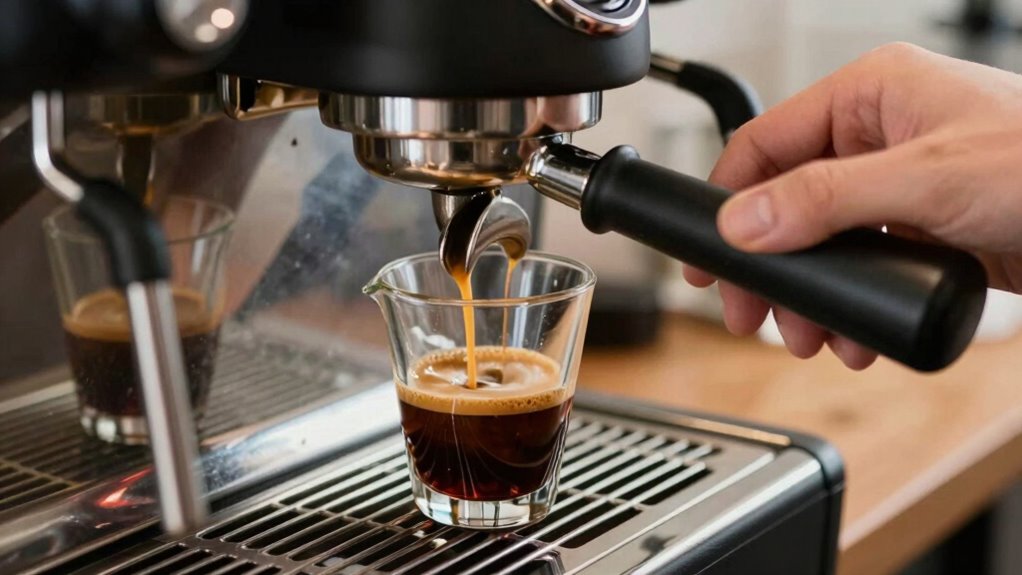
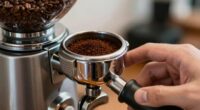
To control flavor in espresso, focus on achieving the right brew ratio, which is the balance between coffee grounds and the final shot volume, typically around 1:2. This ratio influences how water extracts flavors from the coffee, affecting aroma, body, and taste. Adjusting grind size and tamp pressure helps you fine-tune this balance. Mastering these variables will help you craft consistently delicious shots—if you keep exploring, you’ll discover even more ways to perfect your espresso.
Key Takeaways
- The extraction ratio, typically around 1:2, determines how much coffee is brewed relative to the grounds used, affecting flavor balance.
- Proper grind size and tamp pressure help achieve optimal resistance, ensuring the right extraction time and flavor profile.
- Over-extraction (longer contact time) can cause bitterness, while under-extraction (shorter time) results in sour or weak espresso.
- Adjusting grind size and tamp pressure fine-tunes water flow, controlling the extraction ratio and flavor clarity.
- Consistent extraction ratio leads to balanced espresso with rich aroma, body, and nuanced flavors.
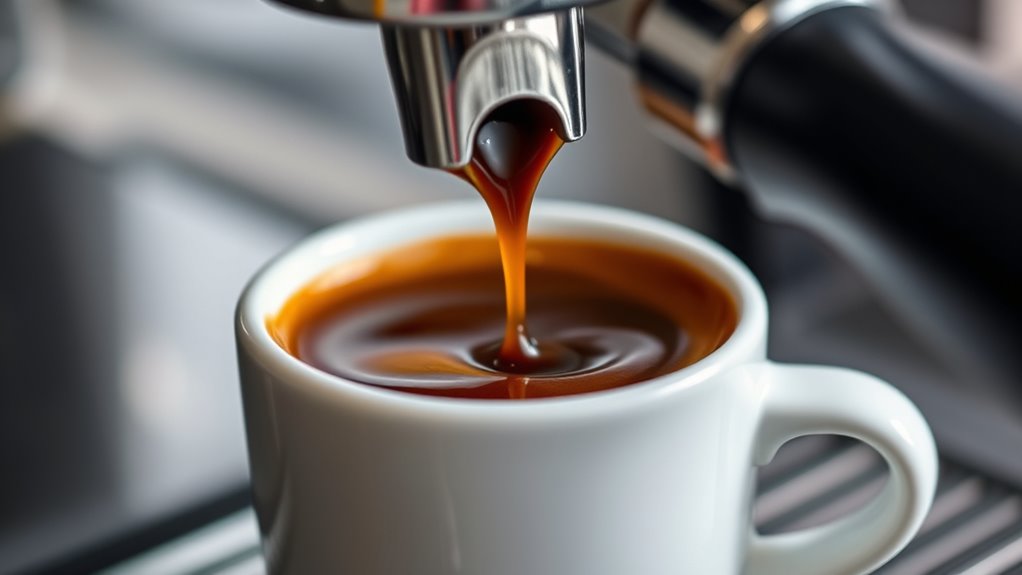
Have you ever wondered what makes a perfect shot of espresso? The answer lies in understanding the delicate balance of extraction, which depends heavily on factors like grind size and tamp pressure. When you’re preparing your espresso, the grind size is one of the first critical elements to get right. If your grind is too coarse, water flows through too quickly, leading to a weak, under-extracted shot. Conversely, if it’s too fine, water struggles to pass through, resulting in over-extraction and a bitter taste. Finding the right grind size isn’t just about personal preference; it’s about creating the ideal resistance for water to extract the rich flavors from your coffee grounds evenly.
Once you’ve dialed in the right grind size, the next step is applying the proper tamp pressure. Tamp pressure is what creates the uniform resistance that water needs to extract the full spectrum of flavors from your coffee. If you tamp too lightly, channels can form, allowing water to flow through the grounds unevenly, which causes under-extraction and a sour or weak espresso. On the other hand, too much tamp pressure compacts the coffee too tightly, increasing resistance and making it difficult for water to pass through, leading to over-extraction and a bitter, harsh taste. The goal is to apply consistent, firm pressure—usually around 30 pounds—so that the coffee bed is evenly compressed. This ensures uniform extraction and a balanced flavor profile.
Understanding how grind size and tamp pressure work together is essential for controlling the flavor of your espresso. They influence how water interacts with the coffee grounds; their combined effect determines whether you get a shot that’s bright and vibrant or one that’s dull and flat. When you adjust your grind size, you’re changing the flow rate of water, and with tamp pressure, you’re controlling the resistance. Both need to be calibrated carefully to achieve that perfect extraction ratio, typically around 1:2—meaning the amount of espresso in your cup is about twice the weight of the coffee grounds used. Paying attention to extraction parameters can help you refine your technique more effectively.
Getting these variables right takes practice, but once you do, you’ll notice a significant difference in your espresso’s flavor, aroma, and body. Remember, small adjustments in grind size and tamp pressure can make a big impact, so don’t be afraid to experiment. Mastering the balance of these factors puts you one step closer to pulling consistently excellent shots and elevating your coffee game.

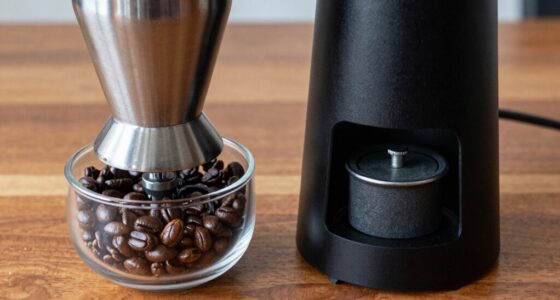
Tuni G1 Conical Burr Coffee Grinder, 48 Grind Settings Anti-static Burr Mill, Precision Electronic Timer and LED Touchscreen for Espresso/Drip/Cold Brew/French Press, Stainless Steel, Silver
[48 Percision Grinding Settings] – This electric coffee grinder offers 48 adjustable settings, allowing you to fine-tune the…
As an affiliate, we earn on qualifying purchases.
As an affiliate, we earn on qualifying purchases.
Frequently Asked Questions
How Does Grind Size Affect Espresso Extraction?
You’ll notice that grind size directly affects espresso extraction because it influences the brew bed and grind uniformity. A finer grind creates more surface area, leading to a quicker extraction, but can cause over-extraction if too fine. Conversely, a coarser grind results in slower extraction, risking under-extraction. Adjusting grind size helps you control flow rate and extraction, ensuring balanced flavor and a perfect shot every time.
What Role Does Tamping Pressure Play in Flavor?
Think tamping pressure doesn’t matter? Think again. You need consistent tamping to guarantee even extraction, which directly impacts flavor. Too much pressure can over-compact the coffee, leading to bitterness, while too little causes under-extraction and sourness. Tamping consistency minimizes pressure variability, giving you a balanced, flavorful shot. Focus on applying steady, firm pressure each time to reveal the true potential of your espresso.
Can Water Temperature Alter the Extraction Ratio?
Yes, water temperature can alter the extraction ratio because it influences how flavors dissolve during brewing. Higher temperatures typically extract more solubles, affecting the ratio and resulting flavor. Your water chemistry, including mineral content, interacts with temperature and brewing equipment to impact extraction. Maintaining consistent water temperature guarantees you control the extraction ratio, resulting in a balanced, flavorful espresso. Adjusting temperature helps fine-tune your brew to match your preferred profile.
How Does Roast Level Impact Ideal Extraction?
You’ll find that roast level considerably impacts your ideal extraction. Darker roasts generally require a slightly longer extraction time because they’re less dense, while lighter roasts, being denser, need a quicker, more precise extraction. Fresh coffee beans also influence this, as fresh beans often need a different approach than older ones. The roast profile impact means adjusting your grind size and brew time ensures you get the best flavor from each roast level.
What Are Signs of Over-Extraction in Espresso?
When you notice your espresso tastes bitter, hollow, or overly harsh, you’re likely over-extracting. This often happens if the brew is too hot or if you serve it at the wrong temperature, which dulls its balanced flavors. Pairing it with dairy can sometimes mask these flaws, but the key is adjusting your grind and extraction time. Watch for these signs—the true flavor profile is hiding just beneath the surface.

51mm Espresso Tamper-Premium Barista Coffee Tamper Coffee Tamper Classic Series Stainless Steel Espresso Tamper Coffee Press Tool Tamper Espresso Handle, 90x51mm, Solid wood, Stainless steel
THE DIAMETER OF THIS TAMPER IS 51MM – please check that this will fit your filter basket before…
As an affiliate, we earn on qualifying purchases.
As an affiliate, we earn on qualifying purchases.
Conclusion
Understanding the right ratio is key to mastering espresso extraction and revealing rich, balanced flavors. When you dial in your grind and dose, you’re controlling the flavor’s intensity and complexity. Did you know that a typical espresso shot uses about 18-20 grams of coffee? That’s roughly the weight of a small avocado! By fine-tuning your ratio, you can turn a simple brew into a bold, flavorful experience that’s as satisfying as that perfect first sip.

Qipecedm Espresso Cups Set of 2, 4 OZ Double Spouts Cups, Shot Glasses, Milk Cup with Handle, Clear Glass, Espresso Accessories for Machine, Small
【ESPRESSO MACHINE ACCESSORIES】The capacity of 4 oz allows you to fill 2 servings of espresso at one time….
As an affiliate, we earn on qualifying purchases.
As an affiliate, we earn on qualifying purchases.
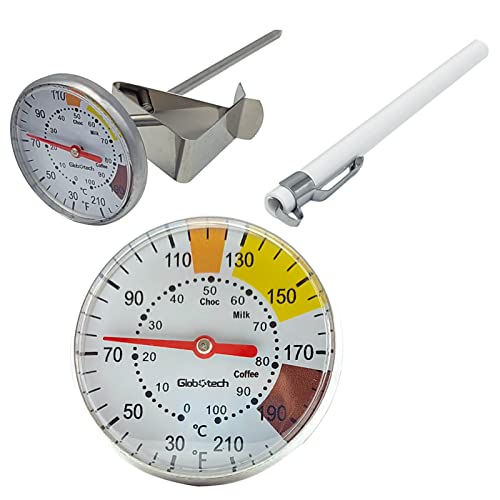
Milk Frothing Thermometer for Coffee Chocolate – Cappuccino Frothy Milk Foam Stainless Steel Thermometer for 12 Oz, 20 Oz and 32 Oz Espresso Steaming Pitchers 2" Dail 5" Stem
MILK FROTHING THERMOMETER – This stainless-steel thermometer is designed for milk frothing, steaming and making cappuccino, measure the…
As an affiliate, we earn on qualifying purchases.
As an affiliate, we earn on qualifying purchases.