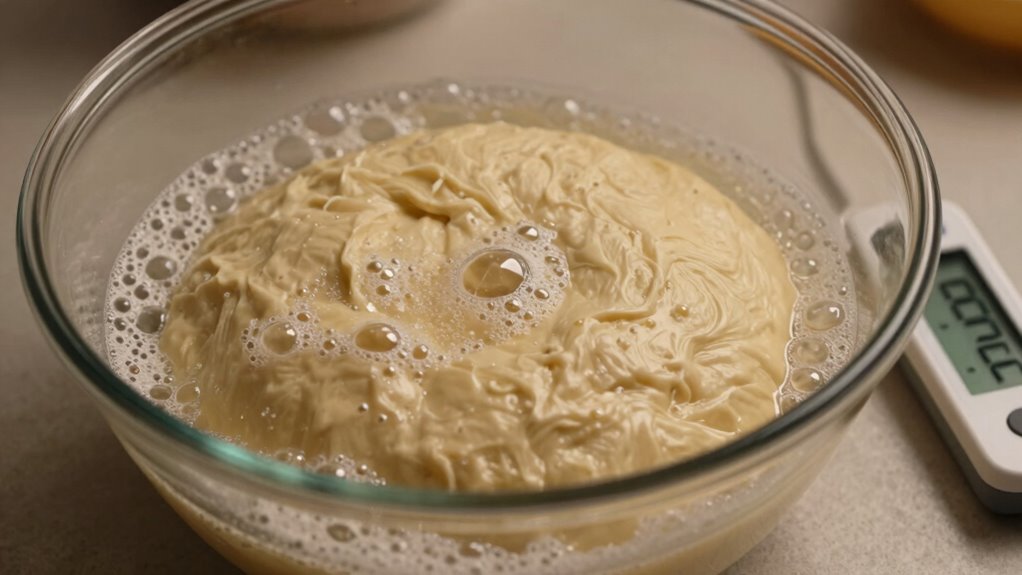

To perfect dough fermentation, understand that temperature and time work together. Warmer conditions speed up yeast activity, leading to quicker rise but risking over-proofing, while cooler temps slow fermentation, enhancing flavor and dough development. Proper timing at the right temperature creates a balanced rise and better texture. If you keep exploring, you’ll discover how to control these factors for consistently great bread results.
Key Takeaways
- Higher temperatures accelerate yeast activity, reducing fermentation time but risking over-proofing if not monitored.
- Cooler temperatures slow fermentation, requiring longer proofing to develop flavor and proper dough rise.
- Optimal fermentation occurs around 75-78°F, balancing speed and dough quality.
- Cold fermentation (refrigeration) extends fermentation, enhancing flavor and dough texture over time.
- Adjusting temperature allows control over fermentation speed to achieve desired bread characteristics.
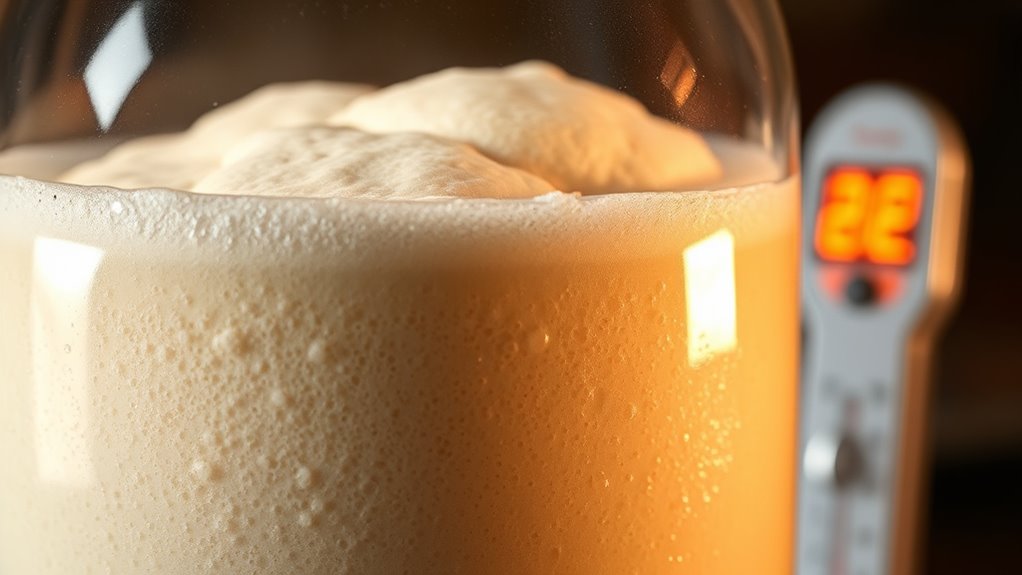
Dough fermentation is a essential process that transforms simple ingredients into flavorful, airy bread. During this stage, yeast activity plays a pivotal role, as the yeast consumes sugars in the dough and produces carbon dioxide and alcohol. This activity creates the bubbles that give bread its rise and texture. The rate at which fermentation occurs depends heavily on fermentation timing, which is influenced by both temperature and the amount of yeast present. Understanding how these factors interact helps you control the proofing process for the best results.
Dough fermentation transforms ingredients into airy bread through yeast activity influenced by temperature and yeast amount.
When you think about fermentation timing, it’s important to recognize that it’s not just about how long you leave the dough to rise, but also about the temperature at which it ferments. At warmer temperatures, yeast activity speeds up, meaning the dough will ferment faster. Conversely, cooler temperatures slow down yeast activity, extending the fermentation process. If you rush this stage, the dough might not develop enough flavor, and the gluten structure might not fully strengthen, resulting in a denser loaf. On the other hand, if you let it ferment too long at high temperatures, the yeast can overact, causing the dough to over-proof and collapse.
Temperature is a key factor in controlling fermentation timing because it directly influences yeast activity. When you keep the dough at a steady, ideal temperature—typically around 75 to 78°F (24 to 26°C)—you allow the yeast to work efficiently, producing a balanced rise without overdoing it. If you want a slower fermentation to develop more complex flavors, you can refrigerate the dough. Cold fermentation drastically reduces yeast activity, extending fermentation timing over several hours or even days. This approach not only enhances flavor but also improves the dough’s texture.
Monitoring yeast activity is essential. You’ll notice signs of active fermentation by bubbles forming on the surface and throughout the dough, along with a noticeable rise. If the dough doesn’t seem to be fermenting, it may be due to inactive yeast, improper temperature, or insufficient fermentation time. Adjusting fermentation timing based on temperature lets you achieve the desired proof and flavor profile. Remember, patience is key; rushing the process can compromise both texture and taste, while giving it enough time lets the yeast work their magic, producing a beautifully risen, flavorful loaf. Understanding the relationship between yeast activity and fermentation timing helps you precisely control your dough’s development for perfect baking results every time.

DuraComfort Smart Portable Air Conditioners, 12000 BTU(Ashrae) /8150 BTU (SACC) Quiet AC Unit, Built-in Dehumidifier and Fan Modes, Mobile App, Cools up to 350 Sq. Ft, White
✔【3-in-1 OPERATION】Combines 3 energy efficient functions for all of your needs with cool, fan, & dehumidifying modes all...
As an affiliate, we earn on qualifying purchases.
Frequently Asked Questions
How Does Humidity Affect Dough Fermentation?
Humidity impacts dough fermentation by influencing hydration levels, which in turn affect yeast activity. When humidity is high, your dough absorbs more moisture, leading to better hydration and more active yeast fermentation. Conversely, low humidity can dry out the dough, slowing down yeast activity and requiring adjustments to hydration levels. Keeping humidity consistent helps maintain peak yeast activity, ensuring your dough ferments properly and develops the right texture.
Can I Speed up Fermentation Without Compromising Flavor?
Yes, you can speed up fermentation without sacrificing flavor by adjusting temperature and yeast activity. Increasing the dough’s temperature boosts yeast activity, which accelerates fermentation speed. However, keep it warm but not hot to avoid overproofing or flavor loss. Use a slightly higher yeast amount or shorter rise times carefully, and always taste test to verify the flavor develops properly while speeding up the process.
What’s the Ideal Fermentation Temperature for Sourdough?
Think of your sourdough as a slow dance—it thrives at a steady, gentle rhythm. The ideal fermentation temperature hovers around 75-78°F, where yeast and bacteria perform harmoniously. Choose a warm, draft-free fermentation vessel to maintain consistent warmth. Keep in mind, ambient temperature effects matter: cooler temps slow fermentation, while warmer speeds it up, so monitor closely to develop rich flavor without overproofing.
How Do Different Flour Types Influence Fermentation Time?
Different flour types influence fermentation time by affecting gluten development and enzyme activity. Whole grain flours, like whole wheat, contain more nutrients and enzymes, speeding up fermentation but requiring longer gluten development. White flours have less nutrients, so gluten develops faster, but fermentation may take longer for flavor. You’ll notice these differences as you adjust fermentation times, ensuring your dough achieves ideal texture and taste with the right flour choice.
Is It Better to Ferment Dough in a Refrigerator or at Room Temperature?
You should ferment dough in a refrigerator if you want slower yeast activity, which allows for better gluten development and flavor complexity. Room temperature fermentation speeds up yeast activity, resulting in quicker rise but less flavor and potentially weaker gluten structure. Choose refrigeration for more nuanced taste and improved texture, while room temperature works for faster results. Consider your schedule and desired dough characteristics to decide the best method.
Hisense API0825UW1D Smart Inverter Twin Hose 8,000 BTU (DOE) 350 SF Heat/Cool Tower Portable Air Conditioner, White
Ultimate All-Season Comfort – Experience year-round climate control with powerful cooling for hot summer days and efficient supplemental...
As an affiliate, we earn on qualifying purchases.
Conclusion
Think of dough fermentation as a dance between time and temperature, where each step shapes your bread’s character. When you balance these elements, you’re guiding a delicate symphony, allowing flavors to bloom and textures to develop. Ignore the rhythm, and the dance falters. Embrace the right tempo, and your dough becomes a vibrant masterpiece—alive with flavor and soul. Master this harmony, and every loaf tells a story of patience, precision, and artistry.
Inverter 16000 BTU Portable Air Conditioner, 3 in 1 Portable Ac Unit Cools Up for Rooms 850 Sq. Ft, Dual Hose Standing AC for Bedrooms with Dehumidifier, Fan, Quiet Sleep Mode, Remote Control
【Efficient Inverter Tech, 40% Energy Saved】 This 16,000 BTU ASHRAE (12,000 BTU SACC), DOE ETL certified powerful portable...
As an affiliate, we earn on qualifying purchases.

Humhold 14000BTU Portable Air Conditioners Inverter Technology,Dual Hose Fast Cooling Portable AC Unit for Large Room up to 700 sq.ft, w/t Dehumidifier & Fan, (42dB) Quiet Sleep Mode, Remote Control
INVERTER Technology for 40% Energy Saving: Engineered with variable-speed inverter technology, this Portable ac unit saves 40% energy...
As an affiliate, we earn on qualifying purchases.