
When choosing a countertop oven, consider convection versus true convection. Convection uses a fan to circulate hot air, ensuring even cooking and faster results. True convection combines a dedicated heating element with a fan, providing more precise temperature control and uniform baking, especially for complex recipes or multiple layers. If you want versatile baking and consistent results, true convection might be better. Keep exploring to discover which option best fits your cooking needs.
Key Takeaways
- True convection combines a dedicated heating element with a fan for more precise, even heat distribution and superior baking results.
- Convection ovens use a fan to circulate hot air, promoting faster, more uniform cooking but may lack the precise temperature control of true convection.
- True convection is ideal for baking delicate items or large batches, providing consistent heat throughout the oven cavity.
- Standard convection ovens are more budget-friendly, offering the benefits of circulating air without the added precision of true convection.
- Both convection types enhance energy efficiency and cooking speed, but true convection offers greater versatility for complex recipes.
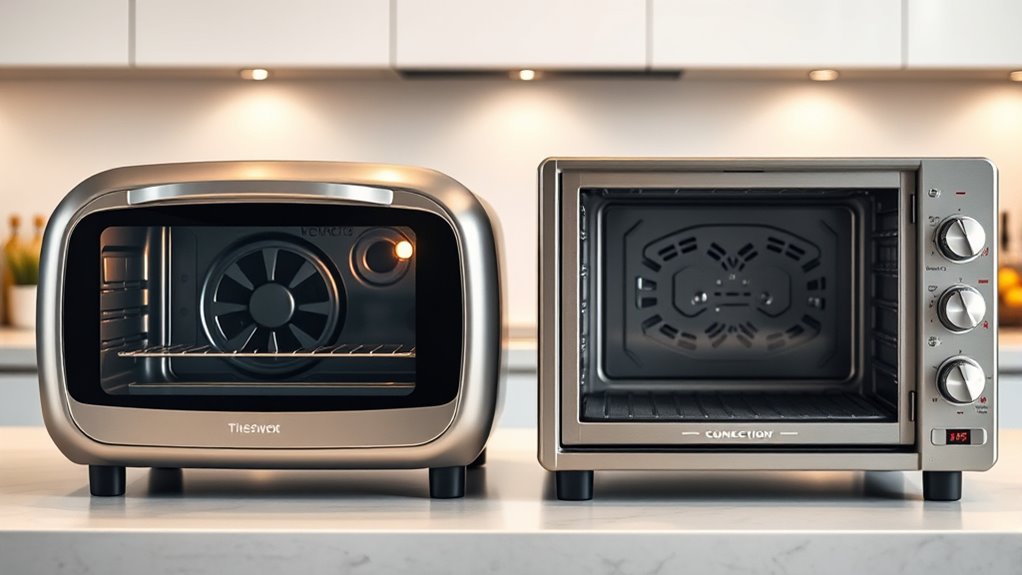
Countertop ovens have become a popular kitchen appliance because they offer a convenient and versatile way to cook, bake, and broil your favorite dishes without using a full-sized oven. When considering these appliances, understanding the difference between convection and true convection is essential, especially if you want to maximize baking versatility and energy efficiency.
Countertop ovens are versatile, energy-efficient, and perfect for quick, even cooking without a full-sized oven.
A convection countertop oven uses a fan to circulate hot air around your food, promoting even cooking and browning. This feature speeds up cooking times and helps you achieve consistent results, whether you’re roasting vegetables or baking cookies. The fan also enhances baking versatility, allowing you to cook multiple dishes at once without worrying about uneven heat distribution. Plus, because the fan efficiently distributes heat, these ovens tend to be more energy efficient than traditional models. They use less power to reach and maintain the desired temperature, saving you energy and reducing your utility bills over time.
True convection ovens take this a step further by integrating a dedicated heating element with the fan. This setup produces a more precise and consistent heat, ideal for baking delicate pastries or dishes that require uniform temperature control. The true convection system ensures even heat flow throughout the oven cavity, which is especially beneficial when baking multiple layers or large batches. This precise control enhances baking versatility, making it easier to achieve professional-quality results at home. Additionally, because true convection ovens maintain consistent temperature levels with less energy waste, they are often more energy efficient than standard convection models. Connected technology in modern countertop ovens can further optimize cooking performance and energy savings.
When choosing between convection and true convection, consider your cooking habits. If you frequently bake or cook multiple dishes simultaneously, true convection offers superior baking versatility and more consistent results. It’s particularly useful for delicate baked goods or complex recipes that demand precise temperature control. On the other hand, if you’re looking for a more budget-friendly option that still improves cooking times and energy efficiency, a convection oven without the true convection feature might suffice.
In both cases, these countertop ovens are designed to be energy efficient, helping you save on electricity while giving you the flexibility to cook a variety of meals. Whether you opt for convection or true convection, you’ll find that these appliances make your kitchen more functional and efficient. They’re perfect for those who want the convenience of quick, even cooking without sacrificing the quality of their baked goods or meals. By understanding the key differences, you can select the right countertop oven that best fits your needs, ensuring you get maximum baking versatility and energy efficiency in a compact, easy-to-use appliance.
Frequently Asked Questions
Do Convection Ovens Use More Energy Than Traditional Ovens?
Convection ovens generally use more energy than traditional ovens because their fans and motors require extra power. However, they’re often more efficient overall, as they cook faster and evenly, saving you time and energy in the long run. When you compare energy consumption, convection ovens might seem higher initially, but their efficiency makes up for it by reducing cooking time, making them a smart choice for energy-conscious users.
Can Countertop Convection Ovens Bake Bread as Well as Full-Sized Ones?
You can absolutely bake bread as well in a countertop convection oven as you would in a full-sized one! While it might seem tiny, its oven performance packs a punch, delivering even heat perfect for bread baking. Don’t underestimate this small powerhouse—its convection technology guarantees your loaves get that beautiful crust and soft crumb, making it a versatile kitchen hero. Size isn’t everything when it comes to baking excellence!
Are True Convection Ovens Quieter Than Standard Convection Models?
Yes, true convection ovens are generally quieter than standard convection models. Their improved noise levels are thanks to better airflow effectiveness, which reduces the need for loud fans. You’ll notice a smoother operation without the constant hum or buzz common in standard convection ovens. This quieter performance makes cooking more enjoyable, especially if you’re sensitive to noise or use your oven frequently.
How Easy Is It to Clean Countertop Convection Ovens?
Cleaning your countertop convection oven is generally straightforward. You can easily wipe down the interior with a damp cloth after use, and many models have removable crumb trays and accessories for quick cleaning. To make maintenance easier, follow tips like regularly cleaning the heating elements and avoiding abrasive cleaners. Using a soft brush for vents and avoiding harsh chemicals guarantees your oven stays in top shape without hassle.
What Safety Features Differentiate Convection From True Convection Ovens?
You’ll find that true convection ovens often have advanced safety features like thermal insulation and overheating protection, which help prevent accidents and damage. These features monitor the oven’s temperature, shutting it down if it gets too hot, ensuring safe operation. Convection ovens may have basic safety mechanisms, but true convection models typically offer enhanced protection, giving you peace of mind while cooking.
Conclusion
So, now you know the difference between convection and true convection countertop ovens. Do you prefer faster cooking with even heat or more precise control for delicate dishes? Whichever you choose, understanding these features helps you make smarter decisions in your kitchen. Remember, the right oven can turn simple meals into culinary delights. Isn’t it worth investing a little time to find the perfect match for your cooking style? Your next great meal starts with the right choice!