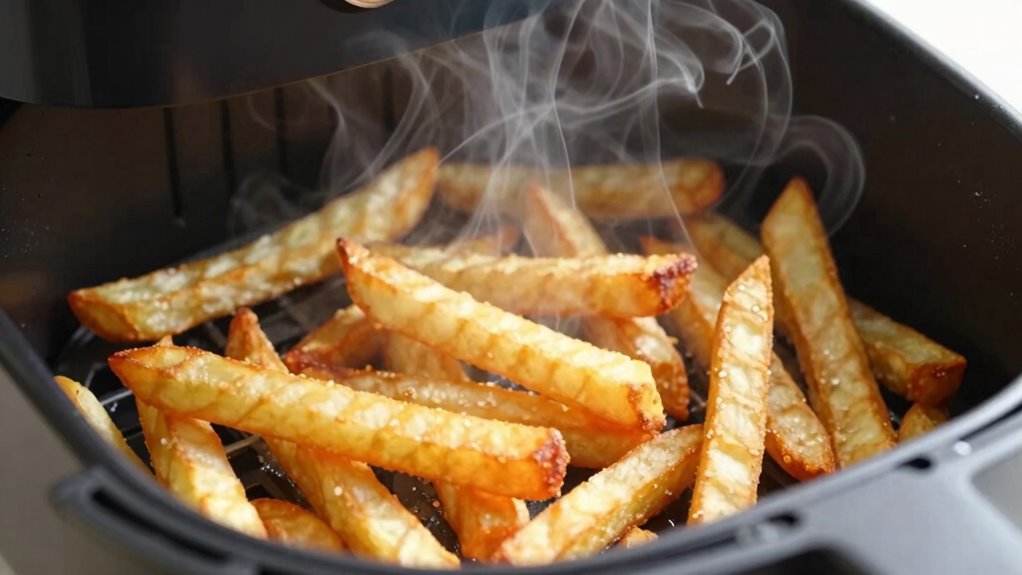

Air frying achieves its crispy texture through rapid hot air circulation that evenly surrounds the food, creating a Maillard reaction and browning the surface. The airflow is essential, as it removes moisture and promotes the formation of a golden, crunchy exterior. Using a light coating of oil helps enhance browning and crispness without excess fat. Keep these airflow principles in mind, and you’ll discover simple ways to maximize crunch and flavor with your air fryer.
Key Takeaways
- Hot air circulation around food creates a Maillard reaction, leading to browning and crispiness.
- Rapid airflow ensures even heat distribution, promoting uniform texture and crunch.
- Light oil coatings or sprays enhance browning and improve the crispy exterior.
- Preheating the air fryer helps maintain consistent airflow and optimal crisping results.
- Properly arranged food allows maximum airflow, preventing sogginess and ensuring crunchiness.

The secret behind the crispiness in air frying lies in its innovative cooking techniques. Instead of immersing food in oil, an air fryer rapidly circulates hot air around the food surface, creating a Maillard reaction—a chemical process that develops browning and that desirable crunch. To achieve the best results, you often need to follow specific cooking techniques, such as lightly coating your food with a thin layer of oil or using a cooking spray. This helps mimic the traditional frying effect and ensures even browning. Many recipes also recommend preheating the air fryer, just like you would with an oven, to ensure the heat is evenly distributed from the start. Additionally, understanding smart appliance features can help optimize cooking times and temperatures for perfect results.
You can prepare a wide variety of dishes using air frying by adapting your favorite recipes. For example, instead of deep-frying chicken wings, you can air fry them with just a light mist of oil, delivering the same crispy skin with a fraction of the fat. Fresh vegetables like Brussels sprouts or zucchini chips also turn out beautifully crispy using this method. When cooking, keep in mind that overcrowding the basket can hinder airflow, preventing the food from crisping uniformly. You might need to cook in batches for the best results. Also, experimenting with different seasonings and coatings can enhance flavor without adding extra calories.
Incorporating air frying into your routine means embracing healthy cooking techniques without sacrificing taste. It’s a practical way to enjoy snacks like French fries, onion rings, or even baked goods with a crispy exterior, all while controlling the amount of oil used. The quicker cooking times compared to traditional methods save you energy and time, making it a convenient option for busy days. So, if you’re enthusiastic to enjoy your favorite crispy foods guilt-free, give air frying a try. It’s a smart, healthier alternative that fits seamlessly into your lifestyle, proving that you don’t need a deep fryer to get that perfect crunch.

bella 4Qt Slim Air Fryer, Fits-anywhere™ Kitchenware, EverGood™ Ceramic Nonstick Coating, Adjustable Temperature, 6 Preset Cooking Options, 60 Min Auto Shutoff w Audible Tone, 3.3lb Capacity, Oatmilk
Slim Design for Any Space: The bella 4qt Air Fryer features a sleek, space-saving design, perfect for fitting…
As an affiliate, we earn on qualifying purchases.
As an affiliate, we earn on qualifying purchases.
Frequently Asked Questions
Can Air Frying Replace Traditional Deep Frying Entirely?
You can replace traditional deep frying with air frying for healthier options, but it might not fully match the texture. Air frying uses hot air circulation, reducing oil absorption and creating a crispy exterior. However, the texture comparison shows air-fried foods are often less greasy and slightly different in crunch. While air fryers are versatile, some prefer traditional frying for that authentic, deep-fried taste and texture.
What Types of Foods Are Best Suited for Air Frying?
You’ll find that crispy vegetables and healthy snacks are perfect for air frying, as it uses less oil while still delivering that satisfying crunch. About 70% of users prefer air frying for vegetables, making them more appealing and nutritious. You can also air fry chicken wings, fries, and even donuts. Its versatility lets you create guilt-free, crispy treats that satisfy cravings without the mess of traditional frying.
How Do I Clean and Maintain My Air Fryer?
To keep your air fryer in top shape, follow a simple maintenance routine and cleaning tips. After each use, unplug it and let it cool before cleaning the basket and tray with warm soapy water. Wipe down the interior with a damp cloth. Regularly check the heating element for grease buildup. Doing this guarantees ideal airflow, prevents odors, and extends your air fryer’s lifespan.
Is Air Frying Healthier Than Other Cooking Methods?
Yes, air frying is healthier than many other cooking methods because it reduces oil use, helping you cut down on unhealthy fats. Plus, it retains more nutrients in your food compared to deep frying or pan-frying. You get a crispy texture without sacrificing nutritional value, making it a smart choice for a healthier diet. So, enjoy your favorite fried foods with less guilt and more health benefits.
Can I Cook Frozen Foods Directly in an Air Fryer?
Indeed, you can cook frozen food directly in your air fryer, making it a convenient choice for busy days. Just follow some cooking tips: preheat your air fryer for even crispiness, shake or turn the food halfway through, and adjust cooking time as needed. Remember, a little patience and attention will yield perfectly crispy results, even with those frozen foods that seem to have time-traveled from the freezer to your plate.

Cuisinart Non-Stick Airfryer Basket, Compatible with TOA-60, AND TOA-65, ANS-TOA2528, Silver
Durable Nonstick Steel Construction
As an affiliate, we earn on qualifying purchases.
As an affiliate, we earn on qualifying purchases.
Conclusion
Now, as you savor that perfectly crispy bite, remember how air frying combines health and indulgence. It’s a guilt-free crunch that feels like a treat, yet isn’t. You get the same satisfying texture without the excess oil or calories. So, while it’s your favorite comfort food, it’s also your smart choice. Enjoy the best of both worlds—crunchy and healthy—proving that sometimes, the lightest way can be the most satisfying.

Mantova Air Fryer Spray 450F Smoke Point – All-Natural High-Heat Cooking Oil – Perfect for Air Fryers, Roasting, Grilling, Baking, and Sautéing-High Smoke Point, Non-Aerosol Spray, Easy to Use and Mess-Free – Made in Italy – (Pack of 1)
All-Natural Ingredients: Made with pure oil, free of additives and artificial flavors.
As an affiliate, we earn on qualifying purchases.
As an affiliate, we earn on qualifying purchases.
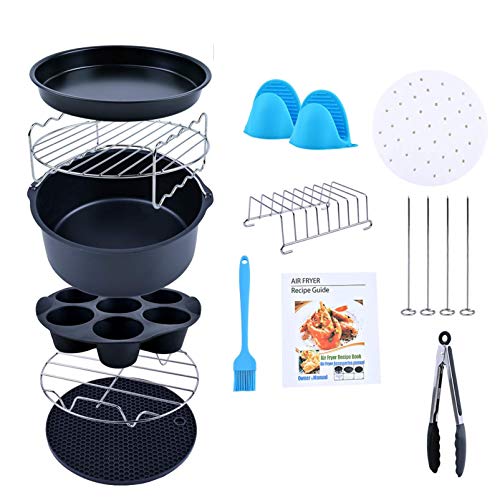
Air Fryer Accessories, Set of 12 Fit for 5.3Qt and Larger Air Fryer with Cake & Pizza Pan, Metal Holder, Skewer Rack & Skewers, etc, Nonstick Coating, Dishwasher Safe
❤️ Air Fryer Accessories Set of 12 – Our Air Fryer Accessories kit includes 1 x Cake Barrel,…
As an affiliate, we earn on qualifying purchases.
As an affiliate, we earn on qualifying purchases.