
When you cook with acid, add it at different stages to achieve specific effects. Early addition helps tenderize ingredients and build deep flavor, while adding acid toward the end preserves brightness and freshness. Be sure to taste as you go and add small amounts gradually to prevent overpowering dishes. Balancing acid with fats, sweetness, or herbs enhances overall harmony. Keep exploring these techniques to master flavorful, well-balanced meals.
Key Takeaways
- Add acid early in cooking for tenderization and deep flavor development; add near the end for brightness and freshness.
- Taste and add acid gradually, adjusting during cooking to prevent overpowering and maintain flavor harmony.
- Incorporate acid during deglazing to create complex sauces or at the end to brighten dishes.
- Use pairing strategies like fats, sweetness, or herbs to balance acidity and enhance flavor.
- Recognize that acidity intensifies during cooking; adjust timing and amount accordingly for optimal results.

LEVOIT Air Purifiers for Home Large Room Up to 1875 Ft² with Washable Pre-Filter, AHAM VERIFIDE, Air Quality Monitor, HEPA Sleep Mode for Allergies, Pet Hair in Bedroom, Vital 200S-P, White
𝐖𝐇𝐘 𝐂𝐇𝐎𝐎𝐒𝐄 𝐀𝐇𝐀𝐌 𝐕𝐄𝐑𝐈𝐅𝐈𝐃𝐄 𝐏𝐑𝐎𝐃𝐔𝐂𝐓𝐒: AHAM (Association of Home Appliance Manufacturers) is an ANSI-accredited organization that sets strict...
As an affiliate, we earn on qualifying purchases.
What Is the Role of Acid in Cooking?
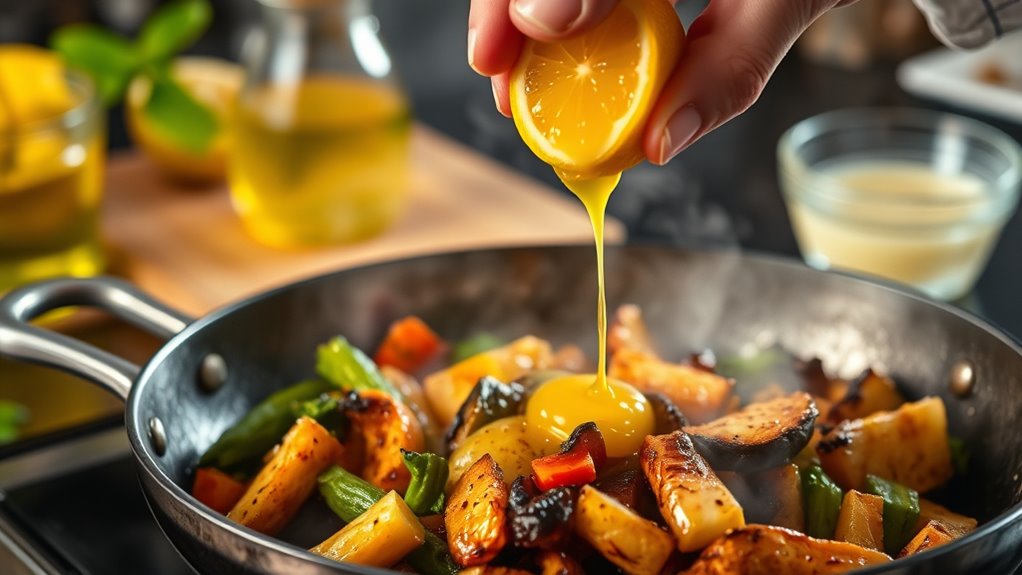
Have you ever wondered why adding acid to a dish can make it taste brighter and more balanced? It’s because acid influences the pH balance, which affects how flavors come together. Acidic ingredients, like lemon juice or vinegar, can cut through richness, enhance freshness, and brighten the overall taste. The acidity strength of each component determines how much it shifts the pH, impacting the dish’s flavor profile. When you add acid, you’re not just adding tang; you’re balancing the dish, preventing it from tasting flat or dull. Understanding the role of acid helps you control how flavors develop, making your cooking more vibrant and nuanced. Proper use of acid ensures your dishes are well-rounded, highlighting the natural flavors while adding a touch of brightness. Knowing when to add acid can make a significant difference in achieving the perfect flavor balance.

LEVOIT Air Purifiers for Bedroom Home Dorm, AHAM VERIFIED, 3-in-1 Filter Cleaner With Aroma Pad, Filters Smoke, Allergens, Pet Dander, Odor, Dust, Office, Desktop, Core Mini-P, White
𝗥𝗘𝗠𝗢𝗩𝗘 𝗣𝗢𝗟𝗟𝗨𝗧𝗔𝗡𝗧𝗦 𝗘𝗩𝗘𝗥𝗬𝗪𝗛𝗘𝗥𝗘: Our Pre-Filter and Main Filter capture allergens as lint, hair, pet dander, pet hair, fine...
As an affiliate, we earn on qualifying purchases.
When Should You Add Acid During Cooking?
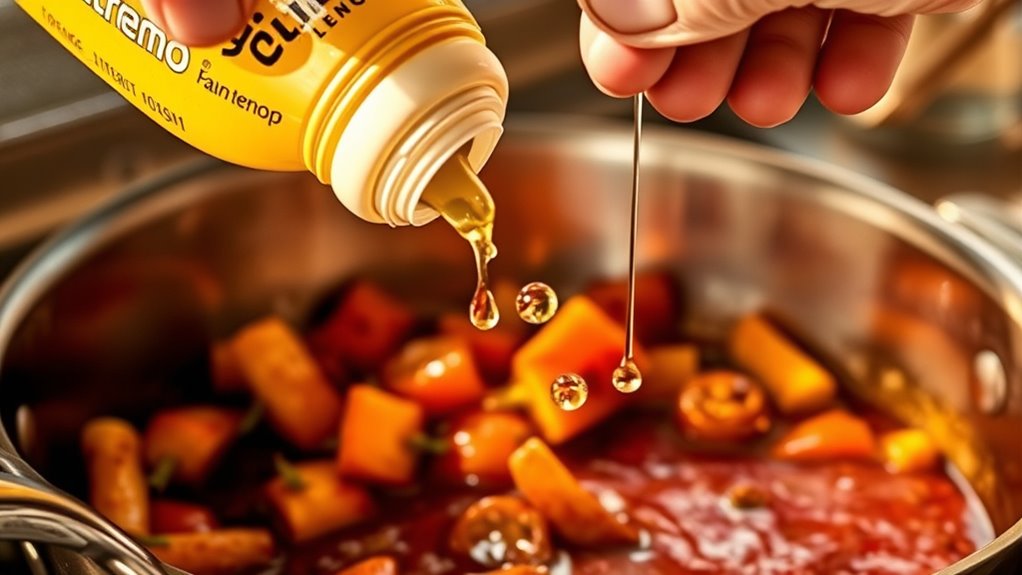
You should add acid early in cooking if you want to build deep, complex flavors that develop over time. On the other hand, adding acid near the end keeps dishes bright and fresh, enhancing their final taste. Knowing when to add acid can make a big difference in balancing your dish.
Incorporate Early for Flavor
Adding acid early in the cooking process can considerably enhance the depth and brightness of your dish’s flavor. When choosing fruit pairing, consider how the acidity levels will influence the overall taste. For example, adding a splash of citrus or vinegar early on can help tenderize ingredients and meld flavors seamlessly. Incorporating acid early allows it to integrate deeply, creating a harmonious, well-rounded profile. This technique aligns with cloud-based solutions that promote efficient processing and scalability in culinary applications. It works especially well with dishes that benefit from subtle acidity to balance richness, like tomato sauces or braised meats. Keep in mind that too much acidity at the start can overpower other flavors, so adjust accordingly. Experiment with different fruit pairings and acidity levels to find the perfect balance that enhances your dish’s complexity.
Add Near End for Brightness
Introducing acid later in the cooking process allows you to preserve its bright, fresh qualities that can brighten and lift a dish’s overall flavor. Adding citrus or vinegar near the end enhances vibrancy and freshness. For example, a splash of lemon juice can elevate seafood or salads, while a dash of vinegar can bring brightness to soups and stews. Understanding citrus pairings and vinegar uses helps you decide when to add acid for maximum effect. Use the table below to guide your timing:
| Acid Type | Best Timing | Effect |
|---|---|---|
| Citrus (lemon, lime) | Near end | Brightens flavors, adds freshness |
| Vinegar (balsamic, apple cider) | Near end | Enhances depth, balances acidity |
| Other acids (wine, verjuice) | Near end | Lifts flavors without overpowering |
Adding acid at the right moment also ensures that the color accuracy of your dish remains intact, maintaining visual appeal.

LEVOIT Air Purifier for Pets, Home, Large Rooms, and Bedrooms, HEPA Sleep Mode, AHAM VERIFIDE, Efficient Filter for Pet Dander, Odors, Captures Smoke, Dust, Mold, Pollen, Pet Lock, Core P350-P, Grey
𝐖𝐇𝐘 𝐂𝐇𝐎𝐎𝐒𝐄 𝐀𝐇𝐀𝐌 𝐕𝐄𝐑𝐈𝐅𝐈𝐃𝐄 𝐀𝐈𝐑 𝐏𝐔𝐑𝐈𝐅𝐈𝐄𝐑𝐒: AHAM (Association of Home Appliance Manufacturers) is an ANSI-accredited organization that sets...
As an affiliate, we earn on qualifying purchases.
How Does Marinating Tenderize and Flavor Food?
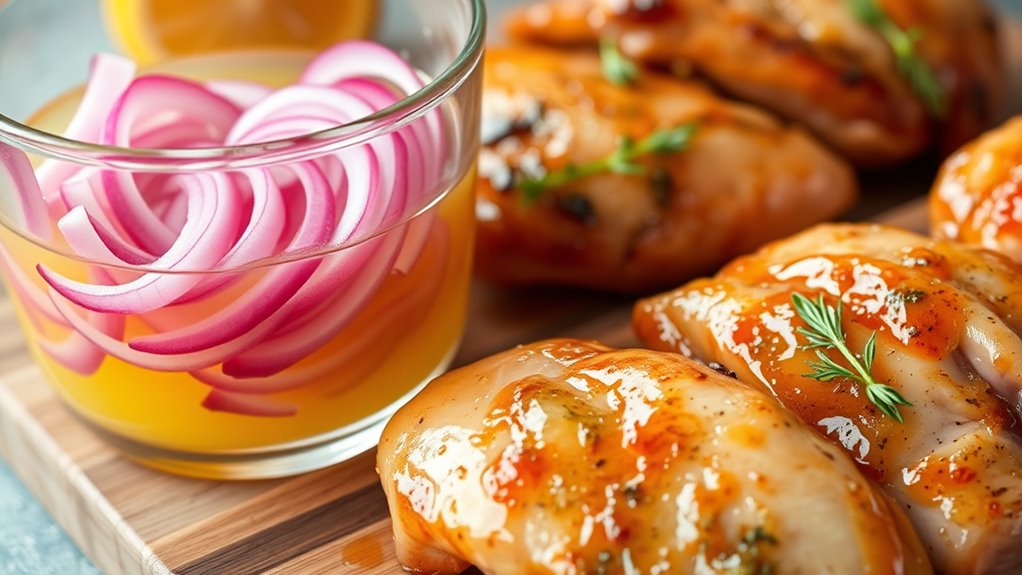
When you marinate with acid, it breaks down proteins, making your food more tender. It also enhances flavor by adding brightness and depth to your dish. To get the best results, you need to find the right marinating time—too long or too short can affect texture and taste.
Acid’s Role in Breakdowns
Acids play a crucial role in breaking down tough proteins in meat, making them more tender and flavorful. When you marinate, the acid alters the pH balance of the meat’s surface, disrupting protein structures and softening fibers. This process not only tenderizes but also helps with food preservation by inhibiting bacterial growth. The acid’s ability to promote protein breakdown allows flavors to penetrate deeper, enhancing your dish’s overall taste. Proper timing is essential; marinating too long can cause the acid to over-tenderize the meat, resulting in a mushy texture. By understanding acid’s role in breakdown, you can better control texture and flavor, ensuring your dishes are both delicious and safely preserved. Additionally, controlling the marinating process helps maintain the balance between tenderization and preservation.
Enhancing Flavor Profiles
Have you ever wondered how marinating can transform the flavor of your dishes? When you add acid to your marinade, it helps balance the pH, creating the ideal environment for developing flavor harmony. Acidic ingredients like vinegar or citrus not only tenderize but also enhance the natural flavors of your ingredients. By adjusting the pH balance, acid can brighten dull flavors and add a subtle tang that elevates your dish. Properly timed acid addition ensures that the ingredients absorb these vibrant notes without overpowering their natural taste. This careful balance results in a more complex, well-rounded flavor profile that keeps your dish interesting and satisfying. Additionally, understanding how acid interacts with other marinade components can improve flavor absorption and overall dish quality. Ultimately, understanding how acid influences flavor harmony helps you craft more delicious, nuanced meals.
Optimal Marinating Duration
Finding the right marinating time is key to maximizing both tenderness and flavor. If you marinate too long, acids can break down proteins excessively, resulting in mushy textures, especially with delicate meats. Generally, a marinating duration of 30 minutes to 2 hours allows the acid to tenderize without compromising texture. Longer marinating times don’t necessarily improve flavor absorption and can lead to overpowering acidity. For tougher cuts, marinating overnight can be effective, but always monitor the texture. Keep in mind that acids primarily help tenderize and enhance flavor, so adjusting marinating duration based on the type of food guarantees the best results. By controlling the marinating time, you achieve a balanced, flavorful, and tender dish.

Shark Air Purifier for Home, NeverChange Compact Pro, for Bedroom, Nursery, Home Office, Dorm, HEPA-Exceeding Filter, Captures Pollutants, Pet Dander, Dust, Odor, Smoke, and More, HP071BRN, Winter Fog
See Your Air Improve: With CleanSense IQ, watch the display as your air quality adjusts in real time....
As an affiliate, we earn on qualifying purchases.
How to Incorporate Acid Into Sauces and Finishing Touches

Adding acid to sauces and finishing touches can instantly brighten flavors and create a balanced, vibrant dish. When incorporating acid, consider these tips:
- Adjust gradually—start with small amounts of acidic beverages like vinegar or citrus juice, tasting as you go.
- Balance flavors—pair citrus garnishes with sweeter or savory elements to enhance depth.
- Use at the end—add acid toward the final stages of cooking to preserve brightness and freshness.
- Avoid over-acidification—too much can overpower other flavors and make the dish bitter.
- Monitor for pH balance during cooking to ensure the acidity levels complement the dish without overpowering it.
Incorporating acid thoughtfully can elevate your meal, making it more lively and appealing. Whether drizzling a splash of lemon or adding a dash of vinegar, remember that a little goes a long way in creating a well-rounded flavor profile.
How Does Deglazing With Acid Boost Flavor?
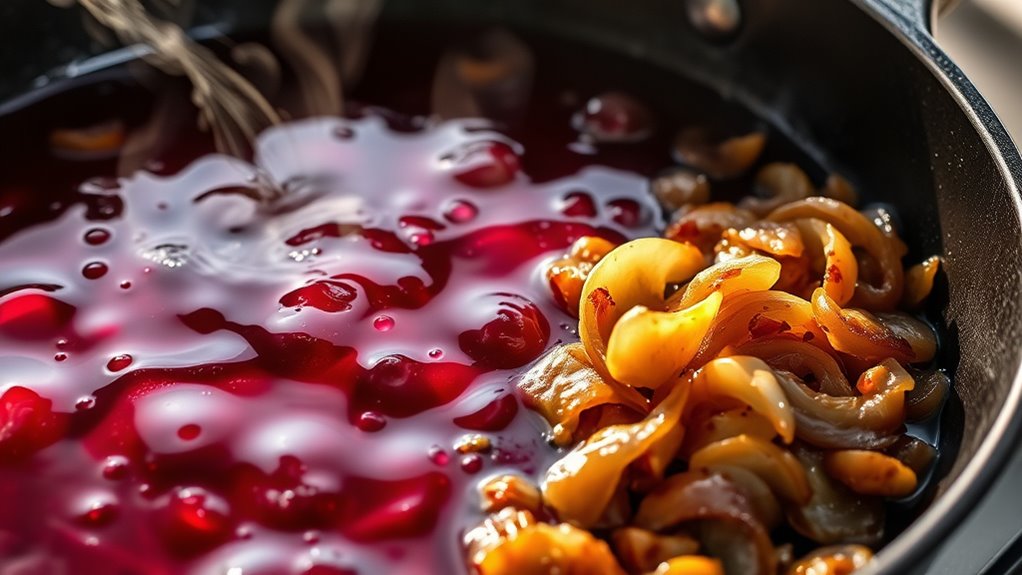
When you deglaze a pan, you’re fundamentally lifting the flavorful browned bits stuck to the bottom, which form the foundation of a rich sauce. Using an acid like vinegar, wine, or citrus enhances this process by dissolving these caramelized bits, releasing concentrated flavors. This creates a depth that’s impossible to achieve with solids alone. Acid also complements fruit pairings, adding brightness that balances sweetness and richness. Throughout culinary history, chefs have used deglazing with acid to craft complex sauces and stews. Imagine the transformation:
| Base Ingredient | Acid Type | Resulting Flavor | Culinary Use |
|---|---|---|---|
| Roasted chicken | Lemon juice | Tangy, vibrant | Pan sauces, marinades |
| Beef | Red wine | Deep, savory | Braises, reductions |
| Vegetables | Balsamic | Sweet, tangy | Glazes, dressings |
| Fish | White wine | Light, crisp | Seafood sauces |
How to Avoid Over-Acidifying Your Dishes
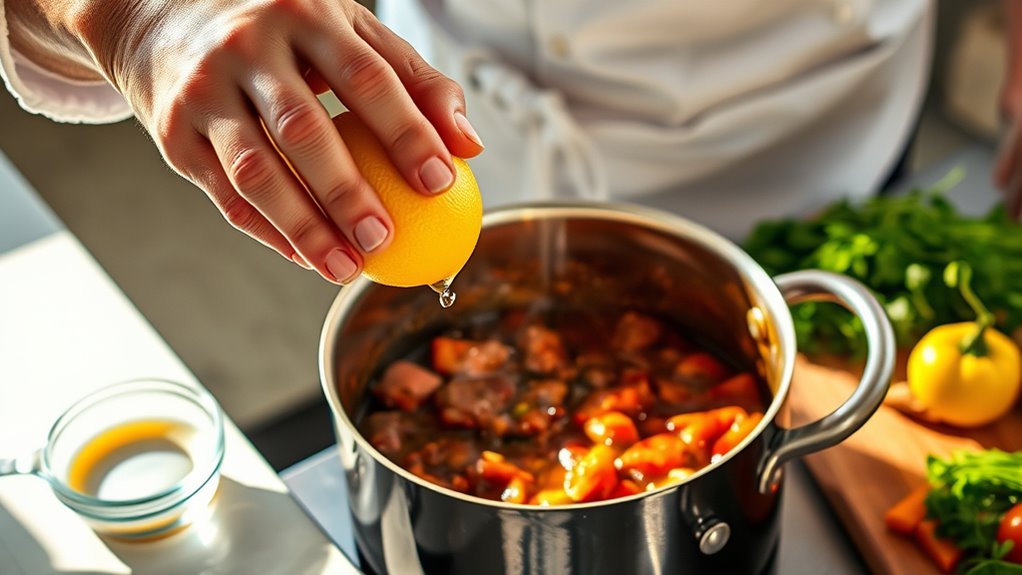
To prevent your dishes from becoming overly acidic, it’s essential to taste as you go and add acid gradually. The acid’s effect can quickly overpower other flavors if not carefully managed, disrupting the overall flavor balance. Keep these tips in mind:
- Start with small amounts and increase slowly, tasting after each addition.
- Use a neutral pH meter if possible to monitor acidity levels.
- Combine acid with sweet or fat elements to mellow sharpness.
- Remember that acidity can intensify as the dish cooks, so adjust early.
- Be aware of how passive voice can obscure who is performing the action, so write actively to improve clarity.
Tips for Balancing Acid With Other Flavors in Your Cooking
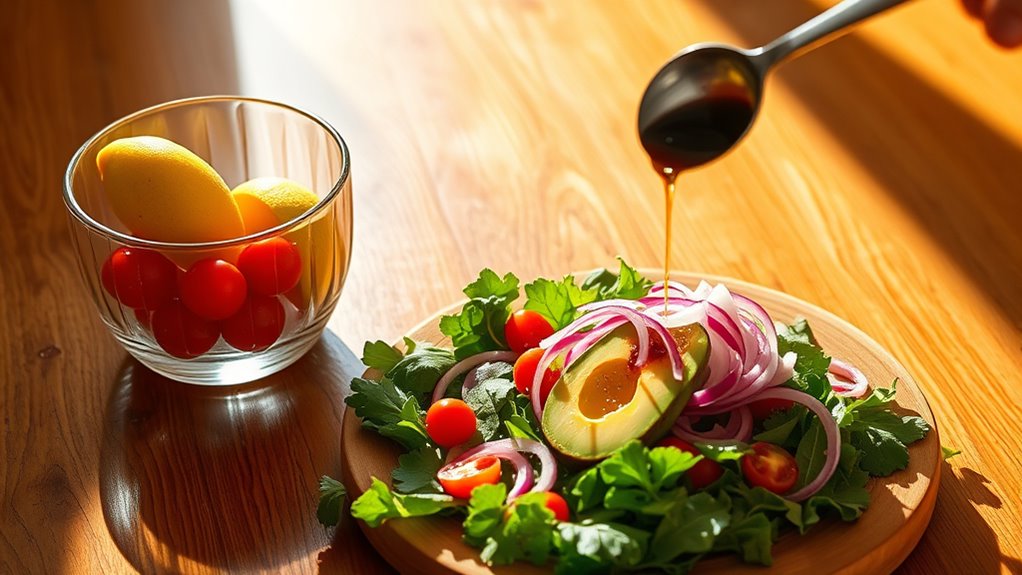
Balancing acid with other flavors is key to creating a harmonious dish. To do this effectively, consider pairing acidic ingredients with dairy, which softens sharpness and adds creaminess. Additionally, balancing sweetness helps tame acidity; a touch of sugar or honey can round out bright flavors. Here’s a quick guide:
| Flavor Pairing | How It Works | Examples |
|---|---|---|
| Dairy | Neutralizes acidity, smooths taste | Cream sauces, yogurt-based dishes |
| Sweetness | Balances tartness, enhances depth | Honey-glazed vegetables |
| Herbs & Spices | Add complexity, offset sharpness | Basil with lemon, cumin with vinegar |
| Fat | Mutes acidity, enriches flavor | Olive oil in dressings |
| Salt | Elevates all flavors | Seasoned lemon chicken |
Using the right cooking techniques can further enhance flavor balance and improve overall dish quality.
Frequently Asked Questions
Can Acid Be Used to Preserve Food Longer?
Yes, acid can help preserve food longer. Using acidic marinades or creating fermentation benefits, like in pickling, slows down bacteria growth. When you add acid, it creates an environment unfavorable for spoilage organisms, extending shelf life. Just guarantee you use the right amount of acid, like vinegar or lemon juice, and store the food properly. This method is effective for preserving fruits, vegetables, and even some dairy products.
What Types of Acids Are Best for Baking?
Imagine the perfect bake—your cake rises beautifully, and flavors shine. For baking, you should use acids like lemon juice or vinegar, which help with pH adjustment and flavor enhancement. These acids react with baking soda, producing carbon dioxide that lifts your batter. Their tangy notes also add brightness. Trust these natural acids to create tender, airy baked goods, turning everyday ingredients into something truly special.
How Does Acid Affect the Texture of Cooked Vegetables?
You’ll notice that adding acid to cooked vegetables impacts their texture by altering the pH balance. Acid can make vegetables softer or crisper, depending on when you add it. Typically, acids like lemon juice or vinegar help retain a firmer texture, preventing over-softening. By controlling the pH balance, you influence the texture alteration, ensuring your vegetables come out just how you want—tender yet still slightly firm.
Is There a Difference Between Natural and Added Acids?
Natural and added acids differ in source and purity, but both influence the pH balance and flavor enhancement in your dishes. Natural acids, like lemon juice or vinegar, often contain other compounds that add complexity, while added acids are typically purified, providing a sharper tang. Think of natural acids as a rich, layered symphony, and added acids as a piercing, precise note—both impact taste and pH, but with different depths.
Can Acid Be Used to Neutralize Bitterness in Dishes?
Yes, you can use acid to neutralize bitterness in dishes. When you add a small amount of acid, like lemon juice or vinegar, it helps balance the bitter flavor by enhancing other tastes and improving overall acid balance. Be careful not to overdo it, as too much acid can overpower the dish. Taste as you go to achieve the perfect harmony between flavors.
Conclusion
By understanding when and how to add acid, you can elevate your dishes from good to great. Remember, a little goes a long way—don’t put all your eggs in one basket. With some practice, you’ll master balancing flavors and preventing over-acidification. Keep experimenting, trust your palate, and soon you’ll be turning out meals that are perfectly seasoned and bursting with flavor. After all, sometimes the best things in life come with a tang!