The myth that searing meat locks in juices isn’t true; in fact, searing doesn’t prevent moisture loss. High heat causes cell membranes to rupture and muscle fibers to contract, making juices escape regardless of browning. Searing’s main benefit is developing rich flavor and a beautiful crust through the Maillard reaction, not sealing in moisture. To cook juicy, tender meat, focus on gentle methods and proper techniques—you’re about to learn more that can help you achieve perfect results.
Key Takeaways
- Searing does not create a barrier; meat juices are mobile and can escape regardless of browning.
- Heat causes muscle fibers to contract and cell membranes to rupture, leading to juice loss during cooking.
- The Maillard reaction enhances flavor and crust, not moisture retention inside the meat.
- Moisture loss occurs through evaporation and leakage, unaffected by searing or sealing.
- Proper cooking techniques like low, slow heat and resting produce juicier, more tender meat than relying on searing.
Where the “seal in Juices” Myth Began
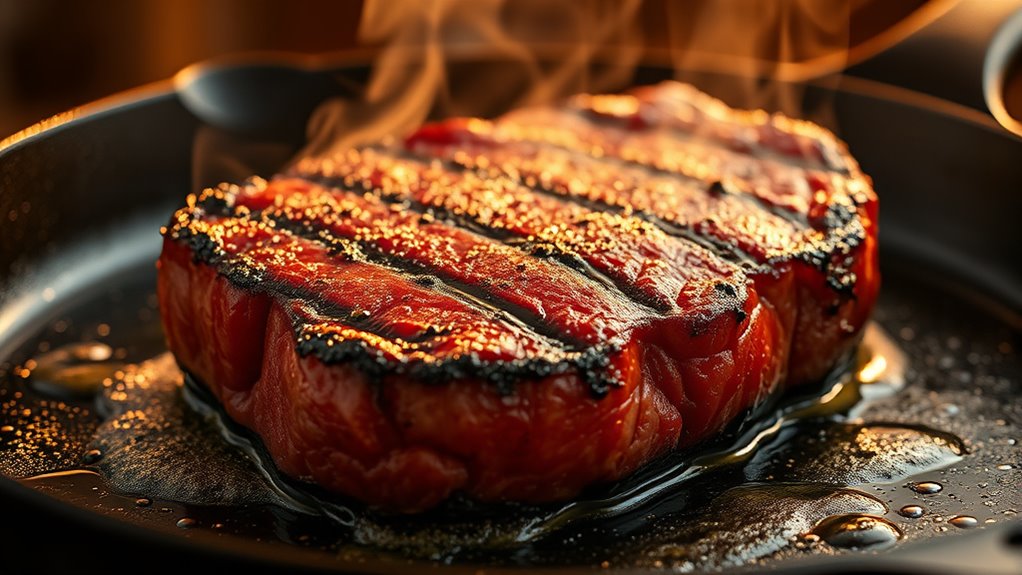
Many people believe that searing meat locks in its juices, but this idea actually has its roots in early marketing claims rather than scientific fact. The history origin of the “seal in juices” myth traces back to the 1970s when marketing tactics aimed to promote specific cooking methods and products. Food companies and chefs emphasized searing as a way to preserve moisture, making it a popular kitchen myth. This marketing strategy successfully influenced public perception, even though it lacked scientific backing. Over time, the idea gained widespread acceptance, becoming a cooking guideline. Today, many still believe that searing creates a juice barrier, but its origins are more about marketing than culinary science. Furthermore, scientific research shows that searing primarily affects surface flavor and appearance rather than retaining internal moisture.
What Really Happens When You Sear Meat
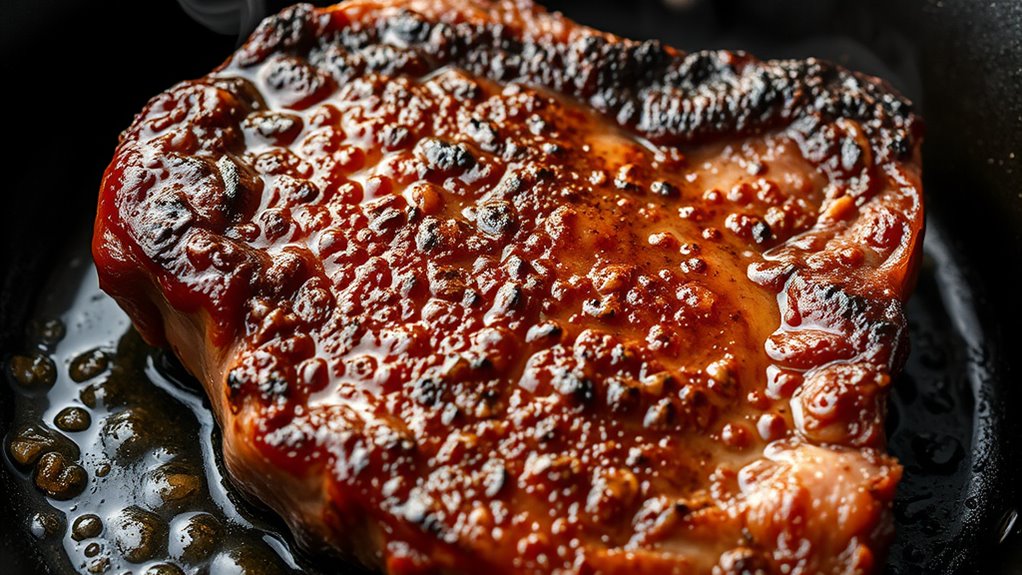
When you sear meat, the high heat causes the surface to brown through a chemical reaction called the Maillard process, creating rich flavors and appealing color. During this process, some moisture escapes from the meat, but the myth that searing locks in juices isn’t accurate. Instead, searing primarily enhances flavor and appearance, not moisture retention. Additionally, understanding color accuracy can help in evaluating the visual appeal of perfectly seared meat.
Surface Browning Process
As you sear meat, the surface undergoes a rapid transformation driven by a chemical reaction known as the Maillard reaction. This process creates the rich, brown crust that enhances flavor and texture. During searing, high heat causes surface sugars and amino acids to react, producing complex flavors and appealing color. This browning isn’t just for show; it’s a vital step in developing taste. As heat penetrates the meat, the marbling effect intensifies the crust’s richness. Keep in mind:
- The Maillard reaction accelerates at higher temperatures, creating that desirable crust.
- Proper heat application guarantees even browning and flavor development.
- Searing doesn’t seal in juices but promotes the surface’s delicious crust.
- Understanding the chemical reactions involved can help you optimize your cooking process.
Understanding this process helps you control the quality and flavor of your cooked meat.
Moisture Loss Dynamics
Searing meat triggers more than just surface browning; it also causes moisture to escape from the muscle fibers. This moisture loss can reduce the meat’s juiciness, but it doesn’t mean your meat is drying out completely. When you sear, the high heat creates a crust that may hinder marinade absorption, limiting flavor penetration. While some moisture escapes during searing, it doesn’t profoundly affect overall meat tenderness if cooked properly afterward. The key is managing heat and time so the meat remains juicy and tender. Searing’s impact on moisture loss is minimal if you allow for proper resting and gentle cooking afterward. Additionally, understanding the moisture loss dynamics can help you better control the cooking process. So, don’t worry—searing alone won’t drain all the juices, nor will it prevent you from achieving flavorful, tender meat.
Scientific Evidence That Debunks the Myth
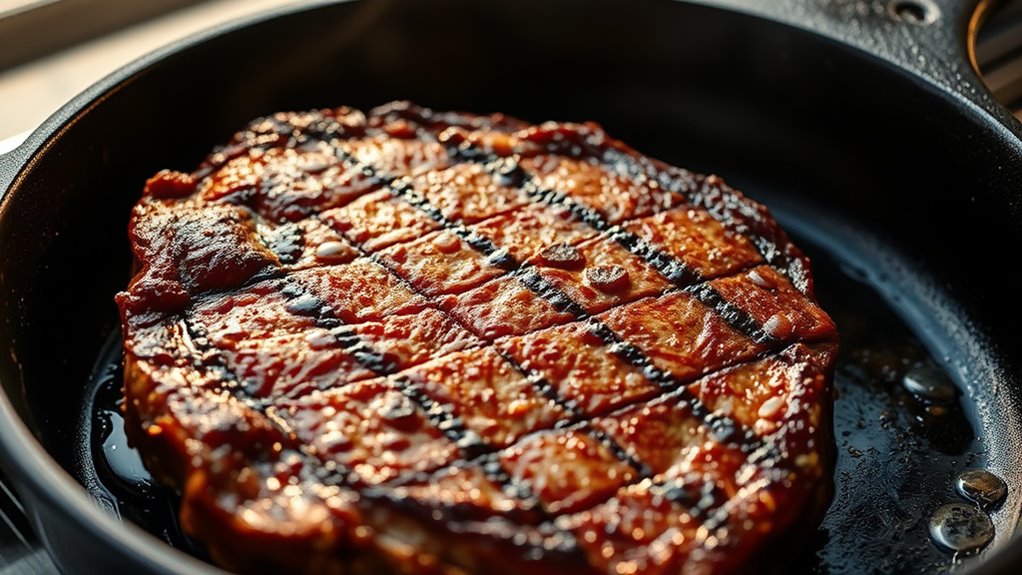
Scientific studies show that meat juices are mobile and can move throughout the meat during cooking. When you cook meat, the cell structures change, allowing moisture to escape regardless of searing. Sealing the meat doesn’t trap the juices, so the myth that searing keeps it all inside isn’t supported by evidence. Additionally, auditory processing research demonstrates that sensory perceptions, much like meat juices, are influenced by complex internal and external factors.
Meat Juices Are Mobile
Have you ever noticed how meat appears to release juices when you sear it? That’s because meat juices are mobile, not trapped by a sear. When you apply heat, the internal juices move freely due to meat elasticity, which allows fluids to flow toward the surface. This movement isn’t prevented by a crust but is part of the natural response to heat. Additionally, understanding the science of muscle fibers reveals that the movement of juices is a fundamental aspect of how meat responds to heat, further debunking the myth of “locking in” moisture.
- Juices flow out because of muscle fiber contraction, not sealing.
- Marinade penetration occurs early, before the high heat impacts meat structure.
- Juices are constantly moving inside, regardless of searing, debunking the myth of “locking in” moisture.
Cooking Alters Cell Structure
When heat is applied to meat, it causes the cells within to break down and change shape. This process involves cell damage and alters enzyme activity, which are vital for understanding cooking. The heat denatures proteins and damages cell membranes, making the structure more porous. This breakdown allows juices to escape regardless of searing. The table below illustrates how heat impacts meat at the cellular level:
| Effect | Description | Outcome |
|---|---|---|
| Cell Damage | Membranes rupture due to heat | Juices leak out naturally |
| Enzyme Activity | Enzymes deactivate | No effect on moisture retention |
| Protein Denaturation | Structural change | Affects texture and moisture |
| Collagen Breakdown | Softens connective tissue | Improves tenderness |
| Water Loss | Evaporation and leakage | Juices escape early |
This shows that cooking fundamentally changes cell structures, debunking the myth that searing seals in juices. Additionally, the cell structure is inherently altered during cooking, making it impossible for any technique to completely contain moisture.
Sealing Doesn’t Trap Moisture
Many believe that searing meat creates a crust that seals in moisture, but scientific studies show this isn’t true. When you sear meat, the high heat causes surface drying and moisture evaporation, which actually leads to moisture loss rather than retention. The crust forms on the surface, but it doesn’t act as a barrier to moisture escaping during cooking. Instead, heat penetrates the meat, and moisture continues to evaporate inside.
You can observe this by noticing:
- Surface drying occurs quickly during searing
- Moisture continues to evaporate despite the crust
- The idea of a “sealed in” effect is a myth
Understanding this helps you focus on proper cooking techniques without relying on false myths about sealing in juices.
How the Maillard Reaction Enhances Flavor
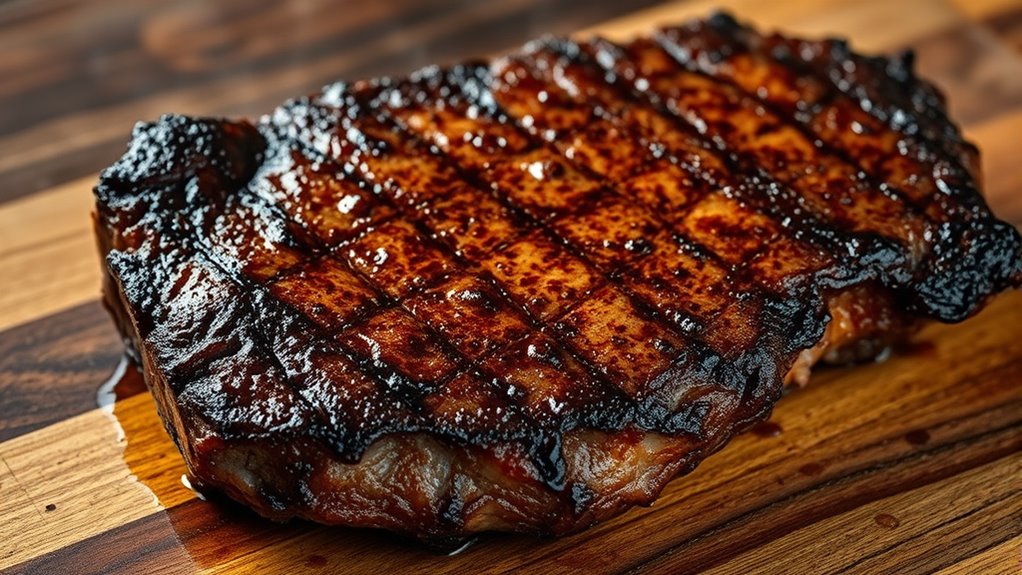
The Maillard reaction transforms simple amino acids and sugars into complex, flavorful compounds that elevate the taste of cooked foods. This process is responsible for the rich Maillard flavor you notice in browned meats and toasted bread. As the reaction occurs, it creates new molecules that boost aroma development, making your food smell enticing and appetizing. The browning you see isn’t just for appearance; it signals the formation of these flavorful compounds that deepen the taste. By actively promoting the Maillard reaction through proper cooking techniques, you enhance the overall flavor profile of your dishes. Understanding this process can help you better control browning and flavor development in your cooking. This reaction is a vital step in cooking, delivering depth and complexity that go far beyond basic seasoning. It’s the secret behind many beloved, savory flavors.
Easy Ways to Cook Juicy, Tender Meat Without Searing

You can achieve juicy, tender meat without searing by using gentle cooking methods that preserve moisture and break down connective tissues. Low and slow techniques, like braising, poaching, or simmering, are excellent for flavor enhancement and texture improvement. These methods allow the meat to cook evenly, preventing moisture loss and ensuring it stays tender. To maximize results, consider these tips:
- Use a flavorful liquid, such as broth or wine, to infuse taste.
- Cook at low temperatures over longer periods for better breakdown of collagen.
- Cover your meat to retain moisture and promote even cooking.
- Understanding cooking techniques can help you select the best method for tender, juicy results.
Common Searing Mistakes That Can Ruin Your Meat
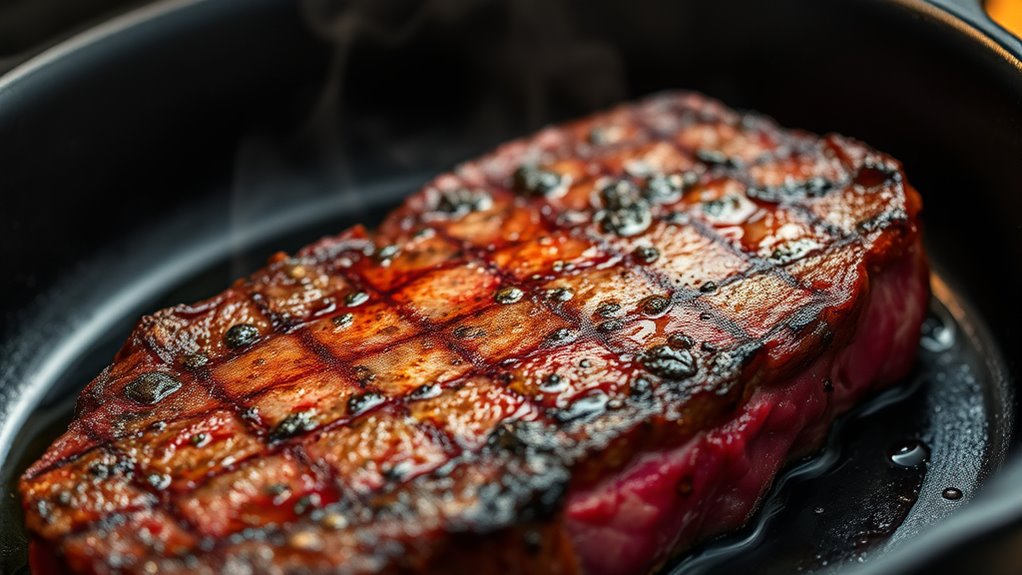
Searing meat incorrectly can quickly ruin its texture and flavor, leaving you with tough, unevenly cooked results. One common mistake is overcrowding the pan, which lowers the heat and causes steaming instead of proper searing. This prevents meat tenderness from developing and diminishes flavor. Another error is not preheating the pan enough, resulting in sticking and uneven browning. Using cold or wet meat also hampers the Maillard reaction, reducing flavor development. Additionally, flipping the meat too often interrupts the formation of a good crust, impacting both tenderness and flavor. Finally, rushing the process with high heat can burn the outside before the inside is cooked properly, compromising meat quality. Avoid these mistakes for a better sear and more satisfying results.
Simple Tips for Perfectly Juicy, Delicious Meat
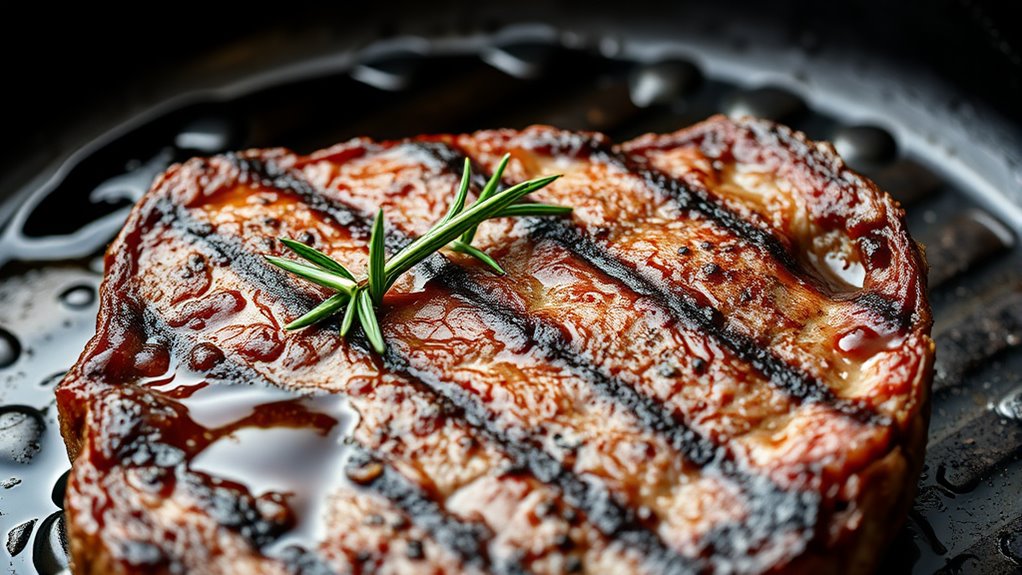
Achieving juicy, flavorful meat starts with simple, effective techniques that maximize moisture and tenderness. Focus on proper cooking techniques and flavor enhancement methods to elevate your dishes. First, let meat rest after cooking; this allows juices to redistribute evenly. Second, season generously beforehand to build layers of flavor. Ultimately, avoid overcooking—use a thermometer to hit the perfect internal temperature. To enjoy the best results, keep these tips in mind:
- Use a meat thermometer to prevent overcooking and keep juices intact
- Marinate or brine to boost flavor and moisture retention
- Cook at consistent, moderate temperatures for even results
- Incorporate comprehensive services such as project management support to ensure a seamless cooking process and optimal results.
Frequently Asked Questions
Does Searing Actually Affect the Internal Temperature of Meat?
No, searing doesn’t substantially affect the internal temperature of meat. When you sear, heat transfer occurs mainly on the surface, creating a flavorful crust. However, this process doesn’t penetrate deeply enough to raise the internal temperature meaningfully. Your meat’s internal temperature is primarily influenced by the oven or grill’s heat, not the searing step. So, focus on proper cooking times to reach your desired doneness.
Can Searing Be Skipped Without Losing Flavor or Moisture?
Imagine searing as the opening act of a concert—it’s not essential, but it sets the stage. You can skip searing without sacrificing flavor enhancement or moisture preservation. While it adds a delightful crust and depth of flavor, the main performance—your cooked meat—remains juicy and flavorful without it. Focus on proper cooking methods, and you’ll still enjoy a tender, tasty result, even without that initial sear.
How Does Resting Meat Impact Its Juiciness?
Resting meat substantially improves its meat moisture and overall juiciness. When you let the meat sit after cooking, the juices redistribute evenly throughout, preventing them from spilling out when you cut into it. This resting benefits your dish by keeping it moist and flavorful. Skipping this step can result in drier meat, as the juices escape, making it less tender and less enjoyable to eat.
Are There Alternative Methods to Achieve Flavor Without Searing?
You can absolutely boost flavor without searing by using marinades, which *release* incredible benefits like tenderization and deep flavor infusion. Instead of relying solely on high heat, try slow cooking, braising, or smoking to develop rich, complex tastes. These methods allow the marinade’s flavors to permeate the meat thoroughly, creating a delicious meal without the myth of sealing in juices. Experiment and discover how flavor can shine through a variety of techniques.
What Role Does Marinade Play in Maintaining Moist Meat?
A marinade helps keep your meat moist by providing moisture retention and adding flavor. Marinade benefits include tenderizing and enhancing taste, but it doesn’t actually seal in juices. Instead, it penetrates the meat, improving texture and moisture. To maximize this, marinate for the right amount of time, and cook carefully. This way, you enjoy juicy, flavorful meat without relying on myths about sealing in juices.
Conclusion
So, next time you sear, remember that the myth of “sealing in juices” isn’t true—your meat’s juiciness depends on proper cooking techniques, not a sear. Did you know that over 80% of flavor comes from the Maillard reaction, not sealing? Focus on timing and temperature instead. With these tips, you’ll enjoy perfectly tender, flavorful meat every time—no myth needed. Happy cooking!