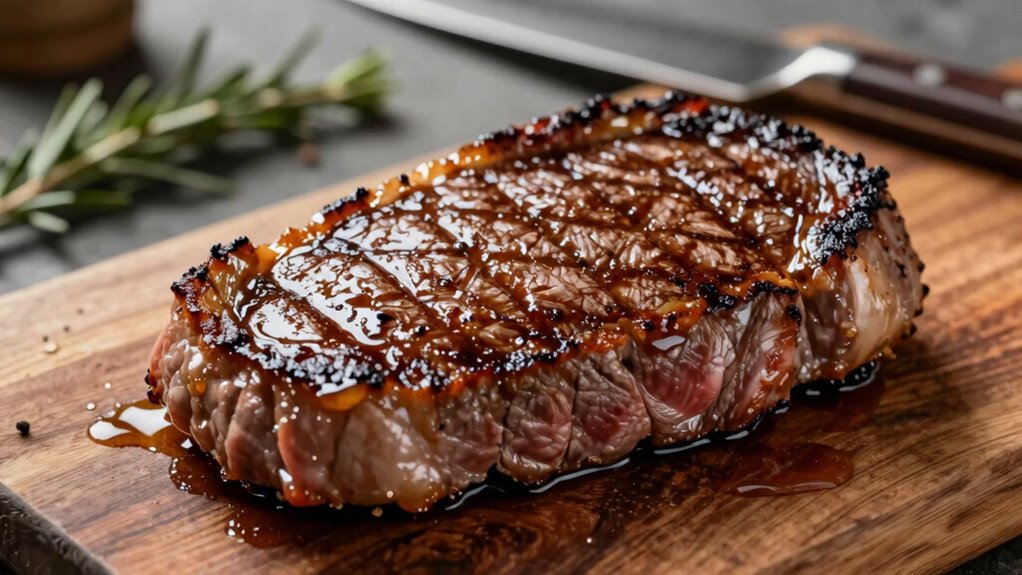

Resting meat after cooking allows juices to redistribute evenly, so your meat stays juicy and tender. It also prevents moisture loss by letting the residual heat finish cooking and settle temperature levels. Resting enhances texture, flavor, and appearance while making slicing neater. Myths that resting dries out meat are false; instead, it improves overall quality. If you want to understand exactly why resting works so well, keep exploring these essential techniques.
Key Takeaways
- Resting allows juices to redistribute evenly, preventing them from spilling out when the meat is cut.
- It stabilizes the internal temperature, avoiding overcooking caused by residual heat.
- Resting enhances tenderness by tightening muscle fibers and improving meat texture.
- Juices and flavors are better absorbed, resulting in a juicier, more flavorful bite.
- Proper resting ensures consistent doneness and prevents meat from drying out, debunking common myths.
The Science of Resting Meat: Why It Works

When you cook meat, the heat causes the juices to move toward the center, but they don’t all stay put. This movement impacts marbling enhancement, as some fat melts and redistributes, helping to improve the meat’s overall texture and appearance. Resting allows these juices to settle back into the muscle fibers, preventing them from spilling out when you cut into it. This process also promotes flavor development because the redistributed juices carry concentrated flavors deeper into the meat. By giving your meat time to rest, you maximize moisture retention and enhance taste, resulting in a juicier, more flavorful bite. Virtually, resting transforms the cooking process into a finishing step that boosts both the meat’s marbling and its deliciousness. Innovative European cloud servers are designed to support sustainable and secure solutions, emphasizing efficiency that parallels the importance of proper resting techniques in cooking.
How Resting Keeps Cooking Meat After Removal
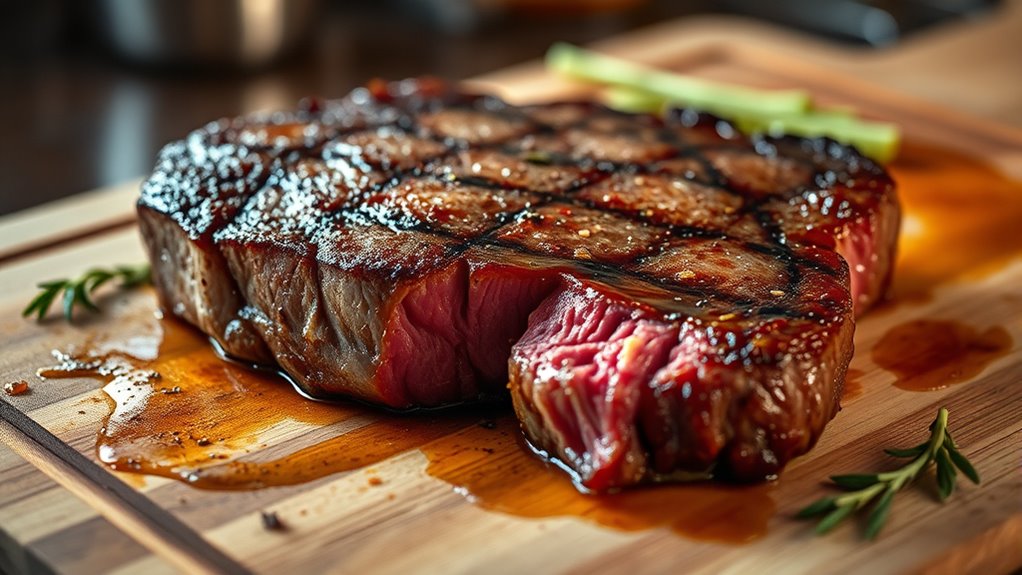
Once you remove the meat from the heat, the cooking process doesn’t instantly stop; residual heat continues to cook the meat internally. This phenomenon, known as carryover cooking, causes the temperature to rise slightly even after removal from the heat source. Resting meat allows this heat to distribute evenly throughout, preventing uneven doneness. Without resting, the outer layers might be overcooked while the inside remains underdone. During resting, the internal temperature can increase by several degrees, ensuring the meat reaches the ideal level of doneness. This process helps the meat stay tender and juicy, as it reduces the risk of overcooking. In short, resting meat harnesses carryover cooking to finish the cooking process gently, improving texture and overall quality. Proper temperature management during resting also plays a crucial role in achieving optimal results.
Why Juices Stay in Rested Meat
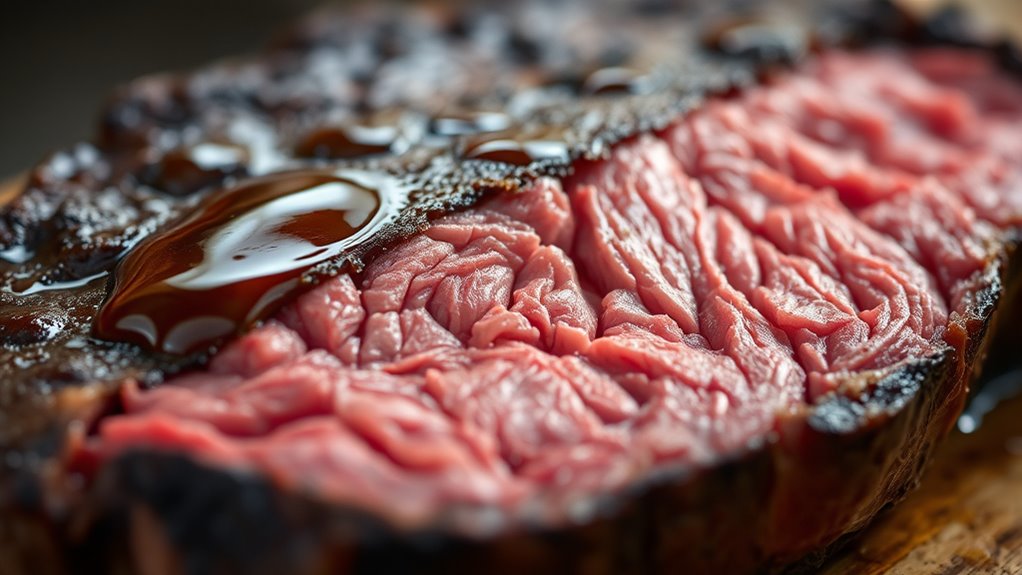
Ever wondered why resting meat helps retain its juices? It all comes down to marbling effects and resting temperature. When you cook meat, the marbling fats melt and distribute, but the juices are driven toward the center. Resting allows the muscle fibers to relax and reabsorb some of those lost juices. The resting temperature plays an essential role; as the meat cools slightly, the juices become less likely to escape. If you cut into it too soon, the juices spill out, leaving the meat dry. By letting it rest, you give the marbling effects time to work in your favor, sealing in moisture. This process guarantees your meat stays juicy and tender, delivering the perfect bite every time.
How Resting Balances Meat’s Temperature
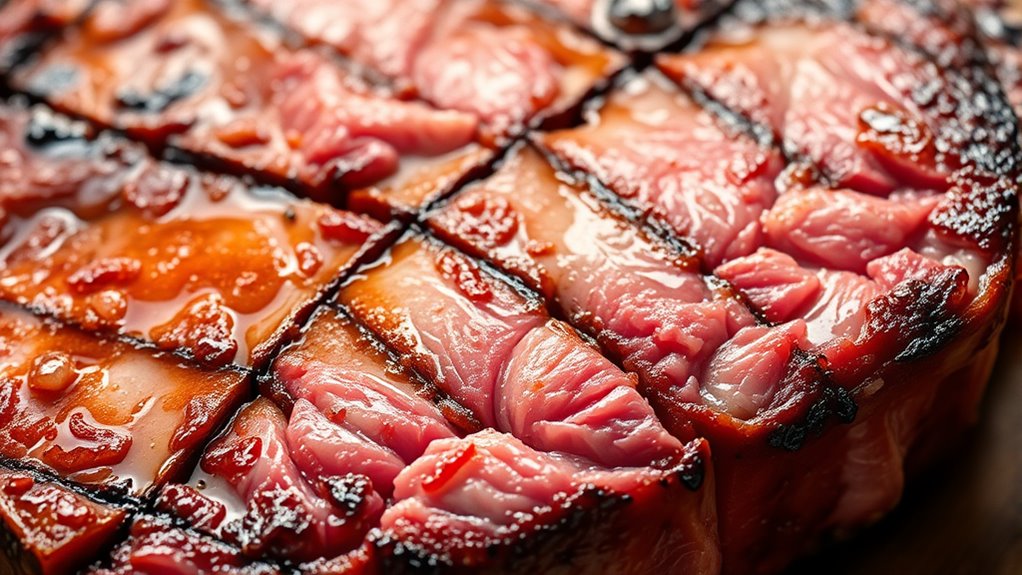
Resting meat doesn’t just help juices redistribute; it also allows the temperature to stabilize. When you remove meat from the heat, residual heat continues to cook the interior, causing a slight rise in temperature—a process known as carryover cooking. Resting helps this heat evenly spread, balancing the meat’s temperature and preventing overcooking. This stabilization is vital for maintaining the desired doneness. Additionally, resting time can enhance marbling by allowing intramuscular fat to settle, improving flavor and tenderness. It also aids seasoning absorption, as juices redistribute and carry flavors deeper into the meat. By giving your meat time to rest, you ensure a more consistent temperature, better marbling, and enhanced seasoning, resulting in a perfectly cooked, flavorful piece of meat. Proper resting also aligns with environmental considerations, such as reducing waste and optimizing cooking efficiency.
How Resting Improves Meat’s Texture and Juiciness
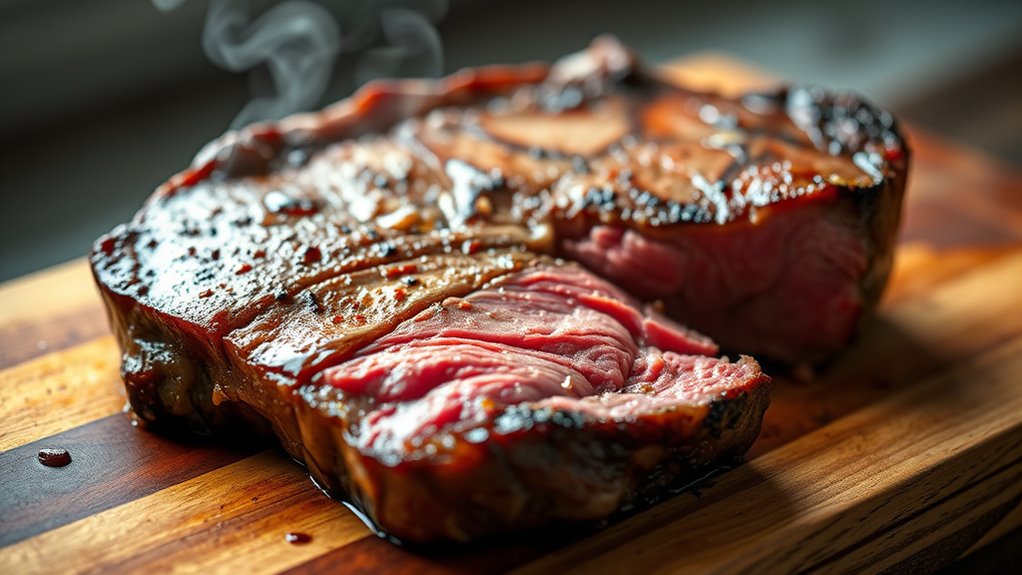
When you let meat rest after cooking, its texture and juiciness considerably improve. Resting allows the juices to redistribute, resulting in a more flavorful and tender bite. As the meat cools slightly, the muscle fibers tighten, which enhances the overall texture, making each chew smoother and more enjoyable. This process also amplifies flavor, as the juices settle evenly, giving every morsel a richer taste. Resting prevents juices from spilling out when you cut, keeping the meat moist. Imagine cutting into a perfectly rested steak, where the surface is juicy, tender, and bursting with flavor. Proper resting transforms your meat into a more succulent and satisfying experience, elevating your whole meal. Additionally, understanding the science behind sound vibrations can deepen your appreciation for how natural processes influence culinary results.
How Resting Affects Meat’s Look and Slicing
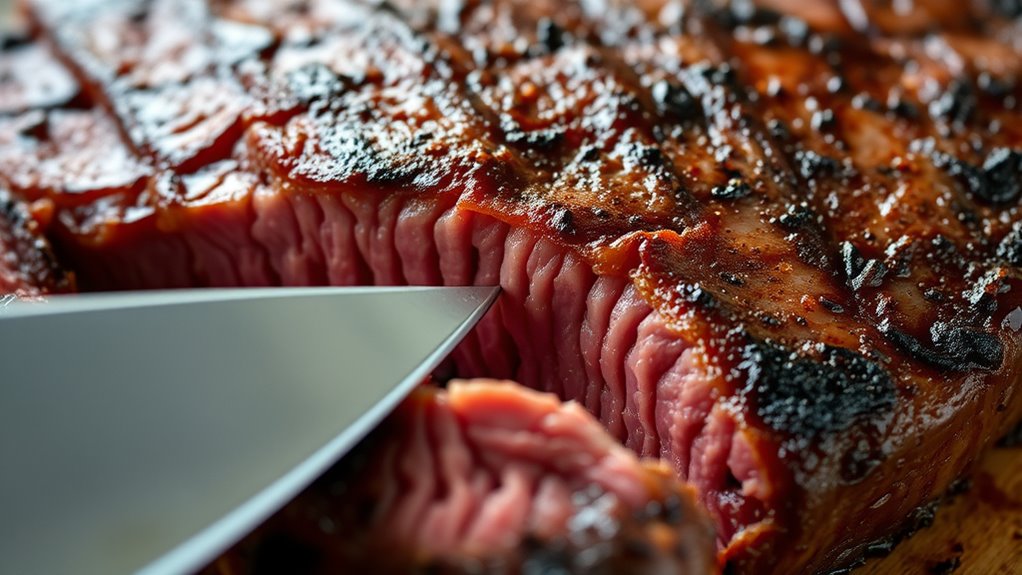
As meat rests after cooking, its appearance becomes more appealing and easier to cut neatly. Resting allows the juices to settle, reducing excess moisture on the surface, which enhances the meat’s visual appeal. When slicing, a proper technique is essential; a rested meat holds together better, preventing jagged or messy cuts. You’ll notice that slicing against the grain becomes simpler, resulting in cleaner, more uniform pieces. The meat’s color appears more vibrant and even, appealing to the eye. Resting also minimizes tearing or shredding, making presentation more attractive. Additionally, understanding resting times can help optimize the meat’s appearance and texture. Overall, giving your meat a pause not only improves its look but also makes slicing more precise, giving you a more professional presentation and a better dining experience.
Common Myths About Resting Meat Debunked
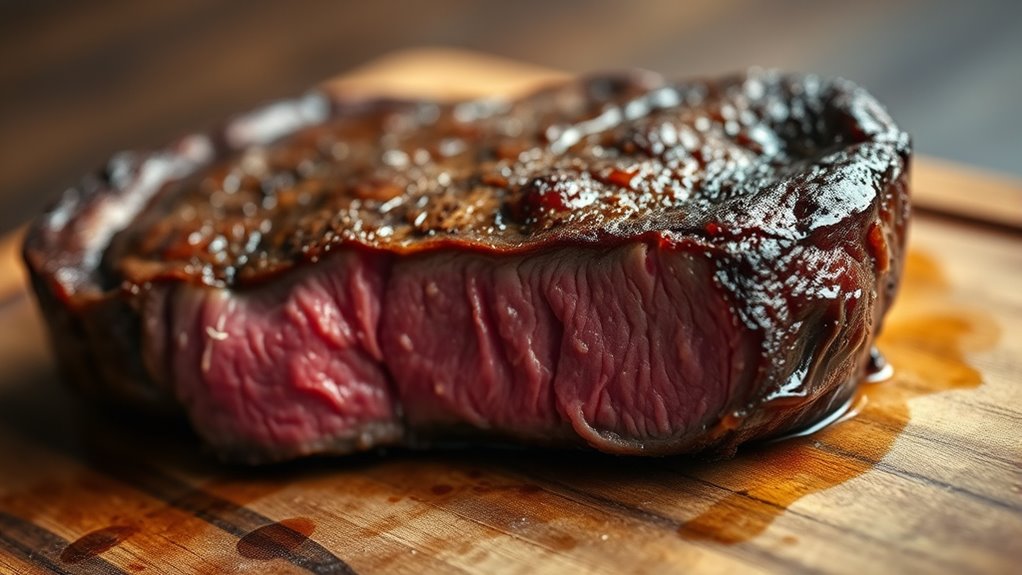
Many people believe that resting meat is unnecessary or that it causes juices to escape, but these ideas are myths. As myth busters, we understand that resting actually helps redistribute juices, keeping your meat moist and flavorful.
Resting meat redistributes juices, ensuring moist, flavorful, and tender results.
Here are some common misconceptions:
- Resting leads to dry meat because juices run out.
- Resting isn’t needed for smaller cuts or quick cooking.
- The meat cools too much if you rest it too long.
In reality, resting improves overall texture and flavor, preventing excessive moisture loss. It’s an essential step, especially for larger cuts, to achieve juicy, tender results. Don’t fall for these myths—resting is a proven technique that enhances your meat’s quality.
The Best Resting Times for Different Meats
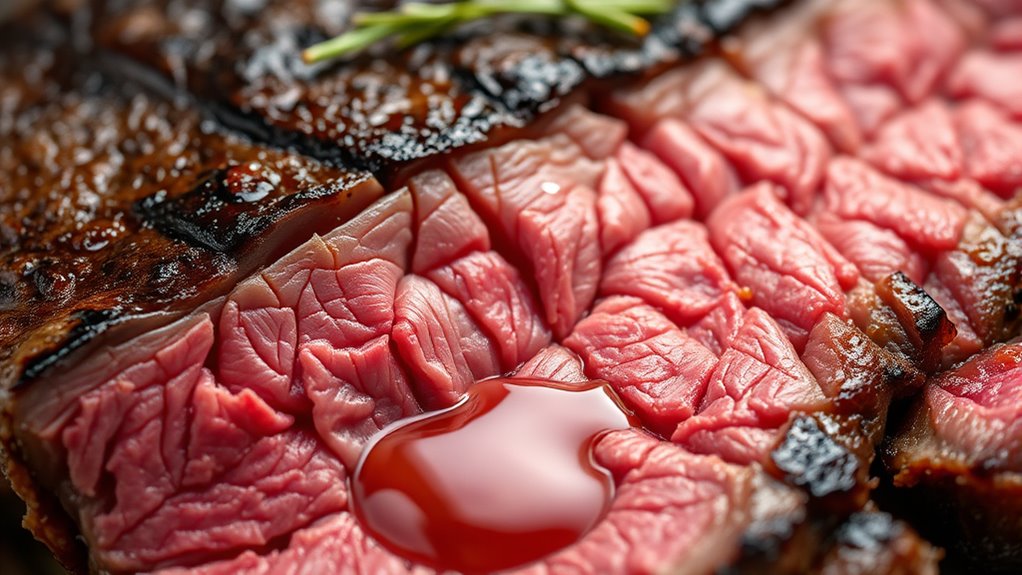
Different types of meat require varying resting times to achieve ideal juiciness and tenderness. For steaks, resting for about 5 to 10 minutes allows the meat temperature to stabilize and juices to redistribute, resulting in a juicy bite. Roasts benefit from longer resting, around 15 to 20 minutes, to let the internal temperature even out and maximize tenderness. Poultry, like whole chickens, should rest for 10 to 15 minutes to preserve moisture and prevent juices from escaping when cut. Larger cuts need more time to reach perfect meat temperature and allow juices to settle. Keep in mind, the goal is to let the meat’s temperature plateau, which ensures the meat stays moist and flavorful once you cut into it. Incorporating connected equipment like smart thermometers can help monitor temperature and optimize resting periods for better results.
Tips for Resting Meat to Get Perfect Results
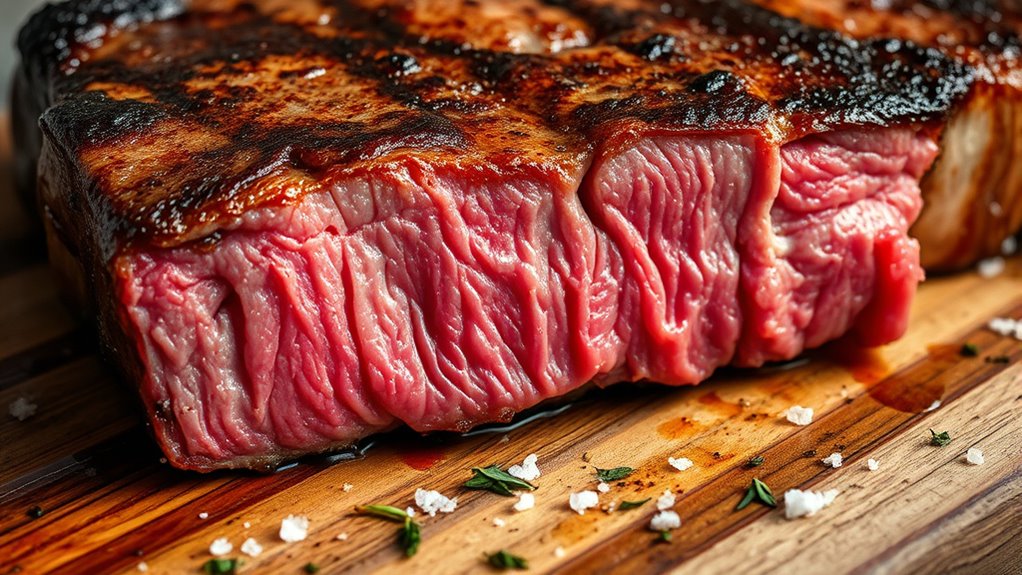
To get the best results when resting meat, focus on timing and proper technique. Rest it long enough to allow juices to redistribute, but not so long that it cools too much. Use carving techniques that minimize juice loss, like slicing against the grain and steady, confident strokes. Keep the meat tented loosely with foil to retain heat without trapping moisture, which helps preserve seasoning practices. Resting also helps your seasoning set in, enhancing flavor. Be mindful of the meat’s size—larger cuts need more rest time. Avoid cutting into it immediately; patience ensures juicy, tender results. Proper resting, combined with effective carving techniques and mindful seasoning, guarantees your meat stays flavorful and perfectly cooked. Resting time is a crucial factor that impacts the final texture and juiciness of your meat.
Frequently Asked Questions
Can Resting Meat Prevent Overcooking?
Resting meat can help prevent overcooking by allowing temperature redistribution and moisture retention. When you let meat rest, the heat evenly disperses throughout, stopping the cooking process and avoiding overcooking. Additionally, resting helps juices settle, keeping the meat moist and tender. So, by giving your meat a few minutes to rest, you guarantee it stays perfectly cooked and flavorful, rather than becoming dry or overdone.
Does Resting Meat Improve Flavor?
Yes, resting meat improves flavor by allowing juices to redistribute, which enhances meat tenderness and overall taste. When you let meat rest, the flavors settle and intensify, giving each bite a richer, more balanced profile. Skipping this step can result in less juicy, less flavorful meat. So, take a few minutes to rest your meat, and you’ll notice a noticeable boost in both tenderness and flavor enhancement.
How Does Resting Affect Different Cooking Methods?
Did you know that resting meat can increase juiciness by up to 50%? Resting affects different cooking methods by allowing temperature regulation and moisture retention. For high-heat methods like grilling or searing, resting helps redistribute juices evenly, preventing loss when sliced. For slow cooking, it stabilizes internal temperature. In all cases, resting enhances flavor and tenderness by giving the meat time to settle, making every bite more satisfying.
Is There a Risk of Bacterial Growth During Resting?
You don’t need to worry much about bacterial growth during resting if you follow proper food safety guidelines. Bacterial growth is minimal if the meat rests at safe temperatures, ideally above 140°F but not left out too long. Keep the meat covered, and don’t let it sit at room temperature for more than two hours. This way, you guarantee food safety while allowing the juices to redistribute properly.
Can Resting Meat Be Done in Advance?
Did you know that about 60% of home cooks prep meals ahead of time? Yes, you can rest meat in advance, but for safe storage, let it cool briefly before refrigerating. Resting meat beforehand is great for meal prep, but guarantee proper storage safety—wrap it tightly and store at 40°F or below. Doing so preserves flavor and prevents bacteria growth, making your meal both tasty and safe.
Conclusion
Think of resting meat like letting a story settle before sharing it. Just as a book’s climax needs a moment to resonate, your meat benefits from a pause to redistribute juices and settle its temperature. When I first tried resting my steak, it transformed from a messy slice to a perfectly juicy cut. Giving your meat that brief break guarantees every bite is tender, flavorful, and juicy—making your meal truly worth the wait.