
Oil smoke points tell you the temperature where oil begins to produce visible smoke, signaling breakdown or potential release of harmful compounds. But they don’t reveal everything about oil stability, flavor, or health benefits. Higher smoke points don’t automatically mean safer or better; many factors influence cooking results. To cook confidently and safely, it’s helpful to understand what smoke points really mean and how to choose the right oil. Discover more tips below.
Key Takeaways
- Smoke points indicate the temperature where oil begins to produce visible smoke, signaling breakdown but not necessarily toxicity.
- They help determine suitable oils for high-heat cooking methods like frying and sautéing.
- A higher smoke point doesn’t guarantee oil stability or health benefits; other factors like processing and composition matter.
- Overheating beyond the smoke point can degrade flavor, nutrients, and produce harmful compounds.
- Proper understanding of smoke points guides safe, effective, and flavor-conscious oil selection during cooking.

LEVOIT Air Purifier for Home Large Room Up to 1073Ft² with Air Quality Monitor, AHAM VERIFIDE, Smart WiFi, Washable Pre-Filter, HEPA Sleep Mode for Pets, Allergies, Dust, Pollen, Vital 100S-P, White
𝐖𝐇𝐘 𝐂𝐇𝐎𝐎𝐒𝐄 𝐀𝐇𝐀𝐌 𝐕𝐄𝐑𝐈𝐅𝐈𝐃𝐄 𝐀𝐈𝐑 𝐏𝐔𝐑𝐈𝐅𝐈𝐄𝐑𝐒: AHAM (Association of Home Appliance Manufacturers) is an ANSI-accredited organization that sets...
As an affiliate, we earn on qualifying purchases.
What Smoke Points Really Mean
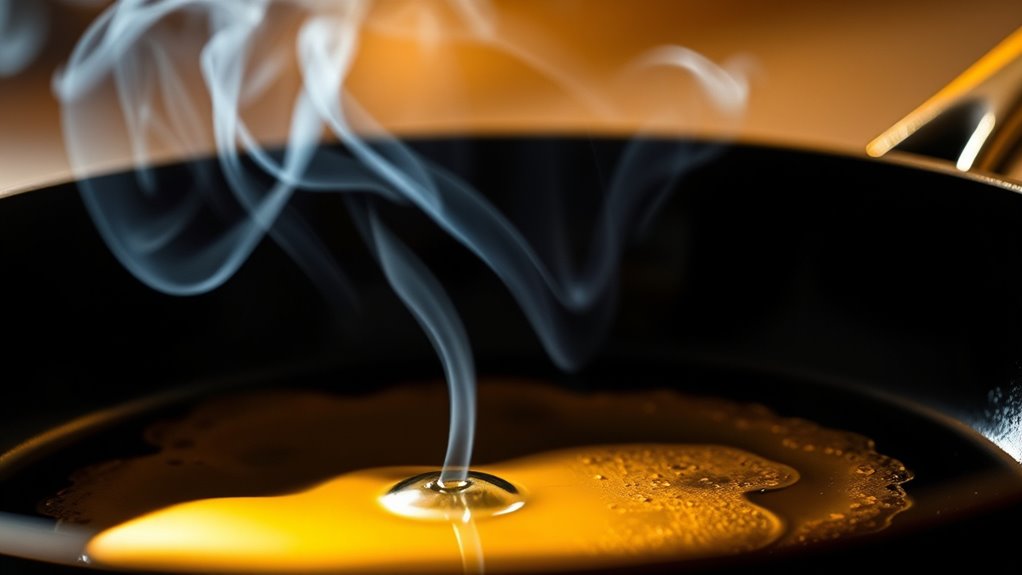
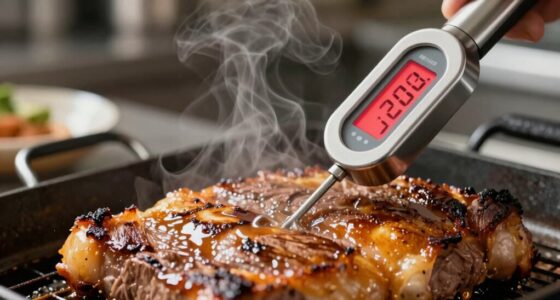
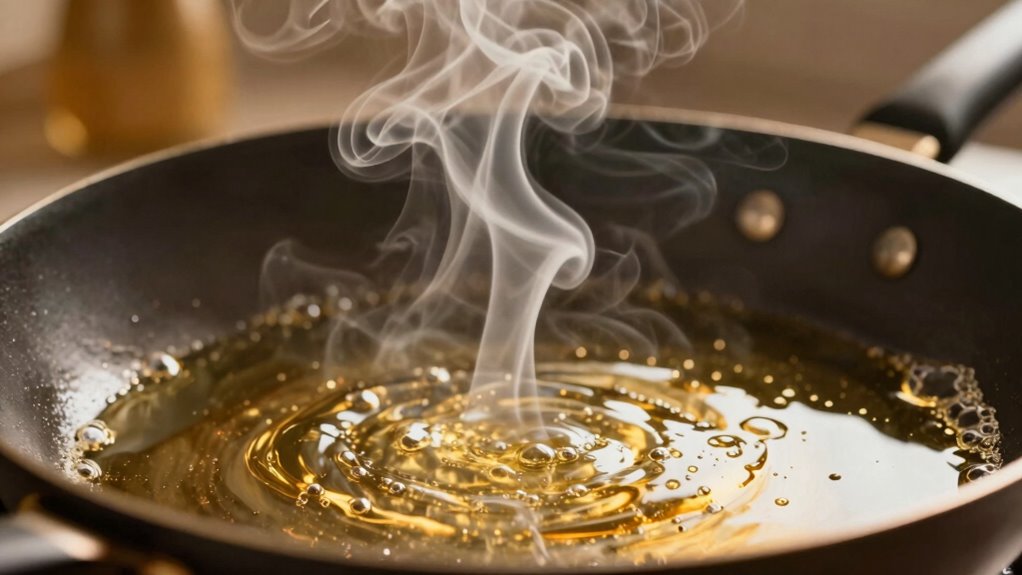
Understanding what smoke points really mean is essential when choosing the right oil for cooking. The smoke point indicates the temperature at which an oil begins to produce visible smoke, signaling that it’s breaking down. This breakdown can impact flavor profiles, making your dishes taste burnt or bitter if you heat beyond this point. It also affects health benefits, as overheating can release harmful compounds and diminish beneficial nutrients. Knowing an oil’s smoke point helps you select the best option for your cooking method, whether frying, sautéing, or baking. For instance, high smoke point oils like avocado or refined oils are better for high-temperature cooking, while lower smoke point oils retain their flavor profiles at moderate temperatures. Additionally, understanding the breakdown process of oils can help prevent the formation of potentially harmful compounds during cooking. Making informed choices guarantees better flavor and healthier results.

LEVOIT Air Purifiers for Home Large Room Up to 1875 Ft² with Washable Pre-Filter, AHAM VERIFIDE, Air Quality Monitor, HEPA Sleep Mode for Allergies, Pet Hair in Bedroom, Vital 200S-P, White
𝐖𝐇𝐘 𝐂𝐇𝐎𝐎𝐒𝐄 𝐀𝐇𝐀𝐌 𝐕𝐄𝐑𝐈𝐅𝐈𝐃𝐄 𝐏𝐑𝐎𝐃𝐔𝐂𝐓𝐒: AHAM (Association of Home Appliance Manufacturers) is an ANSI-accredited organization that sets strict...
As an affiliate, we earn on qualifying purchases.
Common Myths About Smoke Points

Many people believe smoke points tell you everything about oil safety, but that’s not true. There are common myths about cooking temperatures and how stable oils really are when heated. Understanding these misconceptions helps you make smarter choices in your kitchen. For example, high heat tolerance varies among oils and doesn’t solely determine safety or best usage.
Smoke Point Misconceptions
There are several common myths about smoke points that can lead to confusion when choosing cooking oils. One misconception is that oils with higher smoke points are always healthier or better for every type of cooking. In reality, factors like oil extraction methods influence flavor retention and nutritional value, which matter just as much. Some believe that once an oil reaches its smoke point, it instantly becomes toxic or unusable; but, in truth, the smoke point is more about the onset of visible smoke, not safety. Additionally, people often assume all refined oils have higher smoke points than unrefined ones, ignoring how processing impacts flavor and quality. Understanding these misconceptions helps you select oils based on their actual properties rather than myths, leading to better cooking outcomes.
Cooking Temperature Myths
A common myth about smoke points is that cooking at temperatures just below an oil’s smoke point is always safe and ideal. Many believe that as long as you stay under the smoke point, you’re avoiding harmful compounds. However, this isn’t always true. For example, olive oil has a lower smoke point than some believe, so cooking at high heat can cause it to break down faster, reducing its health benefits. Similarly, while avocado benefits include its high monounsaturated fat content, overheating avocado oil can diminish these benefits and produce unwanted compounds. Instead of focusing solely on the smoke point, pay attention to proper cooking temperatures. This way, you preserve nutritional quality and avoid producing harmful substances, regardless of the oil used. Additionally, understanding cooking temperature guidelines can help you choose the right heat level for different oils and dishes.
Oil Stability Confusions
Despite common beliefs, smoke points don’t tell the whole story about an oil’s stability during cooking. Many assume that once an oil reaches its smoke point, it’s unsafe or unstable, but this isn’t always true. Oil stability depends on more than just smoke points; factors like oil extraction methods and refining processes play a vital role. For example, oils that undergo extensive refining often have higher smoke points but can still degrade quickly if exposed to prolonged heat. Conversely, minimally processed oils may have lower smoke points but remain stable longer during cooking. Relying solely on smoke points can mislead you about an oil’s true resilience. Additionally, oxidation resistance varies among oils based on their chemical composition and processing methods. To cook safely and efficiently, consider how your oil is produced and its overall chemical composition, not just its smoke point.

KNKA Air Purifier for Home Bedroom Large Room Up to 1,695 Ft² in 1 Hr, HEPA Air Cleaner with Washable Pre-Filter, AQI Display, ECO Mode, Sleep Mode, Pet Mode for Pets, Dust, Pollen, APH4000
𝐇𝐢𝐠𝐡 𝐂𝐀𝐃𝐑 𝐕𝐚𝐥𝐮𝐞: This air purifier provides reliable performance with a Smoke/Dust/PM2.5 CADR of 226 CFM (384 m³/h)...
As an affiliate, we earn on qualifying purchases.
Why Smoke Points Don’t Tell the Whole Story
Smoke points are useful, but they don’t tell the whole story of how an oil performs in cooking. Factors like flavor, stability, and how the oil reacts over time matter just as much. Understanding these limitations helps you choose the best oil for your specific dishes. Additionally, considering energy-efficient cloud servers can inspire innovative approaches to food technology and sustainable cooking methods.
Smoke Point Limitations
While smoke points are often used to determine the safe heating limits for oils, they don’t tell the whole story. Relying solely on smoke points can lead you to overlook important factors like flavor retention and health implications. An oil might have a high smoke point but still degrade quickly, affecting taste and releasing harmful compounds. Conversely, oils with lower smoke points might maintain their flavor and nutritional quality better if used at appropriate temperatures. Additionally, smoke point doesn’t account for how different oils react during cooking, which impacts overall health. Recognizing the limitations of smoke points can help you make better choices for healthier and more flavorful cooking. You should consider these limitations when choosing an oil, understanding that smoke points are just one piece of the puzzle. This helps ensure your cooking is both delicious and health-conscious.
Alternative Cooking Indicators
Have you ever relied solely on smoke points to choose the right oil for your cooking? While smoke points offer some guidance, they don’t tell the whole story. Pay attention to flavor profiles, as certain oils bring unique tastes to your dishes—extra virgin olive oil adds fruitiness, while sesame oil offers nuttiness. Consider health benefits too; some oils contain antioxidants or healthy fats that support your well-being. Looking at the oil’s processing method, such as cold-pressed or refined, can also indicate how well it suits different cooking styles. By combining these indicators, you make more informed choices that enhance your meals and promote better health, rather than just avoiding smoke or burnt flavors. Additionally, understanding the processing method can reveal the oil’s nutrient retention and suitability for various culinary uses.

Medify MA-40 Air Purifier with True HEPA H13 Filter | 1,793 ft² Coverage in 1hr for Smoke, Wildfires, Odors, Pollen, Pets | Quiet 99.9% Removal to 0.1 Microns | White, 1-Pack
MAXIMUM COVERAGE: Cleans large spaces up to 1,793 sq ft in one hour, 896 sq ft in 30...
As an affiliate, we earn on qualifying purchases.
How to Pick the Right Oil for Your Cooking

Choosing the right oil for your cooking depends largely on understanding its smoke point, which is the temperature at which it starts to break down and produce smoke. To pick the best oil, consider these factors:
Selecting the right cooking oil depends on knowing its smoke point and your flavor, cooking method, and health priorities.
- Flavor profiles – Do you want a neutral taste or a distinctive flavor that enhances your dish?
- Cooking method – High smoke point oils are perfect for frying, while lower ones suit dressings or sautéing.
- Health benefits – Some oils, like extra virgin olive oil, offer antioxidants and anti-inflammatory properties, while others might be more refined but have fewer nutrients.
Tips for Using Oils Safely and Effectively
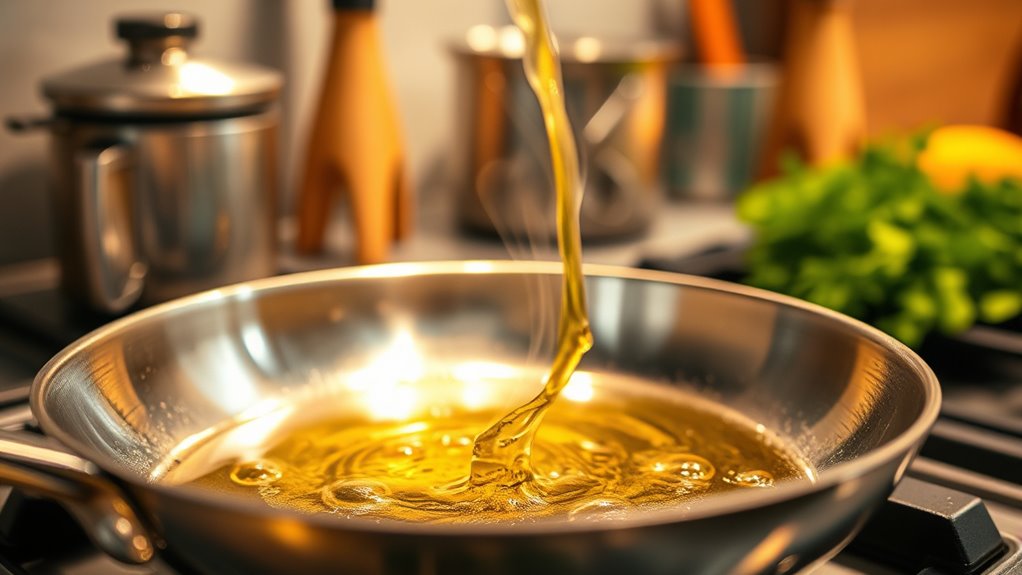
Using oils safely and effectively guarantees your cooking remains healthy and flavorful. To prevent unwanted smoke and preserve oil quality, always heat oils gradually, paying attention to their smoke points. Keep oil flavor in mind; for delicate dishes, choose oils with a mild taste, while stronger-flavored oils suit robust recipes. Proper storage tips are essential—store oils in a cool, dark place away from heat and light to prevent rancidity. Use clean utensils to avoid introducing moisture or contaminants that can spoil the oil. Also, don’t reuse oil excessively, as repeated heating can break down its quality. Being aware of Free Floating can help you better understand how oils behave in different environments and conditions. By following these tips, you ensure your oils enhance your dishes without compromising health or flavor, making every meal safer and more enjoyable.
How to Choose the Best Cooking Oils
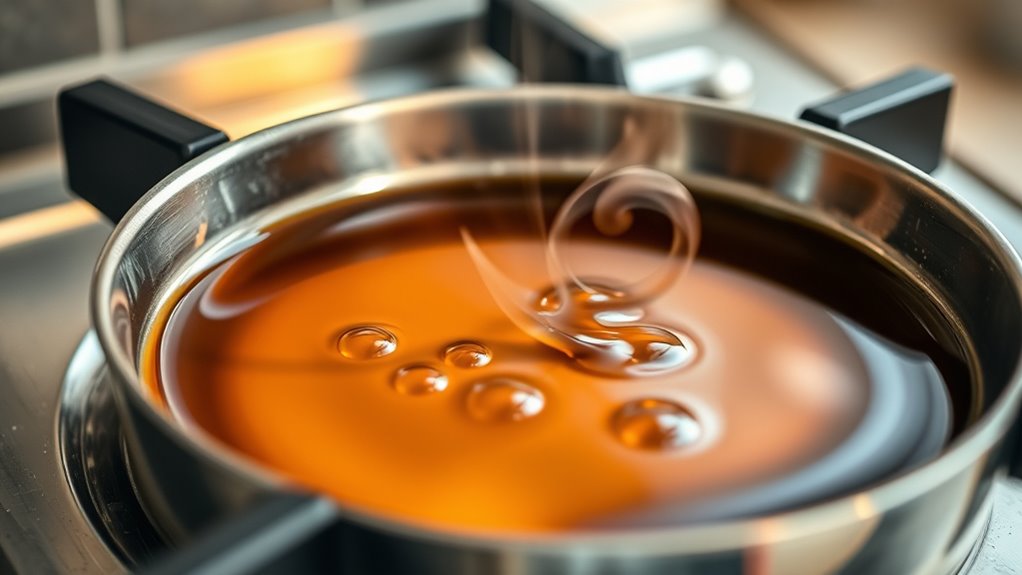
Selecting the right cooking oil depends on understanding your specific needs and the qualities of each type. Consider these factors to make an informed choice:
- Flavor profiles: Whether you prefer a mild, neutral taste for baking or a distinctive flavor for salads, different oils add unique notes to your dishes.
- Health benefits: Some oils, like extra virgin olive oil, provide heart-healthy fats, while others, such as coconut oil, offer medium-chain triglycerides.
- Cooking methods: High smoke point oils like avocado or refined oils are perfect for frying, whereas extra virgin varieties suit low-heat or raw applications.
- Knowing the smoke points of various oils can help you select the most appropriate one for your cooking technique.
Frequently Asked Questions
How Do Impurities Affect an Oil’s Smoke Point?
Impurity effects lower an oil’s smoke point because impurities, like food particles or moisture, cause the oil to break down sooner. When impurities are present, they create hotspots that accelerate smoking and burning. To maintain a high smoke point, you should always filter and store your oil properly. Clean oils with fewer impurities last longer at higher temperatures, making your cooking safer and more effective.
Can Adding Ingredients Change an Oil’s Smoke Point?
Adding ingredients can change an oil’s smoke point, affecting your cooking temperature and flavor. For example, adding spices or herbs might lower the smoke point, making the oil smoke sooner, while fats like butter can alter both the smoke point and flavor. You should pay attention because these changes influence how hot you can cook without burning the oil or compromising taste. Always adjust your heat accordingly to guarantee ideal results.
Does Oil Refinement Impact Smoke Point Accuracy?
Refinement can impact the accuracy of an oil’s smoke point, but it mainly affects oil flavor and clarity. The smoke point may shift slightly after refining, making it a bit less precise for cooking temperature guidelines. When choosing oils, consider both smoke point and flavor, especially if you’re cooking at high temperatures. Always test your oil before high-heat cooking to make sure it won’t smoke prematurely.
Are There Health Risks Associated With Overheating Oils?
Overheating oils is like pushing a balloon too far—risking the burst of health issues. When you heat oils past their smoke point, you lose antioxidants benefits and create harmful compounds. This can reduce flavor enhancement and introduce free radicals into your meal. To keep your cooking safe and tasty, stick to proper temperatures, and enjoy the full benefits of healthier, antioxidant-rich oils without risking your well-being.
How Does Cooking Duration Influence Oil Stability?
Cooking duration directly impacts oil stability because the longer you heat it, the more the oil degrades. Extended cooking causes the oil to break down faster, leading to increased smoke, off-flavors, and harmful compounds. To maintain oil stability, avoid prolonged heating and reuse, especially at high temperatures. Keep an eye on cooking time, and you’ll preserve oil quality and ensure healthier, tastier dishes.
Conclusion
Remember, ignoring smoke points is like playing with fire in a fireworks factory. If you don’t understand what they truly mean, you risk turning your kitchen into a disaster zone. Choosing the wrong oil can ruin your meal—or worse, your stove! So, don’t just guess; be informed. Mastering oil selection isn’t just a tip—it’s your secret weapon for safe, delicious cooking. Trust me, your taste buds—and your home—will thank you forever.