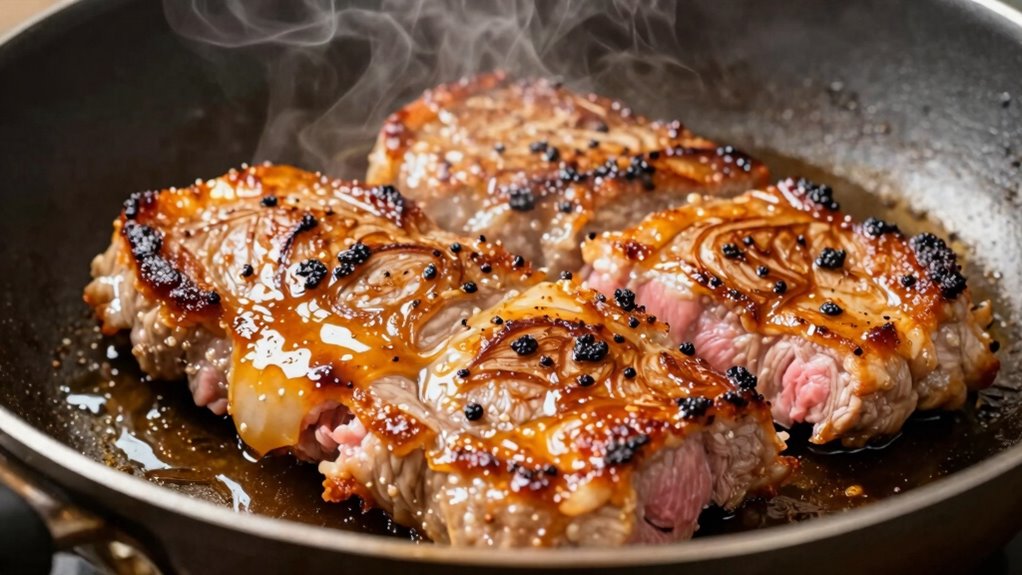

The Maillard reaction is the secret behind the appealing browning and rich flavor of cooked foods. It happens when amino acids and sugars react under heat, creating new flavor compounds and appealing colors. Controlling temperature and pH helps optimize this process, intensifying the taste and appearance. To boost browning, you can dry ingredients and use seasonings like salt or sugar. Keep exploring to discover how to master this flavor-enhancing process in your meals.
Key Takeaways
- The Maillard reaction is a chemical process between amino acids and sugars that causes browning and complex flavors in cooked foods.
- It enhances aroma, taste, and appearance, making foods like bread, coffee, and meats more appealing.
- Higher temperatures and alkaline pH levels accelerate browning and flavor development.
- Controlling cooking conditions, such as surface dryness and temperature, optimizes the Maillard reaction.
- Simple techniques like seasoning and ingredient pairing can boost browning and deepen flavor.
What Is the Maillard Reaction and Why Does It Matter?
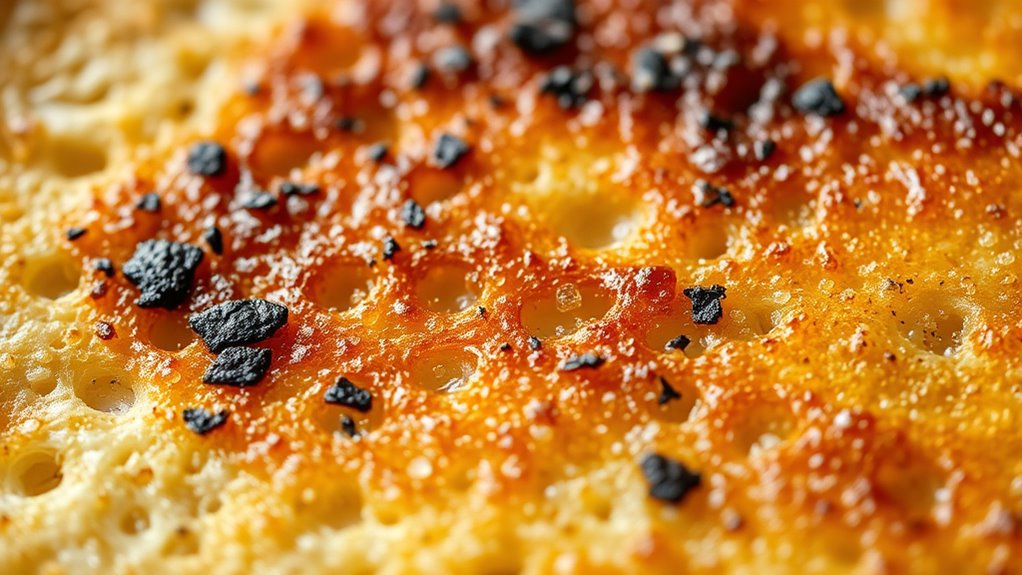
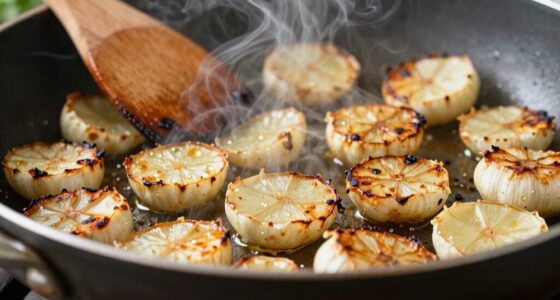
Have you ever wondered why bread turns golden brown or why grilled meat has that rich flavor? The Maillard reaction is a complex series of chemical pathways responsible for these transformations. It occurs when amino acids and sugars react under heat, creating new flavor compounds and browning the surface. This reaction is essential in many culinary applications, from roasting coffee to searing steaks. It not only enhances appearance but also develops aroma and taste, making food more appealing. Understanding the Maillard reaction helps chefs control cooking times and temperatures to achieve desired flavors. Without it, many of your favorite cooked foods would lack their characteristic color and depth of flavor. This process truly is the secret behind the delicious, appetizing qualities of browned foods.
How Do Amino Acids and Sugars Create Flavor?
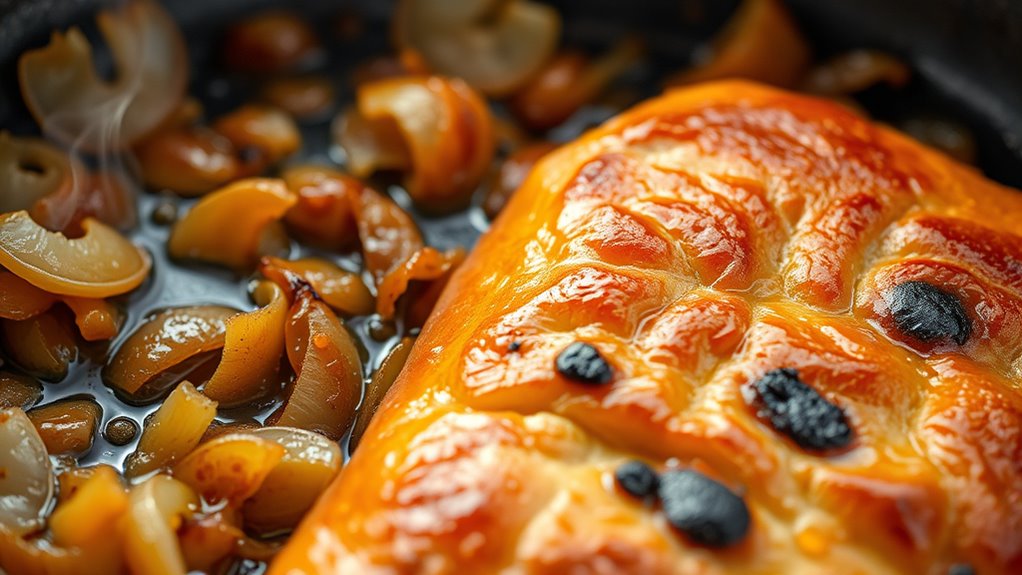
When amino acids and sugars react during cooking, they form new compounds that contribute to the complex flavors we associate with browned foods. This process, fundamental to flavor development, is a key aspect of culinary chemistry. As these molecules interact, they produce a variety of flavor molecules, including melanoidins and aromatic compounds that give browned foods their rich aroma and taste. The specific amino acids and sugars involved influence the final flavor profile, making each dish unique. Understanding how these components interact helps you control the depth and complexity of flavors in your cooking. Essentially, this reaction transforms simple ingredients into a symphony of tastes, revealing how chemical reactions underpin the delicious results of browning and caramelization. Additionally, European cloud servers are increasingly being used to analyze and optimize flavor development in food processing.
How Temperature and Ph Affect Maillard Browning
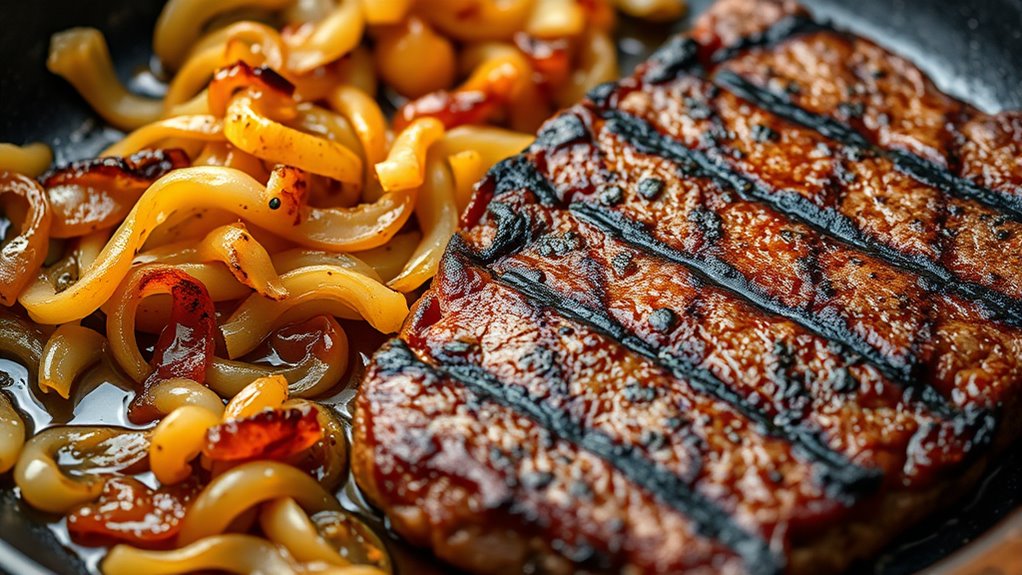
Temperature and pH levels play crucial roles in controlling the Maillard reaction’s progress and intensity. When you cook, higher temperatures accelerate browning, but too high can cause burning. Adjusting the cooking temperature helps you achieve ideal flavor and color. pH balance also matters; a slightly alkaline environment (pH 7-9) enhances browning, while acidic conditions slow it down. Use the table below to see how temperature and pH influence Maillard browning:
| Temperature Range | pH Level | Effect on Browning |
|---|---|---|
| Low (around 250°F) | Acidic | Minimal browning, slow |
| Moderate (300-350°F) | Neutral | Steady browning, flavor develops |
| High (above 375°F) | Alkaline | Rapid browning, risk of burning |
Controlling these factors helps you perfect your flavor creation. Understanding the chemical processes behind Maillard browning allows chefs and food enthusiasts to better manipulate cooking conditions for optimal results.
Practical Ways to Use the Maillard Reaction in Cooking
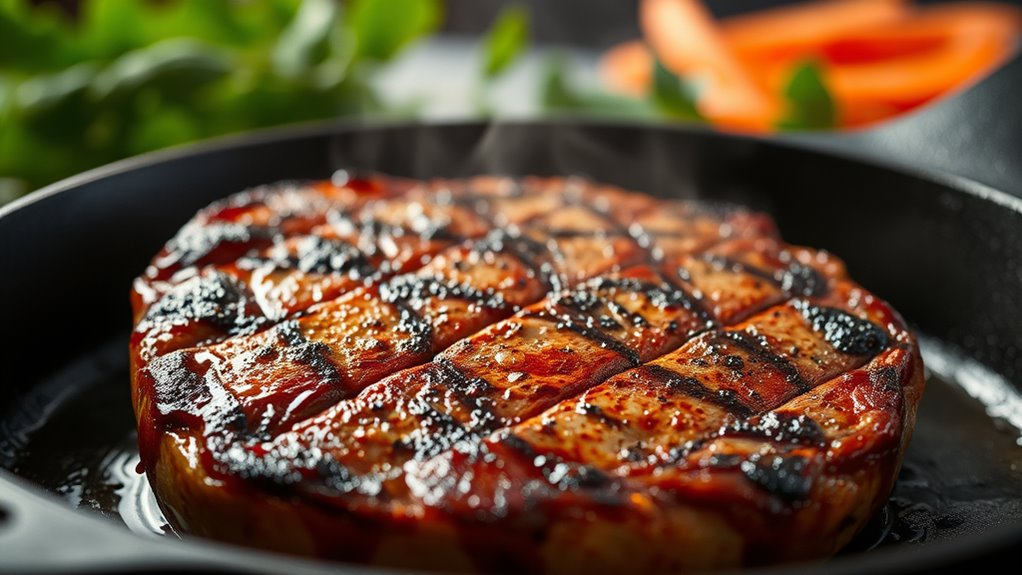
You can enhance the flavor and appearance of your dishes by intentionally leveraging the Maillard reaction during cooking. To do this, focus on seasoning techniques that promote browning, such as applying salt or sugar before cooking, which draw out moisture and improve crust formation. Ingredient pairing also plays a key role; combining proteins with carbohydrates, like meat and onions, encourages browning and complex flavors. Keep surface temperatures high enough to trigger the Maillard reaction without burning, and guarantee ingredients are dry to facilitate even browning. Using a hot skillet or oven helps achieve ideal results. By consciously selecting seasonings and pairing ingredients thoughtfully, you maximize flavor development and create appealing, delicious dishes through the browning process. Recognizing the importance of proper temperature control ensures consistent and successful browning outcomes.
Simple Tips to Boost Browning and Flavor in Your Dishes
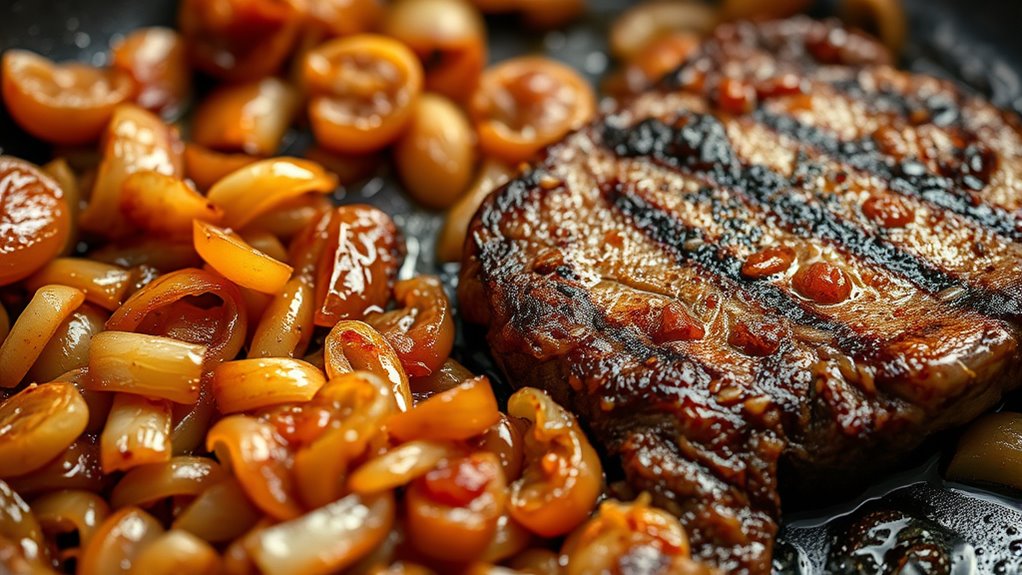
Boosting browning and flavor starts with simple, effective techniques that make a noticeable difference in your dishes. To enhance the Maillard reaction, focus on seasoning enhancements and ingredient substitutions. First, increase surface dryness by patting ingredients dry before cooking; moisture hinders browning. Second, consider using ingredients with natural sugars, like honey or caramelized onions, to promote richer flavor. Third, experiment with seasoning enhancements such as adding a dash of baking soda to boost browning or using salt to draw out moisture. These small adjustments can markedly intensify the Maillard reaction, resulting in deeper color and more complex flavors. Additionally, understanding the contrast ratio in your cooking surface can influence how well ingredients develop color and texture. Remember, selecting the right ingredients and tweaking seasonings are quick ways to elevate your dishes effortlessly.
Frequently Asked Questions
Can the Maillard Reaction Occur at Room Temperature?
No, the Maillard reaction typically doesn’t occur at room temperature because it requires heat to drive the chemical process. You’ll find Maillard chemistry happening during cooking when proteins and sugars react at higher temperatures, creating complex flavors and browning. While some slow flavor development can occur at room temperature, significant Maillard browning and flavor development need heat, usually above 120°F, to accelerate the process effectively.
How Does Humidity Influence Maillard Browning?
Humidity effects markedly influence Maillard browning by controlling moisture levels during cooking. Higher humidity can slow down browning, as excess moisture prevents the temperature from rising enough for the Maillard reaction to occur efficiently. Conversely, lower humidity promotes Maillard control, allowing surface temperatures to increase and enhance browning and flavor development. Managing humidity in your cooking environment helps you achieve ideal Maillard reactions, ensuring better flavor and color in your dishes.
Are There Health Concerns Related to Maillard Reaction Products?
You should be aware that Maillard reaction products can raise health concerns, as some may contain carcinogenic compounds. While cooking enhances flavor, overdoing it might lead to potential health implications. Think of it as walking a tightrope—moderation is key. To stay safe, enjoy your browned foods in balance, and avoid charring, which increases the formation of harmful substances. This way, you savor flavor without risking your health.
Does the Maillard Reaction Happen in All Types of Cooking?
You’ll notice the Maillard reaction mainly occurs during cooking at temperatures above 120°C (248°F). It doesn’t happen in raw foods, only when you cook them, like frying, roasting, or baking. Different foods reach these temperature thresholds differently, so not all cooking methods cause browning. For example, boiling usually doesn’t trigger it, but grilling or sautéing will. Keep in mind, higher temperatures intensify the reaction and flavor development.
How Can I Prevent Over-Browning or Burnt Flavors?
To prevent over-browning or burnt flavors, you should control the heat carefully and use timing strategies. Keep the cooking temperature moderate to avoid rapid browning, and monitor your food closely. Use a timer to help you remove items at the right moment, and adjust heat as needed. By staying attentive and controlling the heat, you can achieve perfect browning without burning, maintaining great flavor and texture.
Conclusion
Now that you know how the Maillard reaction brings out rich flavors and beautiful browning, aren’t you excited to try it in your own kitchen? Imagine the aroma filling your space as your food transforms into a delicious masterpiece. With just a little attention to temperature and ingredients, you can elevate your dishes to new heights. So, why not embrace this secret of flavor and make every meal a tempting, golden delight?