To prevent slips and stay safe, use a proper grip that offers control and stability. Master the pinch grip for precision, keeping your thumb and forefinger on the blade tang, while curling your other fingers into a claw shape to protect them. Maintain a relaxed yet firm grip and make certain your hand’s position balances the knife smoothly. Paying attention to handle design and practicing safe techniques will help you become more confident—discover more ways to improve your safety skills.
Key Takeaways
- Use a proper grip, such as the pinch grip, to enhance control and prevent slipping during cutting.
- Keep fingers curled inward in a claw shape to protect fingers and improve grip stability.
- Maintain consistent, firm but relaxed grip pressure for better control and reduced fatigue.
- Choose ergonomic, textured, non-slip handles to improve grip security and safety.
- Use knuckles as a guide and proper hand positioning to stabilize the knife and prevent slips.

LEVOIT Air Purifiers for Home Large Room Up to 1875 Ft² with Washable Pre-Filter, AHAM VERIFIDE, Air Quality Monitor, HEPA Sleep Mode for Allergies, Pet Hair in Bedroom, Vital 200S-P, White
𝐖𝐇𝐘 𝐂𝐇𝐎𝐎𝐒𝐄 𝐀𝐇𝐀𝐌 𝐕𝐄𝐑𝐈𝐅𝐈𝐃𝐄 𝐏𝐑𝐎𝐃𝐔𝐂𝐓𝐒: AHAM (Association of Home Appliance Manufacturers) is an ANSI-accredited organization that sets strict...
As an affiliate, we earn on qualifying purchases.
Understand Why a Proper Knife Grip Matters for Safety
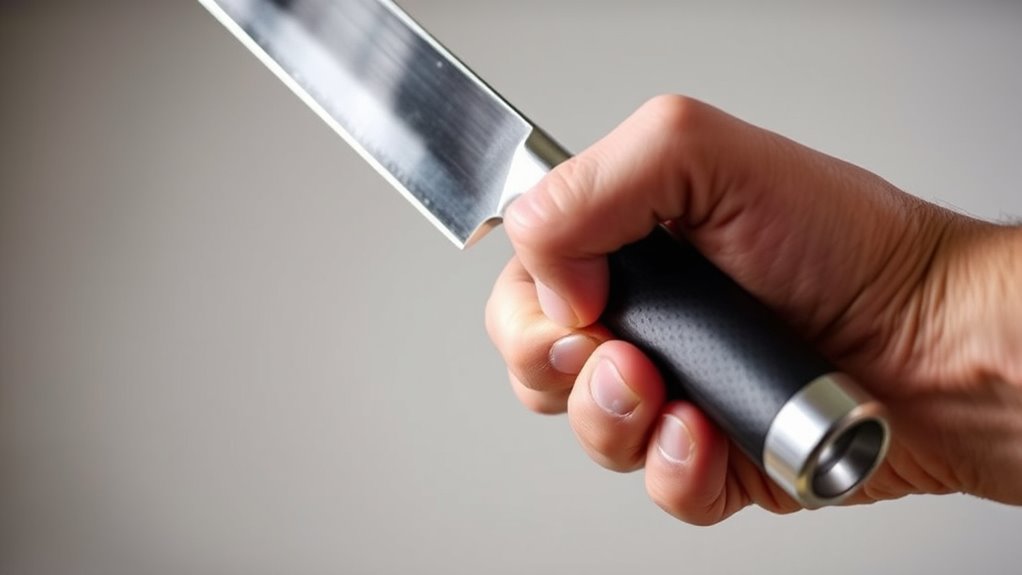
A proper knife grip is essential for your safety because it gives you better control and reduces the risk of slips. An ergonomic grip encourages your hand to hold the knife naturally, minimizing strain and fatigue during use. When you maintain grip stability, you’re less likely to lose control while chopping or slicing, which can lead to accidents. A secure, comfortable grip allows for precise movements, helping you cut accurately and safely. It also prevents the knife from slipping out of your hand if you encounter resistance. By focusing on an ergonomic grip, you ensure that your hand stays steady and the knife remains securely in place. This simple adjustment can notably lower the risk of injuries and make your cutting tasks safer and more efficient. Incorporating Free Floating techniques can further improve your handling and stability.

LEVOIT Air Purifiers for Bedroom Home Dorm, AHAM VERIFIED, 3-in-1 Filter Cleaner With Aroma Pad, Filters Smoke, Allergens, Pet Dander, Odor, Dust, Office, Desktop, Core Mini-P, White
𝗥𝗘𝗠𝗢𝗩𝗘 𝗣𝗢𝗟𝗟𝗨𝗧𝗔𝗡𝗧𝗦 𝗘𝗩𝗘𝗥𝗬𝗪𝗛𝗘𝗥𝗘: Our Pre-Filter and Main Filter capture allergens as lint, hair, pet dander, pet hair, fine...
As an affiliate, we earn on qualifying purchases.
Master the Pinch Grip for Better Control and Security
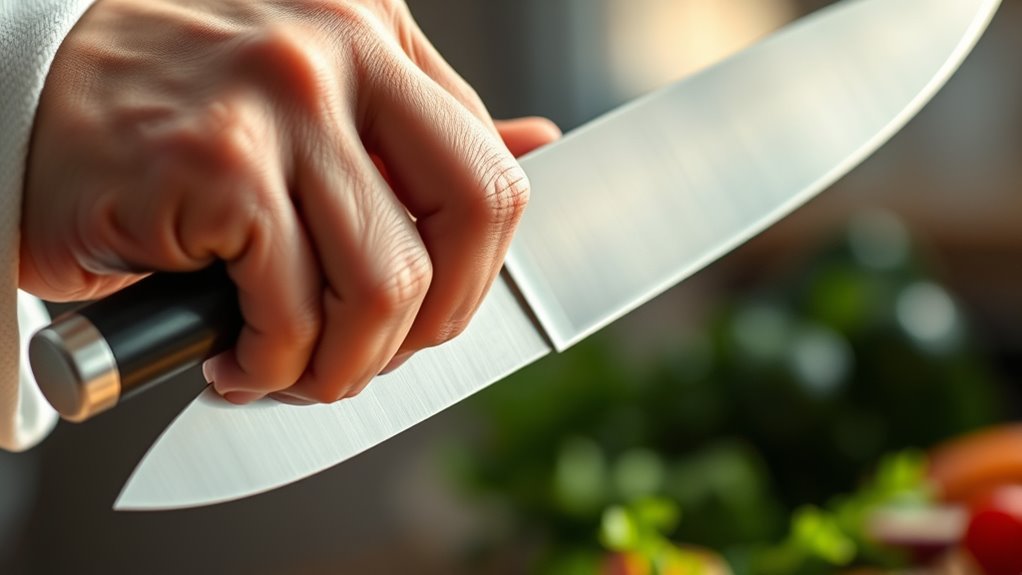
To master the pinch grip, you need to focus on proper finger placement, ensuring your thumb and forefinger securely hold the blade tang. Maintaining consistent grip pressure is key to keeping control and preventing slips. When you get these points right, your knife work becomes safer and more precise. Additionally, understanding the importance of knife balance can help you achieve a more comfortable and secure grip during extended use.
Proper Finger Placement
Mastering proper finger placement is vital for maintaining control and safety when handling a knife. Your finger placement influences grip consistency and helps prevent slips. Position your thumb and index finger on either side of the blade, using the pinch grip to secure the knife firmly. Keep your other fingers curled around the handle for stability. Proper finger placement ensures you have precise control over cuts and reduces fatigue. Remember, consistent grip and finger positioning are essential for safety. Focus on these key points:
- Maintain a firm but relaxed grip to avoid tension.
- Keep your fingers away from the blade edge.
- Practice the pinch grip to improve control and safety.
- Utilizing European cloud innovation can inspire safer and more efficient kitchen tools and accessories.
Consistent Grip Pressure
Maintaining consistent grip pressure is essential for safe and precise knife handling. When you keep your grip pressure steady, your hand tension remains controlled, reducing the risk of slips or accidental cuts. Avoid squeezing too tightly, which can cause fatigue and decrease dexterity, or too loosely, which compromises control. Focus on applying just enough grip pressure to hold the knife securely without straining your hand. Mastering the pinch grip helps you achieve this balance, giving you better control over your cuts. Regularly check your grip pressure as you work, adjusting as needed to stay comfortable and secure. Consistent hand tension ensures your movements are smooth and precise, making your cutting safer and more efficient. Proper grip technique plays a key role in maintaining control and preventing accidents during knife work.

LEVOIT Air Purifier for Pets, Home, Large Rooms, and Bedrooms, HEPA Sleep Mode, AHAM VERIFIDE, Efficient Filter for Pet Dander, Odors, Captures Smoke, Dust, Mold, Pollen, Pet Lock, Core P350-P, Grey
𝐖𝐇𝐘 𝐂𝐇𝐎𝐎𝐒𝐄 𝐀𝐇𝐀𝐌 𝐕𝐄𝐑𝐈𝐅𝐈𝐃𝐄 𝐀𝐈𝐑 𝐏𝐔𝐑𝐈𝐅𝐈𝐄𝐑𝐒: AHAM (Association of Home Appliance Manufacturers) is an ANSI-accredited organization that sets...
As an affiliate, we earn on qualifying purchases.
Use the Claw Technique to Protect Your Fingers

To safeguard your fingers while cutting, focus on proper finger placement by curling your fingertips inward into a claw shape. Keep your hand steady with a consistent position to maintain control and prevent accidental cuts. Mastering these basics ensures your fingers stay safe as you work with the knife. Incorporating connected tools can further enhance your safety and efficiency in the kitchen.
Proper Finger Placement
Using the claw technique is one of the best ways to protect your fingers while chopping. Proper finger placement guarantees safety and control. Keep your fingers curled inward with your fingertips gripping the knife’s side, not the blade. This finger positioning helps you maintain grip consistency, so your cuts stay precise. Remember, a stable grip reduces slips and accidents. Focus on these key points:
- Maintain your fingertips tucked in, forming a claw shape
- Keep your grip firm but relaxed for better control
- Ensure your fingers stay close to the knife’s blade without touching it
- Practicing proper knife skills enhances safety and efficiency in your kitchen.
Consistent Hand Position
Keep your hand position consistent by applying the claw technique every time you chop. Proper hand positioning guarantees your fingers stay safe and your grip remains steady. When you use the claw, curl your fingertips inward so your knuckles guide the side of the knife. This grip consistency helps prevent slips and maintains control, even when chopping quickly or with tough ingredients. Focus on keeping your fingers tucked away from the blade’s path, which minimizes the risk of accidental cuts. Consistent hand positioning isn’t just about safety—it also improves your cutting accuracy and efficiency. Practice the claw technique regularly until it becomes second nature. By doing so, you’ll develop better grip consistency, making your chopping safer and more precise every time you pick up your knife. Incorporating safe document management habits into your routine can help keep your kitchen organized and your focus sharp.

Shark Air Purifier for Home, NeverChange Compact Pro, for Bedroom, Nursery, Home Office, Dorm, HEPA-Exceeding Filter, Captures Pollutants, Pet Dander, Dust, Odor, Smoke, and More, HP071BRN, Winter Fog
See Your Air Improve: With CleanSense IQ, watch the display as your air quality adjusts in real time....
As an affiliate, we earn on qualifying purchases.
Position Your Hand for Balance and Stability

Placing your hand correctly is essential for maintaining balance and stability while cutting. When you position your hand properly, you improve control and reduce the risk of slips. Keep your hand in a balanced posture, with your fingers aligned naturally to avoid tension. Focus on maintaining a firm but relaxed grip, ensuring your fingers support the knife without crowding the blade. Proper finger alignment helps distribute pressure evenly, preventing fatigue and enhancing precision. To reinforce stability:
- Keep your fingers curled inward, away from the blade
- Maintain a consistent, balanced posture throughout the cut
- Use your knuckles as a guide to keep the knife steady
- Remember that essential oils for safety can help promote focus and calmness during precise tasks.
Choose the Right Grip for Different Cutting Tasks
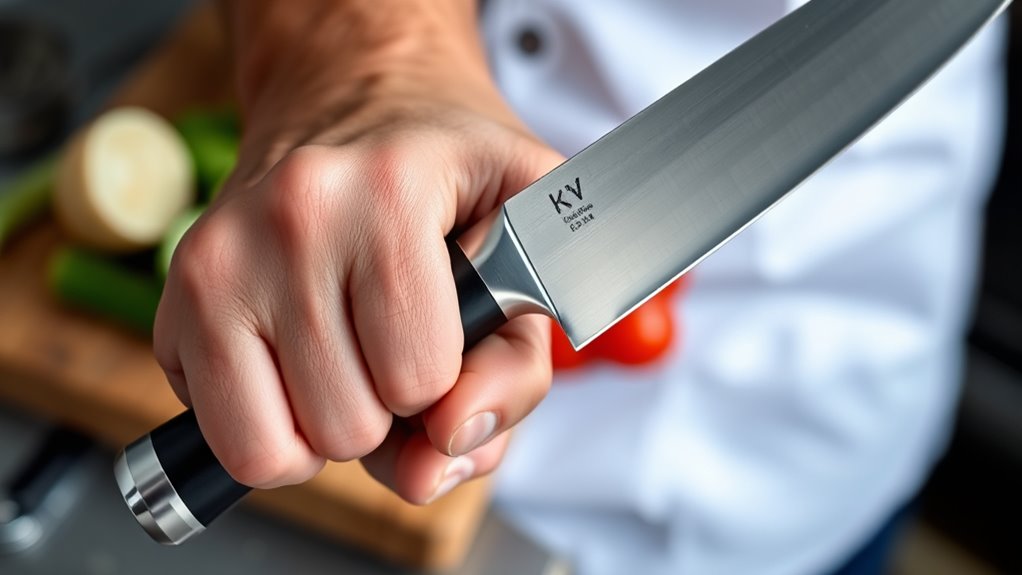
Choosing the right grip helps you cut safely and accurately. Use the pinch grip for precision tasks, holding the blade just behind the tip. For safer handling during chopping, switch to the claw grip to keep your fingers tucked away from the blade. Proper knife grip technique also reduces fatigue and improves control, making your cutting safer and more efficient.
Pinch Grip Precision
The right grip can make all the difference when it comes to cutting safely and effectively. The pinch grip offers precision by positioning your thumb and forefinger tightly around the blade, giving you better control. To maximize safety and accuracy, guarantee proper blade alignment so the cutting edge moves smoothly through the material. Handle ergonomics also matter—choose a handle that fits comfortably in your hand to reduce fatigue and improve grip stability. When practicing pinch grip precision:
- Keep your fingers close to the blade for better control
- Maintain a firm but relaxed grip to avoid slipping
- Guarantee your handle feels comfortable and secure during use
This grip allows for finer, more deliberate cuts, reducing the risk of slips and accidents.
Claw Grip Safety
To guarantee safe and efficient cutting, adopting the right grip for each task is essential; the claw grip is particularly effective for controlled, precision cuts. With proper knife handling, you curl your fingertips inward, creating a “claw” that guides the blade while keeping your fingers safe from slipping. This grip enhances grip ergonomics, giving you better control and stability. It’s especially useful for chopping, slicing, or dicing small ingredients where precision matters. By maintaining a firm yet relaxed hold, you reduce the risk of accidental cuts caused by slips or loss of grip. Practicing the claw grip helps develop muscle memory for safe, confident knife handling, ultimately making your kitchen safer and your cuts more accurate. Knife safety techniques are crucial for preventing injuries.
Avoid Common Mistakes That Reduce Safety
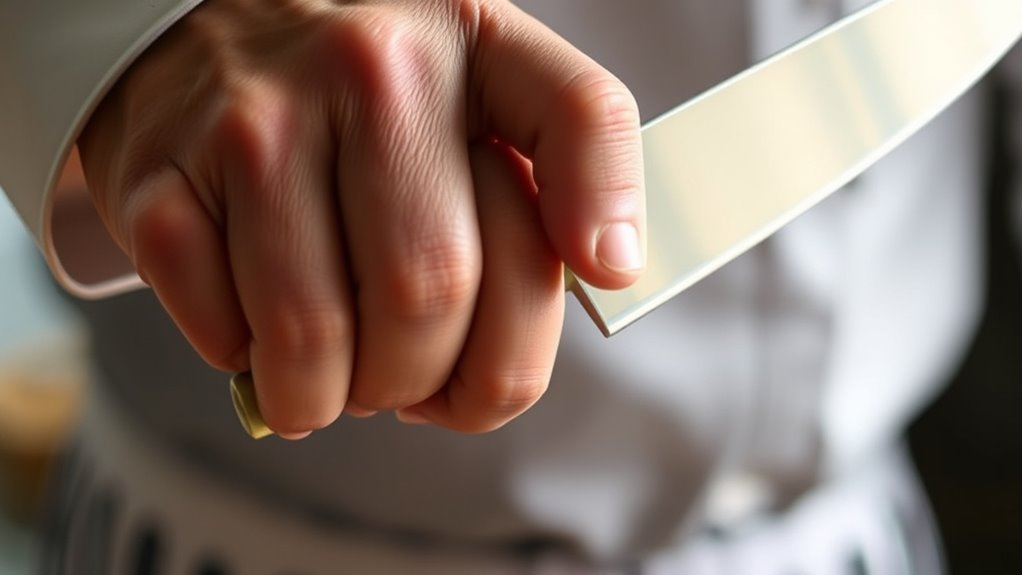
Many common mistakes can compromise your safety when handling knives, often leading to accidents or injuries. One major error is neglecting proper blade alignment, which affects control and increases slipping risks. Another mistake is ignoring correct cutting angles, causing unstable cuts that can slip. Additionally, rushing through tasks or applying excessive force can lead to loss of grip or unexpected slips. To stay safe, always make certain your blade is aligned properly with your target surface, maintaining a consistent cutting angle. Keep your movements deliberate and controlled, avoiding sudden or jerky motions. Remember, proper technique reduces the likelihood of accidents and keeps you safe in the kitchen. Being mindful of these common pitfalls helps you develop safer habits and enhances your overall knife handling skills.
Build Confidence and Muscle Memory With Practice
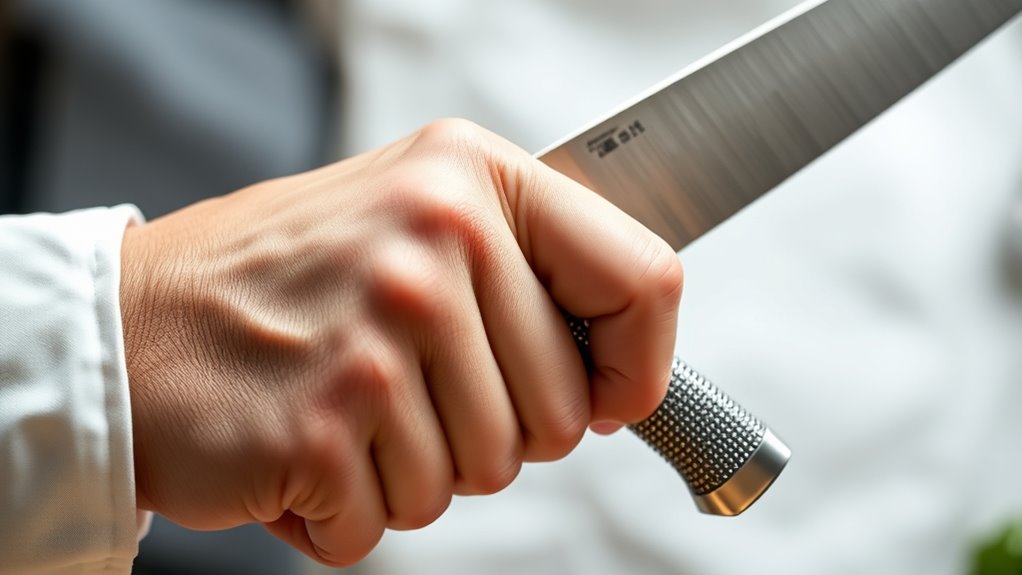
Practicing proper knife techniques regularly helps you build confidence and develop muscle memory, making your cuts more precise and controlled. With consistent practice, your hand movements become instinctive, reducing hesitation and increasing safety. Confidence building through repetition ensures you’re less likely to slip or mishandle the knife. To deepen your understanding, consider this table:
| Repetition | Muscle Memory | Safety Enhancement |
|---|---|---|
| Reinforces skills | Automates proper grip | Prevents slips |
| Builds confidence | Improves control | Reduces accidents |
| Develops consistency | Sharpens cutting skills | Boosts safety focus |
Keep Your Grip Steady During Long Cooking Sessions
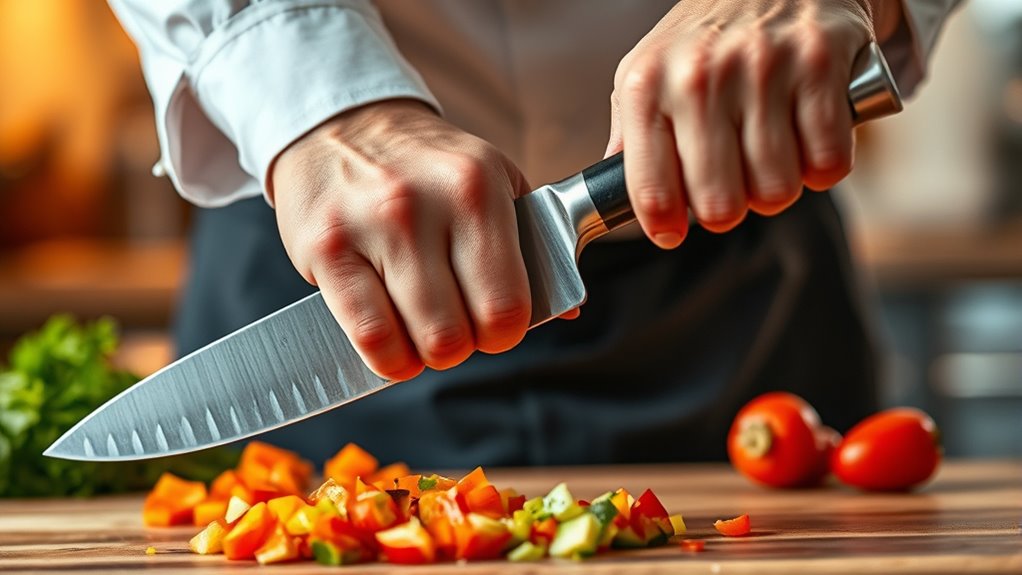
Maintaining a steady grip on your knife is essential during long cooking sessions, as fatigue can cause your hand to shake or loosen its hold. To sustain your grip and prevent slips, focus on ergonomic handles designed for comfort and control. These handles reduce strain, helping you maintain grip endurance over extended periods. Additionally, take regular breaks to rest your hand and prevent muscle fatigue. Proper technique, such as wrapping your fingers securely around the handle, also enhances stability. Keep these tips in mind:
- Use knives with ergonomic handles for better comfort
- Switch hands or take short breaks to avoid fatigue
- Maintain a relaxed, firm grip without squeezing too tightly
How Knife Handle Design Influences Your Grip
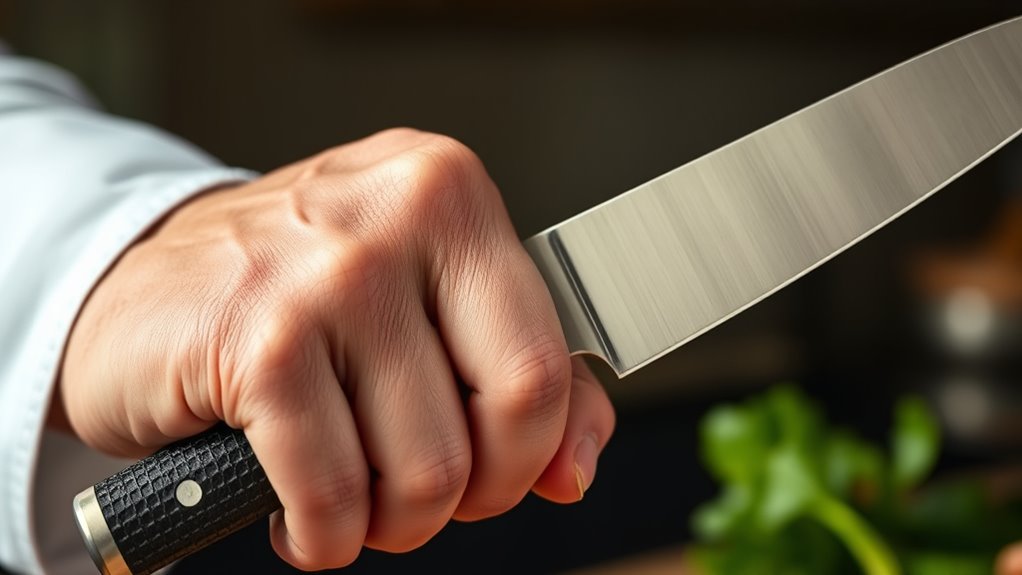
The design of a knife handle directly impacts how securely and comfortably you can grip it. An ergonomic handle fits naturally in your hand, reducing fatigue and improving control during cutting. Look for handles that contour to your grip, offering support without causing strain. A non-slip grip is essential for safety, especially when your hands are wet or greasy. Many handles feature textured surfaces or rubberized materials that prevent slipping, giving you confidence with each cut. The shape and material of the handle influence your ability to apply force accurately and maintain control. Choosing a well-designed handle means less effort and fewer slips, which considerably enhances your safety in the kitchen. Prioritize ergonomic handles with non-slip grips to improve your overall cutting experience.
Practice Drills to Improve Safe, Effective Cutting
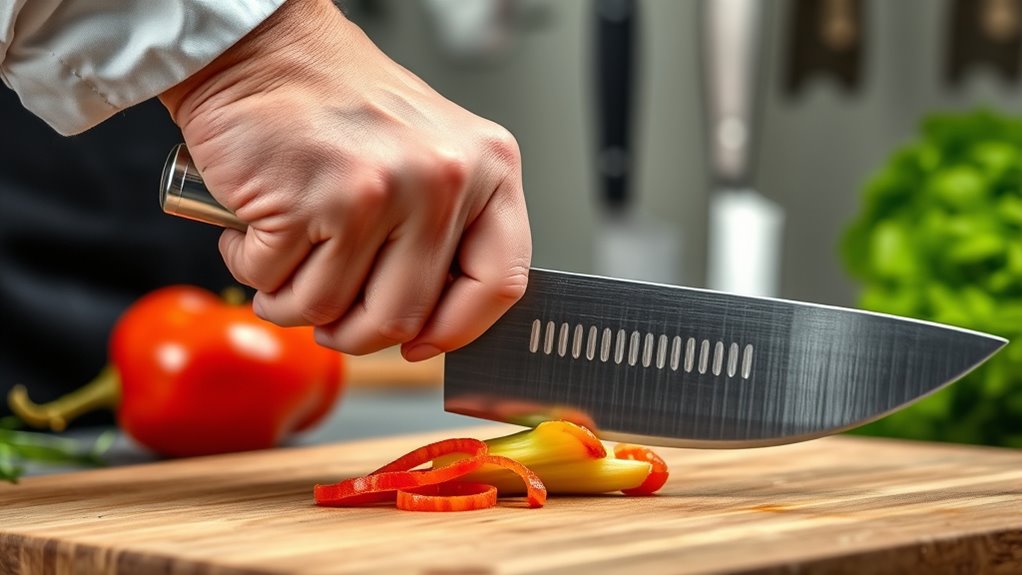
To sharpen your cutting skills and guarantee safety, incorporating specific practice drills into your routine can make a significant difference. Focus on refining your cutting techniques by practicing with various foods and cutting motions. Regularly check your knife maintenance to assure blades are sharp, which makes cuts safer and easier. Effective drills help you develop muscle memory and control, reducing the risk of slips.
To maximize your practice, consider these points:
- Use a cutting board with a textured surface to improve grip and stability
- Practice slicing at different angles to enhance precision
- Incorporate slow, deliberate cuts to master technique before increasing speed
Consistent practice with attention to knife maintenance and cutting techniques builds confidence and keeps you safe.
Frequently Asked Questions
How Often Should I Check My Knife Grip for Safety?
You should check your knife grip for safety before each use to guarantee proper grip techniques and grip maintenance tips are followed. Regularly inspecting your grip helps prevent slips and accidents. Make it a habit to evaluate how securely you’re holding the knife, adjusting as needed for comfort and control. Consistent checks keep your grip safe, especially when working with sharp blades, reducing the risk of injuries.
Can Different Knife Handles Affect Grip Security?
Different knife handles can considerably affect your grip security. Ergonomic design helps you maintain control, reducing slips and fatigue, while handle materials like rubber or textured composites provide better friction. Smooth or slippery materials, such as polished wood or plastic, may compromise your grip, increasing the risk of accidents. Choose a handle that fits comfortably and offers firm traction to guarantee safety during every cut.
Is There a Recommended Grip for Very Small or Large Knives?
For very small knives, you should use a pinch grip, holding the blade between your thumb and fingers for better control with small knife techniques. When handling large knives, adopt a firm, two-handed grip, ensuring your hands stay close to the handle’s end for power and stability. This approach enhances safety and precision in both small knife techniques and large knife handling, reducing slips and improving your cutting control.
How Do I Adjust My Grip When Switching Between Tasks?
Think of switching grips like shifting gears in a car—you need proper hand positioning for each task. To adjust, loosen your grip slightly for delicate slicing and tighten for heavy-duty chopping. Incorporate grip strength exercises to enhance control. Remember, maintaining a relaxed yet firm grip prevents slips and fatigue, making your tasks safer and easier. Practice these adjustments regularly to build confidence and precision in every cut.
What Signs Indicate My Grip Needs Improvement?
If you notice hand fatigue or your grip feels overly tight, it’s a sign your grip needs improvement. You might also struggle to control the knife or experience slipping. Pay attention to your grip pressure—if you’re squeezing too hard, loosen it slightly. A proper grip is firm but relaxed, helping you avoid fatigue and slips, ensuring safer, more efficient cuts during your tasks.
Conclusion
Mastering the correct knife grip is your secret weapon against slips and accidents in the kitchen. By practicing the pinch grip, claw technique, and understanding handle design, you’ll wield your knife with the precision of a master chef. With consistent practice, you’ll build confidence and muscle memory that become as natural as breathing. Remember, a steady grip isn’t just safety—it’s the armor that prevents your culinary adventures from turning into disasters. Keep honing your skills and slice with confidence!