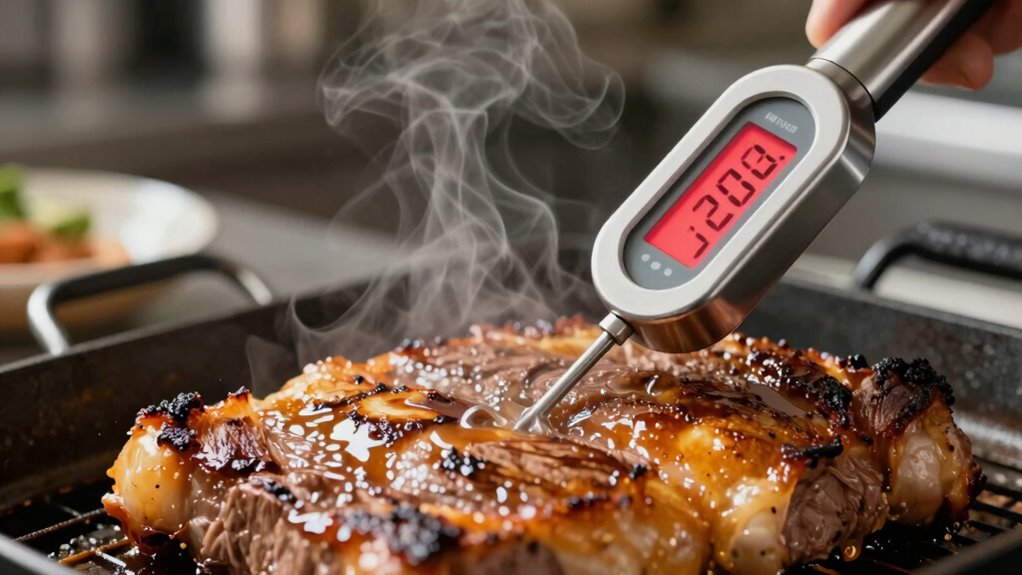
The one temperature tool every cook should understand is a reliable meat thermometer. It helps you guarantee food safety, avoid under- or overcooking, and enhance flavors by hitting precise internal temperatures. Whether digital or analog, mastering how to use and maintain it is key to perfect results. Knowing the right temperatures for different meats guarantees safe and delicious dishes every time. If you continue exploring, you’ll discover how to make temperature checks a natural part of your cooking routine.
Key Takeaways
- An instant-read meat thermometer provides quick, accurate internal temperature readings essential for proper doneness and safety.
- Regular calibration ensures the thermometer maintains precise measurements for consistent cooking results.
- Proper probe placement—avoiding bone and fat—is crucial for reliable temperature assessment.
- Knowing specific temperature targets for different meats ensures safety and optimal flavor.
- Incorporating routine temperature checks makes precise heat control a natural part of cooking.

Alpha Grillers Meat Thermometer Digital – Instant Read Food Thermometer for Cooking & Grilling – Professional Kitchen Gifts for Men, Dad & Mom
Instant Read Food Thermometer | Our instant read thermometer features a temperature probe and advanced, highly accurate technology…
As an affiliate, we earn on qualifying purchases.
As an affiliate, we earn on qualifying purchases.
Why Precise Temperature Control Matters in Cooking
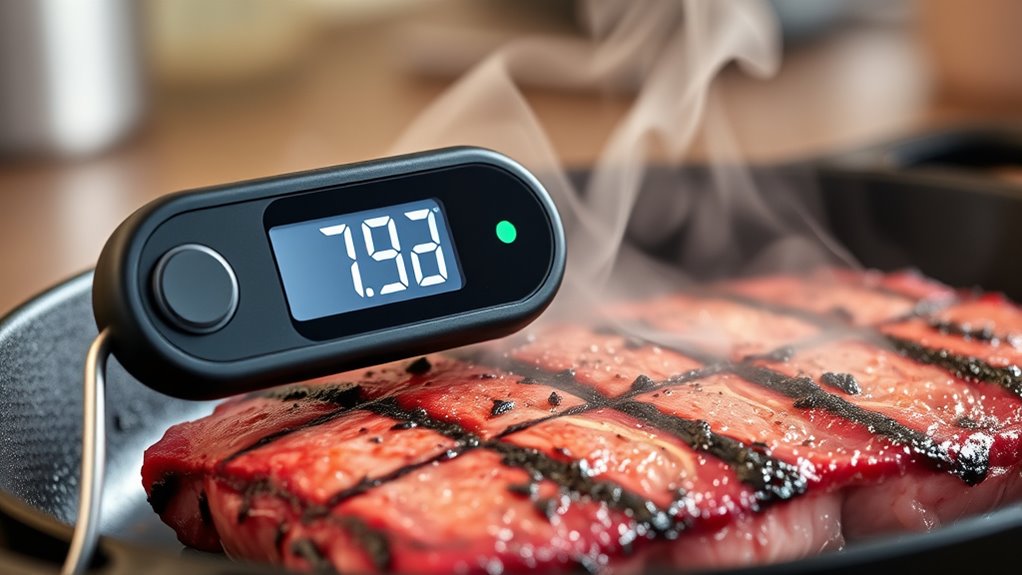
Precise temperature regulation is essential because it directly affects the quality and safety of your cooked food. When you maintain the right temperature, you guarantee harmful bacteria are destroyed, promoting food safety. Without accurate control, you risk undercooking, which can lead to foodborne illnesses, or overcooking, which damages texture and nutrients. Additionally, proper temperature management enhances flavor development, allowing ingredients to reach their full potential. For example, gentle heating can bring out complex flavors in meats and vegetables, making your dishes more delicious. Using reliable temperature tools helps you monitor and adjust heat precisely, giving you confidence in your cooking process. Understanding the thermal properties of ingredients can further improve your control over cooking outcomes. Ultimately, precise temperature control ensures your meals are safe to eat and bursting with ideal flavor.
Alpha Grillers Meat Thermometer Digital – Instant Read Food Thermometer for Cooking & Grilling – Professional Kitchen Gifts for Men, Dad & Mom
Instant Read Food Thermometer | Our instant read thermometer features a temperature probe and advanced, highly accurate technology…
As an affiliate, we earn on qualifying purchases.
As an affiliate, we earn on qualifying purchases.
How Your Instant-Read Meat Thermometer Works
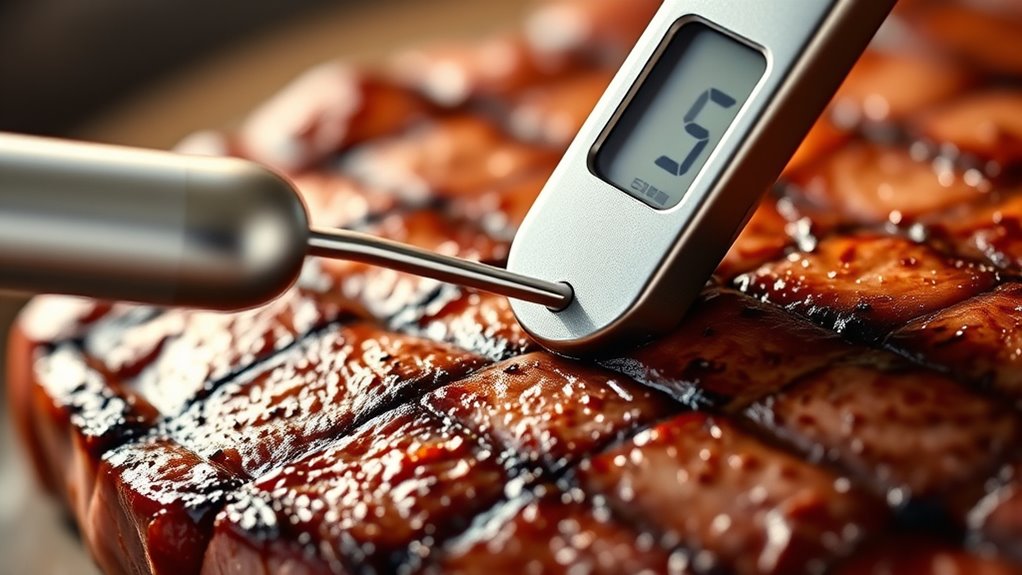
An instant-read meat thermometer works by quickly measuring the internal temperature of your food, giving you immediate feedback on doneness. It typically uses a metal probe that you insert into the thickest part of the meat. The thermometer type can be digital or analog, each with different readout methods but similar core functions. To guarantee accurate readings, you should regularly perform calibration techniques, such as testing it in ice water or boiling water. Calibration helps confirm the thermometer provides precise measurements. Most instant-read thermometers have a response time of a few seconds, making them ideal for quick checks. Understanding how these thermometers work and maintaining their calibration ensures your cooking is consistently precise and safe. Proper use and calibration are key to getting reliable temperature readings every time. Additionally, awareness of measurement accuracy and industry standards can help you select the best thermometer for your needs.

Taylor Instant Read Analog Meat Food Grill BBQ Cooking Kitchen Thermometer with Red Pocket Sleeve for Calibration, 1 inch dial, Stainless Steel
PROFESSIONAL, INSTANT READ RESULTS: NSF approved thermometer provides an instant read on internal food temperatures
As an affiliate, we earn on qualifying purchases.
As an affiliate, we earn on qualifying purchases.
How to Use and Maintain Your Thermometer Properly
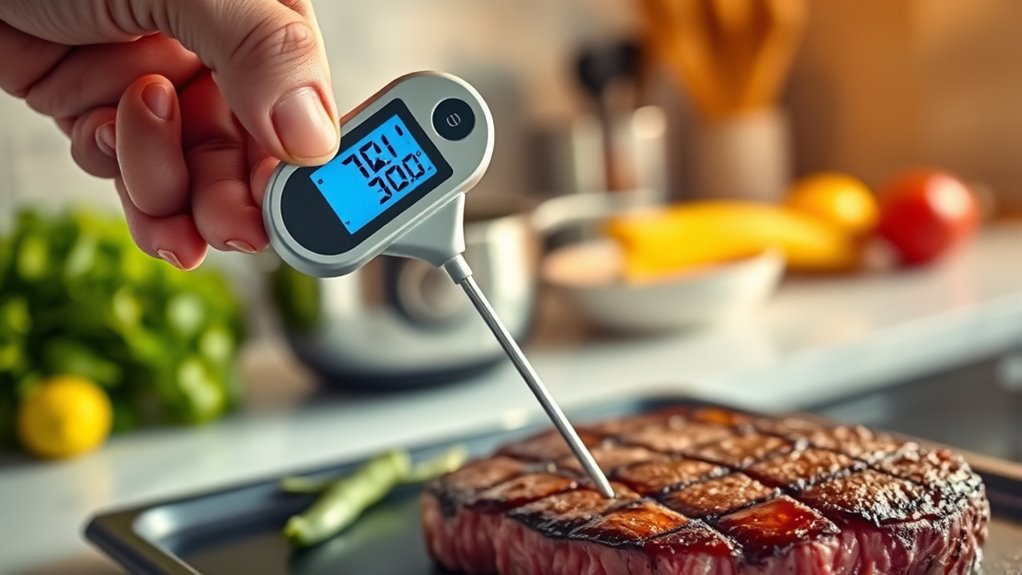
To guarantee accurate and reliable temperature readings, you need to use and maintain your thermometer properly. Start by regularly checking calibration techniques, such as testing it in ice water or boiling water, to assure accuracy. If the thermometer reads incorrectly, recalibrate it according to the manufacturer’s instructions. Proper thermometer placement is essential; insert the probe into the center of the thickest part of the food without touching bone or fat, which can skew results. Clean the probe with soap and hot water after each use to prevent cross-contamination. Store your thermometer in a designated, protected spot to avoid damage. By maintaining calibration and placing the thermometer correctly, you’ll get consistent, precise readings that improve your cooking results. Additionally, understanding temperature calibration ensures your thermometer remains accurate over time.

AWLKIM 2 Pack Stainless Steel Meat Thermometer, Safe Leave in Oven, 2.5-in Extra-Large Dial Food Thermometer for Cooking, Temperature Probe for Baking, Steak, Turkey – Kitchen Gadgets – Silver
One investment, Double Value — Equipped with two identical stainless steel thermometers in one pack, perfect for multi-tasking…
As an affiliate, we earn on qualifying purchases.
As an affiliate, we earn on qualifying purchases.
What Are the Key Temperature Targets for Different Meats?

Knowing the correct temperature targets for different meats helps guarantee your dishes are both safe and delicious. When selecting meat, understanding the proper temperature zones is essential. For poultry, aim for an internal temperature of 165°F to ensure safety, especially with chicken and turkey. Beef steaks and roasts are best cooked to various zones depending on your preference: rare (125°F), medium rare (135°F), or well-done (160°F). Pork should reach at least 145°F, followed by a three-minute rest. Fish is safe at 145°F, but many prefer it slightly lower for better texture. Remember, different meats have specific target zones that balance safety with ideal flavor and tenderness. Using your thermometer to hit these targets guarantees you serve meat that’s both perfectly cooked and safe to eat. Smart kitchen devices can assist in maintaining precise temperatures, enhancing both safety and cooking consistency.
How to Make Temperature Checks a Natural Part of Your Cooking

Integrating temperature checks into your cooking routine becomes effortless when you develop simple habits. Keep your thermometer within reach and make checking temperature a quick, routine step. For example, test your meat or baked goods at strategic moments, and do so confidently rather than guessing. This builds your cooking confidence and helps you avoid overcooking or undercooking. As you regularly check temperatures, you’ll notice more consistent results and better flavor. Incorporate these checks naturally by setting reminders or including them as part of your standard process, like checking the internal temperature during resting. Over time, temperature checks will become second nature, ensuring each dish reaches the perfect doneness and flavor profile without extra effort. Understanding proper calibration of your thermometer ensures accurate readings and better cooking outcomes.
Frequently Asked Questions
Can I Use the Same Thermometer for All Types of Food?
You can use the same thermometer for all types of food, but it’s best to have separate probes or calibration for different foods. Follow meat temperature standards to guarantee safety, and use seafood cooking tips to avoid undercooking or overcooking. Always clean your thermometer thoroughly between uses to prevent cross-contamination, especially when switching from raw meat to seafood. This way, you guarantee accurate readings and safe, delicious meals every time.
How Often Should I Calibrate My Thermometer?
You should calibrate your thermometer regularly to keep it performing at its best. For ideal thermometer maintenance, consider calibration frequency every few months or whenever you notice inconsistent readings. It’s a simple step that ensures accuracy and food safety. Don’t wait for signs of trouble—regular calibration helps prevent errors and guarantees your thermometer remains a reliable tool in your kitchen. Consistent maintenance is key to confident cooking.
What Are Common Mistakes When Using a Temperature Tool?
When using a temperature tool, you might place the probe incorrectly, leading to inaccurate readings. Always make certain the probe is fully inserted into the thickest part of the food, avoiding bone or fat. Also, don’t forget to check and replace batteries regularly, as low power can affect accuracy. Proper probe placement and battery maintenance are key to getting reliable temperature readings every time you cook.
Is There a Preferred Thermometer Type for Different Cuisines?
For different cuisines, your choice of thermometer depends on cooking methods. Instant-read thermometers are perfect for quick checks in grilling or roasting, while probe thermometers excel in slow-cooking or roasting. Select a thermometer based on your specific needs, ensuring accurate temperature readings. Good thermometer selection helps you master various cuisines, prevent overcooking, and achieve perfect results every time, no matter what you’re preparing.
How Does Ambient Temperature Affect Thermometer Accuracy?
Ambient temperature can impact your thermometer’s accuracy due to ambient variance, causing it to give slightly incorrect readings. To guarantee precision, you should regularly calibrate your thermometer, especially if you notice inconsistent results. Keep your thermometer away from heat sources or cold drafts and store it in a stable environment. Proper calibration and mindful placement help you get the most accurate readings, no matter the ambient conditions.
Conclusion
Mastering temperature control can boost your cooking skills and guarantee food safety. Did you know that improperly cooked meat causes over 1.3 million cases of foodborne illness each year? By understanding your thermometer and checking temps regularly, you not only enjoy perfectly cooked meals but also protect yourself and loved ones. Make temperature checks a habit—your taste buds and health will thank you every time you cook.