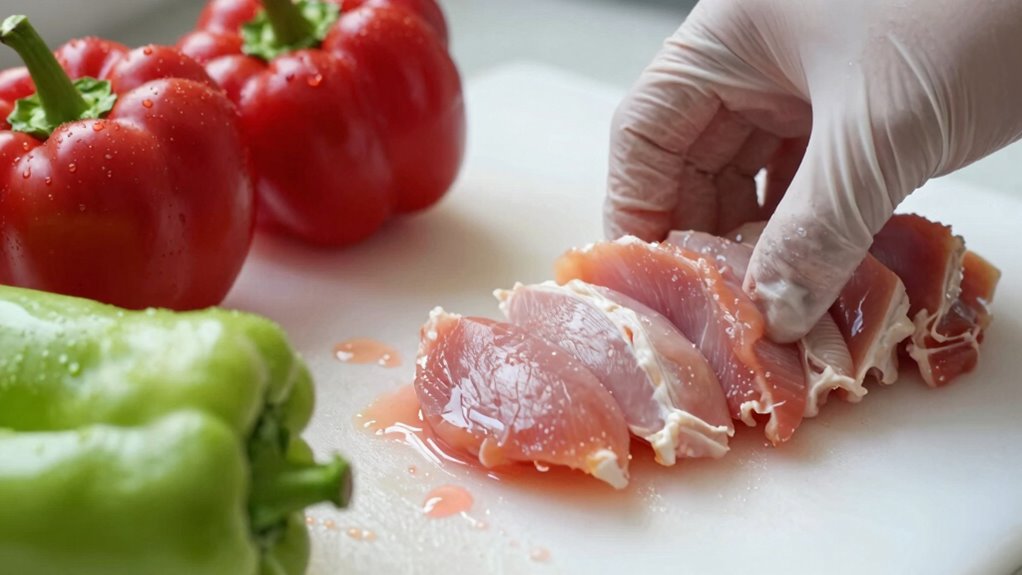
Taking shortcuts like rinsing raw produce or reusing utensils without cleaning can backfire, leading to dangerous cross-contamination. Bacteria from raw meats, seafood, and unwashed surfaces easily spread to other foods, utensils, and surfaces, increasing your risk of foodborne illnesses. Proper hygiene practices, including thorough handwashing and separate tools, are essential to keep your kitchen safe. Keep going to discover how to prevent these hidden risks and protect your health.
Key Takeaways
- Taking shortcuts like reusing unclean utensils or surfaces increases bacteria transfer, risking foodborne illnesses.
- Rinsing raw meat or produce spreads bacteria to sinks, countertops, and other foods if not properly sanitized.
- Skipping thorough cleaning and sanitizing of tools and surfaces allows harmful pathogens to multiply and contaminate food.
- Using the same utensils for raw and cooked foods without proper cleaning facilitates cross-contamination.
- Neglecting proper hygiene practices, such as handwashing, can make simple shortcuts backfire by spreading bacteria.

Plastic Cutting Board, Set of 4 with Storage Stand, Color Box Packed, BPA-Free, Preventing Cross-contamination of Different Food Types, Dishwasher Safe
COLOR CODED INDEX PLASTIC CUTTING BOARD set of 4 – RED cutting board with ham icon for cutting…
As an affiliate, we earn on qualifying purchases.
As an affiliate, we earn on qualifying purchases.
What Is Cross-Contamination and Why Is It Important?
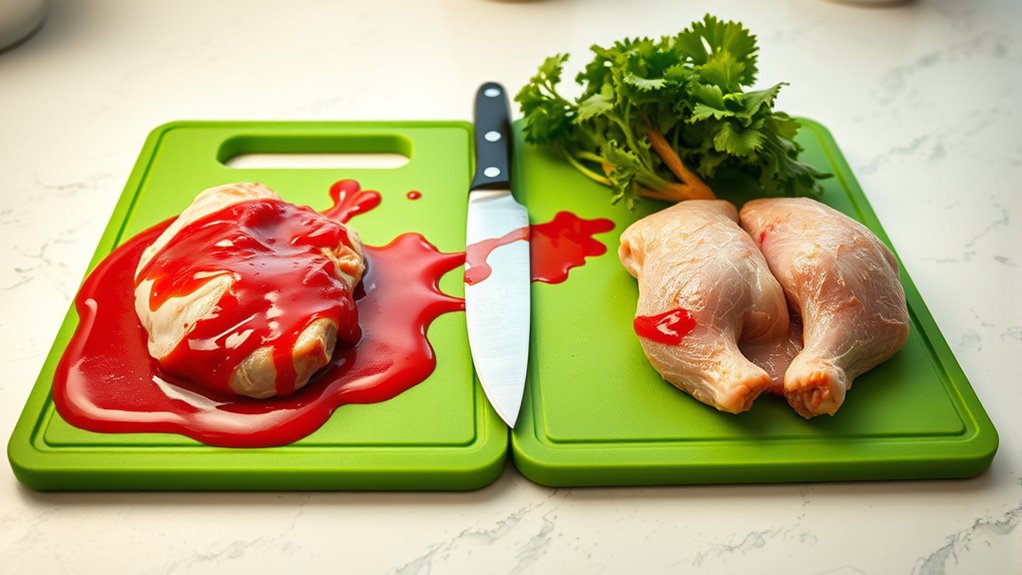
Have you ever wondered how bacteria or viruses spread from one food to another? This is what we call cross-contamination, a major threat to food safety. It occurs when harmful microorganisms transfer between foods, surfaces, or utensils, leading to potential foodborne illnesses. Understanding cross-contamination is vital because it helps prevent contamination and keeps your kitchen safe. If you don’t take steps to prevent it, bacteria can multiply rapidly, especially in raw meats or seafood, and infect other foods. This is why contamination prevention is essential in every step of food handling. By being aware of how cross-contamination happens, you can adopt proper hygiene practices and storage methods, reducing health risks for everyone enjoying your meals. Proper cleaning appliances and systems are essential tools in maintaining a safe environment and preventing the spread of harmful microorganisms.
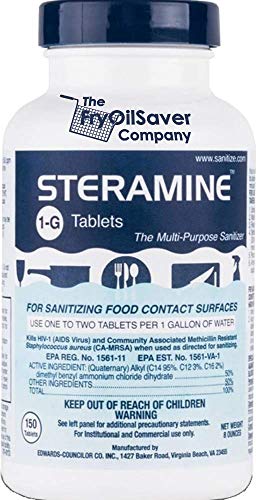
1 Bottle Steramine Sanitizer Tablets – Multi Purpose Steramine Sanitizing Tablets for Food Contact Surfaces in Kitchen, Diners, Hotels, Restaurants & Food Trucks by FryOilSaver Co. (150 Count)
1 BOTTLE OF STERAMINE SANITIZING TABLETS FOR COMMERCIAL AND PROFESSIONAL USE – This bottle contains 150 concentrated Steramine…
As an affiliate, we earn on qualifying purchases.
As an affiliate, we earn on qualifying purchases.
Common Sources of Cross-Contamination in Your Kitchen
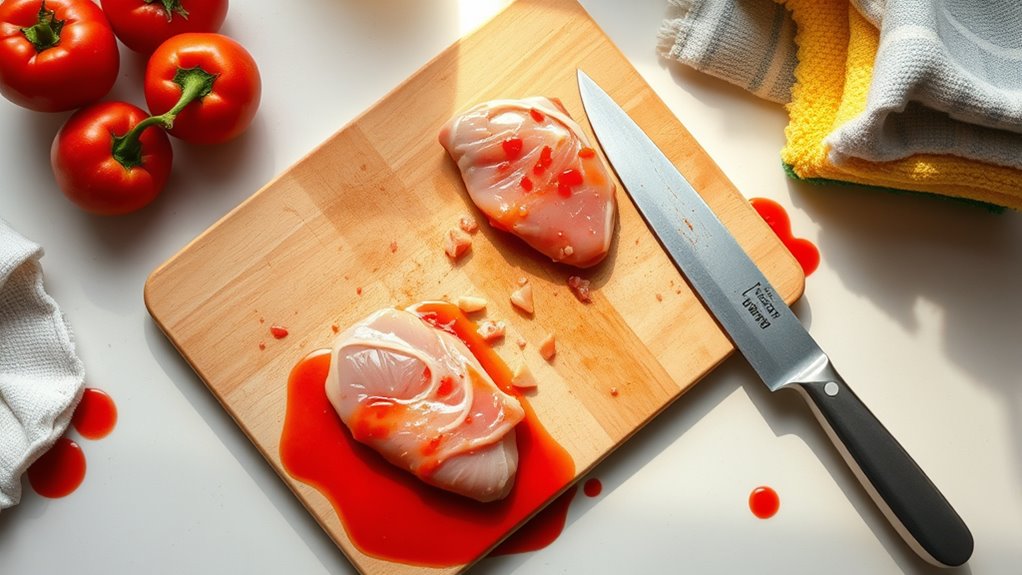
Your kitchen can be a hotspot for cross-contamination if you’re not careful about common sources. Kitchen gadgets like cutting boards, knives, and spatulas can harbor bacteria if not cleaned properly between uses. Using the same utensils for raw meat and vegetables without washing them spreads harmful pathogens. Cooking techniques matter too—failing to cook food to the right temperature or not refrigerating leftovers promptly increases risks. Surfaces such as countertops and sinks can also become contaminated if touched by raw ingredients or used improperly. Even small tools like peelers or graters can transfer bacteria if not sanitized after each use. Paying attention to these sources and practicing proper cleaning and cooking techniques is essential, and understanding sound therapy techniques can help improve your ability to follow these safety practices. By doing so, you reduce the chances of cross-contamination and keep your kitchen safer.

Lysol All Purpose Cleaner Spray, Multi-Purpose Disinfecting Spray, Kitchen & Bathroom Cleaner, Mango & Hibiscus Scent, 32 Fl Oz
ALL PURPOSE CLEANER KILLS 99.9% OF VIRUSES and BACTERIA: Lysol All Purpose disinfectant spray kills 99.9% of viruses…
As an affiliate, we earn on qualifying purchases.
As an affiliate, we earn on qualifying purchases.
How Utensils and Surfaces Spread Bacteria

Ever wonder how bacteria can spread so easily in your kitchen? It often comes down to utensil contamination and surface transfer. When you use the same knife or cutting board for raw meat and vegetables without cleaning in between, bacteria transfer from contaminated utensils to other foods. Surfaces like countertops and sinks can also harbor bacteria if not sanitized properly. Touching these surfaces and then handling other foods without washing your hands or utensils spreads bacteria further. This cycle of surface transfer makes cross-contamination a common problem. To prevent this, always wash utensils thoroughly after each use, especially when switching between different types of food. Regularly disinfect countertops and cutting boards, and avoid using the same utensils for raw and cooked foods. Incorporating smart sanitation devices can also help maintain a safer kitchen environment by automatically disinfecting surfaces and utensils.
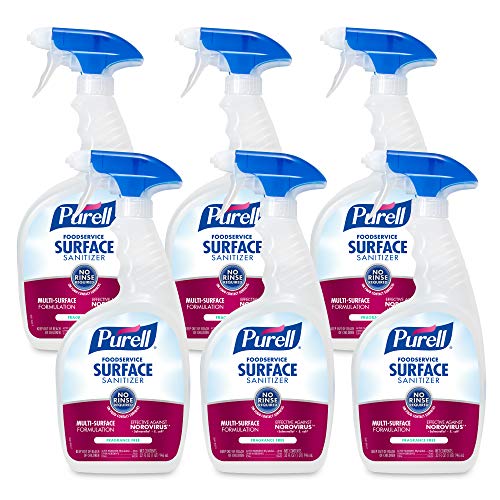
PURELL Foodservice Surface Sanitizer Spray, Fragrance Free, 32 fl oz Capped Bottle with Spray Trigger in Pack (Pack of 6) – 3341-06
One-step sanitizer offers powerful germ-kill without harsh chemicals to provide a better overall experience for guests
As an affiliate, we earn on qualifying purchases.
As an affiliate, we earn on qualifying purchases.
How Food Storage Can Lead to Cross-Contamination
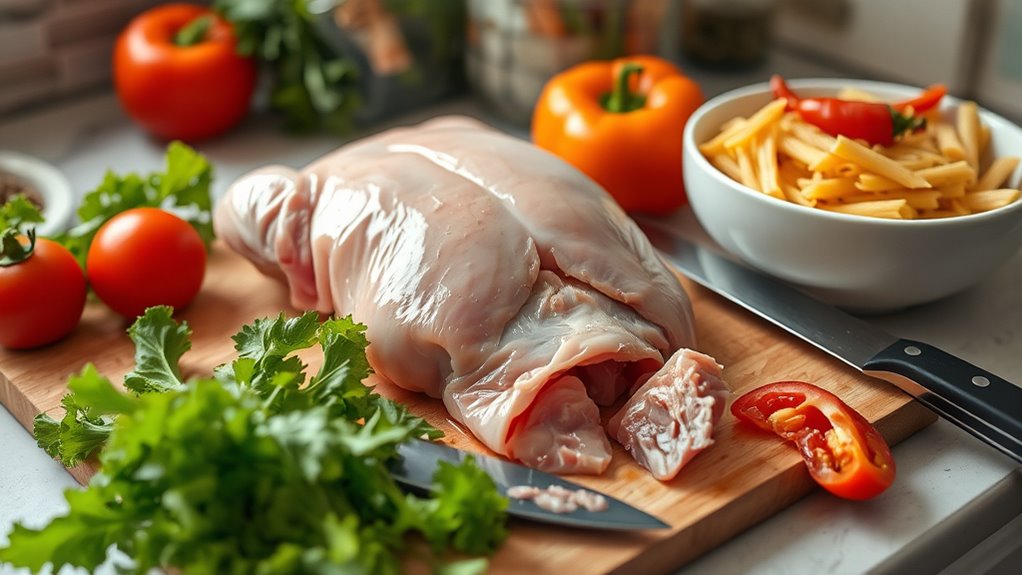
You can accidentally cause cross-contamination if you don’t use proper containers for different foods. Keeping raw and cooked items separate prevents bacteria from spreading. Always segregate these foods and choose the right storage methods to keep your kitchen safe. Using appropriate storage containers can further reduce the risk of cross-contamination.
Proper Container Use
Using proper containers for food storage is essential to prevent cross-contamination. Choosing the right storage containers helps keep foods separate and reduces risks. Here are four key tips:
- Select airtight, leak-proof storage containers to prevent spills and mixing.
- Use clear containers or label them clearly with labeling methods to identify contents quickly.
- Store raw meats below cooked or ready-to-eat foods to avoid drips and cross-contact.
- Regularly clean and sanitize containers to prevent bacteria buildup.
Segregate Raw and Cooked
Why is it so important to keep raw and cooked foods separate during storage? Mixing them can transfer harmful bacteria and cause foodborne illnesses. To prevent this, always use designated storage areas for raw and cooked items. Keep raw meats on the bottom shelf of your fridge to avoid drips onto cooked foods. Use separate cutting boards for raw meats and cooked produce to prevent cross-contamination. Properly segregating foods reduces risks and keeps your meals safe. Here’s a quick guide:
| Food Type | Storage Tip | Utensil Tip |
|---|---|---|
| Raw meats & fish | Store on bottom shelves | Use separate cutting boards |
| Cooked foods | Keep on higher shelves | Use clean utensils for cooked |
| Fresh produce | Store separately, away from raw | Wash thoroughly before use |
Following these steps helps ensure your food stays safe and contamination-free. Proper storage techniques are essential for food safety standards and maintaining a healthy kitchen environment.
Why Rinsing or Reusing Raw Meat and Produce Is Risky
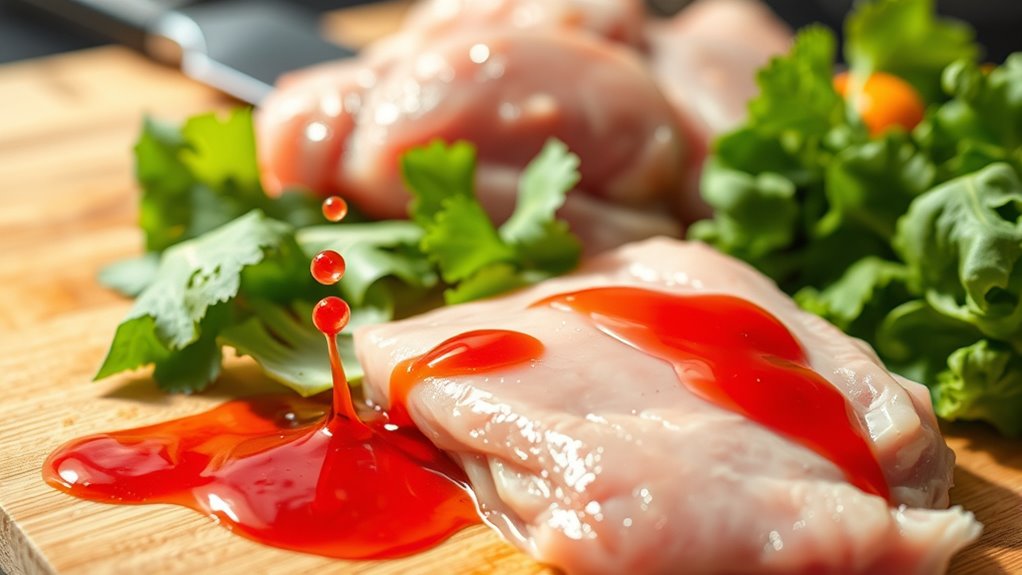
Rinsing raw meat or produce might seem like a good way to clean them, but it can actually spread harmful bacteria instead of removing it. When you rinse produce, water droplets splash bacteria onto sinks, countertops, and other surfaces, increasing contamination risk. Reusing raw meat without proper cooking can also be dangerous because bacteria survive and multiply. To stay safe, consider these points:
- Rinsing produce can spread bacteria rather than eliminate it.
- Reusing raw meat increases the chance of cross-contamination.
- Splashing water spreads bacteria to surrounding areas.
- Proper cooking, not rinsing, kills harmful pathogens effectively.
- Implementing safe food handling practices is essential to prevent illnesses.
Avoid the temptation to rinse or reuse raw meat and produce. Instead, focus on proper storage, thorough cooking, and clean handling to prevent cross-contamination and foodborne illnesses.
How to Spot Cross-Contamination Risks
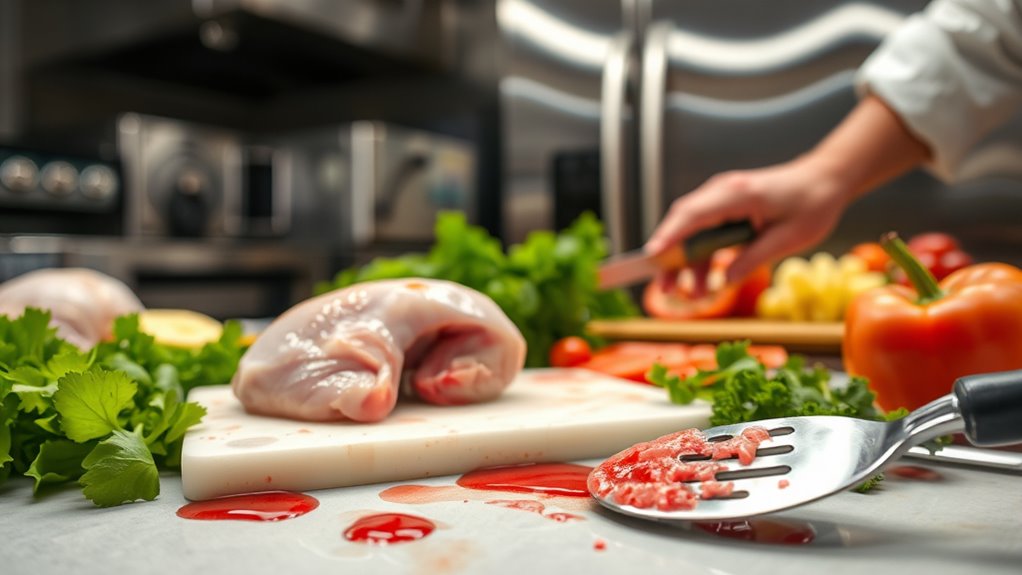
Recognizing cross-contamination risks starts with paying close attention to how food and surfaces are handled in your kitchen. Look out for kitchen clutter that makes it hard to keep things separate—piles of utensils, cutting boards, and ingredients can easily lead to mix-ups. Check for expired ingredients, which can harbor bacteria that transfer to fresh foods. Be cautious of raw meats stored above ready-to-eat items or near produce, as drips can cause contamination. Dirty sponges or cloths left on counters or appliances are also red flags. If you notice these issues, it’s a sign you need to organize better and handle ingredients more carefully to prevent bacteria from spreading. Spotting these risks early helps keep your kitchen safer and cleaner. Additionally, practicing proper food storage techniques can significantly reduce the chance of cross-contamination.
Tips to Prevent Cross-Contamination During Cooking
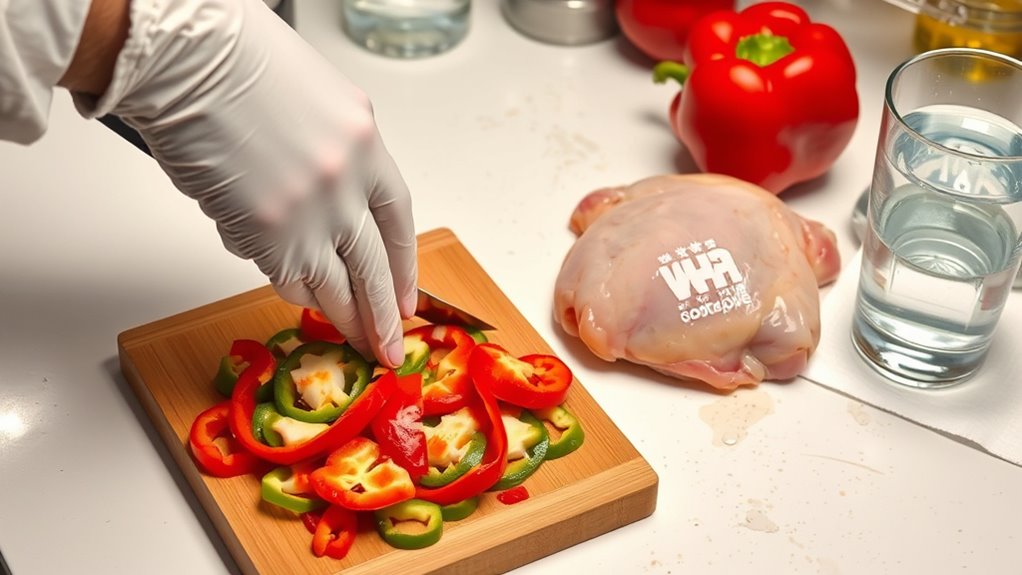
To prevent cross-contamination during cooking, it’s essential to use separate cutting boards and utensils for raw meats and ready-to-eat foods. This is a key aspect of kitchen safety. Additionally, maintain consistent cleaning routines to reduce bacteria spread. Proper food handling techniques are crucial for minimizing microbial transfer. Here are four tips:
Using separate cutting boards and utensils prevents cross-contamination and promotes kitchen safety.
- Clean and sanitize all surfaces and utensils immediately after preparing raw meats.
- Use hot, soapy water to wash cutting boards, knives, and counters thoroughly.
- Store raw meats separately in sealed containers on the bottom shelf of the refrigerator.
- Avoid cross-contact by never placing cooked foods back on the same surface used for raw ingredients.
Following these tips minimizes risks, ensures kitchen safety, and keeps your cooking environment clean.
Proper Handwashing Techniques You Should Know

Proper handwashing is one of the most effective ways to prevent the spread of bacteria and cross-contamination in the kitchen. Start by wetting your hands with clean, running water, then apply soap and lather thoroughly for at least 20 seconds. Be sure to scrub all surfaces, including between your fingers and under your nails. Rinse well and dry with a clean towel or paper towel. When soap isn’t available, hand sanitizer with at least 60% alcohol can be an effective alternative; however, it’s not a substitute for proper washing. Use kitchen gadgets like brushes or scrubbing tools to clean your hands if needed. Regular handwashing, combined with proper use of hand sanitizer, keeps bacteria from spreading to food and surfaces, reducing cross-contamination risks. Additionally, understanding the science behind microbial transmission can help you better prevent the spread of harmful bacteria.
Health Risks and Foodborne Illnesses From Cross-Contamination
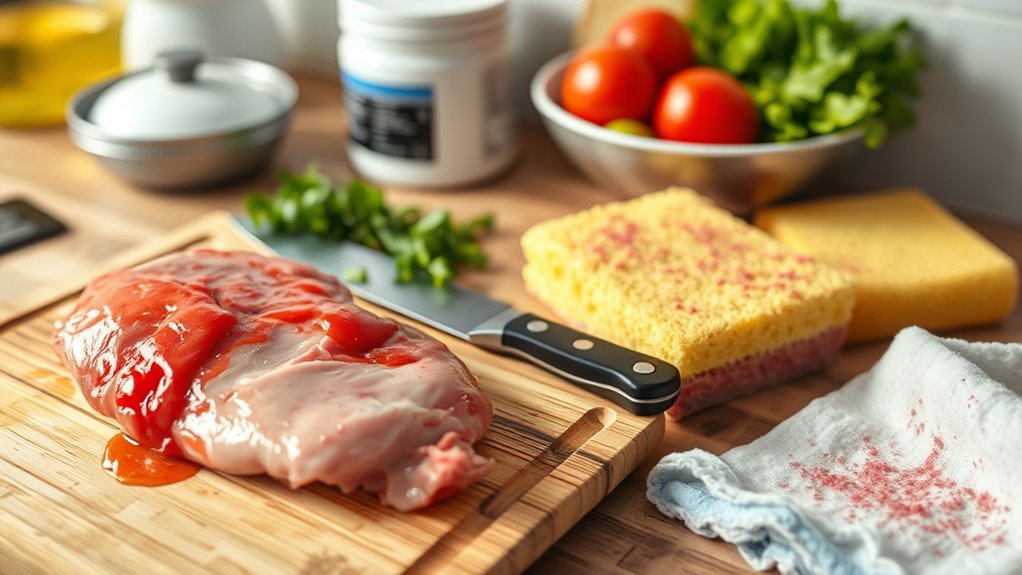
Cross-contamination can introduce harmful bacteria and pathogens into your food, leading to serious health risks. When bacteria transfer from raw meats or contaminated surfaces, you risk food poisoning. These illnesses can cause symptoms like nausea, diarrhea, and fever. To understand the dangers: 1. Food poisoning results from consuming contaminated food. 2. Bacteria transfer can happen through improper handling or cross-contact. 3. Contaminated surfaces or utensils spread bacteria to other foods. 4. Vulnerable groups, like the elderly or immunocompromised, face higher risks. Proper hygiene practices are essential to prevent bacteria transfer and keep your meals safe. Ignoring proper hygiene increases the chance of bacteria transfer, making your meals unsafe. Recognizing these risks helps you prevent foodborne illnesses and protect your health from the dangers of cross-contamination.
Frequently Asked Questions
Can Cross-Contamination Occur With Cooked Foods?
Yes, cross-contamination can happen with cooked foods. If you use the same cooking surfaces or utensils without proper cleaning, bacteria from raw foods can transfer to cooked items, causing illness. Always wash surfaces and utensils thoroughly after handling raw ingredients, even when cooking foods thoroughly. Sharing utensils without cleaning them between uses also risks spreading bacteria. Staying vigilant helps keep your cooked foods safe and prevent cross-contamination.
How Long Can Bacteria Survive on Kitchen Surfaces?
Bacterial resilience means bacteria can linger on kitchen surfaces for days if not properly cleaned. Surface longevity varies, but many bacteria survive up to 48 hours or more on countertops, cutting boards, and utensils. This hidden threat underscores the importance of regular, thorough cleaning. Don’t let the misconception that surfaces are safe after a quick wipe fool you—proper sanitation keeps your kitchen truly hygienic and reduces the risk of cross-contamination.
Are There Specific Cleaning Products That Better Prevent Cross-Contamination?
You should use food-grade disinfectants or antimicrobial sprays to effectively prevent cross-contamination. These products are specifically designed to kill bacteria on kitchen surfaces without leaving harmful residues. Regularly cleaning with these disinfectants guarantees surfaces stay sanitized and safe for food preparation. Avoid using harsh chemicals that aren’t food-safe, as they can transfer contaminants. Consistent use of proper disinfectants keeps your kitchen safer and reduces the risk of bacterial spread.
Does Cross-Contamination Happen More Often With Organic or Conventional Produce?
You might be surprised, but organic produce has a slightly higher risk of contamination—about 12% more—compared to conventional produce. This is because organic farming often uses natural fertilizers that can carry pathogens. While both types can harbor bacteria, conventional produce risks are usually lower due to stricter pesticide and chemical controls. Always wash your fruits and vegetables thoroughly, regardless of whether they are organic or conventional, to minimize contamination.
Can Cross-Contamination Occur Through the Air in the Kitchen?
Yes, cross-contamination can occur through the air in your kitchen. Airborne bacteria can settle on surfaces or food if your kitchen ventilation isn’t effective. Poor ventilation allows airborne particles to linger, increasing contamination risks. To diminish this, ensure your kitchen has proper airflow, use exhaust fans, and clean surfaces regularly. This helps prevent airborne bacteria from contaminating your food and keeps your kitchen safer.
Conclusion
Don’t let careless shortcuts crash your culinary confidence. Stay vigilant, sanitize surfaces, and separate slices of raw and ready-to-eat foods. By practicing proper hygiene and handling habits, you’ll prevent pesky pathogens from penetrating your pantry. Remember, a clean kitchen is a safe kitchen—where prevention replaces peril. Protect your plates, prioritize precautions, and keep cross-contamination at bay, so your meals remain safe, savory, and satisfying every time.