
To stop air leaks and rattles during window AC installation, first guarantee your window frame is sturdy and functioning properly. Measure the opening carefully and use insulation strips or foam padding around the edges to seal gaps tightly. Secure the unit with side panels and brackets to prevent movement. Check for loose fittings or gaps regularly, and maintain proper clearance for airflow. Keep these tips in mind, and you’ll discover more tricks for a quiet, efficient setup.
Key Takeaways
- Ensure the window frame and AC unit are properly secured and level for a snug fit.
- Seal gaps around the unit with insulation strips or foam padding to prevent air leaks.
- Secure side panels tightly to minimize rattling and prevent cool air from escaping.
- Use brackets or additional supports to stabilize the AC unit during installation.
- Regularly inspect and re-seal as needed to maintain airtightness and reduce noise.

Are you ready to install a window AC unit and enjoy a cooler, more comfortable space? Before you start, it’s important to focus on maximizing energy efficiency and keeping safety considerations in mind. Proper installation not only helps your unit run smoothly but also reduces energy waste and minimizes potential hazards. When you’re installing your AC, ensure the window frame and sill are sturdy enough to support the weight of the unit. Weak or damaged frames can cause the AC to become unstable or fall, creating safety risks and reducing energy efficiency as gaps and leaks develop. Check that the window operates correctly and open easily; a secure, properly functioning window is essential for a tight seal.
Ensure your window frame is sturdy and secure for safe, efficient AC installation.
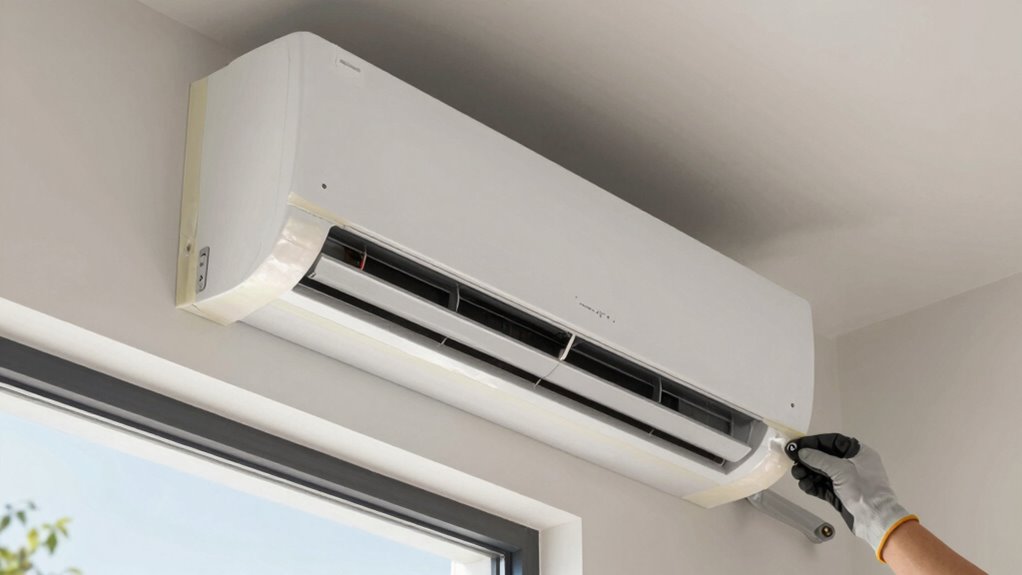
Next, measure your window opening carefully to confirm your AC unit fits snugly. An ill-fitting unit can lead to air leaks, making your air conditioning less effective and increasing your energy bills. To prevent this, use insulation strips or foam padding around the edges of the unit and the window frame. This not only stops unwanted air leaks but also improves overall energy efficiency by maintaining a consistent indoor temperature. When positioning the AC, make sure it’s level and fully seated in the window opening, with the side panels securely in place. This helps create a tight seal, reducing rattling noises and preventing cool air from escaping.
Addressing safety considerations is vital during installation. Always unplug the unit before handling or adjusting it. Check the power cord and plug for damage to avoid electrical hazards. If you notice frayed wires or a loose plug, replace or repair them before powering the unit. When installing the unit, make sure it’s properly grounded and plugged into a dedicated outlet to prevent overloads and potential fire hazards. Avoid using extension cords, as they can cause overheating and compromise safety. Additionally, ensure there’s adequate clearance around the unit for airflow and easy maintenance, which keeps the system running efficiently and safely.
Furthermore, understanding robotic maintenance can help you keep your AC unit in optimal condition, extending its lifespan and ensuring safety. Finally, secure the unit firmly in place to prevent rattling or shifting during use. Rattles often occur when the AC isn’t tightly fitted, which can be annoying and reduce the lifespan of the unit. Using brackets or additional support can help stabilize the unit and minimize noise. Regularly inspecting the installation for gaps or loose fittings is a good habit, as it allows you to address issues promptly. A well-installed, airtight, and secure window AC not only enhances energy efficiency but also guarantees safety and quiet operation, so you can enjoy a cool, comfortable environment all season long.
Frequently Asked Questions
How Often Should I Check for Air Leaks Around My Window AC?
You should check for air leaks around your window AC at least once each season to maintain ideal energy efficiency. Regular seasonal maintenance helps you spot gaps or cracks early, preventing cool air from escaping and warm air from entering. By sealing leaks promptly, you enhance your unit’s performance, reduce energy bills, and ensure your space stays comfortable. Make it a habit to inspect and reseal as needed for the best results.
Can DIY Installation Prevent Rattling Issues Long-Term?
Think of DIY installation as planting a sturdy tree—if you do it right, it can stand tall and resist rattles for years. Proper DIY safety and using professional tools guarantee your window AC stays quiet and secure long-term. Skimping on quality or safety might cause future issues, like rattles or air leaks, that are tougher to fix later. Invest in good materials and follow safety guidelines to keep your unit whisper-quiet.
What Types of Sealants Are Best for Air Leaks?
For air leak prevention, silicone and acrylic latex sealants are your best options. Silicone sealants are flexible, durable, and resistant to weather, making them ideal for sealing gaps around your window AC. Acrylic latex sealants are easy to apply, paintable, and cost-effective. Both sealant types create a strong barrier against drafts, helping you maintain efficient cooling and prevent rattling caused by air leaks.
How Do I Identify the Source of Rattling Noises?
Think of your window AC as a musical instrument that’s out of tune. To find the rattling source, listen closely while the unit runs, noting where the sound intensifies. Use soundproofing techniques like vibration dampening pads under the unit or foam strips around the frame. These methods help isolate and reduce the noise, making it easier to pinpoint the culprit and restore harmony to your cooling system.
Is Professional Installation Necessary for Reducing Air Leaks?
Professional installation isn’t always necessary but highly recommended for reducing air leaks effectively. With professional expertise, you benefit from accurate installation, ensuring the window AC fits snugly and seals properly. This minimizes leaks and rattles, maximizing efficiency and comfort. Attempting a DIY install can lead to gaps and poor sealing, so investing in a skilled technician guarantees peak performance and fewer issues down the line.
Conclusion
By sealing gaps and securing your window AC properly, you can enjoy a quieter, more energy-efficient cooling experience. For example, imagine John, who installed weatherstripping around his unit and fixed rattles—his room cooled faster and was much quieter. Taking these simple steps can make a big difference in comfort. So, don’t overlook small leaks or loose parts; fixing them now will save you headaches—and money—later on.