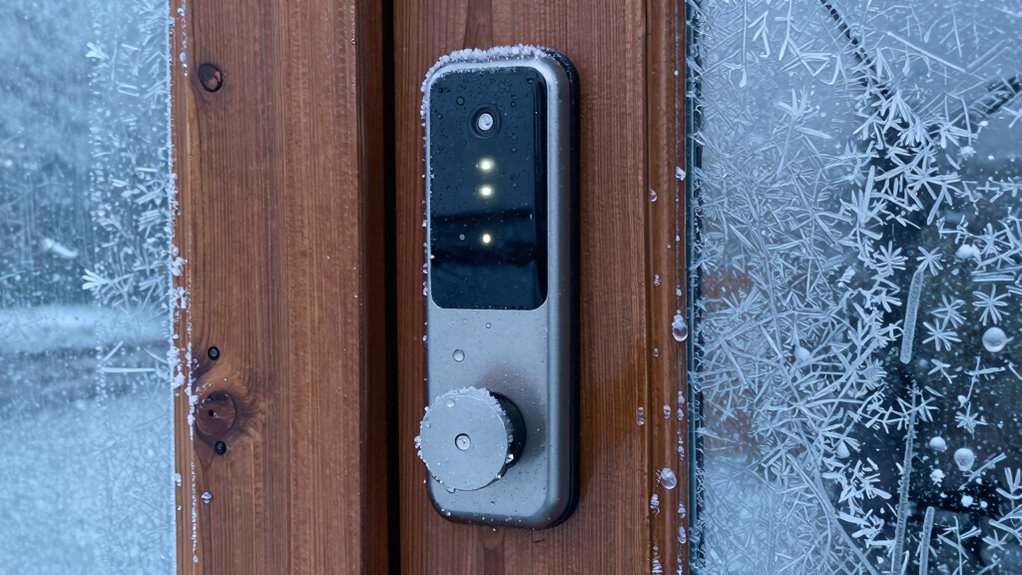
Extreme temperatures can quickly drain your smart lock’s battery or cause it to fail entirely, leaving your home vulnerable. Cold weather slows down the chemical reactions inside the battery, reducing its capacity and risking lockouts. On the other hand, excessive heat accelerates battery depletion and may damage internal components. Keeping your batteries within ideal temperature ranges is vital for reliability. If you want to understand how to protect your lock from these risks, continue exploring the details.
Key Takeaways
- Cold temperatures slow battery chemistry, causing rapid capacity loss and potential lockouts.
- Excessive heat accelerates battery depletion and damages internal lock components over time.
- Extreme temperature fluctuations reduce battery lifespan and compromise smart lock reliability.
- Proper storage in cool, dry environments extends battery life and prevents temperature-related failures.
- Using high-quality, temperature-resistant batteries helps maintain consistent performance in varying weather conditions.
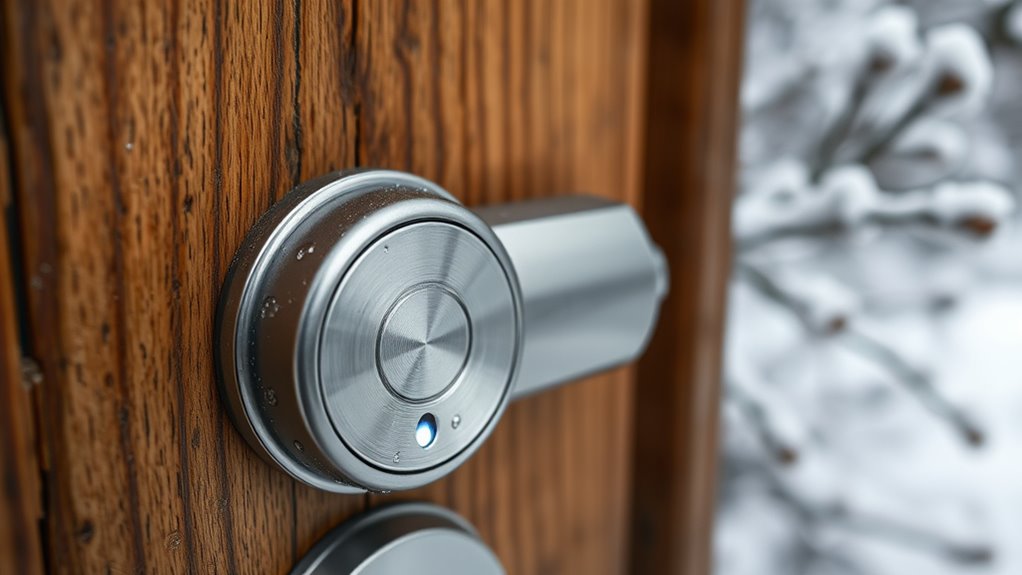
Battery life in smart locks isn’t just about the number of days or weeks between replacements; it’s also about how environmental factors impact their performance. Extreme temperatures, especially cold weather, can considerably drain batteries faster than usual. When temperatures drop, the chemical reactions inside batteries slow down, reducing their capacity to deliver power. This means your lock could weaken or even fail if the batteries don’t have enough charge, leaving your home vulnerable. Conversely, excessive heat can accelerate battery depletion or cause internal damage, compromising the lock’s functionality over time. Additionally, battery chemistry plays a role in how well batteries withstand temperature extremes, influencing their overall longevity. To avoid surprises, regular lock maintenance is vital. You should routinely check the battery status through your lock’s app or control panel. Many smart locks provide low-battery alerts, giving you a heads-up before the power runs out completely. Replacing batteries proactively prevents lockouts and guarantees continuous security. Additionally, it’s wise to keep spare batteries on hand, especially during seasonal changes when temperature fluctuations are more common. Proper placement and storage of batteries also matter. If you’re storing spare batteries, keep them in a cool, dry place away from direct sunlight or extreme cold. When installing new batteries, make sure they’re fresh and fully charged if rechargeable. Using high-quality batteries designed for smart devices can make a difference in longevity and performance. It’s also beneficial to periodically clean battery contacts and ensure they’re free of corrosion or debris—dirty contacts can hinder wireless power transfer and drain batteries more quickly. In some cases, you might consider external power options or backup systems, especially if your lock supports such features. These can provide peace of mind during particularly cold seasons or extended power outages. Remember, consistent lock maintenance isn’t just about replacing batteries—it’s about understanding how environmental factors impact your smart lock’s power and taking steps to mitigate those effects. By staying vigilant and proactive, you’ll keep your smart lock functioning reliably, guaranteeing your home remains secure no matter what the weather throws at it.

Granicell 10-Pack Lithium AA Batteries | 1.5V for Blink Cameras, Smart Locks, Alarms & Tech Devices | 10-Year Life, Leak-Proof, Extreme-Temp Resistant (Non-Rechargeable)
10-Year Ultra-Long Lifespan & High Capacity: Engineered with lithium metal technology, these AA batteries deliver 3x longer power…
As an affiliate, we earn on qualifying purchases.
As an affiliate, we earn on qualifying purchases.
Frequently Asked Questions
How Does Humidity Affect Smart Lock Battery Life?
Humidity impact can substantially shorten your smart lock’s battery life because excess moisture can cause internal corrosion and damage. When humidity levels are high, moisture may seep into the lock’s components, leading to moisture damage that drains batteries faster or causes malfunctions. To protect your smart lock, keep it in a dry environment and consider using a dehumidifier or protective cover to reduce humidity impact and extend battery life.
Are There Specific Temperature Ranges That Optimize Battery Longevity?
Imagine your smart lock basking in a cozy, temperate glow—around 20°C to 25°C—where it thrives. Proper temperature management within this range optimizes battery longevity, preventing rapid drain. Extreme cold or heat throws off battery calibration, causing it to drain faster or malfunction. Keep your smart lock in a stable environment, and it’ll run smoothly, ensuring reliable access while extending its battery life.
Can External Factors Like Sunlight Damage Batteries in Smart Locks?
Sunlight can damage your smart lock batteries through excessive solar exposure, causing overheating and reducing battery life. Additionally, moisture impact from rain or humidity can lead to corrosion and battery failure. To safeguard your smart lock, avoid placing it in direct sunlight and ensure it’s shielded from moisture. Proper placement and maintenance help extend battery longevity and keep your smart lock functioning reliably, even amid environmental challenges.
Do Different Smart Lock Brands Have Varying Temperature Tolerances?
Yes, different smart lock brands have varying temperature tolerances based on their brand specifications and design. You should check each product’s temperature thresholds to guarantee it suits your environment. Some brands might specify a wider range, making their locks more durable in extreme weather, while others have narrower tolerances. Always review the manufacturer’s guidelines to prevent battery failure caused by exposure to temperatures outside these specified limits.
How Often Should Batteries Be Replaced in Extreme Weather Conditions?
In extreme weather, you should replace your smart lock batteries every 2-3 months. Think of your battery capacity like a car’s fuel tank—hot or cold temperatures drain power efficiency faster, just like a tank running low on fuel. During winter or heatwaves, the battery depletes quicker, so regular checks guarantee your lock stays reliable. Don’t wait for it to die—proactive replacements keep your smart lock functioning smoothly.

EBL Lithium AA Batteries 12 Pack, Longest Lasting 3700mAh 1.5V Non-Rechargeable, Upgraded Super Ⅲ AA Lithium Batteries for Blink Camera, Doorbell, Smart Lock Deadbolt
SUPER Ⅲ & Ultra Longest-Lasting: EBL lithium batteries aa 3700mAh is the market's longest-lasting aa batteries non-rechargeable, Advanced…
As an affiliate, we earn on qualifying purchases.
As an affiliate, we earn on qualifying purchases.
Conclusion
To maximize your smart lock’s battery life, keep an eye on temperature fluctuations—extreme heat or cold can drain your batteries faster than you can blink. Don’t let your lock become a victim of Mother Nature’s mood swings; it’s more fragile than you think. Regularly check and maintain it, so you don’t end up stranded outside your own door. With a little care, your smart lock will keep humming along like a well-oiled machine for ages!

POEOSAS Replacement Battery for Eufy S330 S230 S220 E330, 10500mAh Li-ion Battery Compatible with eufyCam S4, eufy Smart Drop Video, Smart Door Lock, T8520 T8520S T8520J11 T8531 E8531JY1 T8520T11
Full Compatibility: POEOSAS battery is fully compatible with eufy S330, S230, E330, S231 Video Smart Lock 3-in-1 and…
As an affiliate, we earn on qualifying purchases.
As an affiliate, we earn on qualifying purchases.

EZRED BMK1914 5-Piece Battery Maintenance Kit
BATTERY MAINTENANCE KIT: This kit includes every tool that you'll need to service or change a battery in…
As an affiliate, we earn on qualifying purchases.
As an affiliate, we earn on qualifying purchases.