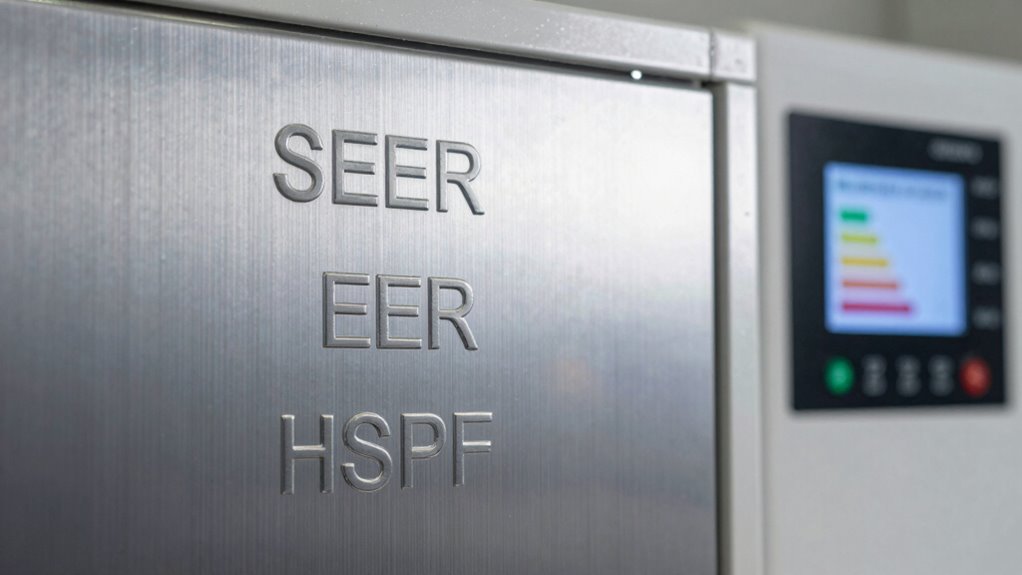

SEER measures how efficiently your air conditioner or heat pump cools over an entire season, while EER shows its performance at specific, peak conditions—especially during hot days. HSPF evaluates how well your heat pump heats over a season. The key difference is that SEER and HSPF focus on long-term efficiency, whereas EER highlights instant performance. Knowing these ratings helps you choose the right system, and if you keep going, you’ll see how they impact your energy savings.
Key Takeaways
- SEER measures overall seasonal cooling efficiency, while EER assesses real-time, peak cooling performance at specific conditions.
- HSPF evaluates seasonal heating efficiency of heat pumps, similar to SEER but focused on winter performance.
- EER is impacted by outdoor temperature differences; higher temps reduce EER, unlike SEER, which averages seasonal conditions.
- Higher ratings (SEER, EER, HSPF) indicate better energy efficiency, leading to lower energy costs and improved performance.
- SEER and HSPF reflect long-term seasonal performance, whereas EER provides snapshot efficiency during peak or extreme conditions.

ROVSUN 12,000 BTU Smart WIFI Mini Split AC/Heating System with Inverter & APP Control, 23 SEER2 Ductless Split Air Conditioner with Pre-Charged Condenser, Heat Pump & Installation Kit, 115V
❄️ Versatile 4-IN-1 Mini Split: Dive into an all-season solution with our mini split AC and heating system,…
As an affiliate, we earn on qualifying purchases.
As an affiliate, we earn on qualifying purchases.
What Is SEER and How Is It Calculated?

Have you ever wondered how the efficiency of an air conditioner is measured? That’s where SEER comes in. SEER, or Seasonal Energy Efficiency Ratio, gauges how well your unit performs over an entire cooling season. It considers the total cooling output divided by the total energy consumed, giving you a clear picture of its seasonal efficiency. The higher the SEER rating, the better your air conditioner is at using energy efficiently during the cooling season. This measurement helps you compare different models’ energy performance, ensuring you choose an appliance that saves money and reduces environmental impact. Fundamentally, SEER reflects how effectively your AC operates over time, not just in ideal conditions, making it a valuable tool for understanding overall efficiency. Additionally, understanding wiring basics and proper installation can significantly influence your system’s true efficiency and safety.

Pool Heat Pump 16000 BTU, Electric Pool Heater for Above Ground Pools up to 5000 Gallons, Energy Efficient Heat Pump Pool Heater with WiFi Control,110V- V5
【Pool Heat Pump for Above Ground Pools up to 5,000 Gallons】Designed for above ground pools up to 5,000…
As an affiliate, we earn on qualifying purchases.
As an affiliate, we earn on qualifying purchases.
How Does EER Measure Cooling Efficiency?
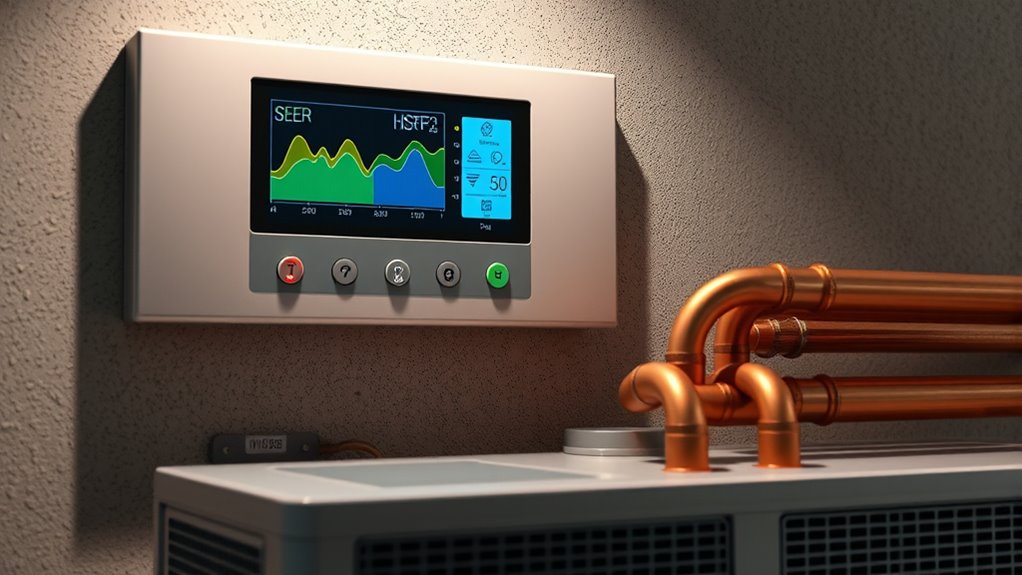
EER measures cooling efficiency by looking at how much power an air conditioner uses at a specific moment. It considers the instantaneous power use during operation and how temperature differences between indoors and outdoors affect performance. Understanding these factors helps you see how EER reflects the unit’s efficiency under real-world conditions. Additionally, seasonal variations can influence EER ratings, making it important to consider how long-term performance differs from short-term measurements.
Instantaneous Power Use
Understanding how EER measures cooling efficiency requires examining its focus on instantaneous power use. EER evaluates how much cooling you get for a specific amount of power consumption at a given moment. Unlike seasonal metrics, it looks directly at the unit’s real-time energy use during operation. By measuring the power consumption of the system when actively cooling, EER provides a clear snapshot of efficiency at that moment. This focus helps you understand how efficiently your unit operates under specific conditions, rather than averaged over a season. Additionally, the measurement method of EER emphasizes the importance of real-time data collection, which can influence how energy savings are assessed. Essentially, EER’s emphasis on instantaneous power use makes it a precise efficiency measurement tool for short-term performance. It reveals how well your system converts electrical input into cooling output in real time.
Temperature Gradient Effects
How does the temperature difference between the indoor and outdoor environments influence EER’s measurement of cooling efficiency? The temperature gradient impacts heat transfer, which directly affects EER ratings. When the outdoor temperature is high, the temperature gradient increases, making it harder for the air conditioner to transfer heat out of your space. This results in a lower EER because the system works harder to maintain indoor comfort. Conversely, a smaller temperature difference means less heat transfer resistance, leading to a higher EER. Basically, EER measures cooling efficiency based on a specific indoor and outdoor temperature setting; larger temperature gradients decrease efficiency, while smaller ones improve it. Understanding this helps you see why outdoor conditions considerably influence your unit’s performance ratings. Additionally, energy-efficient design features in modern systems can help mitigate some of these effects by optimizing heat exchange processes.

Whirlpool 10,000 BTU Window Air Conditioner with Dehumidifier, 115V, Window AC for Rooms up to 450 Sq. Ft., Living Room, Bedroom, or Kitchen, with Remote Control, Digital Display, and 24H-Timer, White
Powerful Cooling Capacity: The Whirlpool 10,000 BTU window air conditioner is powerful enough to cool rooms up to…
As an affiliate, we earn on qualifying purchases.
As an affiliate, we earn on qualifying purchases.
Why Is HSPF Important for Heating Performance?
HSPF measures how efficiently your heat pump provides heating over a season, which directly impacts your energy costs. Knowing this rating helps you choose equipment that saves money and performs reliably during cold months. Ultimately, a higher HSPF means better heating efficiency and long-term savings. Additionally, understanding smart energy management can optimize your overall home energy use and enhance your heating efficiency even further.
Heating Efficiency Metrics
Since HSPF measures how efficiently a heat pump provides heating, it’s a critical metric to take into account when evaluating heating performance. A higher HSPF indicates better energy efficiency, meaning less energy is used for effective temperature regulation. This directly influences your total-cost clarity by helping you choose more economical options. Understanding HSPF helps you compare heat pumps based on their heating efficiency metrics. Here’s a quick visual:
| Metric | Purpose | Focus Area |
|---|---|---|
| HSPF | Heating efficiency | Energy consumption & temperature regulation |
| SEER | Cooling efficiency | Energy use during cooling |
| EER | Instant efficiency | Peak performance in specific conditions |
This table shows why HSPF is essential for assessing heating performance in real-world use.
Energy Cost Savings
Choosing an energy-efficient heat pump can substantially lower your heating bills over time. HSPF, or Heating Seasonal Performance Factor, directly influences your energy cost savings by measuring how efficiently the system heats your home during winter. A higher HSPF means better heating performance and lower utility bills. When selecting a heat pump, consider refrigerant options, as newer refrigerants often improve efficiency and environmental impact. Additionally, installation costs can vary based on the system’s complexity and refrigerant type, but investing in a high-HSPF model typically reduces long-term expenses. By prioritizing HSPF, you ensure your system provides reliable warmth while minimizing energy consumption, ultimately saving you money on heating costs year-round.

GarveeHome 17000 BTU Mini Split, Energy Efficient Mini Split Unit, WIFI Enabled Split AC,Cools Up to 1250 Sq.Ft Minisplit AC/Heating System, Heat Pump & Installation Kit, 230V Ductless Air Conditione
Versatile Modes & User-Friendly Features: Split ac has 7 operating modes (Auto/Cool/Heat/Dry/Fan/Sleep/ECO) and multiple fan speeds (Auto/Low/Low-Mid/Mid/Mid-High/High/TURBO). It…
As an affiliate, we earn on qualifying purchases.
As an affiliate, we earn on qualifying purchases.
How Are SEER, EER, and HSPF Different?
Understanding the differences between SEER, EER, and HSPF is essential when evaluating HVAC systems because each rating measures a specific aspect of energy efficiency. SEER reflects the seasonal efficiency of air conditioners, considering typical climate conditions and usage patterns. EER measures the cooling efficiency at a fixed outdoor temperature, providing a snapshot of performance in peak conditions. HSPF indicates heating efficiency for heat pumps over a heating season. These ratings are based on various efficiency standards, which influence how systems perform in different climates. By knowing these distinctions, you can better assess how a system’s performance impacts your energy bills and the environment. Ultimately, understanding these differences helps you choose equipment that aligns with your climate and minimizes overall climate impact. Additionally, being aware of appliance maintenance plans can ensure your HVAC system remains efficient over time.
When Should You Focus on SEER Ratings?

You should focus on SEER ratings when you’re evaluating air conditioning systems for energy efficiency during cooling seasons. A higher SEER indicates better performance and lower energy costs, especially if you want to qualify for Energy Star certification, which often requires a minimum SEER level. This rating is particularly useful if you’re choosing an AC unit that operates efficiently over the long term. Keep in mind that refrigerant types can impact system efficiency; newer refrigerants often improve SEER ratings by reducing energy consumption. If minimizing energy bills and environmental impact matter to you, prioritize systems with higher SEER ratings. This focus helps guarantee you select an efficient, reliable cooling system suited for your climate and usage patterns. Additionally, understanding your dogs’ names can help you create a comfortable environment tailored to their needs, especially if they are sensitive to temperature changes.
What Does EER Mean for Hot Weather Conditions?
While SEER ratings help you assess a cooling system’s efficiency over a season, EER focuses on performance under specific conditions, making it particularly relevant during hot weather. In intense heat, your AC’s EER rating shows how well it maintains cooling efficiency when outdoor temperatures soar. A higher EER means your system runs more efficiently in extreme heat, helping you save on energy bills and avoid overworking your unit. During hot weather, pay close attention to these factors:
- EER provides a realistic performance estimate under peak temperatures
- Higher EER ratings indicate better efficiency in heat
- It helps you compare units for hot climate performance
- EER is vital when choosing an AC for summer conditions
- Navigation and mapping features in modern units can optimize performance in challenging weather conditions
Understanding EER ensures your cooling system performs at its best when temperatures rise.
Why Is HSPF Key in Cold Climates?
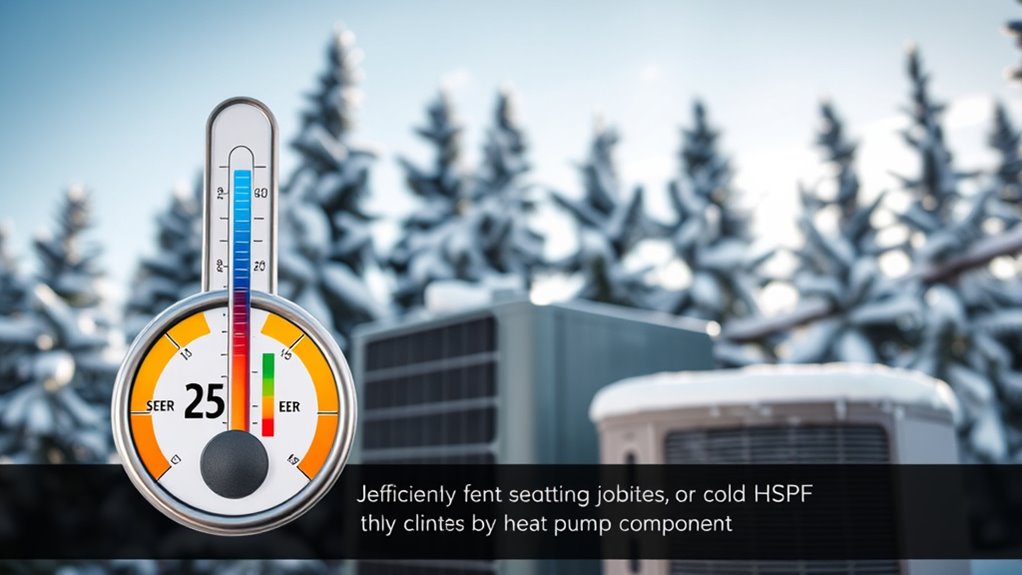
Ever wonder why HSPF matters so much in cold climates? In these regions, your heating system’s efficiency directly impacts your comfort and energy costs. HSPF, or Heating Seasonal Performance Factor, measures how efficiently heat pumps generate warmth over a season, which is vital when temperatures drop. Climate considerations highlight that a high HSPF guarantees less energy is wasted during long winter months. Additionally, energy policy often emphasizes efficient heating solutions to reduce emissions and lower energy bills. Choosing a heat pump with a high HSPF in cold climates aligns with these policies and helps you stay warm without breaking the bank. Overall, HSPF is key because it guarantees your heating system performs at its best in the challenging conditions of colder weather. Ensuring system efficiency is maximized is essential for long-term comfort and cost savings.
How Do These Ratings Impact Your Energy Bills?

Understanding how SEER, EER, and HSPF ratings influence your energy bills is essential because these metrics directly reflect the efficiency of your heating and cooling systems. Higher ratings mean your appliances use less energy to deliver the same comfort, leading to lower bills. By choosing equipment with better ratings, you support energy conservation and comply with appliance standards that promote efficiency. This can markedly reduce your monthly expenses and lessen your environmental impact.
Consider these points:
- Higher efficiency ratings cut down on energy consumption
- Better ratings lead to reduced utility costs
- Energy-efficient appliances often meet stricter standards
- Investing in higher-rated systems pays off long-term
These ratings are vital in making smart decisions that save money and promote sustainable energy use.
Tips to Read HVAC Labels and Choose Smartly

Reading HVAC labels carefully helps you make smarter choices when selecting heating and cooling systems. Focus on energy labels, which display important efficiency ratings like SEER, EER, and HSPF. These labels highlight how well the system performs in real-world conditions, helping you compare models easily. Look for the highest efficiency ratings within your budget, as they indicate lower energy consumption and savings over time. Pay attention to the Seasonal Energy Efficiency Ratio (SEER) for air conditioners and heat pumps, and to the Heating Seasonal Performance Factor (HSPF) for heat pumps. Understanding these ratings guarantees you pick a system that saves energy and reduces costs. Being vigilant with labels helps you make informed decisions and choose systems that truly meet your needs.
Frequently Asked Questions
How Do SEER, EER, and HSPF Ratings Affect Overall HVAC System Lifespan?
Higher SEER, EER, and HSPF ratings boost your HVAC system’s energy efficiency, helping you save on utility bills. They also contribute to system durability because more efficient components tend to experience less strain over time. When you choose systems with better ratings, you’re investing in longevity, reducing the need for repairs, and extending your system’s lifespan. So, prioritize these ratings to guarantee both energy savings and long-term durability.
Can a High SEER Rating Compensate for a Lower EER or HSPF?
A high SEER rating boosts your system’s energy efficiency and can offset a lower EER or HSPF, but it doesn’t fully replace them. While SEER focuses on cooling efficiency, EER and HSPF are vital for heating and overall performance. For maximum cost savings, aim for a balance across all ratings. This guarantees your system runs efficiently year-round, saving you money and extending its lifespan.
Are There Regional Standards for SEER, EER, and HSPF Requirements?
Did you know that some states require a minimum SEER of 14 for new air conditioners? Regional standards for SEER, EER, and HSPF vary widely to match climate needs. Certification requirements guarantee units meet local efficiency benchmarks. In hotter regions, higher SEER ratings are often mandated, while colder areas focus on EER and HSPF standards. Always check your area’s regional standards before purchasing to confirm compliance and maximum energy savings.
How Often Should You Upgrade Your HVAC System Based on These Ratings?
You should consider upgrading your HVAC system every 10 to 15 years to maximize energy savings and guarantee system durability. As newer models offer higher SEER, EER, and HSPF ratings, they improve efficiency and lower energy bills. Regular upgrades also help you stay compliant with regional standards, preventing unnecessary wear and tear, and keeping your home comfortable and cost-effective over time.
Do These Ratings Influence the Availability of Rebates or Tax Incentives?
You’ll find that higher efficiency ratings like SEER, EER, and HSPF often open doors to rebate eligibility and tax incentives, making your upgrade more affordable. These ratings showcase your system’s energy savings, which many programs reward with financial incentives. By choosing equipment with top ratings, you not only cut costs in the long run but also maximize your chances of qualifying for valuable rebates and tax benefits, easing your investment.
Conclusion
Think of HVAC ratings like a roadmap guiding your comfort journey. SEER, EER, and HSPF are your trusted compass, each pointing to different terrains—hot summers, cold winters, or year-round efficiency. By understanding these labels, you’re steering your home toward smarter choices, saving energy and money along the way. With the right knowledge, you’re the captain steering toward a cozy, cost-effective haven—making every season feel just right.