
When comparing radiant heat and air heat, your experience differs considerably. Radiant warmth feels natural and immediate, as if you’re basking in sunlight, directly warming your skin and objects around you. In contrast, air heating relies on warm air circulating, which can feel dry or drafty and may create uneven warmth. To understand how these systems impact your comfort and which might suit your space best, keep exploring the details.
Key Takeaways
- Radiant heat provides direct, instant warmth on skin, mimicking sunlight, while air heat warms surfaces indirectly through convection.
- Radiant systems create a more natural, consistent feeling with fewer drafts and cold spots, unlike the uneven comfort from air heating.
- Radiant warmth feels more soothing and cozy, whereas air heating can cause dryness and draft sensations.
- The sensation of radiant heat remains stable across space, while air heating might produce fluctuating temperatures and airflow discomfort.
- Personal comfort depends on the type: radiant feels more natural, while air heat can feel less uniform and more dry or drafty.
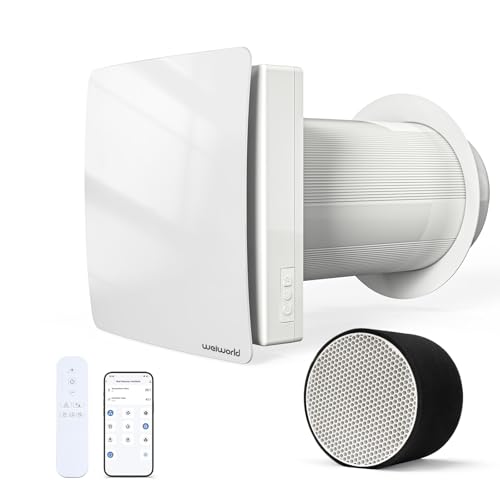
Weiworld Heat Recovery Ventilator with Ceramic Heat Exchanger, Wall-Mounted Fresh Air System with WiFi/Remote Control for Home, Attic, Garage – Supply, Exhaust & Recirculation Ventilation Fan
Heat Recovery Ventilator (HRV) for single room ventilation: Equipped with a high-efficiency ceramic heat exchanger that recovers up...
As an affiliate, we earn on qualifying purchases.
How Does Radiant Heat Deliver Warmth Like Sunlight?

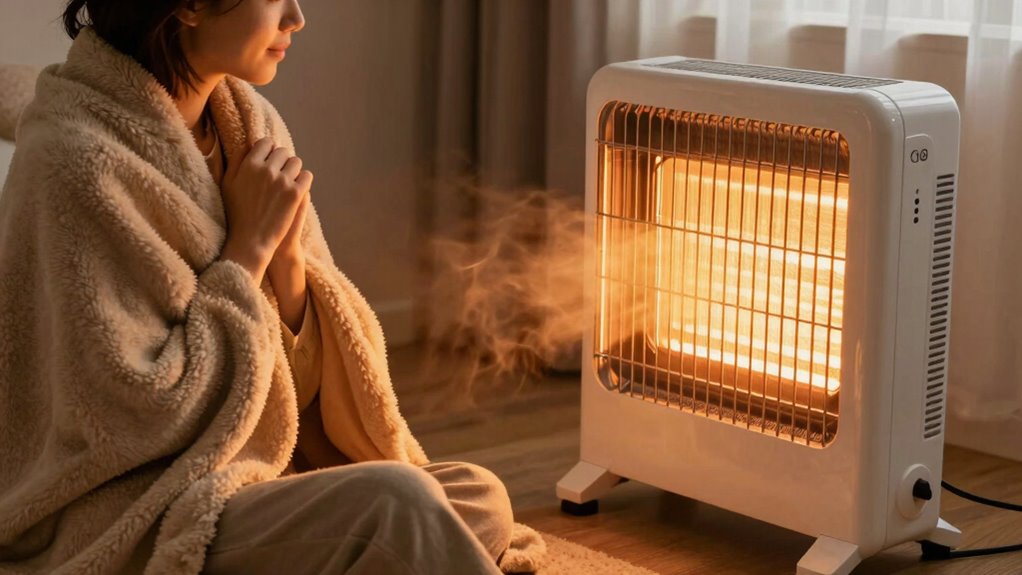
Radiant heat delivers warmth in a way that closely resembles how sunlight warms your skin. It uses thermal radiation to transfer heat directly from a source to your body or objects without needing to heat the air first. This process mimics solar warmth, where sunlight travels through space and heats surfaces upon contact. When radiant heat panels or surfaces emit thermal radiation, they send out infrared waves that are absorbed by your skin and objects around you. This direct transfer feels warm and comfortable because it bypasses the air, which often cools or disperses heat in traditional heating methods. Because it mimics the sun’s natural way of warming, radiant heat creates a cozy environment with efficient and focused warmth. Understanding thermal radiation helps explain why radiant heat feels so natural and comfortable.

VENTS-US Frigate HRV 120s Heat Recovery Ventilator – Whole House Ventilation Fan with Up to 118 CFM and Freeze Protection
HVI Certified Whole-House Air Exchange: A complete system that ensures continuous, balanced fresh air supply and stale air...
As an affiliate, we earn on qualifying purchases.
How Does Air Heating Warm a Space Through Convection?
When you turn on an air heater, warm air begins to circulate throughout the space, creating a convection current. This movement helps raise the temperature of the air itself and nearby surfaces. As the warm air moves, it heats objects and surfaces, making the entire room feel more comfortable. Additionally, efficient energy use in these systems ensures sustainable heating solutions.
Warm Air Circulation
Warm air circulation warms a space through convection, a process where heated air rises and cooler air sinks, creating a continuous flow. This cycle efficiently distributes heat, leading to faster warming and better energy savings. By moving warm air throughout the room, you reduce the need for constant heating, minimizing environmental impact. To visualize this, consider the following table:
| Effectiveness | Energy Savings | Environmental Impact |
|---|---|---|
| Promotes uniform warmth | Reduces energy consumption | Lowers carbon footprint |
| Quick heat distribution | Less power required | Eco-friendly choice |
| Maintains consistent comfort | Saves on heating costs | Supports sustainability |
This circulation keeps your space cozy without excessive energy use, making it an eco-conscious and cost-effective heating method. Additionally, integrating proper insulation enhances the effectiveness of warm air circulation by minimizing heat loss.
Surface and Object Heating
Surface and object heating works by directly transferring heat from the air to the surfaces and objects within a space through convection. When warm air contacts a surface, heat moves from the air to that object based on its thermal conductivity. Materials with higher thermal conductivity, like metals, quickly transfer heat, raising their surface temperature more effectively. As surfaces warm up, they radiate heat back into the room, helping to evenly distribute warmth. Your comfort depends on how well these surfaces absorb and retain heat. If a surface has low thermal conductivity, it heats more slowly and stays cooler, impacting how you perceive the warmth. This process ensures that even without direct air contact, objects can become warm and contribute to a cozy environment. Additionally, the efficiency of surface heating can be influenced by the thermal properties of materials involved, affecting overall comfort and heat distribution.
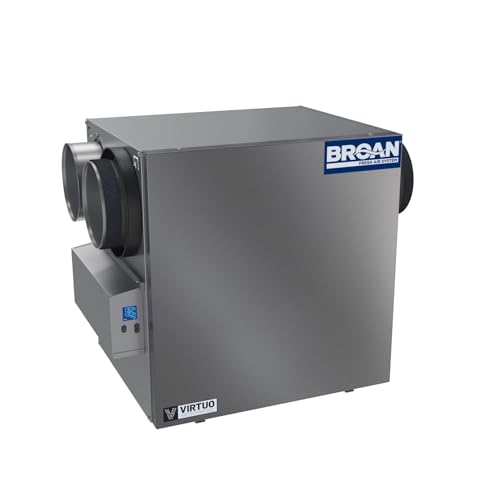
Broan B160H65RS AI 150 CFM Wall or Ceiling Mounted Heat Recovery Ventilator with VIRTUO™ Air Technology and Side Ports - N/A
As an affiliate, we earn on qualifying purchases.
How Do Radiant and Air Heat Feel Differently on Your Skin?

Radiant heat feels noticeably different on your skin compared to air heat because it directly transfers warmth without the need for surrounding air to be heated first. When exposed to radiant heat, your skin sensation registers a gentle, even warmth that feels more natural and comfortable. You won’t notice the typical convection currents or drafts associated with air heat; instead, the warmth feels more immediate and consistent. This direct transfer enhances your temperature perception, making the heat seem more soothing and less intrusive. With air heat, you may feel uneven or dry sensations as the air circulates around you. Radiant heat bypasses these issues, providing a more uniform and pleasant skin sensation that feels closer to natural sunlight warmth.
Broan B110H65RS AI 100 CFM Wall or Ceiling Mounted Heat Recovery Ventilator with Side Ports and LCD Screen - N/A
By continuously monitoring changing indoor and outdoor conditions, the AI Series with VIRTUO Air Technology, provides fresh, filtered...
As an affiliate, we earn on qualifying purchases.
Why Does Radiant Heat Feel More Natural and Comfortable?
The reason radiant heat feels more natural and comfortable lies in the way it directly warms your skin, mimicking the gentle warmth of sunlight. This method enhances your thermal sensation, making the heat feel more familiar and soothing. Because radiant heat warms objects and people directly, your sensory perception perceives the warmth as more natural, similar to being outside on a sunny day. Unlike air heat, which heats the surrounding air and can create drafts, radiant heat provides an even, consistent warmth that feels less intrusive. This direct transfer of heat aligns with your body’s instinctive responses, making you perceive the environment as more comfortable. Additionally, radiant heat systems often operate silently, further contributing to a more comfortable environment. Overall, the way radiant heat interacts with your skin creates a more authentic and pleasant thermal experience.
How Do Radiant and Air Heating Compare in Temperature Uniformity?
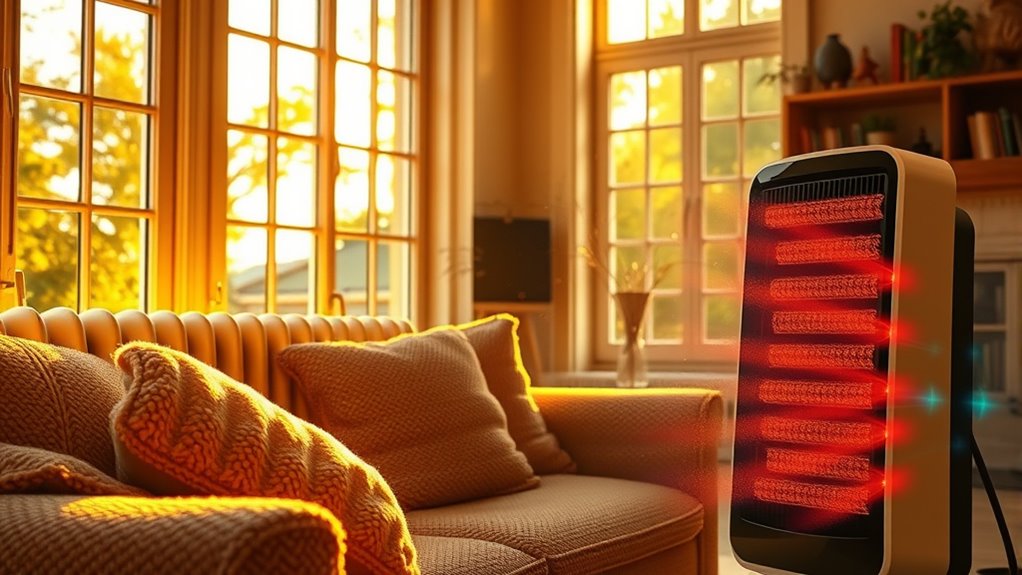
While both radiant and air heating systems aim to create a comfortable environment, they differ markedly in how evenly they distribute warmth throughout a space. Radiant heat provides consistent temperature distribution by warming objects and surfaces directly, reducing cold spots. Air heating, on the other hand, relies on circulating warm air, which can lead to uneven heat distribution and temperature fluctuations. This means you might notice areas with less consistent temperature comfort. Additionally, radiant heating often results in more efficient heat transfer, making it a preferred choice for maintaining uniform warmth.
- Radiant systems promote better temperature consistency across rooms
- Air heating may create hot and cold zones
- Radiant heat minimizes drafts and temperature swings
- Air systems depend on air circulation, affecting uniformity
Ultimately, radiant heating generally offers superior heat distribution, ensuring a more consistent and even temperature throughout your space.
How Can You Decide Which Heating System Works Best for Your Home?
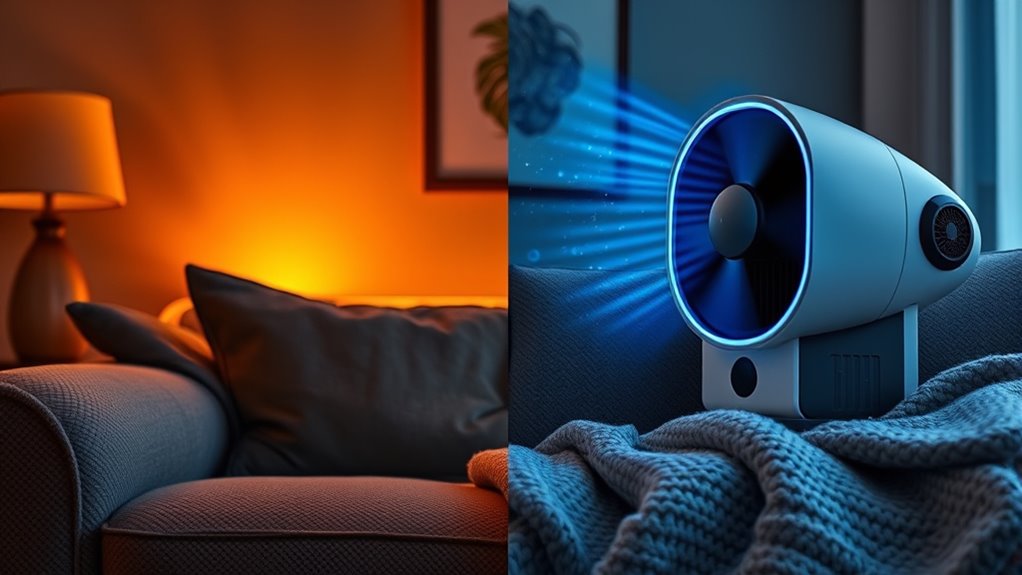
To choose the best heating system for your home, you need to consider factors like efficiency and costs, comfort preferences, and space requirements. Think about how much you’re willing to spend upfront versus long-term savings, and which system feels more comfortable for your daily living. Also, evaluate your home’s layout to see which installation suits your space best. Additionally, understanding different heating methods such as radiant heat vs air heat can help you make an informed decision based on how you actually feel in your environment.
Heating Efficiency and Costs
Choosing the right heating system depends on understanding their efficiency and long-term costs. To make an informed decision, consider the following:
- Conduct a thorough cost comparison, including installation and energy expenses
- Evaluate maintenance requirements to guarantee ongoing reliability and affordability
- Determine how efficiently each system heats your space over time
- Factor in potential energy savings to offset initial investments
- Additionally, assessing the reliability of backup power options can help ensure consistent heat during outages.
Radiant heat systems often have higher upfront costs but lower operating expenses, while air heat systems may be cheaper initially but cost more in energy over time. Keep in mind that maintenance requirements vary; radiant systems typically need less upkeep. By appraising these factors, you can select a system that balances cost-effectiveness with reliable performance for your home.
Comfort Level Preferences
Selecting the right heating system ultimately depends on your comfort preferences, as different systems deliver warmth in unique ways. If you prefer a sleek, modern decor style, radiant heat can be discreet and seamless, blending effortlessly into your home’s design. It tends to provide consistent, gentle warmth, making you feel cozy without drafts. On the other hand, if you prioritize quick heating and flexibility, forced-air systems might suit your needs better. Your choice may also hinge on your preferred energy source—electric, gas, or solar—since some systems align better with your home’s setup and your sustainability goals. Ultimately, consider how each system’s warmth feels and how it fits with your home’s aesthetic and energy preferences to find your ideal comfort level. Understanding heating system types can help you make an informed decision that enhances your home comfort.
Space and Installation Needs
When evaluating space and installation needs, consider the size and layout of your home, as well as how much space you’re willing to allocate for your heating system. Radiant heat systems often require minimal space once installed but can face installation challenges in retrofitting existing structures. Air heat systems, like forced-air units, may need more room for ductwork and equipment placement. Your choice depends on your home’s architecture and available space.
Consider these factors:
- The complexity of installation challenges
- Space requirements for equipment and ductwork
- Impact on existing room layout
- Flexibility for future expansion or modifications
- The need to protect delicate skin from UV rays when considering any additional home features or accessories.
Frequently Asked Questions
Which Heating Method Is More Energy-Efficient Long-Term?
Radiant heating tends to be more energy-efficient long-term because it uses less energy consumption by directly warming objects and people, reducing wasted heat. Although installation costs can be higher upfront, you save money over time through lower energy bills. You’ll appreciate the consistent, comfortable warmth without drafts or temperature fluctuations, making radiant heat a smarter investment for energy savings and comfort in the long run.
How Does Humidity Impact the Comfort of Radiant vs. Air Heat?
Imagine you’re in a cozy forest clearing; humidity effects are like the fog that softens sunlight, influencing comfort levels. Higher humidity makes radiant heat feel gentler and more natural, as it warms your skin directly. Conversely, with air heat, humidity can make the air feel damp and clammy, reducing comfort. So, humidity impacts how you perceive warmth, enhancing comfort with radiant systems but potentially obscuring it with air-based heating.
Are There Health Concerns Associated With Radiant or Air Heating?
You should be aware that both radiant and air heating systems can impact your health, especially concerning indoor air quality. Radiant heat typically minimizes allergen circulation, reducing airborne irritants, while air systems may circulate dust and allergens more. Both types can pose risks if not properly maintained. Regular cleaning and good ventilation help improve allergen distribution, ensuring healthier indoor environments and reducing potential health concerns associated with heating methods.
How Quickly Can Each System Warm a Room From Cold?
Like a sudden sunrise piercing the cold dawn, radiant heat delivers rapid warmth, often within minutes, elevating comfort levels swiftly. Air systems, meanwhile, take longer to circulate warmth, slowly embracing the room like a gentle tide. If you crave immediate coziness, radiant heating is your best bet, transforming chilly spaces into warm retreats almost instantly. Air heating, however, provides a more gradual, steady rise in comfort over time.
What Maintenance Is Required for Radiant Versus Air Heating Systems?
You need to perform regular maintenance routines like checking for leaks, cleaning filters, and inspecting electrical components for both systems. Radiant systems typically require less frequent upkeep, mainly ensuring the panels or tubes stay clean. Air systems may need regular filter replacements to maintain efficiency. Proper maintenance extends the system lifespan, keeps performance *ideal*, and prevents costly repairs down the line. Stay proactive to enjoy consistent, comfortable heat year-round.
Conclusion
Ultimately, choosing between radiant and air heat depends on your comfort preferences and home needs. Do you want a warm, natural feeling that heats objects directly or prefer consistent air temperatures? Both systems have their benefits, but understanding how each feels on your skin can make all the difference. Consider your space, budget, and comfort—after all, isn’t feeling genuinely cozy what truly matters? Make an informed choice and enjoy a warmer, more comfortable home.