
To reduce your home’s heating and cooling load at night, start by adjusting your thermostat to save energy—lower it in winter and raise it in summer—before bed. Use layered bedding and open windows during cool nights for natural airflow. Seal drafts and insulate windows to prevent heat loss or gain. Turn off unnecessary electronics, use ceiling fans to circulate air, and block heat from windows when needed. Following these steps helps you stay comfortable while saving energy—more tips await if you continue exploring.
Key Takeaways
- Lower or raise your thermostat before bed and schedule system operation during off-peak hours for energy savings.
- Use layered bedding and natural ventilation to regulate indoor temperature without adjusting the thermostat.
- Seal drafts and insulate windows to prevent heat loss or gain, maintaining consistent indoor comfort.
- Turn off or dim unnecessary lights and electronics to reduce energy consumption during nighttime.
- Utilize ceiling fans and window coverings to distribute air evenly and block solar gain, decreasing heating and cooling needs.
Adjust Your Thermostat Before Bed
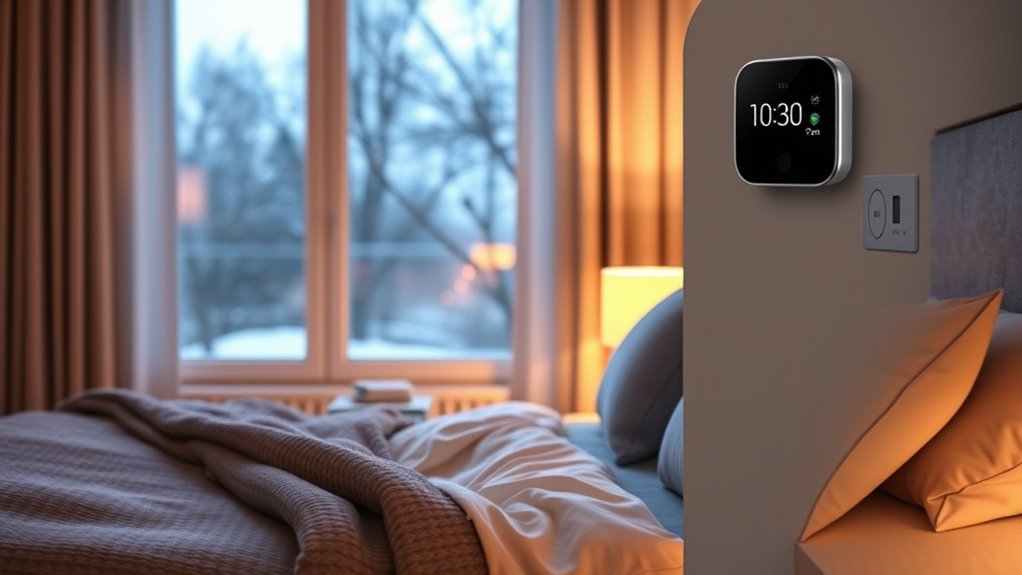
To save energy overnight, it’s important to adjust your thermostat before going to bed. Lowering the temperature in winter or raising it in summer helps reduce your heating and cooling load without sacrificing thermal comfort. When you set your thermostat appropriately, you maintain a comfortable environment that supports better sleep quality. Most people find that a slight decrease in temperature promotes deeper, more restful sleep. Conversely, in warmer months, reducing cooling slightly can prevent overheating and sweating, enhancing your comfort. Remember, small adjustments can make a big difference in energy savings over time. By proactively managing your thermostat, you’re ensuring a cozy night’s sleep while also being mindful of your energy consumption. thermal comfort is key to achieving a balance between energy efficiency and a good night’s rest. Monitoring your HVAC system can help you optimize these settings for maximum efficiency. Additionally, understanding energy management principles can help you develop routines that further reduce unnecessary energy use during nighttime hours, especially when combined with smart thermostat technology. Properly calibrating your thermostat settings can also prevent unnecessary energy waste and improve overall system performance.
Use Layered Bedding to Regulate Temperature

Using layered bedding allows you to easily adjust your sleep temperature without changing the thermostat. By adding or removing layers, you can tailor your thermal regulation throughout the night, keeping comfortable without overcooling or overheating your room. Light sheets and blankets work well for warmer nights, while heavier comforters or duvets provide extra warmth when needed. Layered bedding also offers flexibility; you can switch layers based on your personal comfort and seasonal changes. This method helps reduce the need to constantly adjust your thermostat, lowering energy consumption. Proper layering ensures your body stays at a comfortable temperature, supporting better sleep and energy efficiency. Selecting the right bedding layers can help maximize thermal comfort and energy savings. With the right combination of bedding layers, you can maintain ideal thermal regulation all night long. Additionally, understanding how thermal insulation works can help you choose the most effective layers for your specific climate and sleeping preferences. Incorporating knowledge of projector contrast ratios can also inspire ways to optimize your sleep environment’s light control for better rest.
Seal Drafts and Insulate Windows
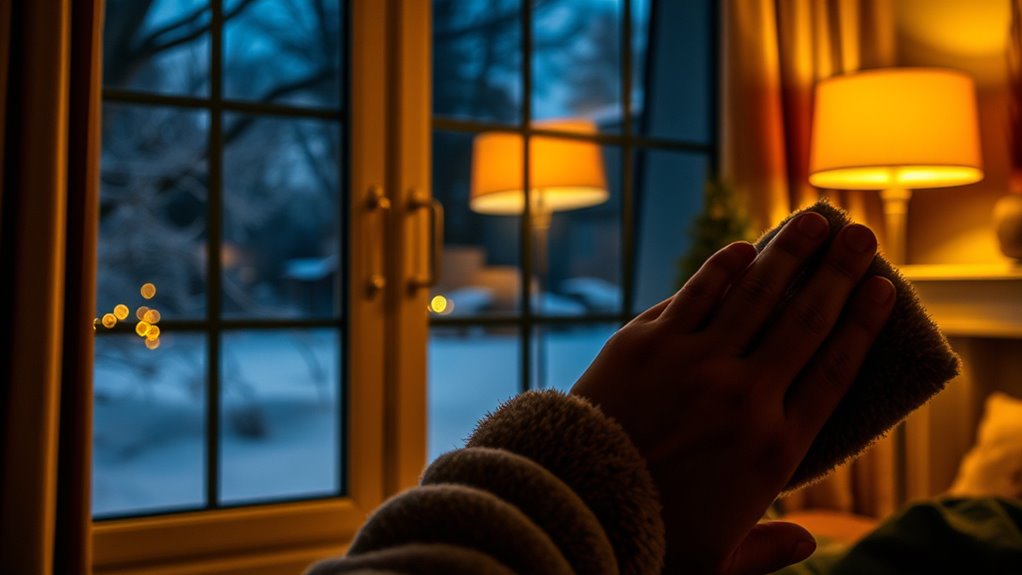
Drafts and leaks can considerably increase your heating and cooling costs, especially overnight when your home’s temperature fluctuates. To reduce heat loss, start by draft proofing doors and sealing gaps around windows. Install weatherstripping or door sweeps to block drafts from entering through gaps under doors. Use caulking to seal any cracks or gaps around window frames and sills. These simple steps prevent warm air from escaping and cold air from seeping in, making your home more energy-efficient overnight. Insulating your windows with thermal curtains or plastic film can further improve insulation. Additionally, smart home systems can monitor and adjust your home’s temperature to optimize energy efficiency during nighttime hours. Proper sealing and insulation are essential for preventing heat transfer and maintaining a stable indoor temperature. Taking these measures ensures your heating and cooling systems work less hard, saving you money and maintaining a comfortable temperature throughout the night. Ensuring correct air sealing techniques enhances overall energy savings and comfort, especially when integrated with connected home technology.
Turn Off or Dim Unnecessary Lights and Electronics

After sealing drafts and insulating your windows, switching off or dimming unnecessary lights and electronics can further cut energy consumption during nighttime. Using energy efficient lighting, such as LED bulbs, reduces energy use while maintaining brightness. Turn off devices that aren’t in use, including TVs, chargers, and computers, to prevent phantom energy drain. Implement electronic device management by unplugging chargers and power strips when not needed. Dimming lights or setting timers ensures minimal energy use without sacrificing comfort. This simple step not only saves energy but also lowers your heating and cooling load by reducing indoor heat from active electronics and lighting. Additionally, managing home energy efficiency helps optimize overall energy use and reduces utility bills. Incorporating smart home systems that automatically control lighting and electronics can further enhance your energy savings. Regularly updating your energy-saving strategies can lead to even greater reductions in energy consumption over time. Being mindful of energy use habits can also contribute to more sustainable and cost-effective home management.
Incorporate Ventilation for Nighttime Airflow
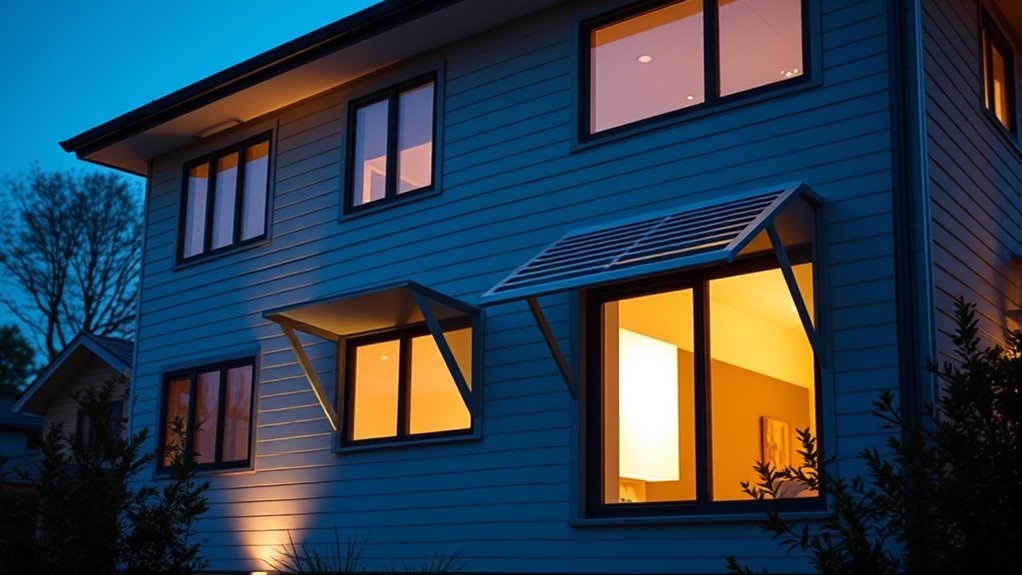
Incorporating proper ventilation during the night can considerably improve indoor air quality and help regulate your home’s temperature. Effective airflow enhancement relies on strategic ventilation strategies that promote fresh air exchange without wasting energy. Opening windows during cooler nights creates natural airflow, reducing the need for cooling systems. Cross-ventilation uses wind direction to maximize airflow, while exhaust fans remove stale air. To visualize these strategies, consider the following table:
| Strategy | How It Works | Benefits |
|---|---|---|
| Window Ventilation | Open windows on opposite sides | Promotes cross-flow airflow |
| Exhaust Fans | Remove indoor air quickly | Improves air quality |
| Night Flows | Use cooler nighttime air | Reduces cooling load |
| Ventilation Timing | Open during cooler hours | Saves energy |
| Airflow Paths | Arrange furniture for flow | Enhances airflow enhancement |
Additionally, modern ventilation techniques can incorporate smart airflow controls to optimize energy efficiency and maintain indoor air quality during the night. Incorporating natural ventilation methods can also reduce reliance on mechanical systems. Properly designed ventilation strategies can significantly contribute to a more comfortable and energy-efficient home environment. Implementing automated ventilation systems can further enhance these benefits by adjusting airflow based on real-time indoor conditions.
Program Your Heating and Cooling System for Nighttime Efficiency
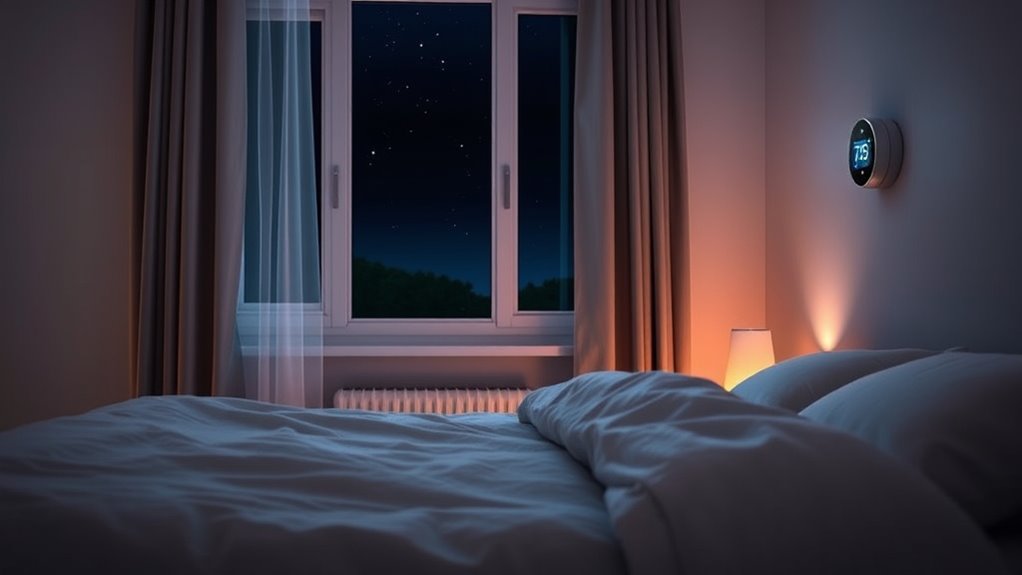
You can save energy by setting temperature limits on your thermostat so your system isn’t working harder than needed at night. Smart thermostat makes it easy to schedule your system to run during off-peak hours when rates are lower. By programming these adjustments, you’ll improve nighttime efficiency and reduce your energy bills. Incorporating adaptive zoning can further optimize comfort and energy use throughout your home. Additionally, understanding regulatory considerations can help ensure your energy-saving strategies comply with local standards and policies.
Set Temperature Limits
To maximize energy savings during the night, it’s essential to set appropriate temperature limits on your heating and cooling system. This helps with effective temperature regulation, preventing your system from working harder than necessary. By establishing clear upper and lower temperature boundaries, you ensure your home remains comfortable without excessive energy use. Adjust your thermostat to slightly higher temperatures in summer and lower in winter to optimize comfort while reducing load. This simple step enhances comfort optimization by maintaining a consistent environment, avoiding temperature swings that can cause your system to cycle more frequently. Properly set temperature limits not only cut energy costs but also extend the lifespan of your HVAC equipment, making your nighttime routine more efficient and eco-friendly.
Use Smart Thermostats
Smart thermostats make it easy to program your heating and cooling system for nighttime efficiency. With their smart thermostat features, you can set your preferred temperatures for different times, ensuring comfort while saving energy. Many models allow remote temperature control, so you can adjust your system from your phone or tablet, even if you’re not home. This flexibility means you can lower the temperature before bedtime and raise it when you wake up, without getting up or manually adjusting the thermostat. Using a smart thermostat helps you avoid unnecessary heating or cooling during the night, reducing energy waste and lowering utility bills. Plus, automatic scheduling and remote control make it simple to maintain a comfortable environment while optimizing your energy use.
Schedule Off-Peak Hours
Scheduling your heating and cooling system for off-peak hours guarantees it operates more efficiently during the night. By setting your thermostat to lower or higher temperatures when you’re asleep, you reduce unnecessary energy consumption. This adjustment ensures your system isn’t running at full capacity when it’s not needed, leading to significant cost savings on your energy bills. Many utility providers offer lower rates during off-peak times, so programming your system accordingly can maximize savings. Use a programmable thermostat to automate these adjustments, making it easy to maintain comfort while minimizing energy waste. Consistently scheduling off-peak hours helps your system run more effectively, lowering energy consumption and reducing your environmental impact. It’s a simple step toward a smarter, more cost-effective nighttime routine.
Utilize Ceiling Fans to Circulate Air

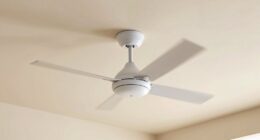
Ceiling fans are an effective way to improve air circulation and reduce the need for heating or cooling. During colder nights, set your ceiling fan to rotate clockwise at a low speed to promote airflow circulation. This creates a gentle updraft that pushes warm air trapped near the ceiling down into the living space, helping to maintain a comfortable temperature without extra heating. In warmer weather, switch the fan to counterclockwise to produce a cooling breeze. Proper ceiling fan operation guarantees air moves efficiently, reducing reliance on your HVAC system. Keep in mind that ceiling fans don’t actually change the room temperature but help distribute air evenly, making your environment feel cooler or warmer, thereby lowering energy consumption and enhancing your nighttime comfort.
Employ Window Coverings to Maintain or Block Heat
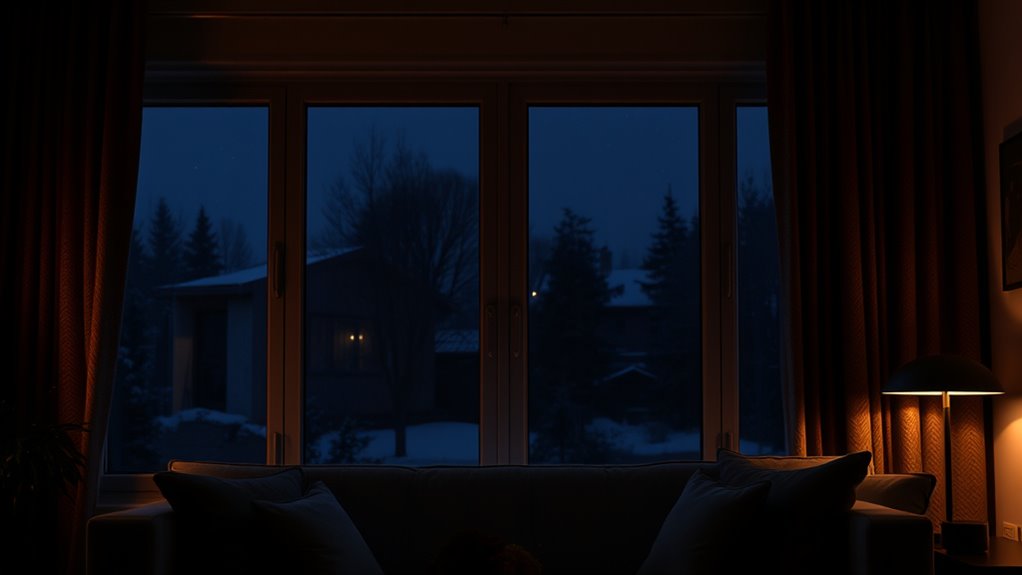
You can improve your home’s energy efficiency by using window coverings to control heat transfer. Insulating drapes keep warmth in during cold nights, while blocking solar gain helps keep your space cooler during warm evenings. Adjusting these coverings nightly can make a noticeable difference in your heating and cooling needs.
Insulating With Drapes
During colder nights, insulating your windows with drapes can substantially reduce heat loss or gain. Thermal curtains are designed specifically to trap air between the fabric and the window, creating an extra barrier that keeps warmth inside. Reflective drapes, on the other hand, work by bouncing heat back into the room, preventing it from escaping through the glass. To maximize insulation, close these drapes before you go to bed, ensuring they cover the entire window frame. This simple step can lower your heating bills by reducing the need for additional heating. When the weather warms up, open the drapes during the day to let sunlight in and naturally warm your space. Insulating with the right window coverings is an effective, low-cost way to improve your home’s energy efficiency overnight.
Blocking Solar Gain
When the sun’s rays are intense, using window coverings to block solar gain can keep your home cooler and reduce the need for air conditioning. Solar shading options like blinds, shades, or curtains help prevent heat from entering your space. Reflective coatings on windows bounce sunlight away, further reducing heat buildup. To maximize effectiveness, consider these strategies:
- Install exterior or interior window shades for adjustable solar shading.
- Use reflective coatings on windows to reflect infrared rays.
- Combine blinds with reflective coatings for enhanced heat control.
These methods work together to maintain a comfortable indoor temperature, saving energy and lowering cooling costs during hot days. Properly deflecting solar gain ensures your nighttime routine supports energy efficiency year-round.
Establish a Consistent Bedtime Routine to Support Temperature Stability
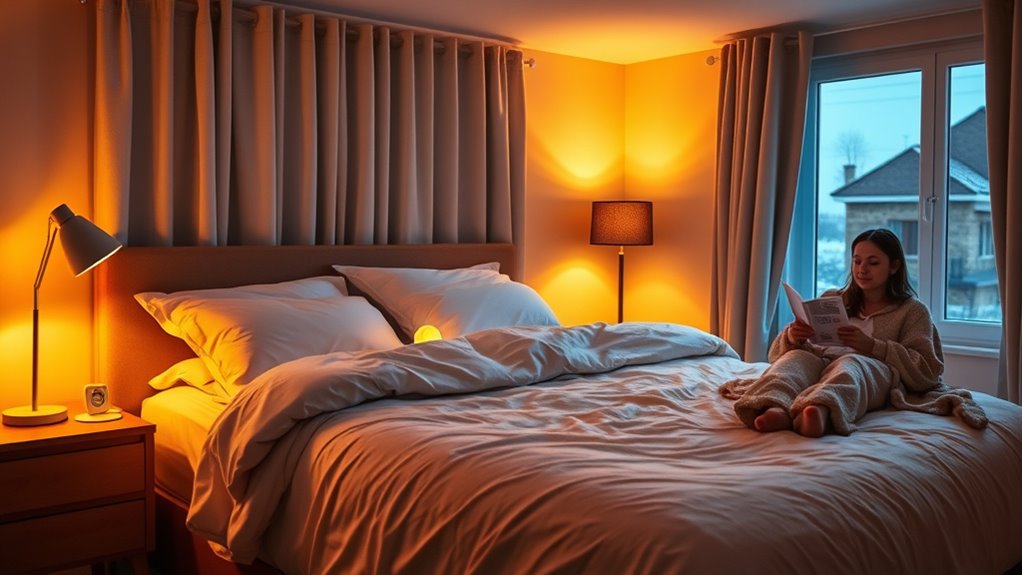
Establishing a consistent bedtime routine helps your body regulate its internal temperature, making it easier to maintain a comfortable environment throughout the night. When you follow regular bedtime routines, your body learns to wind down, which improves sleep quality and stabilizes your core temperature. Going to bed at the same time each night signals your body to prepare for sleep, reducing fluctuations in body heat that can cause discomfort. This consistency also minimizes the need for heating or cooling adjustments, as your body remains more balanced. By sticking to a routine, you help your body maintain a steady internal temperature, which supports overall comfort and reduces energy use. A predictable sleep schedule makes it easier to keep your sleeping environment stable and energy-efficient.
Frequently Asked Questions
How Can I Monitor My Home’s Energy Savings From the Nighttime Routine?
You can monitor your home’s energy savings by using energy monitoring devices like smart meters or plugs that track consumption. Set up savings tracking through your utility’s online portal or a dedicated app to compare your energy use before and after implementing the nighttime routine. Regularly reviewing these insights helps you see how much energy you save, making it easier to optimize your routine for maximum efficiency.
Are There Specific Bedding Materials That Enhance Temperature Regulation?
Choosing the right bedding materials is like finding a cozy fortress that adapts to your body. Breathable fabrics like cotton or linen help regulate temperature, preventing you from overheating or feeling chilled. Thermal insulators such as wool or fleece trap warmth when it’s cold and wick moisture when it’s warm. By selecting these materials, you create a sleep environment that naturally balances your temperature, helping you sleep better and save energy overnight.
What Are the Best Window Coverings for Different Climates?
For ideal energy efficiency, choose climate-specific coverings like thermal curtains in colder climates to retain heat or reflective blinds in warmer areas to block out heat. Consider window treatment options such as double-layer shades or cellular shades that adapt to seasonal changes. These coverings help reduce heat transfer, keeping your home more comfortable and lowering energy bills, no matter the climate.
How Does Nighttime Ventilation Impact Indoor Air Quality?
Nighttime ventilation can dramatically improve your indoor air quality, almost like a gust of fresh mountain air. You actively promote air exchange, which helps remove pollutants and stale odors, making your home healthier. By opening windows or vents at night, you allow fresh air to enter and circulate, reducing indoor pollutants and preventing buildup of allergens. This simple routine boosts your well-being, ensuring cleaner, safer living spaces while you sleep.
Can Smart Thermostats Optimize My Nighttime Heating and Cooling?
Yes, smart thermostats optimize your nighttime heating and cooling by using smart algorithms that learn your schedule and preferences. They automatically adjust temperatures for energy automation, ensuring comfort while reducing energy waste. You’ll save money on energy bills and lower your carbon footprint. Plus, you won’t have to manually change settings, making your nighttime routine more convenient and efficient.
Conclusion
By embracing these nighttime routines, you turn your home into a well-orchestrated symphony of comfort and efficiency. Like a gentle guardian, your habits weave a cozy blanket around your space, shielding it from the chill and heat outside. As you settle into these practices, you craft a sanctuary where temperature stability becomes second nature—a peaceful harbor that conserves energy and nurtures your well-being through the quiet hours.