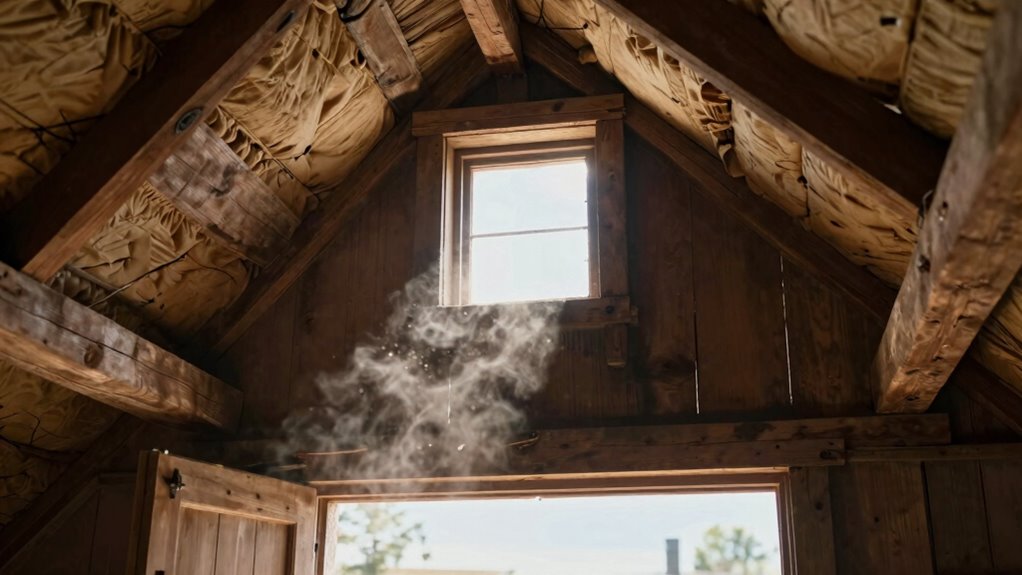

Many believe attic ventilation traps heat inside, but that’s a myth. Proper airflow actually helps dissipate heat and reduce moisture buildup. When vents are designed and maintained correctly, hot air rises and escapes, keeping your attic cooler and preventing problems like mold or insulation damage. Sealing gaps alone can trap heat if ventilation isn’t working well. If you’re curious, discovering how different venting systems optimize airflow can help you keep your attic temperature comfortable.
Key Takeaways
- Proper attic ventilation actually prevents heat buildup by allowing hot air to escape, rather than trapping it.
- Ventilation systems work with insulation to dissipate heat, reducing attic temperatures effectively.
- Trapping heat depends on ventilation design; improper or blocked vents can cause heat retention, not ventilation itself.
- Adequate airflow ensures hot air exits the attic, preventing heat from being trapped under the roof.
- Combining proper ventilation with insulation is essential for effective attic temperature regulation, debunking the myth.
How Attic Ventilation Regulates Temperature Effectively
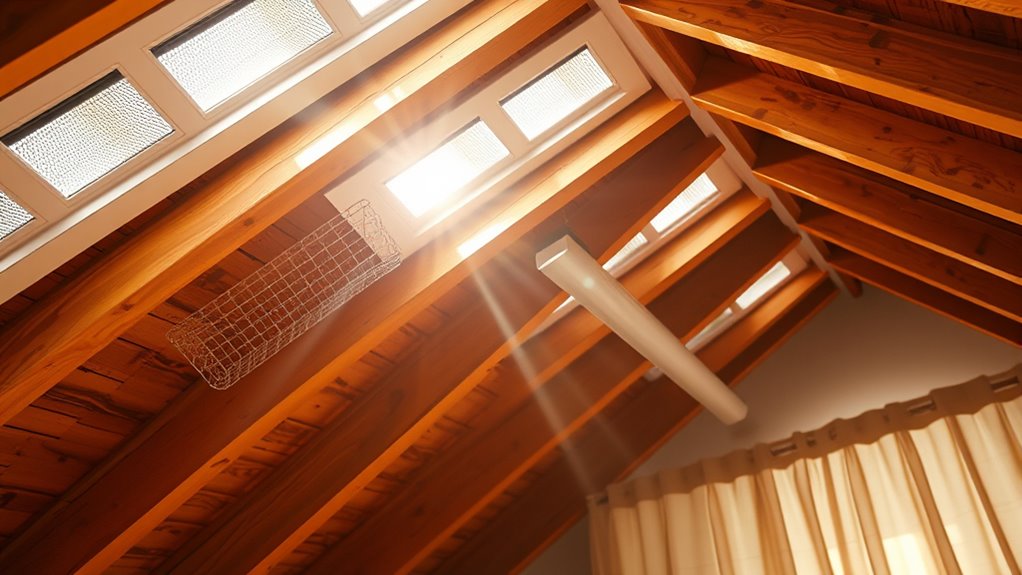
Attic ventilation plays a crucial role in maintaining a consistent temperature by allowing hot air to escape and fresh air to enter. This process prevents heat buildup during summer, reducing cooling costs and protecting your home. Proper ventilation complements insulation techniques, which slow heat transfer, but without airflow, heat can become trapped. If you have solar panels, attic ventilation helps prevent overheating that could impair their efficiency. Good airflow also minimizes moisture buildup, reducing mold and wood damage. You can improve ventilation through vents, attic fans, or ridge vents, ensuring continuous airflow. Combining effective attic ventilation with insulation techniques creates a cooler, more energy-efficient home. This synergy helps regulate temperature naturally, saving you money and extending the lifespan of your roof and solar equipment. Additionally, airflow quality can influence your home’s overall energy efficiency and comfort.
Myths About Attic Heat Trapping—What You Need to Know
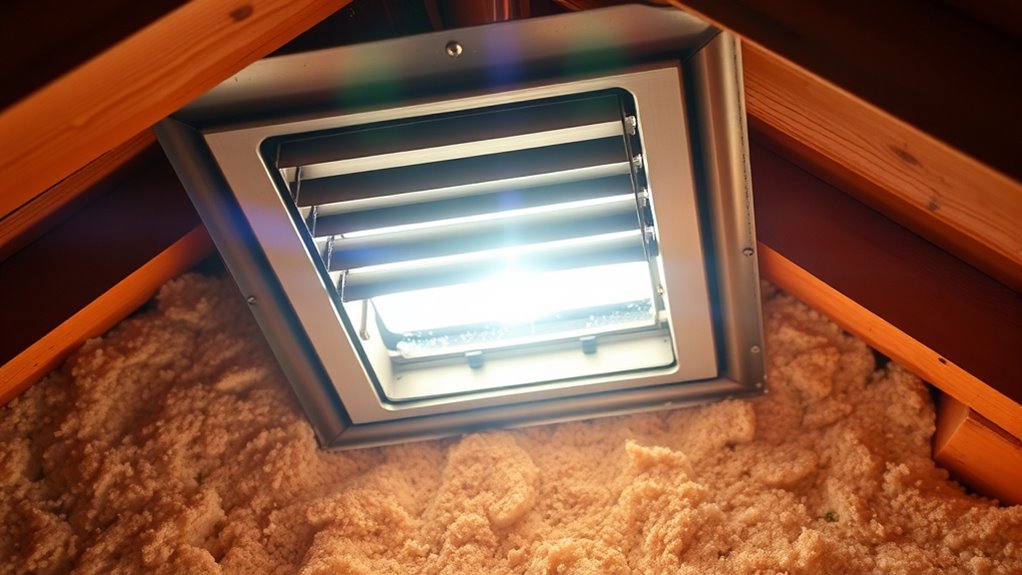
Many people believe that heat trapped in the attic always leads to higher cooling costs, but that’s not entirely true. Common myths about attic heat often oversimplify how ventilation works and what really affects your home’s temperature. Understanding these misconceptions can help you make smarter decisions about attic ventilation. Innovative European cloud servers are designed to promote energy efficiency and sustainability, demonstrating that technology can support smarter environmental choices.
Common Attic Myths
Despite common beliefs, attic heat trapping isn’t as straightforward as it seems. Many assume that simply adding attic insulation will block heat from escaping or entering. However, insulation primarily affects heat transfer, not airflow or ventilation. Another myth is that roof repairs alone can prevent heat buildup; while fixing leaks helps protect your roof, it doesn’t address heat retention issues. Some think that sealing every gap stops heat, but proper ventilation is essential for removing hot air. These misconceptions can lead you to overlook the importance of balanced attic systems. Understanding that insulation, roof repairs, and ventilation work together is key to managing attic heat effectively. Proper attic ventilation systems help prevent heat buildup by facilitating airflow and temperature regulation. Don’t rely solely on one solution—address all factors for a more accurate approach.
Ventilation Misconceptions
While insulation and roof repairs play roles in managing attic conditions, they don’t guarantee proper heat control on their own. Many believe that good ventilation alone prevents attic heat buildup, but that’s a misconception. Proper insulation types, like spray foam or rigid foam, work with solar panels to reflect heat and keep your attic cooler. Ventilation isn’t the only solution; sealing gaps and choosing the right insulation are equally important. Relying solely on attic vents can sometimes trap heat, especially if the vents aren’t balanced or if solar panels shade vents, reducing airflow. Understand that effective attic heat management involves a combination of insulation, sealing, and ventilation—each playing a crucial role in preventing heat traps and maintaining a comfortable home. Additionally, proper airflow management is essential to prevent heat buildup and ensure your attic remains cool during hot months.
Why Proper Ventilation Helps Control Moisture and Prevent Mold
Proper attic ventilation is essential for controlling moisture levels, which directly impacts mold prevention. When moisture gets trapped, it creates the perfect environment for mold growth, damaging your roof insulation and reducing energy efficiency. Good ventilation helps remove excess humidity, preventing condensation that can lead to mold. If you have solar panels installed on your roof, proper airflow ensures they operate efficiently without causing heat buildup or moisture issues underneath. Adequate ventilation also reduces the risk of wood rot and structural damage caused by excess moisture. Keeping your attic well-ventilated supports a healthier, more durable home. It’s a simple step that helps maintain ideal moisture levels, protecting your roof insulation and preventing mold from taking hold in hidden corners. Proper ventilation systems play a crucial role in maintaining optimal attic conditions and preventing moisture buildup.
Boost Your Home’s Energy Efficiency During Hot Months

During the hot months, boosting your home’s energy efficiency can keep indoor temperatures comfortable and reduce cooling costs. Start by ensuring your attic has proper insulation, which prevents heat from seeping into your living space. Well-insulated attics act as a barrier, helping your AC work less hard. Additionally, roof shading—such as awnings, trees, or reflective coatings—reduces heat absorption by your roof, keeping the attic cooler. This combination minimizes indoor heat gain and lowers your cooling bills. Proper attic insulation and effective roof shading work together to improve energy efficiency without relying solely on ventilation. By focusing on these features, you’ll enjoy a more comfortable home and save money during the hottest months. Gold IRA markets offer insight into investment strategies that prioritize stability and security, much like ensuring your home is well-protected from excess heat.
The Science of Attic Airflow and Heat Dissipation Explained
Understanding how attic airflow works is key to effectively dissipating heat and maintaining a comfortable home. Proper airflow helps remove hot air that rises into the attic, preventing heat buildup. When insulation placement is done correctly, it allows for better air circulation and prevents insulation from blocking vents. Attic insulation should be installed with an air gap above to facilitate airflow, ensuring that hot air can escape efficiently. Warm air naturally rises, so creating a path for it to vent out keeps temperatures lower. Good attic airflow reduces the strain on your cooling system and minimizes heat transfer into your living spaces. Additionally, modern smart ventilation systems can optimize airflow by adjusting based on temperature and humidity levels. By understanding the science behind airflow and heat dissipation, you can optimize your attic’s design for better energy efficiency and comfort.
How Proper Venting Extends Roof and Attic Life
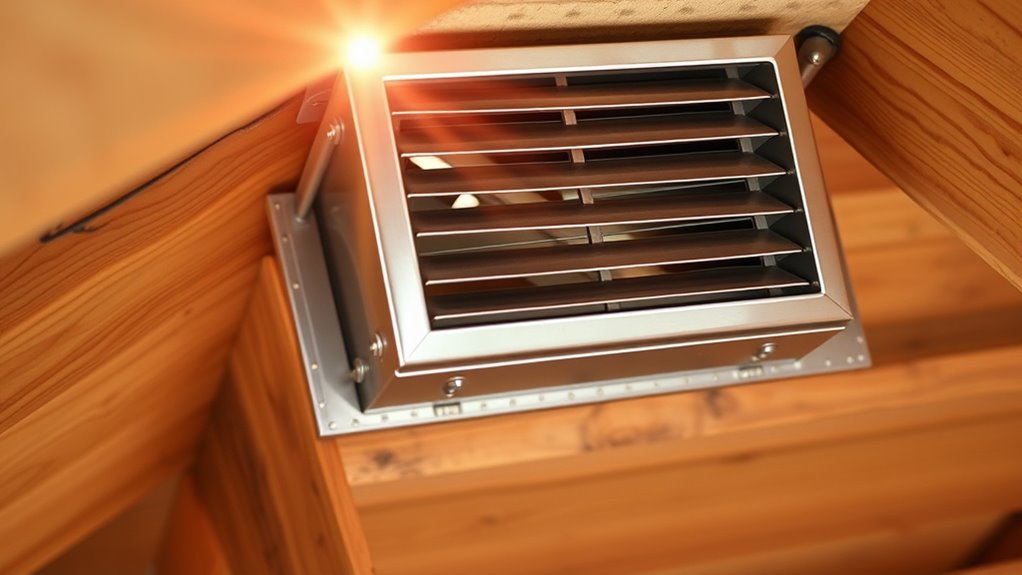
Proper venting prevents moisture from building up in your attic, stopping mold and rot before they start. It also makes your ventilation system work more effectively, keeping temperatures balanced. When your attic stays dry and well-ventilated, your roof and attic last longer and stay in better shape. Using modern outdoor tech can help monitor and optimize your attic’s airflow to prevent issues before they develop.
Prevents Moisture Accumulation
When attic vents are functioning correctly, they help prevent moisture from building up inside your attic space. Excess moisture can cause wood rot, mold growth, and damage to your roof structure. Proper ventilation allows humid air to escape, reducing the risk of condensation that forms on rafters and insulation. If you have solar panels installed, good attic airflow keeps the area beneath them dry, protecting both the panels and your roofing materials. Additionally, effective venting helps maintain your attic insulation’s effectiveness by preventing moisture from compromising its insulating properties. Proper ventilation also contributes to air circulation, which can improve overall energy efficiency in your home. Keeping moisture levels in check extends the life of your roof and attic, saving you money on repairs and replacements down the line. Proper venting is a simple, essential step in maintaining your home’s durability.
Enhances Ventilation Efficiency
Effective attic ventilation directly boosts the efficiency of your roofing system by promoting consistent airflow. Proper ventilation helps prevent heat buildup, which can damage your roof and reduce the lifespan of your attic components. When your attic stays cool, solar panels perform better, and your roof’s color remains less affected by thermal stress. Ventilation also reduces strain on your HVAC system, saving energy. To maximize efficiency, consider these factors:
- Adequate intake and exhaust vents ensure continuous airflow.
- Proper placement prevents heat from trapping near solar panels.
- Insulation works with ventilation to maintain even temperatures.
- Regular maintenance keeps vents clear, optimizing airflow and extending roof life.
Good ventilation ultimately helps your roof last longer and operate more efficiently.
Different Attic Venting Systems and Their Advantages
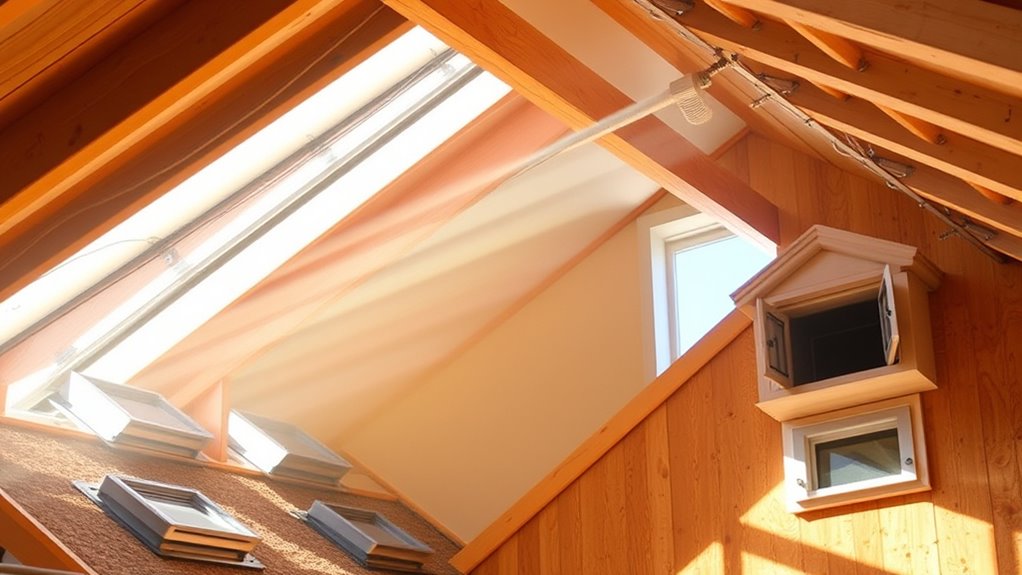
There are several attic venting systems available, each designed to improve airflow and prevent moisture buildup. Solar powered vents use sunlight to operate, offering an energy-efficient way to keep air circulating without electricity costs. They’re easy to install and require minimal maintenance. Ridge vent systems run along the peak of your roof, creating continuous ventilation that effectively expels hot air and moisture. They work best when combined with intake vents, ensuring a steady airflow. Both options help maintain a balanced attic environment, reducing heat buildup and preventing mold. Choosing the right system depends on your attic’s size and configuration, but either can substantially improve ventilation, making your home more energy-efficient and comfortable. Proper soil drainage and ventilation techniques are crucial for maintaining a healthy attic environment.
How to Tell if Your Attic Ventilation Is Working Well

A well-functioning attic ventilation system keeps your attic dry and cool, but how can you tell if it’s doing its job? Here are four signs:
- Consistent attic temperature: Check if the temperature remains stable, preventing heat buildup.
- Minimal condensation: Look for less moisture on roof materials and attic surfaces, indicating proper airflow.
- Healthy attic insulation: Well-ventilated spaces help preserve insulation’s effectiveness and prevent mold.
- Airflow sounds: You should hear gentle airflow or breeze when vents are open, confirming active circulation.
If you notice excess heat, moisture, or uneven temperatures, your ventilation may need improvement. Proper venting prevents heat trapping, protects roof materials, and maintains attic health.
Why Ventilation Dissipates Heat Instead of Trapping It

Ventilation dissipates heat through the continuous movement of air, which carries away warm, trapped air from your attic. This process helps prevent heat buildup that can compromise insulation effectiveness. When you have proper airflow, hot air rises and exits through vents, allowing cooler air to enter and replace it. Roof color plays a key role: lighter-colored roofs reflect more sunlight, reducing heat absorption, while darker roofs absorb more heat, making ventilation even more essential. Instead of trapping heat, ventilation actively disperses it, preventing your attic from reaching excessive temperatures. This constant air movement maintains a more stable environment, supporting your insulation’s performance and reducing cooling costs. Proper ventilation, combined with thoughtful roof color choices, ensures heat doesn’t get trapped but is instead efficiently dissipated.
Frequently Asked Questions
Can Attic Ventilation Reduce Cooling Costs in Summer?
Yes, attic ventilation can reduce your summer cooling costs. Proper ventilation, combined with solar cooling and a vent fan, improves airflow and reduces attic heat buildup. This keeps your home cooler naturally, lowering air conditioning needs. Make sure your vent fan is efficient, as it helps exhaust hot air effectively. Investing in good ventilation and solar cooling options results in a more comfortable home and lower energy bills during summer.
What Are Signs of Inadequate Attic Ventilation?
If your attic’s ventilation is inadequate, you might notice higher energy bills—up to 25% more cooling costs. Signs include uneven insulation effectiveness, where some areas feel warmer or colder, and visible moisture buildup on rafters or ceiling. You may also see mold or mildew. Poor airflow traps heat and moisture, compromising insulation and risking structural damage, so addressing these signs early keeps your attic dry and energy-efficient.
How Often Should Attic Vents Be Inspected or Cleaned?
You should inspect your attic vents at least once a year to guarantee proper ventilation maintenance. Check for blockages, dirt, or debris that could restrict airflow, especially after storms or heavy winds. Clean vents as needed to keep air flowing freely, which helps prevent heat buildup and moisture issues. Regular inspection frequency keeps your attic well-ventilated, protecting your home and extending the lifespan of your roof.
Does Attic Ventilation Impact Home Resale Value?
Attic ventilation can boost your home’s resale value by preventing issues like mold and roof damage, which appeal to buyers. Proper attic insulation and quality roofing materials work together with ventilation to keep your home energy-efficient and protected. When your attic is well-ventilated, it shows you’re proactive about maintenance, making your house more attractive to potential buyers and potentially increasing its market value.
Are There Eco-Friendly Attic Ventilation Options?
Yes, eco-friendly attic ventilation options exist. Did you know that solar-powered vents can reduce your energy bills by up to 30%? You might consider installing solar panels to power attic fans or opting for green roofing with vegetation that naturally insulates your home. These choices not only improve airflow but also support sustainability, helping you lower your carbon footprint while maintaining a comfortable, energy-efficient home.
Conclusion
Don’t fall for the attic heat trapping myth — proper ventilation is your home’s best defense against summer heat. Think of it as a gust of fresh air that keeps your space cool, dry, and healthy. When your attic breathes properly, it’s like opening a window to a cooler, more comfortable home. Keep your vents clear and your roof happy, so you can enjoy a breezy, energy-efficient house all season long.