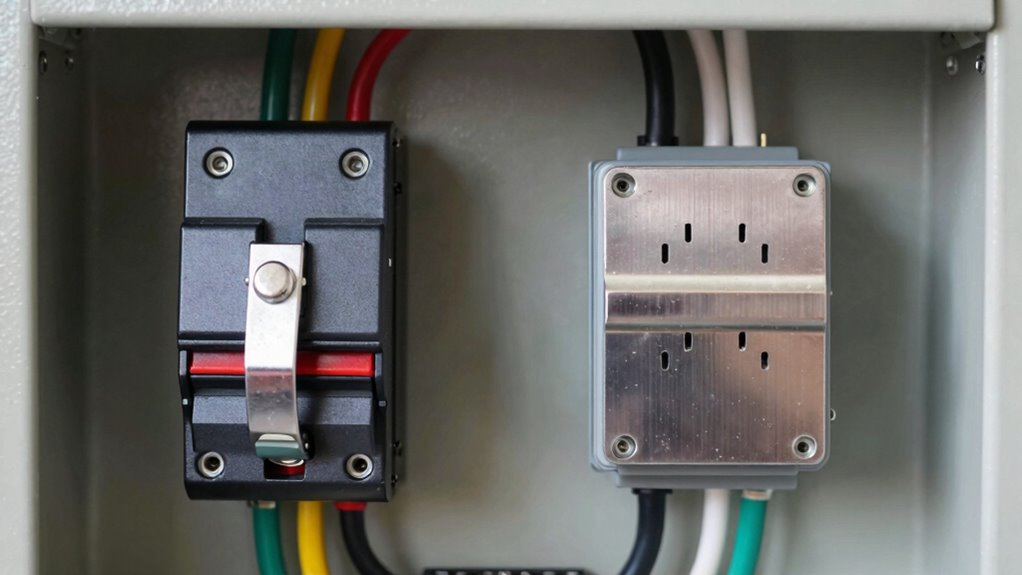
A transfer switch offers the safest, most reliable way to power your panel during outages, as it automatically isolates your home from the utility, preventing backfeeding and electrical hazards. An interlock is a mechanical device on your main panel that requires manual operation; while simpler and less expensive, it depends heavily on your discipline to guarantee safety. To choose the best option and learn how to keep your system secure, continue exploring the key differences.
Key Takeaways
- Transfer switches automatically isolate the generator from utility lines, reducing backfeeding and electrical hazards.
- Interlocks are manual devices on the main panel that prevent simultaneous connection of utility and generator power.
- Transfer switches offer more reliable, automated safety; interlocks depend on correct user operation and installation.
- Transfer switches are typically more expensive and complex to install compared to simpler, cost-effective interlocks.
- Proper installation and user discipline are crucial for both systems to ensure safe, code-compliant backup power.
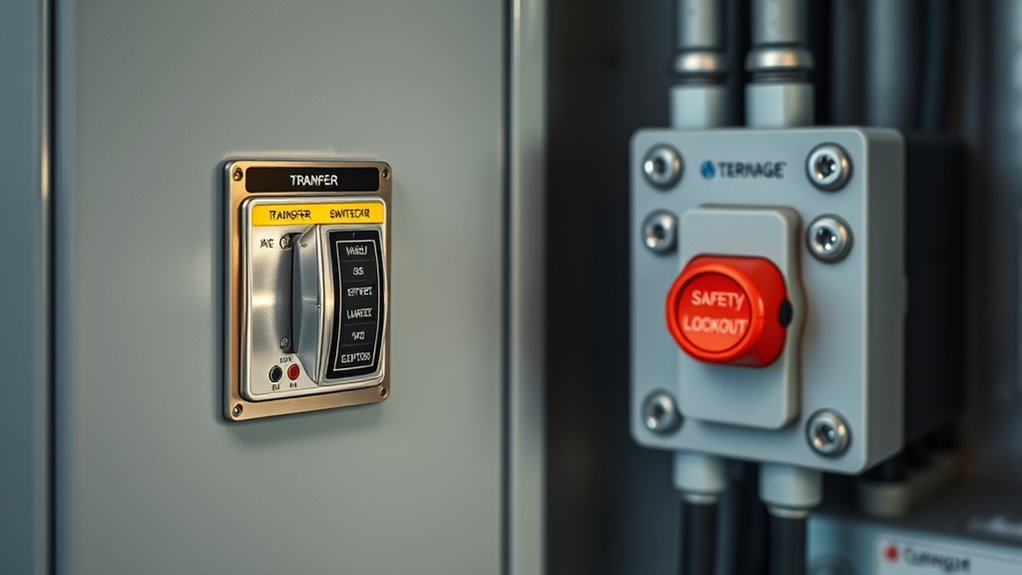
When choosing between a transfer switch and an interlock for your backup power setup, understanding their differences is vital. Both options are designed to keep your generator safe and compliant with electrical code, but they operate differently and offer distinct advantages. Your goal should be to guarantee generator safety and prevent backfeeding, which can be dangerous for you and utility workers. A transfer switch is a dedicated device that connects your generator directly to your home’s electrical system, allowing you to switch power sources safely and reliably. It isolates the generator from the utility lines, preventing electricity from flowing back into the grid, which is essential for safety and compliance with electrical code regulations. This separation also makes it easier to meet local electrical codes that often mandate the use of approved transfer switches for backup power systems.
On the other hand, an interlock is a mechanical device installed on your main breaker panel. It works by physically preventing the main breaker and generator breaker from being on at the same time, ensuring that power from your generator doesn’t feed back into the utility lines. While an interlock can be simpler to install and generally less costly, it requires careful operation to stay within electrical code standards. You must manually switch between utility and generator power, making it vital that you understand proper procedures to maintain safety. Misuse or improper installation can lead to unsafe conditions, including potential electrical shocks or damage to your equipment. Additionally, proper installation techniques are crucial to ensure safety and compliance when using either system.
Generator safety is always the top priority when choosing between these options. A transfer switch offers a more automated, foolproof approach, reducing the risk of human error. It ensures your generator is properly isolated during operation, which minimizes the chance of backfeeding and protects utility workers during outages. Additionally, transfer switches are often tested and approved to meet electrical code requirements, giving you peace of mind that your setup adheres to safety standards. An interlock, while effective if installed correctly, relies heavily on user discipline and proper operation to maintain safety and compliance. If you’re not confident in your electrical skills, hiring a professional to install either device is highly recommended. Proper installation and adherence to electrical code requirements are vital regardless of your choice, as they guard against potential hazards and ensure your backup system functions reliably when needed.
Frequently Asked Questions
Can I Install a Transfer Switch or Interlock Myself?
You can attempt a DIY installation of a transfer switch or interlock, but safety precautions are essential. If you’re experienced with electrical work, follow the manufacturer’s instructions carefully and turn off the main power before starting. However, for most people, it’s safer to hire a licensed electrician. Electrical systems can be dangerous; improper installation risks shock or fire. Prioritize safety and consider professional help to guarantee proper, code-compliant setup.
What Are the Cost Differences Between Transfer Switches and Interlocks?
Thinking about saving a buck? Well, transfer switches usually cost more upfront—think hundreds to thousands—plus higher installation costs and maintenance expenses over time. Interlocks are the budget-friendly option, with lower initial prices and simpler maintenance. But remember, you get what you pay for. So, if you’re aiming for safety and longevity, it might be worth investing in a transfer switch despite the higher costs.
How Do Transfer Switches and Interlocks Comply With Electrical Codes?
You guarantee code compliance and safety standards by installing transfer switches and interlocks according to electrical codes like the NEC. Transfer switches are evaluated for proper connection and grounding, while interlocks must meet specific safety requirements to prevent backfeeding. Both devices require professional installation and regular inspection to stay compliant, helping protect your property and personnel from electrical hazards during power transitions.
Are There Specific Appliances That Require Special Considerations With These Devices?
You should consider appliance compatibility and electrical safety when using transfer switches or interlocks. Some sensitive or high-power appliances, like HVAC systems or large generators, may need special wiring or dedicated circuits to prevent damage or safety hazards. Always check manufacturer guidelines and local codes. Properly installed, these devices guarantee safe, reliable power transitions, protecting your appliances and maintaining electrical safety standards.
How Often Should Transfer Switches and Interlocks Be Inspected or Maintained?
You should inspect and maintain your transfer switch or interlock system annually. Following a regular maintenance schedule guarantees they operate safely and reliably. Conduct visual inspections for signs of wear, corrosion, or damage, and test their functionality periodically. Proper inspection frequency helps prevent electrical issues, ensuring your system responds correctly during power outages. Staying diligent with your maintenance schedule keeps your setup safe and compliant with electrical standards.
Conclusion
Choosing between a transfer switch and an interlock depends on your safety needs. Did you know that properly installed transfer switches can prevent backfeeding, reducing electrical fires by up to 80%? By understanding the differences and selecting the right option, you guarantee your power source remains safe during outages. Always prioritize safety to protect your home and loved ones. Making an informed decision now can save you from costly repairs and dangerous accidents later.