
When choosing a surge protector, pay attention to joule ratings and clamping voltage. A higher joule rating means the device can absorb more energy from power surges, offering better protection. Lower clamping voltage allows the protector to activate sooner, reducing potential damage to your electronics. Both specs matter because they determine how effectively your devices are shielded during voltage spikes. To keep your gear safe, understanding these features will make your selection smarter, and you’ll find out more as you continue.
Key Takeaways
- Higher joule ratings mean the surge protector can absorb more energy, offering better long-term protection.
- Lower clamping voltage activates protection sooner, reducing potential damage to connected devices.
- Response time indicates how quickly a surge protector reacts; faster responses provide better safety.
- Consider both joule rating and clamping voltage for comprehensive surge protection; neither alone is sufficient.
- Additional features like number of outlets and build quality also influence the overall effectiveness of a surge protector.
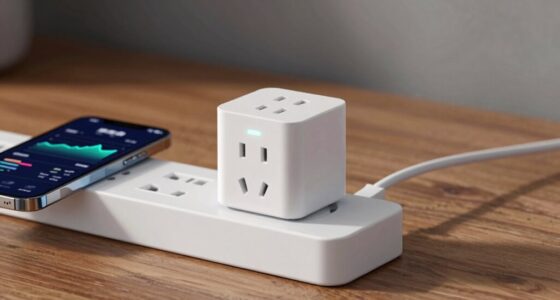
Have you ever experienced a sudden power surge that temporarily knocks out your electronics? That jolt of unexpected voltage can cause more harm than you realize, damaging your devices or shortening their lifespan. This is where understanding power surges and the protection devices designed to guard against them becomes essential. A power surge is a brief spike in electrical voltage that can overwhelm your gadgets, especially if you’re not using the right protection. When shopping for surge protectors, it’s important to consider how well they can handle these sudden increases in energy. Protection devices, like surge protectors, are engineered to absorb or divert excess voltage, preventing it from reaching your connected electronics. They act as a buffer, ensuring that your devices only get a safe, steady flow of power.
Power surges can damage electronics; choose surge protectors with high joule ratings for better safety.
One of the key specifications you should pay attention to is the surge protector’s joule rating. Think of joules as the capacity measure of how much energy the device can absorb before it fails. The higher the joule rating, the more energy your surge protector can handle, which translates into better protection for your valuable electronics over time. For instance, a surge protector with a joule rating of 2,000 joules can absorb more energy than one rated at 600 joules, making it more suitable for protecting high-end or sensitive equipment.
Clamping voltage is another critical factor to consider because it determines how quickly the protection kicks in during a power surge. It’s the voltage level at which the surge protector begins to divert excess current away from your devices. Lower clamping voltage values mean better protection because the device reacts sooner, reducing the risk of damage. For example, a clamping voltage of 400 volts is preferable to one of 600 volts, as it provides a quicker response to surges. Additionally, understanding trusted resources can help you identify reliable surge protection options and ensure your devices are well-protected.
While joules and clamping voltage are essential, other features matter too, like the number of outlets, the presence of a reset switch, and the overall build quality. But ultimately, understanding these two specifications helps you choose a surge protector that offers reliable protection, especially during electrical storms or power fluctuations. Protecting your electronics isn’t just about plugging them into any outlet; it’s about investing in the right protection devices that can stand up to the unpredictable nature of power surges. When you select a surge protector with the appropriate joule rating and clamping voltage, you’re taking a critical step toward safeguarding your devices and ensuring they last longer.
Frequently Asked Questions
How Do Joule Ratings Affect Surge Protector Lifespan?
You should know that higher joule ratings generally mean a surge protector lasts longer because its components can absorb more energy from power surges. This boosts electrical safety, protecting your devices better over time. As the surge protector absorbs more surges without failing, its lifespan extends. Keep in mind, though, that no matter the joule rating, regular replacement is essential for peak protection and safety.
What’s the Difference Between Clamping Voltage and Surge Energy Capacity?
Imagine your devices’ safety as a gentle embrace—clamping voltage comparison shows how tightly the protector holds back surges, preventing harm. Surge energy capacity, however, reveals how much power it can handle before giving in. While a low clamping voltage offers quick protection, a higher surge energy capacity guarantees your devices stay safe during stronger surges. Together, they work to shield your electronics from life’s unpredictable power surges.
Can Surge Protectors Prevent Power Outages?
Surge protectors can’t prevent power outages caused by issues like electrical wiring problems or utility company disruptions. They’re designed to protect your devices from voltage spikes, not to keep your power supply steady. If you experience frequent outages, it’s wise to check your electrical wiring or contact your utility provider. Surge protectors help safeguard your electronics during surges but won’t fix underlying power supply issues.
Are Expensive Surge Protectors Worth the Investment?
Yes, expensive surge protectors are worth the investment. Studies show that higher-quality models with better Joule ratings and clamping voltage can last up to five times longer. While pricier options may seem costly upfront, they offer superior protection for your devices, especially during severe surges. When considering pricing, prioritize brand reputation and reliability—these factors guarantee you get effective, long-lasting protection, saving you money and frustration in the long run.
How Often Should I Replace My Surge Protector?
You should replace your surge protector every 3 to 5 years or if it’s damaged, no matter the power outlet compatibility or warranty. Regularly check for wear or burn marks, and guarantee it still provides adequate protection. Even if it’s still working, surge protectors have a limited lifespan, especially after multiple power surges. Replacing it ensures your devices stay safe and maintains your warranty coverage if needed.
Conclusion
Ultimately, understanding joules, clamping voltage, and vital components helps you choose a superior surge protector. By balancing brilliance with basic knowledge, you boost your device’s durability and data’s safety. Don’t disregard details—delve into the dynamics of design and device specifications. Doing so delivers durability, prevents problems, and provides peace of mind. Protect your prized possessions proactively, and you’ll prevent potential problems, preserve your peace, and power through with confidence and clarity.