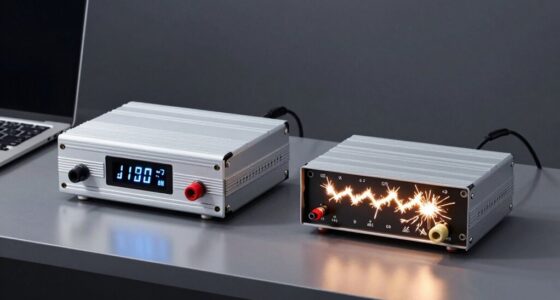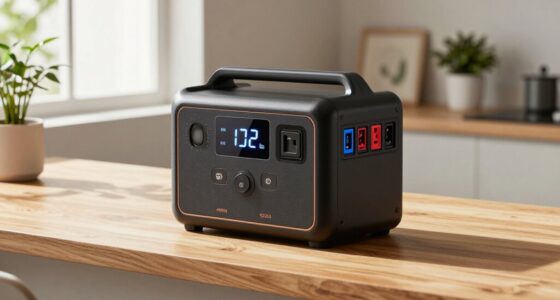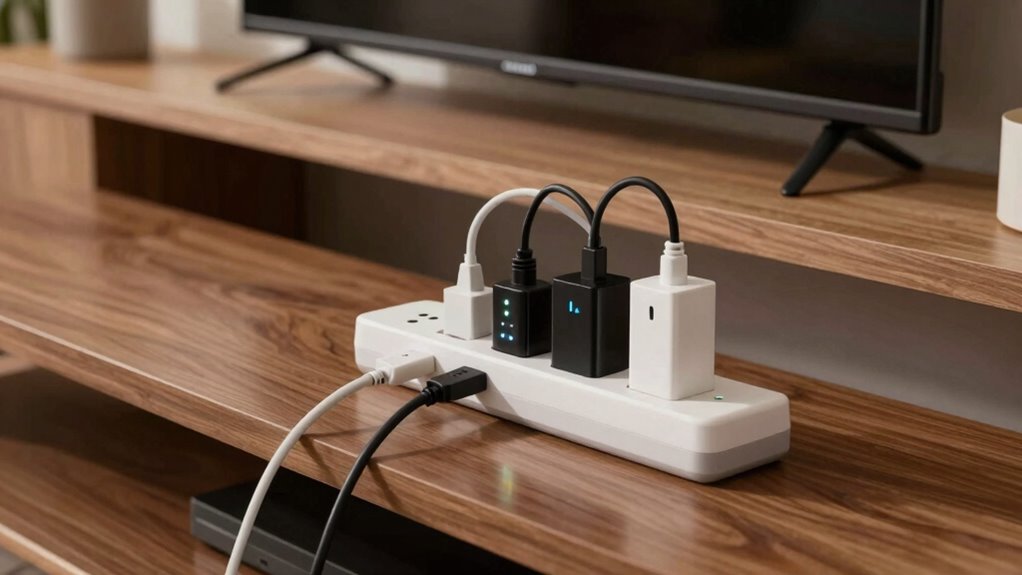
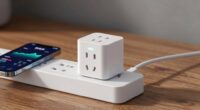
To find standby loads causing phantom power without guessing, use a plug-in power meter to measure each device’s energy draw directly. Unplug devices one at a time or connect them to smart power strips to see which ones consume power when off. Keep track of measurements to identify the biggest culprits. If you want precise control over energy waste, learn about more tools and techniques that help you target hidden power drains effectively.
Key Takeaways
- Use a plug-in power meter to measure the actual energy consumption of devices directly.
- Test devices individually by unplugging others to identify which draw standby power.
- Observe devices’ indicator lights or displays when turned off to detect phantom power usage.
- Employ smart power strips with energy monitoring features to automatically track and control standby loads.
- Focus on high-usage devices first, such as TVs and chargers, for targeted measurement and reduction efforts.
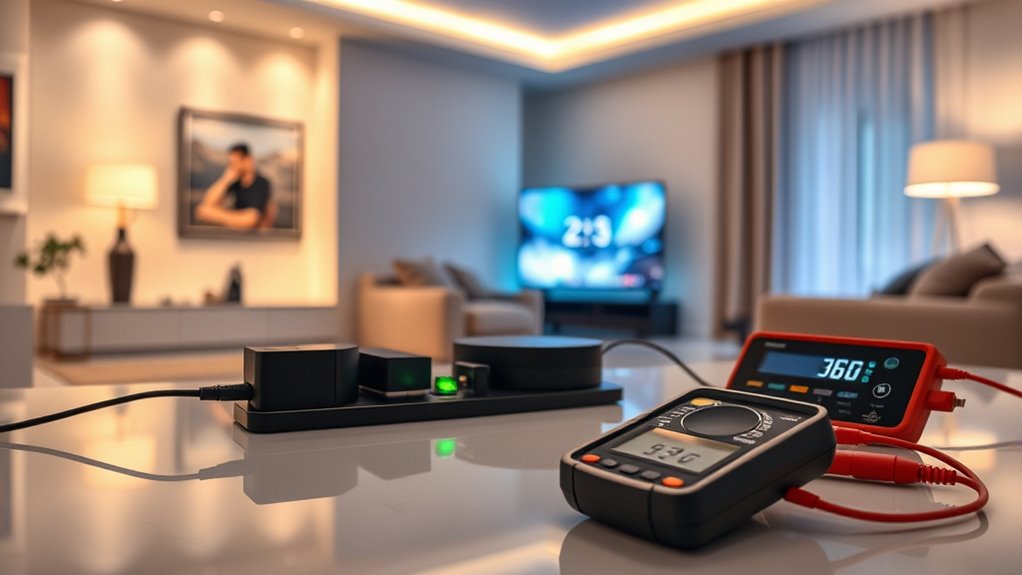
Many household devices draw power even when they’re turned off, a phenomenon known as standby loads or phantom power. This hidden energy drain can quietly increase your electricity bill over time. The good news is that you can identify and reduce these loads with some simple strategies. One effective approach involves using energy efficient chargers and implementing appliance power management techniques.
Energy efficient chargers are designed to minimize power consumption even when your devices aren’t actively charging. For example, modern phone chargers often draw less power in standby mode than older models. Switching to these chargers can cut down on phantom power without sacrificing convenience. Additionally, some advanced chargers feature automatic shutoff or smart charging capabilities. These help guarantee that power is only used when your device actually needs it, preventing unnecessary energy waste.
Appliance power management is another essential step in tackling standby loads. You can start by unplugging devices that aren’t in use for extended periods. Many devices, like TVs, gaming consoles, and kitchen appliances, continue drawing power even when turned off. Using power strips with switches makes it easy to disconnect multiple devices at once, eliminating standby power altogether. This simple act can notably reduce your overall energy consumption.
You might also consider investing in smart power strips or outlets that automatically cut power to devices when they’re not in active use. These devices often come with timers or motion sensors, giving you more control over your energy use. For example, you could set your entertainment system to turn off after a certain period, preventing phantom power from creeping in during idle times. Combining these tools with good appliance power management habits ensures you’re not wasting energy unnecessarily.
Understanding how to find standby loads without guesswork involves some basic investigation. You can use a plug-in power meter to measure the actual energy draw of individual devices. By testing your appliances, you’ll pinpoint which ones are responsible for substantial phantom loads. Once identified, you can focus your efforts on managing or replacing those specific devices with energy efficient chargers or smarter power management solutions. Additionally, monitoring energy consumption tools can help you track your overall energy use more comprehensively.
Reducing standby power isn’t just about saving money; it also lessens your environmental impact. Small changes, like switching to energy efficient chargers and practicing appliance power management, add up over time. You’ll not only see a decrease in your energy bills but also contribute to a more sustainable way of living. Taking control of standby loads empowers you to make smarter choices about your household energy use, making your home more efficient and eco-friendly.
Frequently Asked Questions
How Do I Measure Phantom Power Consumption Accurately?
To measure phantom power consumption accurately, you should use proper measurement techniques with testing tools like a multimeter or a clamp meter. Turn off all devices, then connect your meter to the power source or outlet. Turn on the device and note the readings. Make certain your testing tools are set to measure current or voltage correctly. This approach helps you precisely identify standby loads without guesswork.
Can Standby Loads Vary Between Different Electronic Devices?
Standby loads definitely vary between devices, proving that even your gadgets enjoy a bit of power-hungry drama. Device compatibility influences how much power they draw when idle, and power consumption variability means some spend more energy lurking in the background. So, don’t assume all electronics are equally considerate; some quietly sap your electricity, making it essential to identify and manage standby loads for a smarter, more efficient home.
What Are the Long-Term Costs of Standby Power?
The long-term costs of standby power impact your energy efficiency and cost savings. Even small amounts of energy drained by devices in standby mode add up over time, increasing your electricity bill. By reducing standby loads, you enhance energy efficiency and save money. Investing in power strips or unplugging devices when not in use can notably cut these costs, making your home more economical and environmentally friendly.
Are There Devices That Consume Phantom Power Even When Turned Off?
Yes, some devices still consume phantom power even when turned off. To combat this, you can use energy-efficient outlets or smart power strips, which cut power automatically when devices are not in use. These solutions help you eliminate unnecessary standby loads, saving energy and reducing costs. By switching to these devices, you guarantee that your electronics only draw power when actively needed, making your home more energy-efficient.
How Can I Reduce Phantom Power Without Unplugging Devices?
You can reduce phantom power without unplugging devices by using smart power strips with individual outlet controls, so you can turn off multiple devices at once. Additionally, energy monitors help you identify which devices draw standby power, allowing you to manage them more efficiently. These tools make it easy to cut unnecessary energy use, saving you money and reducing waste without the hassle of constantly unplugging your electronics.
Conclusion
Just like a tiny leak can sink a ship, those small standby loads can add up over time. I once found a blinking modem wasting power overnight, saving me enough electricity to run a small fan for hours. By identifying and unplugging these phantom loads, you’re effectively sealing leaks in your energy use. Don’t let hidden standby power quietly drain your wallet—tackle it now, and enjoy the satisfaction of a more efficient home.