
The main mistake that skews your temperature control is improper sensor placement and neglecting calibration. If sensors are placed near windows, vents, or in drafty spots, they’ll give false readings, causing your system to overcompensate or underperform. Over time, uncalibrated sensors drift and become less reliable. Fixing these issues improves accuracy, but there’s more to learn about how to avoid this common mistake and optimize your climate system.
Key Takeaways
- Incorrect sensor placement near heat sources or drafts can produce skewed temperature readings.
- Failing to calibrate sensors regularly leads to inaccurate data and poor temperature control.
- Positioning sensors behind furniture or in corners can prevent accurate ambient temperature detection.
- Overlooking the need for proper placement and calibration causes system inefficiencies and discomfort.
- Regularly reviewing sensor location and recalibrating ensures accurate, reliable climate regulation.
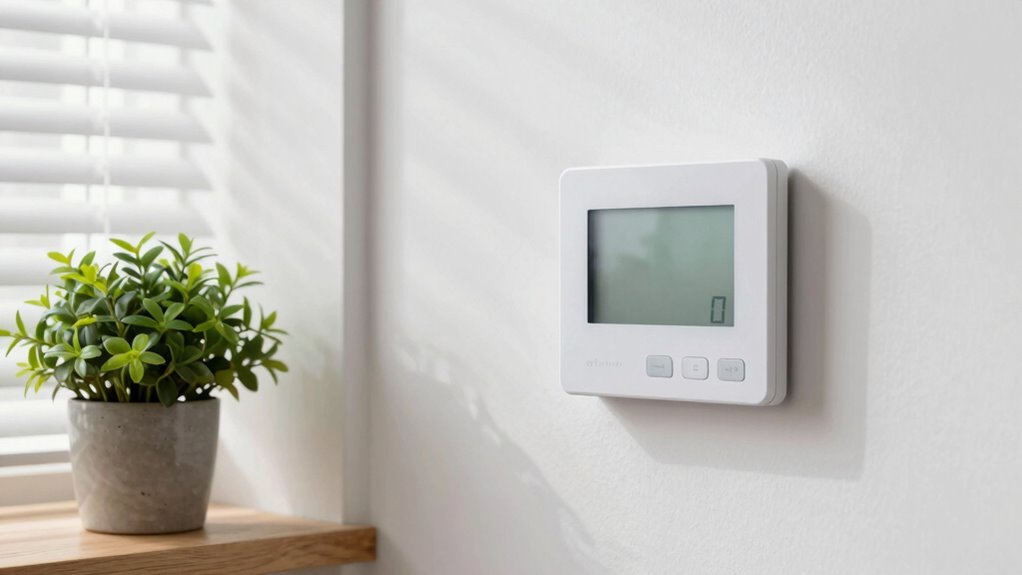
When relying on room sensors to manage climate control, it’s easy to assume they always provide accurate readings. But in reality, sensor calibration and placement accuracy play crucial roles in ensuring these devices deliver reliable data. If sensors aren’t properly calibrated, they might report incorrect temperatures, leading your heating or cooling system to overreact or underperform. Calibration isn’t a one-time task; it’s an ongoing process that keeps sensors aligned with actual conditions. If neglected, even a well-placed sensor can drift out of calibration over time, causing inaccurate readings that throw off your entire climate control system.
Placement accuracy is equally vital. When sensors are installed in areas that don’t reflect the typical room temperature—such as near windows, vents, or direct sunlight—they can produce skewed data. For example, placing a sensor near a drafty window might make the room seem cooler than it actually is, prompting unnecessary heating. Conversely, a sensor tucked into a corner or behind furniture might miss warmer zones, leading to inadequate cooling. You need to position sensors where they can monitor the general ambient temperature without interference, ideally at an average height and away from heat sources or airflow disruptions. Regularly evaluating sensor placement ensures they remain effective over time. Additionally, understanding sensor calibration and its importance can help you identify issues early and maintain optimal system performance. Properly maintaining both calibration and placement safeguards against sensor drift, which can occur gradually and impact overall accuracy.

SECRUI Digital Hygrometer Thermometer for Room Temperature Humidity Meter Indoor Thermometer Accuracy Calibration LCD Temperature Sensor with Maximum and Minimum Records, TH1, White
[Excellent Result] The SECRUI KR-TH1 room temperature monitor will help you and your family live in the best…
As an affiliate, we earn on qualifying purchases.
As an affiliate, we earn on qualifying purchases.
Frequently Asked Questions
How Often Should Room Sensors Be Calibrated?
You should calibrate your room sensors at least once a year to maintain ideal sensor accuracy. Regular calibration guarantees the sensors provide precise temperature readings, which is vital for effective climate control. If you notice inconsistent readings or environmental changes, consider increasing calibration frequency. Properly calibrated sensors help prevent temperature fluctuations, save energy, and extend sensor lifespan, making yearly calibration a good practice for reliable, accurate performance.
What Are Signs of a Faulty Room Sensor?
You’ll notice a faulty room sensor if the temperature readings are inconsistent or don’t match the actual room conditions. Other signs include frequent system toggling, erratic control, or sudden temperature fluctuations. Keep in mind the sensor’s lifespan and calibration frequency, as aging sensors may drift over time. Regular calibration helps maintain accuracy, but if issues persist despite calibration, it’s time to replace the sensor to guarantee proper temperature control.
Can Sensor Location Affect Energy Efficiency?
Imagine your sensor nestled in a spot where sunlight streams in or near a draft—its readings become a distorted mirror of the room’s true temperature. Sensor placement directly impacts energy optimization; a poorly located sensor causes your system to overwork or underperform. Position it away from heat sources or cold drafts, and you’ll see improved efficiency, lower energy bills, and a more comfortable, balanced environment.
Are There Maintenance Tips for Room Sensors?
To maintain your room sensors, regularly check their sensor durability by inspecting for dust, dirt, or damage. Keep sensors clean with gentle wipes, and guarantee they’re free from obstructions. Follow calibration schedules, typically annually, to maintain accuracy. Proper maintenance helps sensors function correctly, preventing temperature control issues and extending their lifespan. Consistent care ensures your system stays efficient, reducing energy costs and improving comfort.
What Types of Sensors Are Most Accurate?
You’ll find that digital thermometers and thermocouples generally offer the highest temperature accuracy, thanks to advanced sensor technology. Infrared sensors also provide precise readings without contact, making them ideal for quick, accurate measurements. To guarantee ideal performance, regularly calibrate your sensors and protect them from dirt and damage. By choosing sensors with proven temperature accuracy, you can maintain better control over your environment and prevent temperature-related issues.

ecobee Smart Thermostat Premium with Smart Sensor and Air Quality Monitor – Programmable Wifi Thermostat – Works with Siri, Alexa, Google Assistant, Black
Save up to 26% per year on heating and cooling costs. ENERGY STAR certified. Included SmartSensor (50 dollar…
As an affiliate, we earn on qualifying purchases.
As an affiliate, we earn on qualifying purchases.
Conclusion
If you ignore the room sensor mistake, it’s like trying to steer a ship with a faulty compass—you’ll never reach the right destination. Fixing this issue aligns your temperature control with reality, ensuring comfort and efficiency. Think of your sensor as the captain’s steady hand guiding your home’s climate. When you get it right, your system sails smoothly, avoiding unnecessary energy waste and discomfort. Keep your sensor calibrated, and enjoy a climate as balanced as a perfectly tuned instrument.

Govee Digital Hygrometer Indoor Thermometer Room H5075, Bluetooth Temperature Humidity Meter with 164ft Remote App Control, Notification Alerts, 2 Years Data Storage Export for Bedroom, Wine Cellar
Smart Features: The Govee Wireless Thermometer Hygrometer supports all basic functions as well as smart functions such as…
As an affiliate, we earn on qualifying purchases.
As an affiliate, we earn on qualifying purchases.
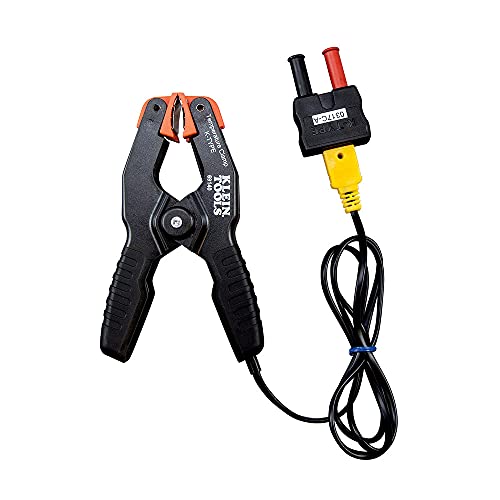
Klein Tools 69140 K-Type Thermometer, Pipe Temperature Clamp for HVAC, Measures -4 to +212 Degrees Fahrenheit
WIDE TEMPERATURE RANGE: Measures temperature from -4 to 212-degrees F (-20 – 100-degrees C) with ±2% accuracy
As an affiliate, we earn on qualifying purchases.
As an affiliate, we earn on qualifying purchases.