Many people wrongly believe that just installing a heater is enough to keep their garage warm. In reality, proper insulation and safety measures are vital for effective heating and preventing hazards. Without insulated walls, heat escapes quickly, making your heater work harder. You also need ventilation and safety features to avoid dangerous gases and fires. If you want to get it right, understanding these key steps is essential—keep going to find out more.
Key Takeaways
- Many overlook proper insulation, which is essential for effective and energy-efficient garage heating.
- People often choose unsafe heaters without necessary safety features or proper ventilation.
- Incorrect installation of insulation and heaters can lead to safety hazards and reduced efficiency.
- Relying solely on heaters without considering ventilation can cause dangerous gas buildup.
- Assuming all heating options are equally suitable ignores the importance of safety, insulation, and energy efficiency.
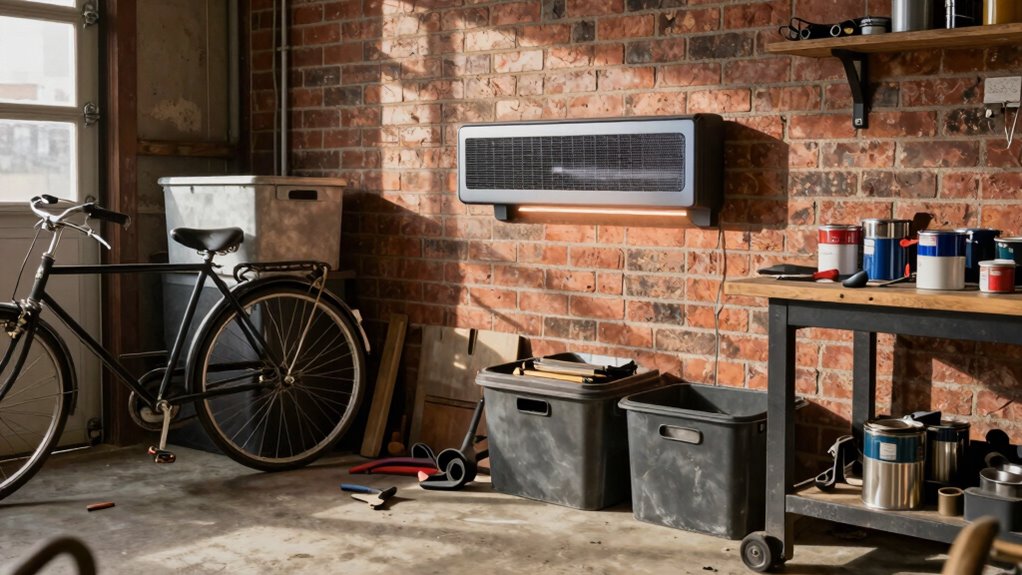
Are you wondering how to keep your garage warm during cold months? Many people overlook one of the most essential factors: insulation. The importance of insulation can’t be overstated because it acts as a barrier, trapping heat inside and preventing cold air from seeping in. Without proper insulation, even the best heater will struggle to maintain a comfortable temperature, leading to higher energy costs and inconsistent warmth. Before installing a heater, you should assess your garage’s insulation quality—adding foam boards, spray foam, or insulation panels can markedly improve heat retention. Proper insulation not only helps keep the space warm but also reduces the workload on your heating system, making it more efficient and extending its lifespan. Additionally, choosing the right insulation materials can make a significant difference in heat retention and overall comfort. When considering heater safety, many folks focus solely on choosing the right type of heater, but safety should be your top priority. A common mistake is using portable heaters without proper ventilation or safeguards, which can lead to carbon monoxide buildup or fire hazards. Always select a heater with safety features such as automatic shut-off, tip-over protection, and proper electrical wiring standards. Never overlook the importance of following manufacturer instructions and local building codes—doing so minimizes risks and ensures your garage stays warm safely. Additionally, keep combustible materials away from heating devices, and never leave a heater unattended for long periods. Proper maintenance, such as checking cords and filters regularly, also plays a key role in heater safety, preventing potential electrical issues or fire risks. In fact, understanding proper insulation techniques can greatly enhance your overall heating efficiency and safety. Recognizing the significance of correct installation procedures can also prevent many common issues related to safety and efficiency. Moreover, being aware of energy-efficient heating options can help you select a system that balances cost and performance effectively.
A well-insulated garage can significantly reduce the energy needed to keep it warm, making your heating efforts more cost-effective. Many people mistakenly assume that simply installing a heater will solve all their cold garage problems. However, without addressing insulation and safety considerations, a heater can become an inefficient and hazardous solution. It’s also important to consider ventilation to prevent any buildup of harmful gases and ensure fresh air circulation. The right approach involves a combination of improving your garage’s insulation, choosing a heater with safety features, and following proper operating procedures. This holistic strategy ensures that your garage remains warm, safe, and cost-effective throughout the cold months.

Reach Barrier 3009 Garage Door Insulation Kit
Reach Barrier(Tm) Reflective Insulation And Bubble Barrier Technology Blocks Up To 95-Percent Of Radiant Heat Which Will Help…
As an affiliate, we earn on qualifying purchases.
As an affiliate, we earn on qualifying purchases.
Frequently Asked Questions
How Much Does Garage Heating Typically Cost Annually?
Garage heating typically costs between $200 and $1,200 annually, depending on the heater type and usage. To keep costs low, guarantee proper garage ventilation to improve efficiency and reduce energy waste. Regular heater maintenance also helps prevent breakdowns and extends its lifespan. By maintaining good airflow, you optimize heating performance, which can save you money over time while keeping your garage warm and comfortable during colder months.
Are Electric Heaters Safer Than Gas Heaters?
Electric heaters are generally safer than gas heaters because they eliminate risks like carbon monoxide leaks and open flames. For example, a homeowner switched from gas to electric, reducing safety concerns considerably. While electric heaters are often more energy-efficient for small spaces, you should consider safety concerns and energy efficiency when choosing. Electric heaters provide a safer environment, especially in enclosed garages where ventilation might be limited.
Can I Install Garage Heating Myself?
You can install garage heating yourself if you have basic electrical skills, but make certain you prioritize garage ventilation and heating zone control. Proper ventilation helps prevent buildup of fumes, especially if you’re using gas heaters, while zone control allows you to heat specific areas efficiently. However, for safety and code compliance, it’s often best to hire a professional, especially when handling electrical connections or gas lines.
How Long Does It Take to Heat a Garage?
It usually takes about 15 to 30 minutes to heat a garage, depending on the insulation, ventilation, and heater size. To warm it efficiently, make certain your garage has proper ventilation to prevent heat loss and maintain insulation. Regular insulation maintenance helps keep the heat in, making your space warmer faster. You can speed up heating by sealing gaps and keeping doors closed, which conserves warmth and reduces energy use.
What Are the Best Insulation Options for Garages?
Think of your garage as a fortress guarding your comfort. For the best insulation options, consider high-quality insulation materials like spray foam, fiberglass batts, or rigid foam boards—they all act as shields against the cold. Pair this with proper garage ventilation to control moisture and temperature. This combo keeps your space warm and energy-efficient, turning your garage into a cozy retreat rather than a chilly challenge.
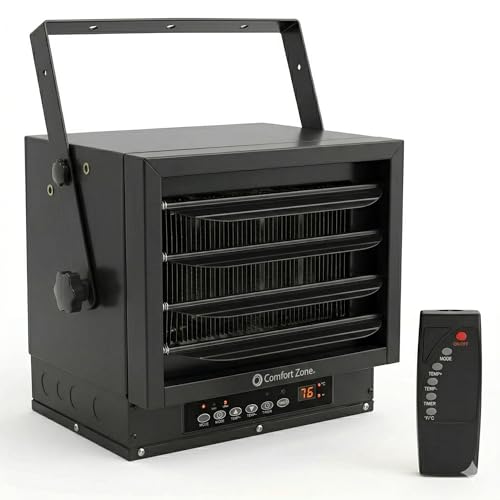
Comfort Zone Hard-Wired Ceiling Mount Garage Space Heater with Remote, 7,500 Watt, 240 Volt, Fan-Forced, Overheat Protection, Digital Thermostat, 12-Hour Timer, Ideal for Garage & Workshop, CZ230ERBK
OPTIMAL SPACE UTILIZATION: Maximize your available floor space with the space-saving design of this fan-forced heater. Specifically designed…
As an affiliate, we earn on qualifying purchases.
As an affiliate, we earn on qualifying purchases.
Conclusion
Don’t let the misconception that garage heating is unnecessary hold you back. Even if your garage isn’t used daily, a warm space can boost comfort and protect your tools from harsh weather. Remember, a small investment in the right heating setup can save you money in the long run by preventing damage and improving your work environment. So, consider your needs carefully—you might be surprised how beneficial a heated garage can be.

CTSC 8500W Garage Heater Electric, 240v Hardwired Fan-Forced Electric Garage Heater with Digital Thermostat, Remote Control and Timer, ECO Function, Ideal for Workshop, ETL Listed Garage Heater
Quick Troubleshooting: Through a lot of market research, we found that the most frequent failure of this kind…
As an affiliate, we earn on qualifying purchases.
As an affiliate, we earn on qualifying purchases.
Reach Barrier 3009 Garage Door Insulation Kit
Reach Barrier(Tm) Reflective Insulation And Bubble Barrier Technology Blocks Up To 95-Percent Of Radiant Heat Which Will Help…
As an affiliate, we earn on qualifying purchases.
As an affiliate, we earn on qualifying purchases.