
TL;DR

Prime made for students and young adults
- Fast, free delivery for dorm and study essentials
- Prime Video and Amazon Music included
- Member-only deals
In 2026, the leading 4K webcams integrate advanced AI features like tracking and auto-zoom, improving streaming quality. The Logitech MX Brio remains top for low-light performance, while brands like EMEET excel with AI-driven capabilities. These innovations enhance content creation and professional video calls.
In 2026, several leading webcam brands have launched models featuring advanced AI capabilities, such as facial tracking, auto-zoom, and gesture control, aimed at streamers, content creators, and remote workers. For a detailed overview, see the original analysis of top webcams. These innovations significantly enhance video quality and user experience, marking a shift from traditional webcams to smart, AI-driven devices.
The Logitech MX Brio remains a top choice for its larger sensor and superior low-light performance, despite most models capping 4K at 30fps. Meanwhile, brands like EMEET have expanded their lineup with AI-powered webcams like the PIXY, which offers facial tracking and gesture control, and the C60E with auto-zoom features. Budget options such as the EMEET C960 continue to provide genuine 4K resolution at accessible prices, though with fewer AI features.
Most high-end models now incorporate AI features that enable automatic framing, face tracking, and background segmentation, which are especially valuable for live streaming, virtual meetings, and content creation. These innovations are covered in detail in the top webcam roundup. These features are driven by improved sensors and software, providing more natural and professional-looking video. However, many models are still limited by platform compression, which reduces the visible benefits of 4K resolution during calls. For more insights on the latest in 4K webcams, see the comprehensive review.
The 10 picks
- 1
 AOC 4K Webcam for PC with Microphone, Privacy Cover, 99° FOV, Plug & Play USB…View on Amazon →
 - 2
 4K Webcam for PC & Mac with Autofocus and Noise-Canceling MicrophonesView on Amazon →
 - 3
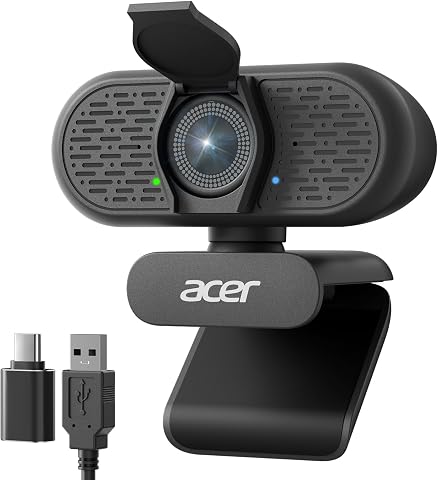 Acer A640 4K Webcam for PC with Sony Sensor, Autofocus, AI Noise Canceling Mi…View on Amazon →
 - 4
 EMEET C960 4K Webcam for PC with Auto Focus and Dual MicsView on Amazon →
 - 5
 EMEET NOVA 4K Webcam for PC – Ultra HD, Autofocus, Dual Mics, Privacy Cover,…View on Amazon →
 - 6
 Logitech MX Brio Ultra HD 4K Webcam for Collaboration and StreamingView on Amazon →
 - 7
 EMEET S600 4K Webcam for StreamingView on Amazon →
 - 8
 Logitech Brio 4K Webcam with HDR, Noise-Canceling Microphone, Windows Hello,…View on Amazon →
 - 9
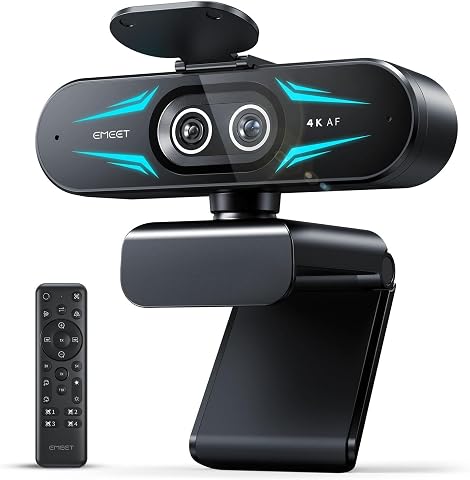 EMEET C60E Dual-Camera 4K Webcam for Streaming with 11X Zoom and RGB LightingView on Amazon →
 - 10
 EMEET PIXY Dual-Camera AI-Powered 4K PTZ Webcam with AI Tracking and Gesture…View on Amazon →
Why AI-Enhanced Webcams Matter in 2026
The integration of AI features into 4K webcams in 2026 offers users more professional and engaging video experiences without requiring additional hardware or editing. For streamers and content creators, features like facial tracking and auto-zoom enable more dynamic and polished presentations. For remote workers, these webcams improve communication clarity and reduce distractions caused by poor framing or lighting. As a result, AI-driven webcams are becoming essential tools in both professional and creative environments, shaping how people communicate online.
Evolution of 4K Webcams and AI Integration
Over the past few years, 4K webcams have moved from basic resolution upgrades to feature-rich devices. In 2024, brands like Logitech and EMEET introduced models with AI capabilities, but adoption accelerated in 2026 as sensors and software matured. The market now emphasizes AI features such as facial tracking, gesture controls, and adaptive framing, which address common issues like poor lighting and unstable framing. Despite these advancements, many users still face limitations due to platform compression and hardware affordability.
“AI features like face tracking and auto-zoom are transforming webcams into smart devices that adapt to user movements and lighting, greatly improving video quality and engagement.”
— Thorsten Meyer, AI and Camera Expert
Key Limitations and Unanswered Questions
While AI features are rapidly advancing, it is still unclear how well these webcams perform across different platforms, especially with platform-specific compression algorithms. The actual impact of AI-driven framing and tracking during high-motion scenarios remains to be fully tested in real-world settings. Additionally, the cost and accessibility of these advanced webcams may limit widespread adoption, and compatibility with various operating systems and software updates is still evolving.
Upcoming Developments in AI Webcam Technology
Manufacturers are expected to release more models with enhanced AI capabilities, including better low-light performance, more accurate tracking, and integration with virtual production tools. Software updates will likely improve compatibility and functionality across platforms like Zoom, Teams, and OBS. Consumers and professionals should watch for new releases in late 2026 and early 2027 that will push the boundaries of AI-powered video quality and interactivity.
Key Questions
How do AI features improve webcam video quality?
AI features such as facial tracking, auto-zoom, and background segmentation automatically adjust framing, focus, and lighting, resulting in more natural and professional-looking video without manual adjustments.
Are 4K webcams with AI features worth the extra cost?
For content creators and professionals who benefit from precise framing, cropping, and recording, AI-enhanced 4K webcams provide significant advantages. For casual video calls, the benefits may be less noticeable due to platform compression.
Will AI features work seamlessly across all video conferencing platforms?
Compatibility varies; some AI features are platform-agnostic, while others depend on software integration. Manufacturers are working to improve cross-platform support, but performance can differ depending on the platform used.
What should I consider when choosing an AI-enabled 4K webcam?
Focus on sensor size, low-light performance, AI features like tracking and auto-zoom, and software support. Price differences often reflect these capabilities rather than resolution alone.
When will more advanced AI features become standard in webcams?
Expect broader adoption in the next 1-2 years, as hardware costs decrease and software integration improves, making AI features more accessible to everyday users.
Source: ThorstenMeyerAI.com
Halloween Picks
halloween
As an affiliate, we earn on qualifying purchases.