TL;DR

Prime made for students and young adults
- Fast, free delivery for dorm and study essentials
- Prime Video and Amazon Music included
- Member-only deals
Artificial intelligence is reshaping the top mirrorless cameras in 2026, improving autofocus, image quality, and video features. This development influences both consumer choices and professional workflows.
Artificial intelligence has become a defining feature of the leading mirrorless cameras in 2026, with manufacturers integrating advanced AI-driven systems to improve autofocus, image processing, and video capabilities. For a detailed overview, see the original analysis. This shift is transforming how photographers and videographers capture images and footage, making AI a key factor in device performance and user experience.
Major brands like Sony, Canon, and Nikon have incorporated AI algorithms into their latest mirrorless models, enabling features such as real-time subject tracking, improved low-light autofocus, and intelligent scene recognition. To explore some top options, check out the best mirrorless cameras. The Sony Alpha 7 IV, for example, now uses AI for more precise eye autofocus and subject detection, which significantly enhances shooting accuracy in complex environments. Similarly, Canon’s EOS R50 has integrated AI-based autofocus that adapts quickly to fast-moving subjects, making it more accessible for content creators.
Industry experts note that AI-driven image processing allows for better noise reduction and color accuracy, especially at higher ISO levels. For more insights, see the full report. Video capabilities are also benefiting, with AI helping stabilize footage, optimize exposure settings dynamically, and enhance audio quality through intelligent noise suppression. These advancements are credited with making mirrorless cameras more versatile and user-friendly, especially for amateurs and professionals alike.
The 10 picks
- 1
 Sony Alpha 1 II Full-Frame Mirrorless Interchangeable Lens Camera (Body) BundleView on Amazon →
 - 2
 Sony Alpha 7 IV Full-Frame Mirrorless Camera with 28-70mm Zoom Lens KitView on Amazon →
 - 3
 Nikon Z50 II with Two Lenses – Compact Mirrorless Camera with 20.9MP Sensor,…View on Amazon →
 - 4
 Canon EOS RP Full-Frame Mirrorless Camera with RF24-105mm Lens KitView on Amazon →
 - 5
 Canon EOS R50 Mirrorless Camera with RF-S 18-45mm F4.5-6.3 IS STM Lens KitView on Amazon →
 - 6
 Sony Alpha a6400 Mirrorless Camera with 16-50mm LensView on Amazon →
 - 7
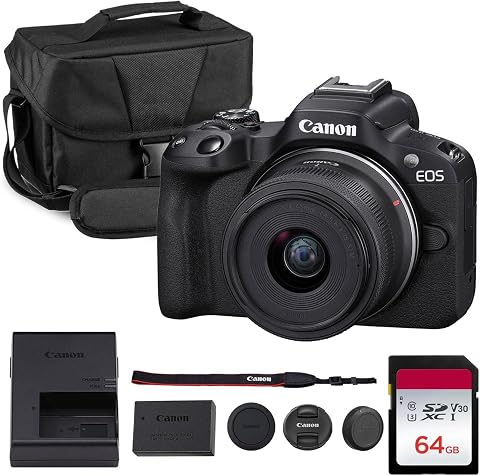 Canon EOS R50 Mirrorless Camera Kit with 18-45mm Lens, 4K Video, Dual Pixel A…View on Amazon →
 - 8
 Canon EOS R100 Mirrorless Camera with RF-S 18-45mm f/4.5-6.3 IS STM LensView on Amazon →
 - 9
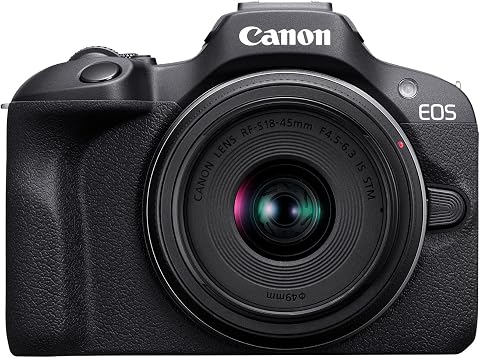 Canon EOS R100 Mirrorless Camera RF-S 18-45mm F4.5-6.3 IS STM Lens KitView on Amazon →
 - 10
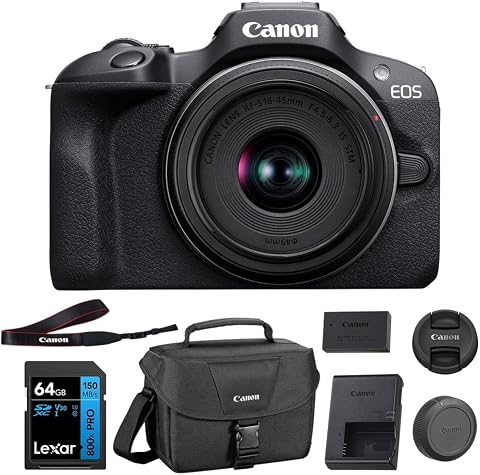 Canon EOS R100 Mirrorless Camera with RF-S18-45mm F4.5-6.3 IS STM Lens Kit, 2…View on Amazon →
Impact of AI on Camera Performance and User Experience
The integration of AI in mirrorless cameras in 2026 marks a significant leap forward in photography technology, offering faster, more accurate autofocus and improved image quality with less effort. For consumers, this means easier shooting in challenging conditions and better results with minimal manual adjustments. For professionals, AI tools streamline workflows and enable new creative possibilities, such as real-time scene analysis and automated editing features.
This development also influences the competitive landscape, pushing manufacturers to prioritize AI innovations to attract buyers. As AI becomes standard, it may shift the value proposition from hardware specifications alone to the intelligence and adaptability of the camera systems, changing long-term investment considerations for users.
Evolution of AI in Camera Technology Since 2023
Since 2023, AI has gradually been integrated into mirrorless camera systems, primarily focusing on autofocus and image enhancement. Early implementations included basic subject tracking and scene recognition, but by 2025, AI algorithms had become more sophisticated, enabling real-time adjustments and smarter scene analysis. The 2026 models represent a culmination of this trend, with AI deeply embedded into core functions, influencing both hardware design and software capabilities.
Industry leaders have invested heavily in AI research, aiming to differentiate their products through intelligent automation and improved user interfaces. This evolution aligns with broader trends in consumer electronics, where AI-driven personalization and automation are becoming standard features across devices.
Unanswered Questions About AI Integration in Cameras
While AI features are widely adopted in 2026, it remains unclear how these systems will evolve in terms of reliability and user control. Some experts question whether AI can fully replace manual adjustments in complex shooting scenarios or if it will introduce new challenges such as increased power consumption or software bugs. Additionally, the long-term durability of AI-driven components and their impact on device longevity are still under assessment.
Future Developments in AI-Enhanced Mirrorless Cameras
Manufacturers are expected to continue refining AI algorithms, focusing on improving real-time processing speed, reducing power usage, and expanding creative tools. Upcoming models may feature even more advanced scene understanding and autonomous shooting modes, making AI an even more integral part of the photography process. Industry events later in 2026 will likely showcase these innovations, setting new standards for camera technology.
Key Questions
How has AI improved autofocus in mirrorless cameras?
AI has enabled real-time eye and subject tracking, allowing cameras to automatically and accurately focus on moving subjects, reducing missed shots and enhancing overall image sharpness.
Are AI features in cameras reliable for professional use?
While AI has shown significant improvements, some professionals still prefer manual controls for complex scenes. Ongoing updates aim to increase AI reliability and customization options.
Will AI make traditional photography skills obsolete?
AI enhances capabilities but does not replace the need for fundamental photography skills. It serves as a tool to improve efficiency and creative potential.
What are the potential drawbacks of AI in cameras?
Possible issues include increased power consumption, software bugs, over-reliance on automation, and concerns about data privacy related to scene analysis features.
Source: ThorstenMeyerAI.com
Halloween Picks
halloween
As an affiliate, we earn on qualifying purchases.