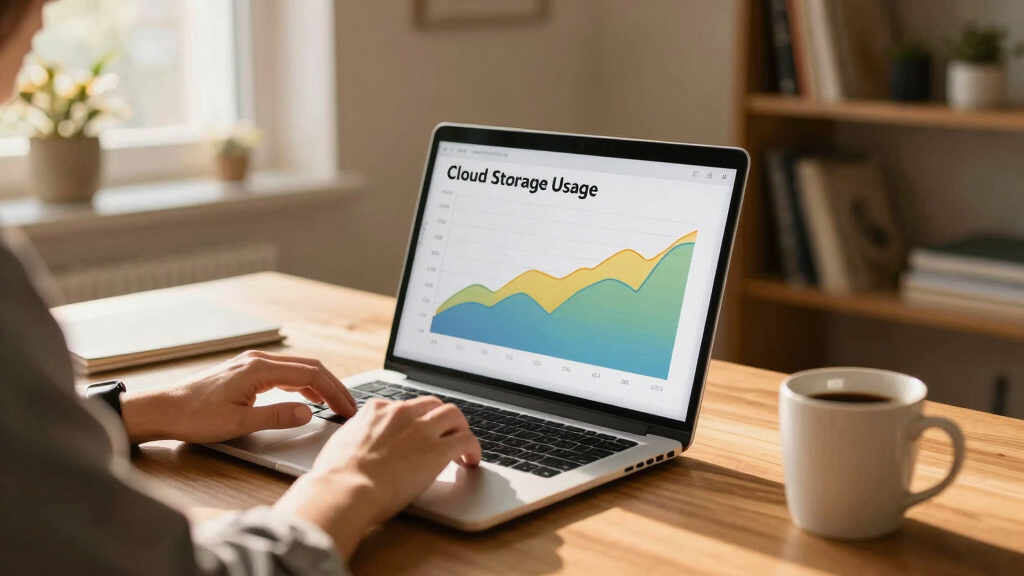

📊 Full opportunity report: Cloud’s Hidden Memory Bill on ThorstenMeyerAI.com — validation score, market gap, and execution plan.

Prime made for students and young adults
- Fast, free delivery for dorm and study essentials
- Prime Video and Amazon Music included
- Member-only deals
TL;DR
A global memory shortage has driven up server costs, causing cloud providers to increase prices subtly. This shift is leading to higher bills for users and a reconsideration of cloud versus on-premises infrastructure.
Cloud service providers are quietly increasing their prices due to a severe memory shortage, marking the first price hike in over two decades. This development affects costs for cloud users worldwide and challenges the long-held assumption that memory shortages only impact hardware prices.
The increase is driven by a global shortage of DRAM memory that has caused prices to double or triple at the manufacturing level, starting with Korean wafer producers like Samsung, SK Hynix, and Micron. These cost increases cascade through the supply chain, leading OEM server manufacturers such as Dell, Lenovo, and HP to raise their prices by 15–25%. Consequently, cloud providers face higher infrastructure costs, which they are passing on to customers through gradual, hidden price adjustments.
On January 4, 2026, AWS announced its first price increase in 20 years, raising GPU instance costs by approximately 15%. Other providers like Azure and Google Cloud are expected to follow in Q2–Q3 2026, as procurement cycles lag behind the initial price hikes. The price increases are mostly absorbed in memory-optimized instances, which are heavily reliant on DRAM, leading to disproportionate cost impacts for memory-intensive workloads.
Industry analysts warn that these increases are not easily visible on bills, as they appear as small, scattered adjustments rather than clear line items, making it difficult for users to recognize the true cost impact. This phenomenon is prompting some organizations to reconsider their cloud strategies, with a growing trend toward on-premises or hybrid solutions for steady workloads.
For more details on how hardware shortages affect overall costs, see The Memory Squeeze: Why Your RAM Bill Doubled.
Cloud’s hidden memory bill
Thought the cloud lets you dodge the squeeze — you rent the RAM, you don’t buy it? You’re still paying for every gigabyte. You’ve just stopped being able to see the bill.
No escape from the shortage anywhere — on-prem servers also cost +15–25%. But providers hedge scarce hardware better than you can, and you can’t buy half a cluster for two weeks.
8×H200 ≈ $15–20/hr owned (3-yr amortized) vs $39.80 rented — roughly half. 83% of CIOs plan to repatriate some workloads. Hybrid is the new default.
The cloud doesn’t make the memory tax disappear — it launders it, turning a violent fab shortage into a few innocuous percentage points scattered across a bill you can’t easily audit. “I’m in the cloud, I’m safe” is the most expensive misconception in this series. Refuse to pay for idle RAM, sort each workload to its cheapest venue, and lock pricing before the Q2–Q3 adjustment. The escape hatch was never cloud-vs-on-prem — it’s discipline-vs-drift. Next: the local-inference rig.
This development signifies a fundamental shift in cloud economics, breaking the longstanding promise of declining prices. The hidden cost increases are affecting budgets, especially for memory-heavy applications like in-memory databases and caching services. Organizations may need to re-evaluate their infrastructure choices, with a notable rise in repatriation and hybrid cloud strategies. The shortage also underscores the vulnerability of cloud supply chains to global semiconductor market disruptions, which could have broader implications for digital infrastructure resilience.
high performance RAM modules for servers
As an affiliate, we earn on qualifying purchases.
As an affiliate, we earn on qualifying purchases.
Memory Shortage’s Impact on Cloud Pricing and Industry
Over the past year, DRAM prices surged by 60–70%, driven by increased demand and constrained supply at the wafer fabrication level. Major memory manufacturers have announced price hikes, which are passed downstream through OEMs to cloud providers. Historically, cloud providers maintained a policy of decreasing prices, but this trend has reversed due to the persistent shortage, forcing them to implement incremental price increases. These adjustments are often masked within existing bills, making the true cost rise less apparent to users.
The shortage has also prompted a shift in enterprise planning, with 83% of CIOs considering or executing workload rebalancing, including partial migration back on-premises. The trend toward hybrid cloud models is accelerating, aiming to balance predictable costs with the flexibility of cloud elasticity, especially for steady-state workloads.
“We continuously evaluate our pricing to reflect market conditions.”
— AWS spokesperson
memory-optimized cloud server instances
As an affiliate, we earn on qualifying purchases.
As an affiliate, we earn on qualifying purchases.
Unconfirmed Aspects of the Memory Shortage Impact
It is not yet clear how long the memory shortage will persist or whether further, more substantial price hikes are planned. The full extent of the impact on different cloud providers and enterprise budgets remains uncertain, as some companies may have strategic reserves or alternative sourcing options. Additionally, the precise timing and magnitude of future price adjustments are still developing, with industry insiders watching procurement cycles closely.
on-premises server hardware for enterprise
As an affiliate, we earn on qualifying purchases.
As an affiliate, we earn on qualifying purchases.
Upcoming Developments in Cloud Pricing and Supply Chains
Expect further price increases in Q2–Q3 2026 across major cloud providers, with some organizations accelerating plans to shift workloads on-premises or adopt hybrid models. Industry analysts predict that supply chain constraints may persist into 2027, potentially leading to continued cost pressures. Cloud providers are also likely to refine their billing transparency and offer new tools to help customers manage rising expenses.
As an affiliate, we earn on qualifying purchases.
Key Questions
Why are cloud prices rising now after 20 years of decline?
The rise is primarily due to a global memory shortage that has increased manufacturing costs, which providers are passing on gradually through their bills.
Organizations should audit their memory usage, optimize workloads, and consider hybrid or on-premises solutions for steady workloads to control costs.
Will these price increases continue beyond 2026?
It is uncertain; industry experts suggest that supply chain issues may persist into 2027, potentially leading to further cost pressures.
Are cloud providers transparent about these price hikes?
Generally, no; the increases are often embedded within existing bills as small adjustments, making them less visible to customers.
Source: ThorstenMeyerAI.com
Halloween Picks
halloween
As an affiliate, we earn on qualifying purchases.