
🔍 Read the full analysis: 9 Best Wi-Fi 7 Routers For Handling More Home Network Demands In 2027 on ThorstenMeyerAI.com

Prime made for students and young adults
- Fast, free delivery for dorm and study essentials
- Prime Video and Amazon Music included
- Member-only deals
TL;DR
A comparison published by ThorstenMeyerAI.com names the TP-Link Archer BE550 its best overall pick among nine Wi-Fi 7 routers, citing its tri-band design and mix of wired connections. The list also covers quad-band and dual-band alternatives, but the source provides no prices, test results or publication date, so its rankings should be read as editorial guidance rather than independently verified performance findings.
ThorstenMeyerAI.com has published a comparison of nine Wi-Fi 7 routers, naming the TP-Link Archer BE550 its best overall pick for its tri-band design and wired-connection options. The guide also points shoppers toward the quad-band ASUS ROG Rapture GT-BE98 Pro for more demanding setups and less complex dual-band models for smaller networks; its advice is a product assessment, not a report of independent benchmark testing.
The guide’s ranking centers on matching a router to a home’s client load, layout and wired equipment, rather than choosing by the Wi-Fi 7 label alone. It describes the Archer BE550 as a balanced tri-band option, while the GT-BE98 Pro is framed as a premium specialist with quad-band capacity and gaming-focused controls. The source does not provide benchmark figures or a test methodology that would establish real-world speed comparisons among the models.
Other routers named in the comparison are the NETGEAR BE9300, TP-Link BE600, Archer BE230, Archer BE400, ASUS RT-BE82U, and NETGEAR RS90 and RS140. The guide places the BE230, BE400, RT-BE82U, RS90 and RS140 among dual-band options, while the BE9300 and BE600 are presented as tri-band alternatives to the BE550; see also this Wi-Fi 7 router guide. It does not give model-by-model pricing, port specifications or measured performance in the supplied material.
The article says its comparison considers band configuration, wired connectivity and feature sets, as well as setup complexity. It treats advertised capabilities as clues for choosing a product, not promises of a particular result at home. The guide’s title refers to 2027, but the source material provided does not state when it was published or whether product availability and specifications were checked for that year.
The 9 picks
- 1
 ASUS ROG Rapture GT-BE98 Pro Quad-Band WiFi 7 Gaming RouterView on Amazon →
- 2
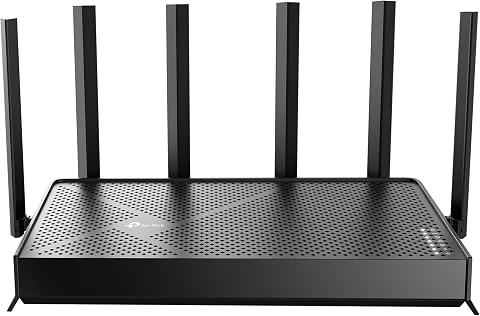 TP-Link Archer BE600 Tri-Band Wi-Fi 7 RouterView on Amazon →
- 3
 NETGEAR Nighthawk BE9300 Tri-Band WiFi 7 RouterView on Amazon →
- 4
 TP-Link Archer BE550 Tri-Band Wi-Fi 7 RouterView on Amazon →
- 5
 NETGEAR Nighthawk RS140 Dual-Band WiFi 7 RouterView on Amazon →
- 6
 ASUS RT-BE82U Dual-Band Wi-Fi 7 RouterView on Amazon →
- 7
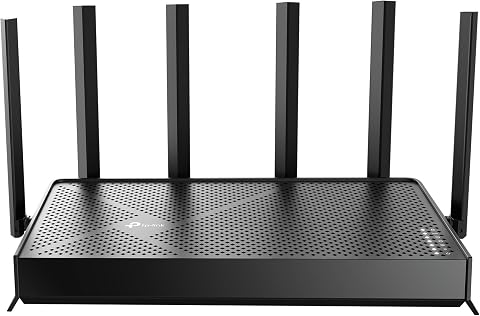 TP-Link Archer BE400 BE6500 Dual-Band Wi-Fi 7 RouterView on Amazon →
- 8
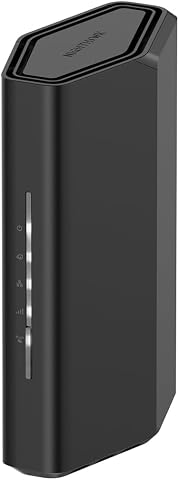 NETGEAR Nighthawk RS90 WiFi 7 Dual-Band RouterView on Amazon →
- 9
 TP-Link Archer BE230 Dual-Band Wi-Fi 7 RouterView on Amazon →
Choosing Capacity for Your Household
The comparison is relevant to households weighing an upgrade because it highlights a practical choice: more bands and ports can offer flexibility, but may add cost and complexity that a smaller network does not need. A tri-band model may suit a home with many active wireless clients, while a dual-band router may be sufficient for a simpler setup. The guide does not quantify how much performance a buyer would gain by choosing one configuration over another.
It also cautions that a new router cannot fix every network bottleneck. Compatible client devices are needed to use Wi-Fi 7 features, and the internet plan, wired links, router placement and physical barriers affect results. For someone with a weak signal in a distant room, coverage planning or an added access point may matter more than buying a router advertised with higher capacity.
Popular right now

Hisense 65-inch U6 Pro Mini-LED 4K UHD Smart Fire TV

Apple AirPods Pro 3 Wireless Earbuds with Active Noise Cancellation

TCL 65-Inch QM6K QLED Mini-LED 4K HDR Smart Google TV, 144Hz
As an affiliate, we earn on qualifying purchases.
The Guide’s Nine Model Lineup
The source groups the routers by the kind of network they may suit: tri-band flexibility in the BE550, BE9300 and BE600; a quad-band premium option in the GT-BE98 Pro; and several dual-band models for less demanding or more constrained setups. That framework is the basis for the guide’s ranking, with the BE550 placed first because the author favors a balance of features over specialized capacity.
The article also emphasizes that older Wi-Fi clients can still connect to a Wi-Fi 7 router, but do not automatically gain every newer capability. It recommends checking device compatibility and wired-port needs before buying. The supplied source offers this selection advice but does not identify independent reviewers, laboratory tests or specific evidence supporting its product rankings.
“The Archer BE550 earns the overall lead by pairing tri-band Wi-Fi 7 with a practical feature mix, rather than focusing only on extreme throughput or gaming extras.”
— ThorstenMeyerAI.com guide
Performance and Publication Details
The supplied material does not state the guide’s publication date, provide prices, or report controlled tests, measured throughput or coverage results for the nine models. It is therefore unclear how the rankings account for differences in firmware, regional versions or changes in product availability. The title’s reference to 2027 does not by itself confirm that specifications were verified for that year.
Actual results will depend on a home’s construction, router placement, internet service and compatible devices. The source also does not specify which households, client counts or wired setups were used to make its judgments. Buyers should verify current specifications and port layouts with manufacturers or retailers before purchasing.
Check Specifications Before Buying
The immediate next step for shoppers is to compare the current versions of the listed models against their own network needs. Count the active Wi-Fi clients, check which devices support Wi-Fi 7, map wired equipment and assess whether the main problem is capacity or coverage. Those details can help determine whether a dual-band, tri-band or quad-band router is appropriate.
Any future revision of the guide would need to clarify its publication date, current pricing and the basis for its rankings to support direct comparisons. Until then, the listed order is best treated as editorial buying advice, not a guarantee of speed or coverage in a specific home.
Key Questions
Which router does the guide rank first?
ThorstenMeyerAI.com names the TP-Link Archer BE550 its best overall pick, citing its tri-band design and mix of wired connections.
Which model is presented as the premium gaming option?
The source identifies the ASUS ROG Rapture GT-BE98 Pro as a higher-end option, pointing to its quad-band capacity and gaming-focused controls. The guide says that scale may be unnecessary for many homes.
Do older devices benefit from a Wi-Fi 7 router?
Older Wi-Fi devices can connect, according to the guide, but they do not gain every Wi-Fi 7 feature. Benefits depend on the client device as well as the router and internet service.
Does choosing more bands guarantee faster Wi-Fi?
No. The source describes additional bands as a way to manage capacity, not a guarantee of faster connections. Home layout, interference, device support and network use also affect performance.
Is the guide based on independent performance testing?
The supplied material does not report controlled tests or benchmark results. It describes a comparison based on band configuration, wired connectivity, features and setup complexity, so readers should treat the ranking as editorial assessment.
Source: ThorstenMeyerAI.com