
📊 Full opportunity report: 8 AI Pioneering Technologies To Follow In 2026 on ThorstenMeyerAI.com — validation score, market gap, and execution plan.

Prime made for students and young adults
- Fast, free delivery for dorm and study essentials
- Prime Video and Amazon Music included
- Member-only deals
TL;DR
In 2026, eight key AI technologies are emerging as leaders in innovation, including advancements in generative AI, autonomous systems, and AI hardware. This report highlights confirmed developments and ongoing trends shaping the AI landscape.
Eight AI technologies are poised to lead innovation in 2026, according to industry experts and recent developments. These technologies span from advanced generative models to new hardware solutions, reflecting the rapid pace of AI evolution and its increasing impact across sectors.
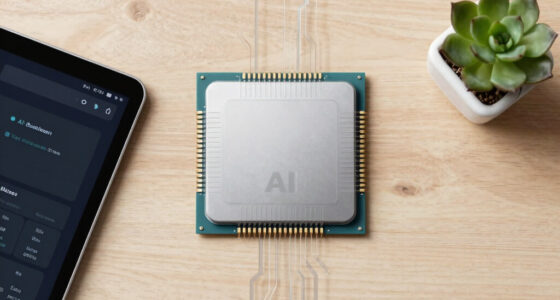
Confirmed advancements include the maturation of large language models (LLMs) like GPT-4 and beyond, which are now integrated into diverse applications from content creation to customer service. For an in-depth analysis, see the original analysis. Autonomous systems, including self-driving vehicles and robotic automation, continue to improve in reliability, driven by breakthroughs in sensor technology and machine learning algorithms. AI hardware, such as specialized chips and neuromorphic processors, are evolving to meet the computational demands of next-generation AI models, with several prototypes already in testing phases.
Experts also highlight emerging trends like multimodal AI, which combines visual, textual, and auditory data, and the increasing deployment of AI in edge computing environments. To explore the latest trends, check out Leverage AI In 2026: 10 Trends To Follow. While these developments are based on current research and product launches, some specific applications remain in pilot or early adoption stages, and regulatory considerations are still evolving. For more insights, see 8 Best Mechanical Keyboards in 2026.
The 8 picks
- 1
 AULA F75 Pro Wireless Mechanical Keyboard, 75% Hot Swappable RGB Backlit Gami…View on Amazon →
 - 2
 Logitech G413 SE Full-Size Mechanical Gaming Keyboard – BlackView on Amazon →
 - 3
 AULA F75 75% Wireless Mechanical Keyboard, Hot Swappable, RGB Backlit, Multi-…View on Amazon →
 - 4
 AULA F99 Wireless Mechanical Keyboard, Tri-Mode BT5.0/2.4GHz/USB-C, Hot Swapp…View on Amazon →
 - 5
 Kisnt KN85 Wireless Mechanical Keyboard, 75% Layout, Bluetooth/2.4GHz/USB-C,…View on Amazon →
 - 6
 Redragon K668 108-Key Hot-Swap Wired RGB Gaming Keyboard with Extra HotkeysView on Amazon →
 - 7
 Redragon Mechanical Gaming Keyboard Wired, 11 Backlit Modes, Hot-Swappable Re…View on Amazon →
 - 8
 RisoPhy Mechanical Gaming Keyboard, RGB Backlit, 104 Keys, Blue Switch, USB W…View on Amazon →
Why These AI Technologies Will Shape 2026
The emergence of these eight AI technologies signals a transformative period for industries including healthcare, transportation, finance, and entertainment. Enhanced AI capabilities will enable more autonomous systems, personalized experiences, and efficient data processing, potentially leading to economic growth and new business models. However, these advancements also raise questions about ethical use, regulation, and societal impacts, making it crucial for stakeholders to stay informed and adaptive.
Key Trends and Developments Leading to 2026
Over the past few years, AI has transitioned from experimental research to mainstream deployment, driven by improvements in model size, training data, and hardware. Notable milestones include the release of GPT-4, advancements in reinforcement learning, and the proliferation of AI-powered edge devices. Industry leaders like OpenAI, Google DeepMind, and emerging startups are investing heavily in next-generation AI solutions, with a focus on scalability, safety, and real-world applicability. These efforts suggest that by 2026, AI will be more integrated into daily life and business operations than ever before.
While many of these technologies are already in development or early deployment, their full potential and societal implications are still unfolding, with ongoing debates about regulation and ethical standards.
“By 2026, we expect these eight AI technologies to define the next era of innovation, fundamentally changing how industries operate and how we interact with machines.”
— Dr. Emily Chen, AI Research Director at TechFuture Labs
Unconfirmed Aspects and Emerging Questions
While these eight AI technologies are poised to be influential, precise timelines, regulatory responses, and societal impacts remain uncertain. Some applications, particularly in autonomous systems and AI-driven healthcare, are still in pilot phases, and their widespread adoption depends on regulatory approval and public acceptance. Additionally, breakthroughs in AI hardware and multimodal models may face technical or ethical hurdles that could delay or alter their trajectory.
Upcoming Developments and Industry Movements
In the coming months, industry leaders will likely announce new AI products, pilot projects, and research breakthroughs aligned with these eight technologies. Regulatory bodies are expected to refine policies on AI safety, privacy, and ethics, influencing deployment. Stakeholders should monitor major conferences, corporate disclosures, and government initiatives for updates on these technologies’ progress and integration into mainstream use.
Key Questions
Which AI technology is most likely to impact daily life in 2026?
Generative AI models, such as advanced language and multimodal systems, are expected to have the most immediate impact, influencing everything from personal assistants to content creation.
Are these AI advancements safe and ethically regulated?
Regulation is still evolving, and while many developers emphasize safety and ethics, comprehensive global standards are yet to be established. Ongoing discussions aim to address these concerns.
Will AI hardware improvements reduce costs for consumers?
Yes, specialized AI chips and neuromorphic processors are expected to lower operational costs and enable more affordable AI-powered devices in the future.
What industries will benefit most from these AI technologies?
Healthcare, transportation, finance, and entertainment are among the sectors most likely to see significant benefits through automation, personalization, and smarter decision-making tools.
How soon will autonomous systems become mainstream?
While autonomous vehicles and robots are progressing rapidly, widespread adoption depends on regulatory approvals and technological reliability, which may extend into the late 2020s.
Source: ThorstenMeyerAI.com
Halloween Picks
halloween
As an affiliate, we earn on qualifying purchases.