
📊 Full opportunity report: 8 AI-Driven Studio Condenser Microphones That Will Blow You Away In 2026 on ThorstenMeyerAI.com — validation score, market gap, and execution plan.

Prime made for students and young adults
- Fast, free delivery for dorm and study essentials
- Prime Video and Amazon Music included
- Member-only deals
TL;DR
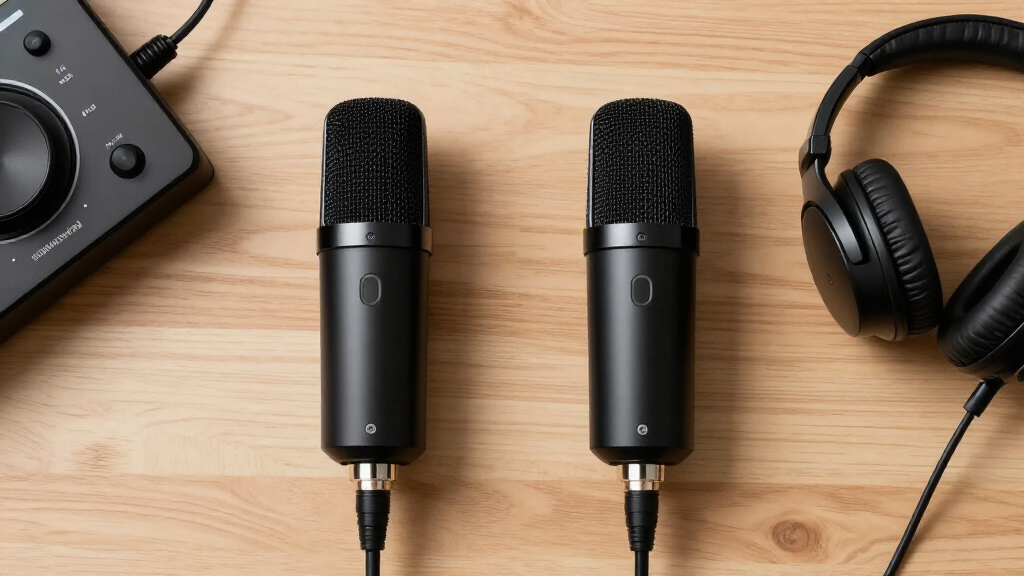
In 2026, eight AI-powered studio condenser microphones are leading the market, offering enhanced sound quality, low self-noise, and smart features. These models are set to redefine professional recording standards with innovative technology.
Eight new AI-powered studio condenser microphones have been launched in 2026, combining cutting-edge artificial intelligence with high-end audio engineering. These models are discussed in detail in the original analysis. These models are designed to deliver superior sound quality, low self-noise, and intelligent features that adapt to recording environments, making them highly relevant for professionals and enthusiasts. For more on microphone technology, see this comprehensive guide. The development signals a significant shift in microphone technology, integrating AI to optimize performance in real-time. This evolution is covered in the detailed analysis.
Leading the lineup is the RØDE NT1 Signature Series AI, praised for its ultra-low self-noise and warm sound profile, now enhanced with AI algorithms that automatically adjust gain and noise reduction based on the environment. Audio-Technica AT2035 AI offers versatile controls and adaptive noise filtering, making it suitable for various recording scenarios. Shure SM4 AI emphasizes durability and vocal clarity, featuring AI-driven feedback suppression and auto-calibration. These microphones utilize advanced AI to analyze sound sources, optimize frequency response, and reduce background noise dynamically, providing a more accurate and cleaner recording experience.
The 8 picks
- 1
 Shure SM4 XLR Studio Condenser Microphone Kit for RecordingView on Amazon →
 - 2
 Audio-Technica AT2035 Cardioid Condenser Microphone with Shock Mount and Acce…View on Amazon →
 - 3
 RØDE NT1 Signature Series Large-Diaphragm Condenser Microphone with Shock Mou…View on Amazon →
 - 4
 Audio-Technica AT2020 Cardioid Condenser Studio XLR MicrophoneView on Amazon →
 - 5
 AKG Pro Audio P120 Condenser MicrophoneView on Amazon →
 - 6
 MAONO A04 Gen2 XLR/USB Condenser Microphone Kit for PC and Content CreationView on Amazon →
 - 7
 Mackie EM-Series Large-Diaphragm Condenser Microphone (EM-91C)View on Amazon →
 - 8
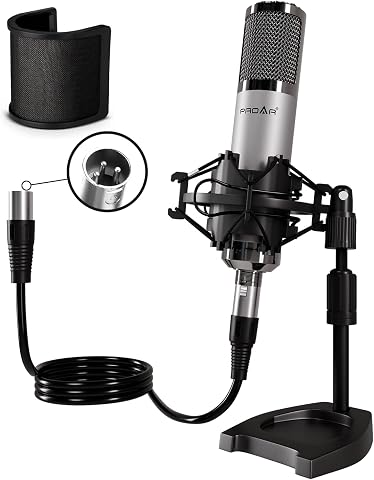 XLR Condenser Microphone with Desktop Stand for Vocals and PodcastingView on Amazon →
Innovative AI Features Transform Recording Quality
The integration of AI into studio microphones in 2026 represents a major advancement for both professional studios and home setups. These microphones can adapt in real-time, providing consistent, high-quality recordings without extensive manual adjustments. This reduces the need for post-production editing, streamlines workflows, and enhances overall sound fidelity. For users, this means easier setup, better sound capture, and greater flexibility across diverse recording environments.
2026 Microphone Market and Technological Trends
The microphone market in 2026 has seen rapid adoption of AI technologies, driven by advancements in machine learning and digital signal processing. Previous models relied heavily on manual calibration and static settings, but recent innovations now incorporate AI to analyze and adapt to acoustic conditions automatically. Leading brands like RØDE, Audio-Technica, and Shure have announced flagship models with integrated AI features, aiming to meet the demands of modern recording professionals and content creators.
“Our NT1 Signature Series AI combines traditional high-fidelity sound with intelligent features that automatically adapt to your environment.”
— RØDE spokesperson
Remaining Questions About AI Microphone Performance
While these models are highly anticipated, it is still unclear how well AI features perform across different recording environments and how they will hold up over time. Long-term durability of AI components and the actual impact on workflow efficiency are still being evaluated. Additionally, user feedback from early adopters has yet to be fully collected and analyzed.
Upcoming Releases and Field Testing in 2026
Manufacturers are expected to release updated models with refined AI algorithms throughout 2026, accompanied by extensive field testing and user feedback collection. Industry events and trade shows will showcase these microphones, providing opportunities for professionals to evaluate their real-world performance. Further, software updates may enhance AI capabilities and compatibility with various recording setups.
Key Questions
How do AI-driven microphones improve recording quality?
AI-driven microphones analyze sound in real-time, automatically adjusting gain, filtering background noise, and optimizing frequency response, resulting in clearer, more accurate recordings with less manual intervention.
Are AI microphones suitable for live performances or only studio use?
While primarily designed for studio environments, some AI microphones are adaptable for live use, especially those with feedback suppression and adaptive noise control features. However, their effectiveness in live settings depends on specific model capabilities.
Will AI features increase the cost of studio microphones?
Yes, integrating AI technology generally adds to the manufacturing cost, making AI-enabled microphones more expensive than traditional models. Nevertheless, the enhanced performance and ease of use can justify the higher price for many users.
Can existing microphones be upgraded with AI features?
Most AI features are integrated into the hardware of new models. Upgrading existing microphones usually requires purchasing new units, although some software-based AI enhancements can be applied via compatible audio interfaces or digital processing tools.
Source: ThorstenMeyerAI.com
Fall Picks
fall essentials
As an affiliate, we earn on qualifying purchases.