
TL;DR

Prime made for students and young adults
- Fast, free delivery for dorm and study essentials
- Prime Video and Amazon Music included
- Member-only deals
A September 2026 report estimates that black spruce in Canada and Dahurian larch in Russia each have far more living mass than humans or livestock. Its tree totals are estimates assembled from forest inventories, not a definitive global ranking, and difficult-to-survey microbes could affect the result.
A report published September 27, 2026, estimates that some boreal tree species may have the greatest total mass of any single species on Earth, with black spruce and Dahurian larch among the leading candidates. The comparison depends on estimates drawn from national forest data, however, and does not establish a definitive global winner.
The report puts the biomass of black spruce in Canada at more than 11 billion tonnes, citing figures from Canada’s National Forest Inventory. It estimates at least 8.4 billion tonnes of Dahurian larch in Russia by combining national forest-area figures, estimates of larch’s share and the relative prevalence of larch species. The author says the Dahurian total could be higher.
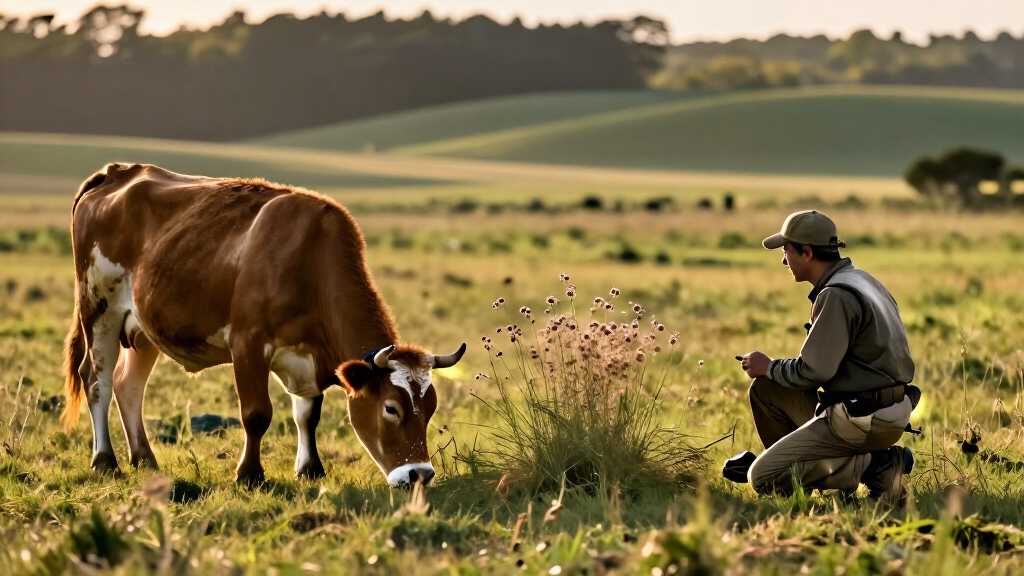
These figures describe estimated living tree mass, not annual harvest. The report compares them with other species using different source data: cattle are estimated at about 650 million metric tons, humans at roughly 350 million, and wild Antarctic krill at 379 million in a 2009 estimate. Sugar cane, the largest crop by annual harvest in the account, exceeded 2 billion metric tons harvested in 2023—a yearly production figure, not a standing biomass estimate.
The report also refers to a 2018 study by Yinon Bar-On and colleagues, which measures the biomass of broad groups of life as carbon mass. That study estimated plants at 450 billion tonnes of carbon and animals at 2 billion tonnes. Carbon mass is not the same as an organism’s total wet or dry weight, so those kingdom-wide figures should not be directly equated with the species estimates expressed in tonnes of living mass.
Why Tree Biomass Changes the Ranking
The comparison illustrates how a species can dominate by mass without being especially large as an individual or conspicuous to people. A spruce or larch tree’s contribution is multiplied across vast forests, while small organisms can also reach substantial totals through immense populations. The report’s animal figures, for example, put cattle above humans and krill, even though its plant candidates are on a much larger scale.
Biomass is also relevant to how scientists account for carbon stored in living things and consider the structure of ecosystems. But the metric needs careful handling: standing tree mass, annual crop harvest and carbon content answer different questions. The report’s contrast between roughly 11 billion tonnes of black spruce and the carbon contained in animals is informative as a broad comparison, not a like-for-like measurement of every species.
As an affiliate, we earn on qualifying purchases.
How the Biomass Comparisons Work
The report begins with familiar animal comparisons. It says humans collectively outweigh ants by about five to one, drawing on research estimating ant numbers and their mass. It then argues that comparing all ants or termites with humans is not a species-level contest: ants and termites each include many species, while humans are one species. By total mass, the report places people near the top among animal species, but below cattle.
For organisms across all life, the report turns to the 2018 study by Bar-On and colleagues, which estimated the carbon stored in major groups: plants, bacteria, fungi, archaea, protists, animals and viruses. Plants had the largest total in that analysis. Within plants, the report separates crops from wild trees. Sugar cane led crops by annual harvest in 2023, while boreal forest trees emerged as candidates for the largest standing biomass belonging to one species.
The tree estimates are not equally direct. Canada’s inventory provides a black spruce figure, while the Dahurian larch estimate is derived from Russian forest totals and assumptions about the proportion of larch represented by that species. The report notes that boreal forests can be dominated by relatively few tree species, which makes individual species’ totals potentially very large.
“The most comprehensive study, (Bar-On et. al 2018) measures the different kingdoms by their carbon mass specifically.”
— Signore Galilei report
As an affiliate, we earn on qualifying purchases.
Where the Species Ranking Is Uncertain
The report does not establish which single species has the greatest biomass worldwide. Its black spruce figure covers Canada, with some trees also growing in the United States, while its Dahurian larch calculation is an estimate based on Russian forest data that are not broken down in the same detail by species. The author describes the larch figure as a minimum and says it may be higher.
Microbes are another source of uncertainty. The report says many bacteria live in aquifers and seafloor sediments that are difficult to study, leaving open the possibility that an abundant bacterial species has a very large biomass. It judges a plant more likely to lead, but that is an assessment rather than a confirmed finding. The cited figures also span different years and methods, including a 2009 krill estimate, a 2023 crop harvest and forest inventory data, so they do not form one standardized census.
boreal forest tree identification book
As an affiliate, we earn on qualifying purchases.
As an affiliate, we earn on qualifying purchases.
What Better Forest Data Could Resolve
The report points to national forest inventories as the basis for refining tree estimates, but the available information is uneven: Canada provides a black spruce total, while the Russian data used for larch do not specify the same species-level breakdown. More detailed inventories could narrow the gap between the two candidates and clarify how much of Russia’s larch stock is Dahurian larch rather than Siberian larch.
A firmer global answer would also require comparable estimates across regions and species, alongside improved measurements of biomass in poorly surveyed underground and seafloor habitats. Until those data are available, the report supports a qualified conclusion: boreal trees are leading candidates for the greatest biomass of a single species, but the precise winner remains unsettled.
biomass measurement tools for trees
As an affiliate, we earn on qualifying purchases.
As an affiliate, we earn on qualifying purchases.
Key Questions
Which species does the report identify as the heaviest?
It does not name a definitive winner. It identifies black spruce and Dahurian larch as leading candidates based on estimated total living mass.
How much black spruce is estimated to grow in Canada?
The report cites Canada’s National Forest Inventory for an estimate of more than 11 billion tonnes of black spruce in the country. This is a forest-biomass estimate, not an annual harvest figure.
Is the Dahurian larch figure directly measured?
No. The report estimates at least 8.4 billion tonnes using Russian forest totals, the reported share of forest land occupied by larches and assumptions about the prevalence of Dahurian larch. It says the total may be higher.
Does the report say humans outweigh all other animals?
No. It estimates cattle at about 650 million metric tons, compared with roughly 350 million for humans. Its cited estimate for Antarctic krill is 379 million metric tons, though that figure dates to 2009.
Could a bacterium have more biomass than the trees?
The report says that possibility cannot be ruled out because many bacteria live in aquifers and seafloor sediments that are difficult to study. It considers a plant more likely to be the leading species, but the ranking is not settled.
Source: hn
Fall Picks
fall essentials
As an affiliate, we earn on qualifying purchases.


![Competitive Programmer's Handbook (2018) [Pdf]](https://micronomicon.com/wp-content/uploads/2026/10/competitive-programmer-s-handbook-2018-pdf-featured-560x300.jpg)