
TL;DR
Science experiment kits for kids boost curiosity and understanding of science through hands-on activities. Recent trends include digital tools and eco-friendly materials, making them more engaging and sustainable than ever.
Choose kits tailored to your child’s age, interests, and safety needs to keep science fun and safe.
Recent trends like AR integration and eco-friendly materials make science kits more interactive and sustainable.
Set clear expectations and use online resources to help your child troubleshoot and learn from mistakes.
Compare kits based on focus, complexity, and budget to find the best fit for your child’s curiosity.
Hands-on experiments turn abstract science into vivid, memorable experiences that inspire lifelong learning.
What Makes a Great Science Kit for Kids? Think Safety, Fun, and Learning
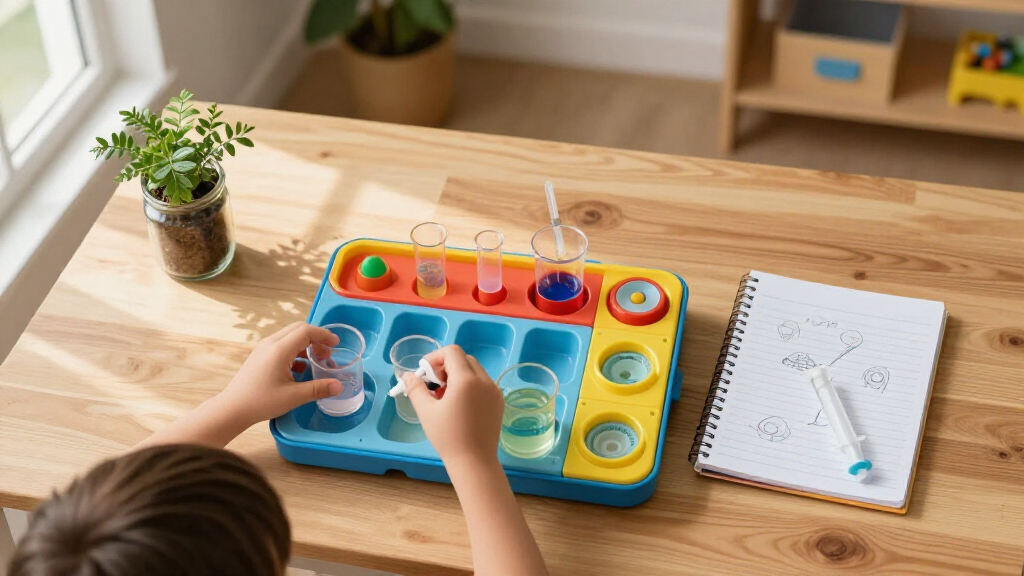
Science experiment kits for kids are more than just toys; they’re mini laboratories designed to ignite curiosity safely. A great kit combines educational value, age-appropriate complexity, and quality materials. This isn’t just about having colorful liquids or cool gadgets — it’s about creating an environment where children can genuinely learn and develop critical thinking skills. For example, a kit with clear, step-by-step instructions encourages independent problem-solving, while the choice of materials impacts both safety and durability. When children understand the ‘why’ behind experiments — such as why certain chemicals react or how magnetic fields work — the learning becomes meaningful, not just superficial play.
Safety is paramount because it directly impacts the child’s confidence and the parent’s peace of mind. Reputable kits use non-toxic, chemical-free substances and include safety warnings that educate children on proper handling. High-quality materials, like reusable glassware or sturdy tools, not only promote sustainability but also teach children about responsible resource use. Ultimately, a well-designed kit balances fun with education, offering opportunities for hands-on engagement that foster curiosity, logical thinking, and problem-solving skills, which are essential for STEM development.

UNGLINGA 150 Experiments Science Kits for Kids Chemistry Lab S.T.E.MToys
- Number of Experiments: 150 science experiments for kids
- Educational Topics: Earth, surface tension, chemistry, physics
- Instruction Manual: Well-illustrated, step-by-step guide
As an affiliate, we earn on qualifying purchases.
As an affiliate, we earn on qualifying purchases.
Latest Trends in Science Kits That Make Learning Even Cooler
Recent innovations in science kits are transforming how children experience STEM learning, making it more immersive and environmentally conscious. For instance, augmented reality (AR) apps are not just add-ons but tools that deepen understanding. When kids can scan a QR code and view a 3D model of a cell or a chemical reaction in action, it bridges the gap between abstract concepts and tangible understanding, fostering a more intuitive grasp of complex ideas. This integration of digital technology enhances engagement and caters to the tech-savvy generation, making science feel more like an adventure than a chore.
Eco-friendly materials are also reshaping the market, reflecting a growing awareness of environmental responsibility. Using biodegradable plastics, recycled paper, and natural dyes isn’t just a trend — it’s a necessary tradeoff to reduce the environmental footprint of manufacturing and disposal. These choices teach children about sustainability from a young age, instilling values alongside scientific knowledge.
Subscription-based kits are revolutionizing ongoing learning. Instead of one-off experiments, children receive themed boxes—such as space exploration, marine biology, or environmental science—each building on previous knowledge. This approach encourages continuous curiosity and helps develop a systematic understanding of scientific concepts, turning science into a sustained, engaging journey rather than isolated activities.
Furthermore, the inclusion of STEM challenges—like designing bridges or coding simple robots—pushes children to apply their knowledge creatively. These challenges foster critical thinking, innovation, and perseverance, which are crucial skills for future careers in science and technology. Overall, these trends reflect a shift from passive learning to active, meaningful engagement that prepares children for real-world scientific challenges.
As an affiliate, we earn on qualifying purchases.
How to Pick the Perfect Science Kit for Your Child’s Age and Interests
Choosing the right science kit isn’t just about matching age labels; it’s about understanding how each child learns best and what sparks their curiosity. When you select a kit, consider the developmental stage and the cognitive skills involved. For younger children, simple activities that focus on sensory experiences and basic cause-and-effect relationships help build foundational scientific thinking. For older kids, more complex experiments that require planning, hypothesis testing, and problem-solving deepen their understanding and keep them challenged. Recognizing these nuances ensures the kit promotes growth without frustration.
Interests are equally important. A child fascinated by space will benefit from kits that include rockets, planetary models, or star charts, which connect scientific concepts to their passions. Conversely, a child interested in animals or ecology might enjoy kits that involve observing insects, growing plants, or studying ecosystems. Aligning the kit with their interests increases motivation and makes learning feel relevant, not just academic.
Safety features must be scrutinized because they directly impact the child’s confidence and the parent’s peace of mind. Non-toxic, durable, and age-appropriate tools are essential. Clear safety instructions and warnings help children understand the importance of responsible experimentation, fostering independence and safety awareness. Budget considerations are also key—while premium kits offer more advanced tools and materials, there are effective options at various price points. Finally, reading reviews and checking for online support resources can ensure you select a kit that offers guidance when needed, making the experience smoother and more enjoyable for both child and parent.
Matching the complexity and theme of the kit with your child’s current interests and developmental level ensures that science remains a source of joy and discovery rather than frustration. For example, a 7-year-old curious about chemistry might enjoy a beginner set with colorful reactions and simple experiments, which can ignite a passion that grows over time. Meanwhile, a 12-year-old with a budding interest in electronics might find a more advanced kit that challenges them and expands their skills, laying the groundwork for future exploration.
eco-friendly science experiment kits for kids
As an affiliate, we earn on qualifying purchases.
As an affiliate, we earn on qualifying purchases.
Compare the Top Science Kits: Which One Fits Your Kid Best?
| Kit Name | Age Range | Focus Area | Price Range | Special Features |
|---|---|---|---|---|
| National Geographic Kids Science Kit | 6-12 | General science, experiments, fossils | $20-$40 | Includes real fossils, microscope, and detailed guides |
| Thames & Kosmos Chem C2000 | 10+ | Chemistry, reactions, lab techniques | $50-$70 | Refrigerated chemicals, advanced experiments, safety gear |
| Scientific Explorer My First Science Kit | 3-6 | Basic experiments, colors, textures | $15-$25 | Easy-to-handle tools, non-toxic, fun illustrations |
| SmartLab Toys Ultimate Secret Formula Lab | 8-12 | Chemical reactions, secret formulas | $40-$60 | Includes mystery powders and safe acids |
Choosing the right kit depends on your child’s age and curiosity. For example, if your 8-year-old loves mysteries, the Secret Formula Lab could be perfect because it combines engaging storytelling with hands-on experiments that develop problem-solving skills. If your 12-year-old is fascinated by chemistry, the C2000 kit offers more complex experiments that challenge their understanding and promote critical thinking. Recognizing these differences ensures that the kit not only matches their current skills but also encourages growth, making science a rewarding pursuit rather than a frustrating chore.
As an affiliate, we earn on qualifying purchases.
What If Your Kid Gets Stuck? Tips for a Smooth Science Adventure
Even the most well-designed kits can sometimes leave children puzzled. The key to a positive experience is fostering resilience and curiosity. When a child encounters a problem, it’s an opportunity to teach patience, problem-solving, and the scientific method itself. Encouraging them to analyze what went wrong—whether it’s a measurement error, a missing step, or a faulty material—helps develop critical thinking skills that are essential in STEM fields. Many kits now come with online resources like tutorial videos, FAQ sections, or customer support, which serve as valuable troubleshooting tools. These resources empower children to become independent learners, reinforcing that setbacks are normal parts of discovery rather than failures.
Supporting your child through troubleshooting teaches perseverance and builds confidence. For example, if a reaction doesn’t produce the expected color, encourage them to review the steps, check the freshness of chemicals, or adjust measurements. Celebrate their efforts and curiosity, emphasizing that science often involves trial and error. Patience and a positive attitude turn setbacks into valuable learning moments, fostering a growth mindset that will serve them well in any scientific pursuit.


![New AI Tutor Achieves 0.71-1.30 SD Effect Size In Dartmouth Course [Pdf]](https://micronomicon.com/wp-content/uploads/2026/07/new-ai-tutor-achieves-0-71-1-30-sd-effect-size-in-dartmouth-course-pdf-featured-560x300.jpg)