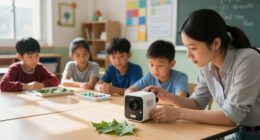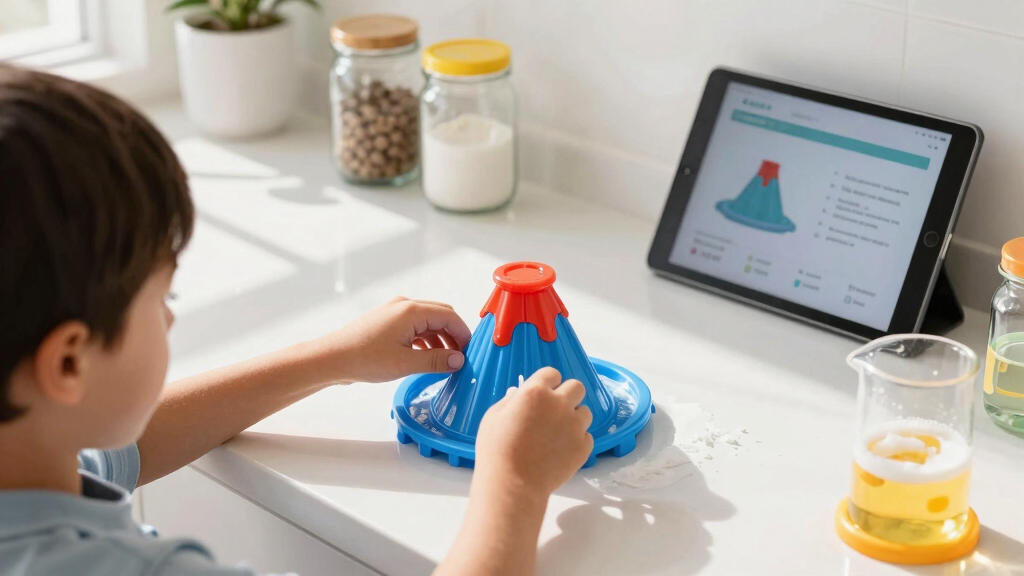

Educational science kits provide children with hands-on experiments to explore scientific principles safely and engagingly. This guide helps parents and teachers select appropriate kits, prepare all necessary materials, and conduct experiments effectively. Whether using kits at home or in the classroom, following this guide ensures a productive and safe learning experience.

Prime made for students and young adults
- Fast, free delivery for dorm and study essentials
- Prime Video and Amazon Music included
- Member-only deals

Doctor Jupiter My First Science Kit for Kids Ages 4-8 | STEM Educational Toy with 100+ Experiments
- ✔ Included Components: 2 Beakers, 1 Conical Flask, 1 Spatula, 2 Stirring Sticks, 2 Spray Bottles, 2 Cups, 1 Funnel, Safety Goggles, Tray, Food Essences, Food Additives, Dried Leaves, Food Colours, Instruction Manual, Bonus Experiment Booklet
- ✔ Age Range: 4-8 years
- ✔ Safety Standards: ASTM F963-17
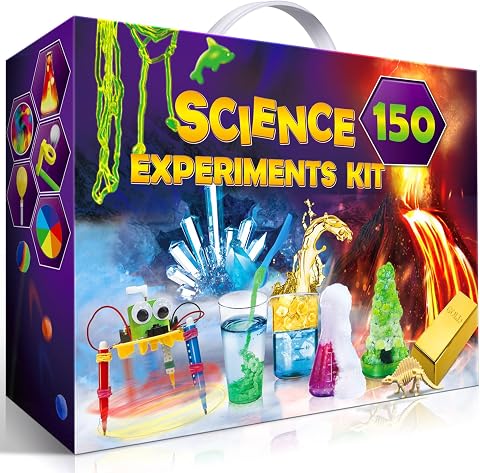
UNGILINGA 150 Experiments Science Kits for Kids, STEM Educational Project Toys for Boys and Girls
- ✔ Number of Experiments: 150
- ✔ Suitable For: Kids
- ✔ Educational Focus: STEM, Science, Hands-on Learning
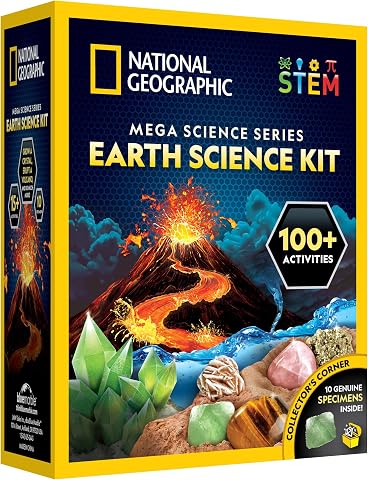
National Geographic Earth Science Kit – 100+ Science Experiments & Activities for Kids
- ✔ Number of Experiments: Over 15
- ✔ Includes: Crystal growing, volcano science, rock collection, geologic dig kits
- ✔ Target Age: Kids
Difficulty: Beginner | Time: 30-60 minutes per project/session
What You’ll Need
Tools & Materials:
- Basic cleaning supplies (cloth, soap)
- Optional: safety goggles and gloves
Knowledge:
- Basic understanding of safety precautions when handling chemicals or equipment
Read the kit instructions thoroughly before starting. Ensure a clean, organized workspace and supervise children at all times during experiments.
Doctor Jupiter My First Science Kit for Kids Ages 4-8 | STEM Educational Toy with 100+ Experiments
<p><strong>This pick stands out for its focus on early STEM education</strong>. With over 100 experiments, it’s designed to foster curiosity in children aged 4 to 8. The included components are simple and safe, with clear instructions that facilitate independent exploration or guided parent-child activities. Compared with the other options, this kit emphasizes safety standards and is particularly accessible for younger children, though it may require adult supervision because of small parts. Its broad experiment range makes it versatile but could feel overwhelming for the very youngest or less experienced kids. Overall, this kit makes science approachable for early learners, balancing fun and education with safety.</p>
Pros:
- Over 100 hands-on experiments to foster curiosity
- Includes comprehensive, easy-to-follow instructions
- Meets high safety standards, including ASTM F963-17
- Encourages critical thinking and problem-solving
Cons:
- Requires adult supervision for some experiments
- Contains small parts that pose a choking hazard for very young children
Best for: Young children starting their science journey, especially in the 4-8 age range.
Not ideal for: Older kids seeking more advanced experiments or those who prefer fewer, more complex activities.
Bottom line: Ideal for introducing young children to STEM with a safe, extensive set of experiments, though supervision is necessary.
“Ideal for introducing young children to STEM with a safe, extensive set of experiments, though supervision is necessary.”
UNGILINGA 150 Experiments Science Kits for Kids, STEM Educational Project Toys for Boys and Girls
<p><strong>This kit is distinguished by its extensive range of experiments</strong>, offering 150 activities that span earth science, chemistry, and physics. It’s well-suited for children who are eager to explore multiple science disciplines and enjoy hands-on projects. The included tools are high-quality and designed for repeated use, with clear instructions that make it accessible for kids with some prior experience or encouragement. Compared to the other options, this kit’s main advantage is its breadth, making it perfect for curious kids who want to experiment with different science fields. Its main tradeoff is that it lacks specific safety gear details and an explicit age range, which could be a concern for parents of very young children or beginners.</p>
Pros:
- Includes 150 experiments for diverse learning
- Well-illustrated, easy-to-follow manual
- High-quality tools and kid-friendly materials
Cons:
- Age range not specified, may need adult supervision
- Limited safety gear details
- Could be overwhelming for complete beginners
Best for: Kids interested in a wide variety of experiments and who have some foundational understanding of science concepts.
Not ideal for: Very young children or beginners who need more structured guidance and safety features.
Bottom line: Best suited for kids with some prior science experience who crave variety and depth in experiments.
“Best suited for kids with some prior science experience who crave variety and depth in experiments.”
National Geographic Earth Science Kit – 100+ Science Experiments & Activities for Kids
<p><strong>This kit offers a compelling selection of geology and earth science experiments</strong>, including volcano eruptions, crystal growing, and geologic digs. It’s best suited for kids fascinated by the planet’s processes, with a detailed learning guide that enhances educational value. Compared with the other kits, it emphasizes specific scientific themes, making it ideal for young explorers with a particular interest in earth sciences. However, it may require adult supervision for some activities, and the limited information on age range could affect suitability. Its smaller number of experiments means less variety but more depth in a focused topic.</p>
Pros:
- Wide variety of engaging earth science experiments
- Educational with detailed learning guide
- Easy-to-follow instructions build confidence
Cons:
- May require adult supervision for some experiments
- Limited information on the precise age range
- Potentially small parts for younger children
Best for: Kids passionate about geology, volcanoes, and earth science activities.
Not ideal for: Children seeking a broad range of science topics or requiring a highly structured curriculum.
Bottom line: Perfect for budding geologists, offering depth in earth sciences but less variety overall.
“Perfect for budding geologists, offering depth in earth sciences but less variety overall.”
As an Amazon Associate we earn from qualifying purchases.
Before You Start
Check that all kit components are present and undamaged. Read the entire kit manual to understand the experiments and safety instructions. Prepare a flat, well-lit workspace free of distractions.
Step-by-Step Instructions
Step 1: Select an appropriate science kit
Choose a kit based on the child’s age, interest, and skill level. Review the kit contents and experiment descriptions to ensure they match your goals and safety requirements.
Tip:Opt for kits with clear instructions and quality materials. Avoid kits with small parts for young children to prevent choking hazards.
Check: The selected kit contains all parts listed, and you understand the experiments involved.
Step 2: Prepare the workspace and safety equipment
Clear a flat surface and lay down a protective sheet or cloth. Gather safety gear like goggles and gloves if recommended. Wash your hands before beginning.
Tip:Ensure good lighting and ventilation. Keep a water source and cleanup supplies nearby.
Check: The workspace is clean, organized, and safety gear is within reach.
Step 3: Read and understand the experiment instructions
Carefully read each step of the experiment manual. Highlight or note key safety warnings and procedural tips.
Tip:Discuss the instructions with the child to ensure they understand the steps and safety precautions.
Check: You and the child can confidently explain the experiment steps and safety measures.
Step 4: Gather all materials needed for the experiment
Collect the specific components from the kit and any additional household items listed in the instructions.
Tip:Lay out all materials in the order they’ll be used to streamline the process.
Check: All required materials are ready and easily accessible.
Step 5: Conduct the experiment step-by-step
Follow the instructions precisely, performing each step carefully. Supervise children closely during each phase.
Tip:If a step is unclear, re-read the instructions or watch a demonstration video if available.
Check: The experiment completes smoothly, and results are observed as described.
Step 6: Record observations and results
Help the child document what they observe, including measurements, colors, changes, or reactions.
Tip:Use a notebook or worksheet to record data systematically for later review.
Check: Clear notes or photos of the experiment outcomes are available for review.
Step 7: Clean up and store materials properly
Wash reusable components and store all materials in the original container or a designated storage bin.
Tip:Dispose of any waste according to safety instructions, especially if chemicals are involved.
Check: The workspace is tidy, and all materials are stored safely for future use.
Common Mistakes to Avoid
- Using the wrong safety equipment or neglecting safety warnings. — Always read safety instructions thoroughly and wear recommended protective gear during experiments.
- Skipping steps or rushing through procedures. — Follow each instruction carefully, and take your time to ensure accuracy and safety.
- Not supervising children closely or leaving experiments unattended. — Stay present and attentive throughout the experiment, especially when handling chemicals or fragile materials.
Troubleshooting
Problem: The experiment does not produce expected results.
Solution: Verify all steps were followed exactly, check the freshness of materials, and consult the manual for troubleshooting tips.
Problem: Materials are missing or damaged.
Solution: Contact the kit provider for replacements or substitutions, or check if the missing parts are stored separately.
Problem: Child becomes uninterested or distracted.
Solution: Engage them by asking questions about what they observe and relate experiments to real-world applications.
What Success Looks Like
The experiment is completed with correct procedures, observations are recorded clearly, and safety measures are followed. The child understands the scientific concept demonstrated.
Next Steps
Repeat similar experiments to reinforce learning, explore additional kits for different topics, or create a science notebook for ongoing projects. Always supervise new experiments and review safety precautions.
Frequently Asked Questions
Are all science kits safe for young children?
Most kits are designed with safety in mind, but always check age recommendations and supervise children during use.
How can I make experiments more engaging for kids?
Encourage questions, relate experiments to their interests, and involve them in recording results to boost engagement.
What should I do if a chemical or material spills?
Follow the safety instructions provided with the kit, clean the spill immediately with appropriate materials, and wash hands after handling chemicals.
How often should I clean and store the kit materials?
Clean reusable parts after each use and store all components in a safe, dry place to maintain their longevity and safety.
Halloween Picks
halloween
As an affiliate, we earn on qualifying purchases.