
TL;DR

Prime made for students and young adults
- Fast, free delivery for dorm and study essentials
- Prime Video and Amazon Music included
- Member-only deals
Educational science kits for kids blend hands-on experiments with STEM learning, fostering curiosity and critical thinking. Modern kits now include digital, eco-friendly, and inclusive features to keep children engaged and inspired.
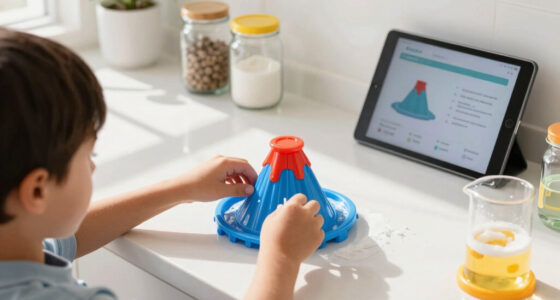
Imagine a box that transforms your child’s curiosity into a full-blown science adventure. The magic of educational science kits for kids lies in their ability to turn complex concepts into colorful, tactile experiences. Whether it’s a bubbling volcano or a mini robot, these kits make science irresistible.
In this article, you’ll learn what makes a great kit, explore the latest developments, and get practical tips to pick the perfect one for your child’s age and interests. Because sparking a love for science early can shape a future innovator.
Choose kits aligned with your child’s age and interests to keep them motivated.
Look for recent innovations like AR, sustainability, and online resources to enhance learning.
Safety is non-negotiable—always verify non-toxic materials and clear instructions.
Science kits can reinforce classroom lessons and foster lifelong curiosity.
Support inclusive design by selecting kits that accommodate children with diverse needs.
What Makes a Science Kit Truly Great for Kids?
Not all science kits are created equal. The best ones combine age-appropriate experiments, safety, and engaging content. For example, a kit for 5-year-olds might focus on colorful chemical reactions with non-toxic ingredients, while a 10-year-old might build a simple robot. Safety comes first—look for certified non-toxic materials and clear instructions.
Beyond safety, a great kit sparks curiosity and wonder. Think of it like opening a treasure chest of colorful liquids, textured minerals, or miniature tools that feel just right in little hands. Kits that include experiment logs or challenge cards motivate kids to think and explore.
Here’s what to check:
- Age compatibility
- Safety certifications
- Variety of experiments
- Educational value and curriculum ties
As an affiliate, we earn on qualifying purchases.
How Recent Tech and Trends Are Changing Science Kits
Modern science kits do more than just include chemicals and models. They incorporate AR apps, digital guides, and eco-friendly materials. These innovations expand the learning experience beyond traditional hands-on activities, enabling children to visualize concepts in 3D or engage in virtual experiments, which can deepen understanding. For instance, AR can illustrate molecular structures or planetary movements that are otherwise invisible, making abstract ideas tangible. This integration encourages children to see science as a dynamic, interactive process rather than static facts.
Eco-conscious brands are using biodegradable plastics and recycled packaging, but this isn’t just about environmental responsibility; it’s about teaching children the importance of sustainability in science and everyday life. Subscription boxes themed around space, robotics, or environmental science keep the excitement alive month after month, providing continuous engagement and learning opportunities that adapt to a child’s growing interests. These trends reflect a shift towards making science education more immersive, environmentally responsible, and aligned with the digital age, which can foster a more holistic scientific mindset.
Here’s a quick overview of recent innovations:
| Feature | Example |
|---|---|
| Digital + AR | AR apps that turn a simple chemistry set into an interactive adventure, allowing kids to see virtual reactions or explore 3D models of molecules |
| Sustainable Materials | Biodegradable plant-based plastics that decompose safely, teaching children about environmental impact while they experiment |
| Subscription Kits | Monthly themed boxes on geology, space, or biology that provide ongoing discovery, helping children build a broader scientific perspective over time |
These features make learning more immersive and environmentally friendly, aligning with today’s tech-savvy and eco-aware young scientists. They also come with the tradeoff of higher costs or complexity, which parents should consider when choosing a kit that matches their child’s maturity and learning style.
STEM science experiment kits for children
As an affiliate, we earn on qualifying purchases.
As an affiliate, we earn on qualifying purchases.
Choosing the Perfect Science Kit for Your Child’s Age and Interests
Picking the right kit isn’t just about age; it’s about interests too. A child fascinated by space might love a moon rover-building set, while a budding chemist might prefer a colorful slime or crystal-growing kit.
Here’s a simple step-by-step process:
- Identify your child’s age and safety needs
- Determine their scientific interests (biology, chemistry, physics, etc.)
- Check for educational alignment with school topics
- Read reviews and verify safety certifications
- Pick a kit with engaging components and clear instructions
Choosing a kit that aligns with your child’s interests and developmental stage isn’t just about making science fun; it’s about fostering sustained engagement. Matching complexity to their ability ensures they won’t become frustrated or bored, which can hinder learning. For example, a 7-year-old curious about animals benefits from a biology kit that allows hands-on interaction, like dissecting frogs or observing insects. Conversely, a 12-year-old with a knack for technology might thrive with a robotics kit that challenges their problem-solving skills. Carefully selecting based on curiosity, ability, and safety helps cultivate a positive, lifelong relationship with science.
kids science kits with AR features
As an affiliate, we earn on qualifying purchases.
As an affiliate, we earn on qualifying purchases.
How Science Kits Boost Kids’ Critical Thinking and Creativity
Science kits aren’t just about following steps—they’re about inspiring questions and inventive solutions. When a child builds a simple circuit or mixes ingredients to create a reaction, they practice problem-solving and critical thinking. These activities encourage children to analyze what’s happening, predict outcomes, and troubleshoot when things go wrong. This process helps develop a mindset that is analytical yet flexible, which is essential for scientific progress and everyday decision-making.
Take a kit that involves designing a small eco-friendly robot. Your kid learns to troubleshoot, make adjustments, and think outside the box—skills that last a lifetime. Such open-ended projects foster resilience and adaptability, as kids learn to refine their ideas through trial and error. Plus, the colorful experiments and hands-on tasks ignite their imagination and curiosity. When children see their ideas come to life, it reinforces their confidence and love for discovery, which are crucial for sustained engagement in science.
Encouraging open-ended experiments, like creating unique slime textures or designing their own mini volcano, nurtures creativity and scientific thinking simultaneously. These activities provide opportunities for children to develop their own hypotheses, test them, and learn from outcomes, which is fundamental to scientific literacy and innovation.
eco-friendly science kits for kids
As an affiliate, we earn on qualifying purchases.
As an affiliate, we earn on qualifying purchases.
Frequently Asked Questions
Are science kits safe for young children?
Yes. Reputable kits are designed with safety in mind, using non-toxic, child-safe materials and clear instructions. Always check the recommended age before purchasing.
What age is best for starting with science kits?
Science kits are available for children from as young as 3 years old, with age-specific activities. Always follow the packaging guidelines to ensure safety and appropriateness.
How do I choose a kit that matches my child’s interests?
Identify what excites your child—space, animals, robots—and pick a kit aligned with those themes. Reading reviews and checking the content helps ensure it’s engaging and suitable.
Can science kits support school learning?
Absolutely. They supplement classroom lessons, reinforce concepts, and make science more tangible and fun outside school hours.
Are eco-friendly science kits available?
Yes. Many brands now focus on sustainability, using biodegradable plastics and recycled materials to teach kids about caring for the planet while they learn.
Conclusion
Science kits turn learning into an exciting adventure—one that sparks curiosity, builds skills, and makes complex ideas tangible. A well-chosen kit becomes a gateway to discovery and a lifelong love of science.
So, the next time you see a colorful box promising fun and learning, remember: you’re holding a tool that can shape a future scientist, engineer, or innovator. Ready to pick your child’s next science adventure?
Columbus Day / Indigenous Peoples' Day Picks
long weekend sales
As an affiliate, we earn on qualifying purchases.