Wood naturally expands when it absorbs moisture and contracts as it dries, which causes warping and cracks in your projects. Factors like the type of wood, grain orientation, and environmental conditions influence how much movement occurs. Sometimes, finishing or sealing the wood can help control moisture exchange. Understanding these physics can help you predict and minimize warping—keep exploring to learn practical techniques for stable woodworking.
Key Takeaways
- Wood expands with increased moisture and contracts when dry, causing warping and movement in projects.
- The type of wood and grain orientation influence how much and in which direction wood will move.
- Environmental fluctuations in humidity and temperature accelerate moisture changes, leading to project distortion.
- Proper acclimation, sealing, and stable climate control reduce risks of warping and cracking.
- Recognizing signs of movement early and designing with allowances minimizes long-term project issues.
The Science Behind Wood Expansion and Contraction
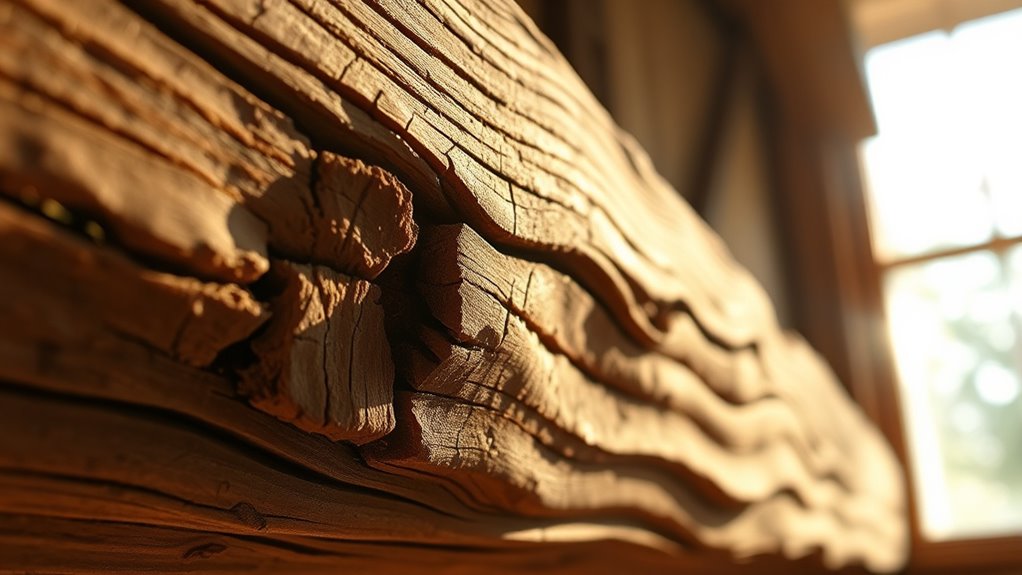
Have you ever noticed how wooden furniture or floors seem to shift with the seasons? That’s because wood naturally expands and contracts based on its moisture content. When moisture levels increase, wood absorbs water, causing it to swell. Conversely, when moisture decreases, wood loses water and shrinks. Different wood types react differently; some expand and contract more than others. Hardwoods like oak and maple tend to be more stable, but still move with changes in humidity. Softwoods, such as pine, are more prone to movement. These shifts happen because wood is hygroscopic, meaning it responds to moisture in the environment. Additionally, scientific skepticism highlights the importance of basing expectations on empirical evidence rather than superstition when dealing with material behavior. Recognizing the material properties of different woods can further improve your ability to predict and accommodate their movement over time. The environmental conditions to which wood is exposed play a crucial role in its dimensional stability. Proper understanding of moisture content is essential for designing projects that remain stable despite environmental fluctuations. Being aware of climate variations can help in selecting appropriate wood types for specific applications.
Factors Influencing Wood Movement
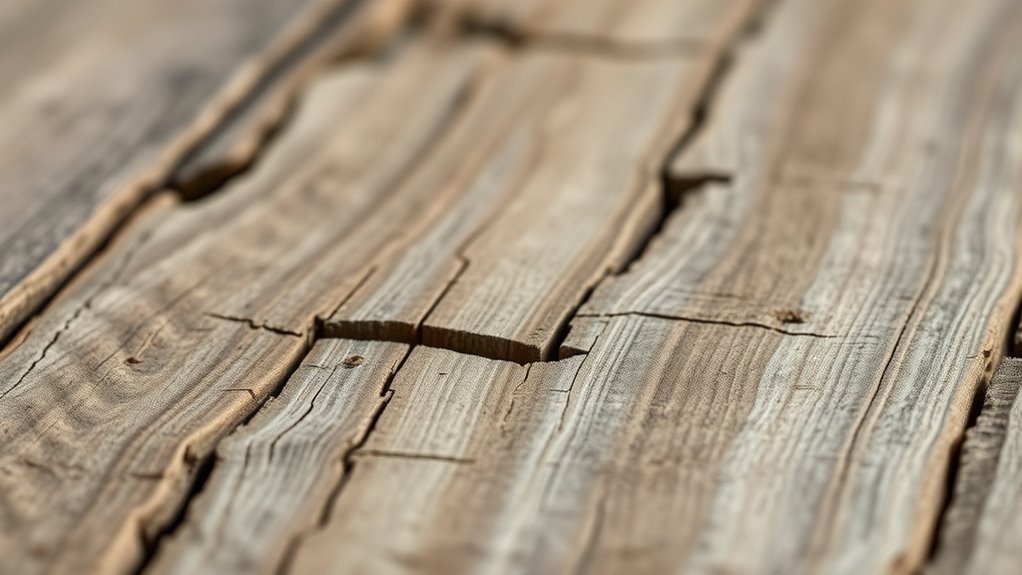
Several factors determine how much wood will expand or contract over time. Chief among them is moisture content; as humidity rises, wood absorbs moisture and swells, while drying causes it to shrink. The direction of the wood grain also plays a role—movement is more pronounced across the grain than along it. Additionally, the type of wood affects its stability, with some species more prone to movement. Other factors include the initial moisture level, environmental fluctuations, and the age of the wood. Understanding these influences helps you predict and manage wood movement in your projects, especially by considering the material’s moisture content. Environmental conditions like seasonal changes can further amplify these effects, making it essential to account for moisture variation during planning and construction. Recognizing wood stability can also guide you in selecting appropriate wood types for specific applications, particularly by choosing species with lower movement tendencies.
Recognizing the Signs and Effects of Wood Movement

Wood movement often manifests through visible changes and structural issues that indicate moisture-related stress. You might notice warping, cupping, or gaps developing in your project, especially if the grain orientation isn’t considered. Grain running parallel to the surface can cause more noticeable movement, leading to cracks or splits. Check for uneven edges or bowing, which signal expansion or contraction. Recognizing these signs early helps prevent further damage. Additionally, the finish selection plays a role; improper finishes may trap moisture, accelerating movement. Be attentive to how your wood reacts over time, especially in varying humidity. Understanding the moisture content of your wood and its effects is crucial for predicting and managing movement. Proper exposure to humidity fluctuations can significantly influence how much your wood moves, so controlling environmental conditions is essential. Monitoring wood expansion and contraction patterns can also give you insight into potential problems before they become severe. Being aware of climatic conditions and how they affect wood behavior can help you better anticipate and mitigate issues. Keeping track of moisture levels with a hygrometer provides valuable data for preventing damage. By understanding these signs and effects, you can take steps to mitigate issues and maintain your project’s integrity.
Techniques to Minimize Warping and Cracking
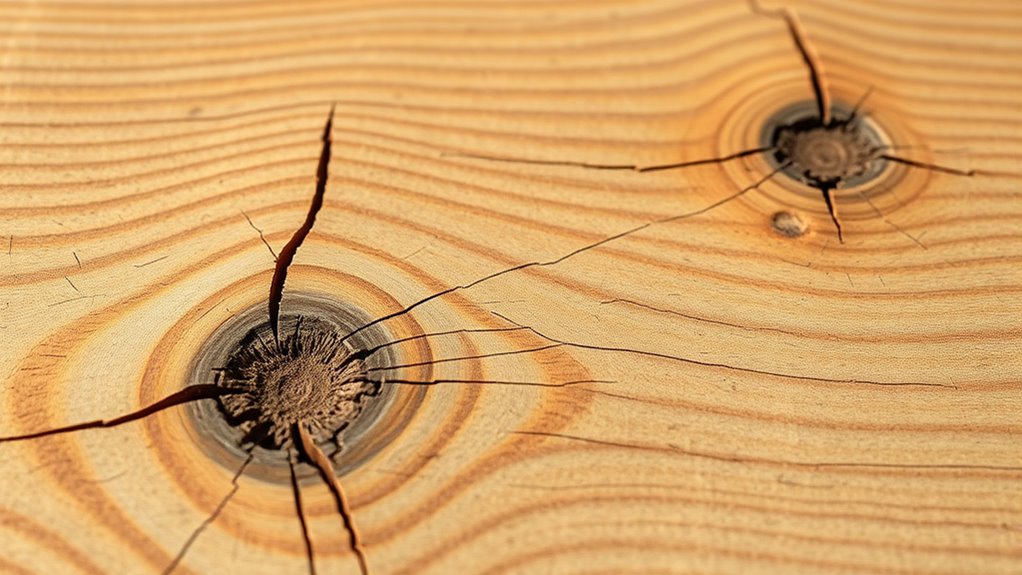
To effectively reduce warping and cracking, you should start with proper wood selection and preparation. Choosing wood with correct grain orientation minimizes internal stresses that cause movement. Ensuring consistent moisture content before working helps prevent future issues. Implementing easy document management techniques can also assist in tracking moisture levels and storage conditions. Climate control by maintaining stable humidity and temperature in your workspace is essential. Proper techniques include:
Start with properly selected, acclimated wood to minimize warping and cracking in your projects.
- Selecting wood with straight, even grain orientation
- Storing wood in a controlled environment before use
- Allowing wood to acclimate to your workshop’s climate
- Using sealants or finishes to limit moisture exchange
- Avoiding rapid drying or wetting processes
- Paying attention to moisture content levels helps prevent unpredictable warping and cracking over time. Utilizing wood movement analysis can also guide you in understanding how different species react to varying environmental conditions. Additionally, monitoring humidity levels regularly can serve as a proactive measure to prevent excessive fluctuations that cause movement. Being aware of species-specific behaviors can further inform your choices for durability and stability.
These steps help stabilize the wood, reducing the risk of warping and cracking over time. Paying attention to grain orientation and climate control creates a more durable, stable project.
Best Practices for Stable Woodworking Projects
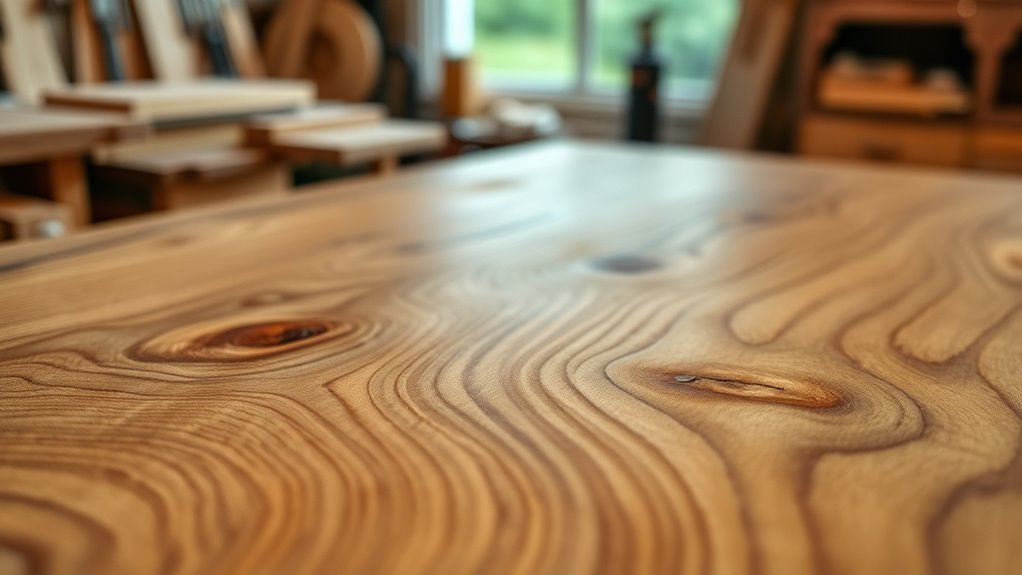
Achieving stable woodworking projects requires careful planning and consistent practices throughout your work process. Start by paying close attention to grain orientation; aligning the grain properly helps reduce movement and warping over time. When selecting wood, consider seasonal changes—wood expands and contracts with humidity fluctuations, so store and acclimate your material in the environment where it will be used. During construction, seal surfaces to limit moisture exchange, enhancing stability. Use proper joinery techniques that allow for movement without stressing the material. Clamping and drying your project thoroughly before finishing minimizes future distortion. Regularly check and maintain your woodworking environment, especially humidity levels, to prevent unexpected shifts. Monitoring environmental conditions is crucial for ensuring your project remains stable over time. Proper wood storage techniques further help in controlling moisture content and preventing warping. Applying these best practices helps ensure your projects remain stable and durable, despite the natural tendencies of wood.
Frequently Asked Questions
How Does Humidity Affect Wood Movement Over Time?
Humidity affects your wood by changing its moisture content, causing it to expand or contract over time. During seasonal variations, increased humidity raises moisture levels, making wood swell, while lower humidity causes it to shrink. You’ll notice these movements, especially in large or flat pieces, as the wood responds to fluctuating environmental conditions. To minimize warping, maintain consistent humidity levels and store your wood properly.
Can Temperature Fluctuations Reverse or Accelerate Wood Warping?
Ever wonder if temperature swings can nudge your wood into new shapes? They definitely can, as thermal expansion and contraction influence its structure. Sudden temperature fluctuations may accelerate warping by increasing structural stress, while gentle changes might help reverse minor distortions over time. Keep your environment stable to reduce these effects. By managing temperature, you help your wood stay true, minimizing unwanted warping and preserving your project’s integrity.
Are Certain Wood Species More Resistant to Movement?
Yes, certain wood species resist movement better due to their characteristics. When you select timber, focus on species with stable grain, low moisture content, and tight growth rings, which help reduce warping. Hardwoods like oak, maple, and cherry tend to be more resistant than softwoods. Proper timber selection is essential for minimizing movement, ensuring your project remains stable and durable over time.
How Do Indoor Versus Outdoor Environments Impact Wood Stability?
Indoor climate typically offers more stable conditions, reducing wood movement, while outdoor exposure subjects wood to fluctuating humidity and temperature. You’ll notice that wood in environments with controlled indoor climate stays flatter and less prone to warping. Conversely, outdoor exposure causes more expansion and contraction, increasing the risk of warping. To maintain stability, control indoor climate and minimize outdoor exposure for your wood projects.
What Are Long-Term Effects of Repeated Wood Expansion and Contraction?
Repeated wood expansion and contraction cause grain separation, joint failure, and structural weakening over time. You’ll notice gaps opening, joints loosening, and surfaces warping as the wood continuously shifts. This ongoing movement stresses the material, leading to cracks and potential project failure. To mitigate these issues, you need to implement proper design techniques, allow for movement, and choose stable wood to guarantee your project remains durable and intact.
Conclusion
As you work with wood, imagine it as a living material stretching and shrinking like a breath. By understanding how temperature and humidity influence its dance, you can prevent warping and cracking. With mindful techniques, your projects will stand firm, like a tree rooted in stable soil. Embrace these practices, and watch your craftsmanship flourish, turning raw timber into timeless pieces that weather life’s changes with grace and resilience.