
You might find some wall anchors hold less than expected because you’ve used the wrong type for your drywall or the installation wasn’t perfect. If the drywall’s too soft, brittle, or thick, it won’t support anchors well over time. Overloading the anchors or not tightening them properly can also weaken their grip. Environmental factors like moisture or vibrations can further reduce their hold. Keep these points in mind; understanding more can help you improve your anchoring success.
Get ready for Prime Big Deal Days — try Prime free
Exclusive member deals on October 6–7, plus fast free delivery. Cancel anytime.
As an affiliate, we earn on qualifying purchases.
Key Takeaways
- Incompatible drywall type or thickness reduces the anchor’s grip strength.
- Improper installation, such as incorrect hole size or angle, weakens holding power.
- Environmental factors like moisture and vibrations can degrade drywall and anchors over time.
- Overloading anchors beyond their rated capacity causes premature failure.
- Using the wrong anchor for the drywall and load compromises long-term stability.
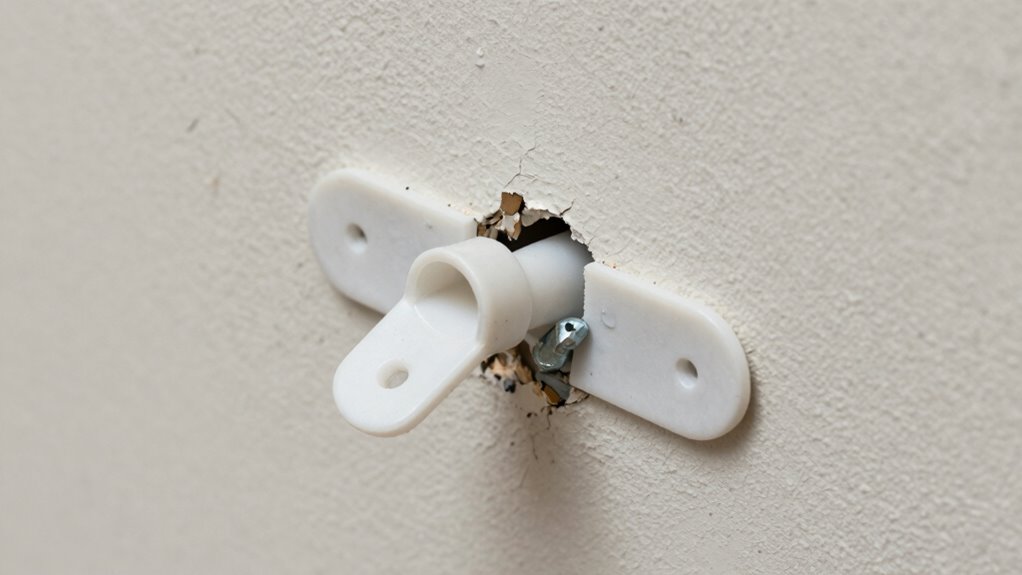
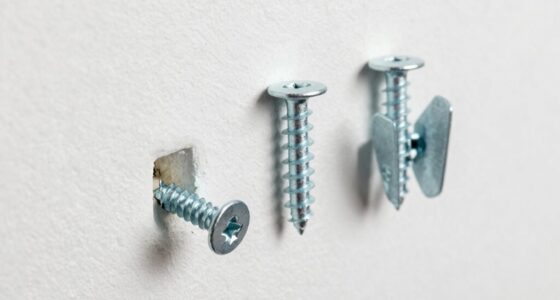
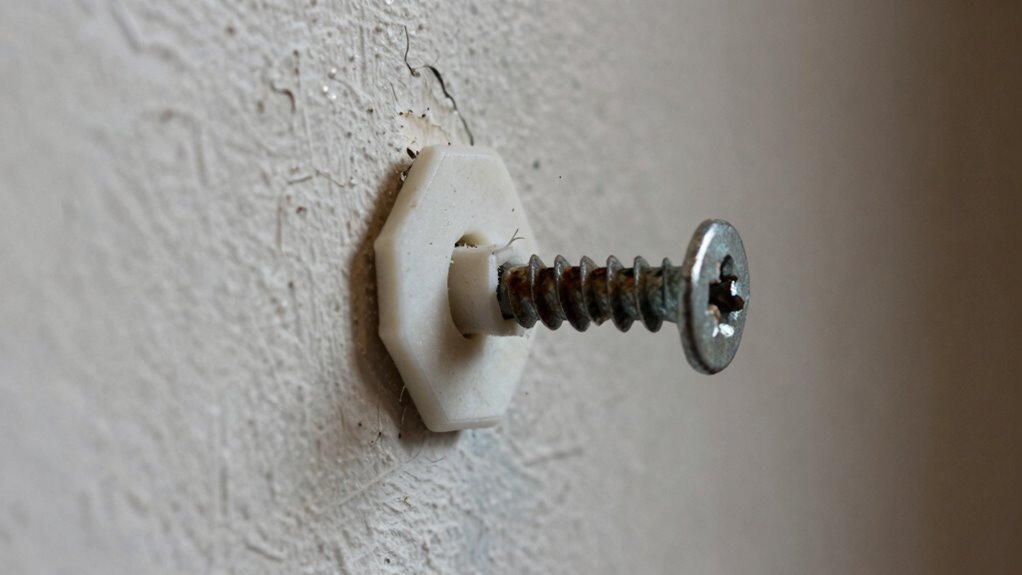
Have you ever wondered why wall anchors sometimes seem to hold less over time? It can be frustrating when you hang a picture or shelf, only to find that the anchor isn’t as secure as it once was. The truth is, many factors influence the longevity and holding power of wall anchors, and understanding these can help you avoid future mishaps. One key aspect is the types of drywall you’re working with. Drywall varies in density and thickness—some drywall is lightweight and soft, while others are heavy-duty and more resistant. If you choose an anchor that isn’t suited for your specific drywall type, it can lead to reduced holding strength over time. For example, plastic expansion anchors work well in standard drywall, but might not hold as well in thicker or more brittle surfaces. On the other hand, toggle bolts or molly bolts provide stronger support in heavier drywall or for hanging heavier items, but only if installed correctly. Proper installation plays a *vital* role in how well the anchor holds. Ensuring you’re using the right type of anchor and installing it correctly is crucial. If you don’t follow the manufacturer’s instructions, such as not drilling the right size hole or not tightening the anchor properly, the holding power diminishes over time. For instance, if an anchor isn’t flush against the wall or is installed at an angle, it won’t distribute weight evenly, which can cause it to loosen or pull out sooner. Even the slightest mistake during installation can weaken the anchor’s grip, especially in less dense drywall. Additionally, environmental factors like moisture, temperature changes, and vibrations can all weaken the bond between the anchor and the drywall. Over time, drywall may degrade or crack around the anchor, especially if it was not installed properly or if the wall isn’t stable. Understanding drywall characteristics can help you choose the right anchor and improve its durability. Using appropriate anchoring techniques based on drywall characteristics can significantly improve the longevity of your installations. Overloading the anchor beyond its weight capacity is another common reason for failure. If you hang something too heavy or add weight gradually without reassessing the anchor’s suitability, it can loosen and fall out. To maximize the durability of your wall anchors, it’s also helpful to consider drywall characteristics, which directly influence how well anchors perform over time. In the end, the key to ensuring your wall anchors hold securely for years to come is selecting the right type of drywall, using the correct anchor for your specific needs, and installing it properly. When you pay attention to these details, you minimize the risk of your anchors losing their grip over time, keeping your pictures, shelves, and décor safe and secure.
drywall wall anchors for heavy items
As an affiliate, we earn on qualifying purchases.
As an affiliate, we earn on qualifying purchases.
Frequently Asked Questions
Can Wall Anchors Be Reused After Removal?
Yes, wall anchors can sometimes be reused after removal, but it depends on the type and how well they were removed. When you perform anchor removal carefully, you maintain their reuse potential. However, if the anchor gets damaged or deformed during removal, reuse might not be possible. Always inspect the anchor for cracks or deformation before deciding to reuse it, and consider replacing if it’s compromised to ensure safety and stability.
Do Different Wall Types Require Specific Anchors?
Think of your wall as a landscape, each type demanding its own native language. Yes, different wall types require specific anchors, much like choosing the right key for a lock. For drywall, toggle anchors work like a sturdy tree trunk, while concrete walls call for heavy-duty expansion anchors. Alternative materials and precise installation techniques guarantee your anchors grip tightly, transforming your wall into a reliable foundation for your décor.
How Do Temperature Changes Affect Wall Anchor Strength?
Temperature changes can weaken wall anchors because of thermal expansion, which causes materials to expand and contract. When temperatures fluctuate, the anchor’s material durability may decrease, leading to reduced holding strength. You might notice that anchors hold less securely in extreme heat or cold, as the constant expansion and contraction stress the material, compromising its ability to stay firmly in place. Always consider temperature impacts when selecting anchors for different environments.
Are Plastic Wall Anchors as Reliable as Metal Ones?
Plastic wall anchors are generally less reliable than metal ones because plastic durability varies, and they can crack or deform under heavy loads. Metal strength usually provides better holding power and stability, especially for heavier items. If you’re hanging something substantial, you should opt for metal anchors to guarantee safety and durability. Plastic anchors work well for lightweight applications but might not hold as securely over time or under stress.
What Is the Maximum Weight Capacity for Standard Wall Anchors?
The maximum weight capacity for standard wall anchors varies, but most hold between 20 to 50 pounds. Anchor material greatly influences this capacity—metal anchors usually support more weight than plastic ones. Proper installation techniques are essential; make sure you select the right anchor for your wall type, drill correctly, and insert the anchor fully. Following these steps helps maximize the anchor’s weight capacity and prevents premature failure.
As an affiliate, we earn on qualifying purchases.
Conclusion
So, next time your wall anchor seems to give way just when you need it most, remember—sometimes, it’s not just the anchor but the unexpected luck of the wall’s material or a tiny flaw in your installation. It’s funny how these little coincidences can turn a secure hold into a surprise. Keep an eye on the details, and you might just find that the wall and anchor work together perfectly—until the next unexpected twist.
plastic expansion anchors for drywall
As an affiliate, we earn on qualifying purchases.
As an affiliate, we earn on qualifying purchases.
As an affiliate, we earn on qualifying purchases.
Fall yard work Picks
leaf blowers
As an affiliate, we earn on qualifying purchases.