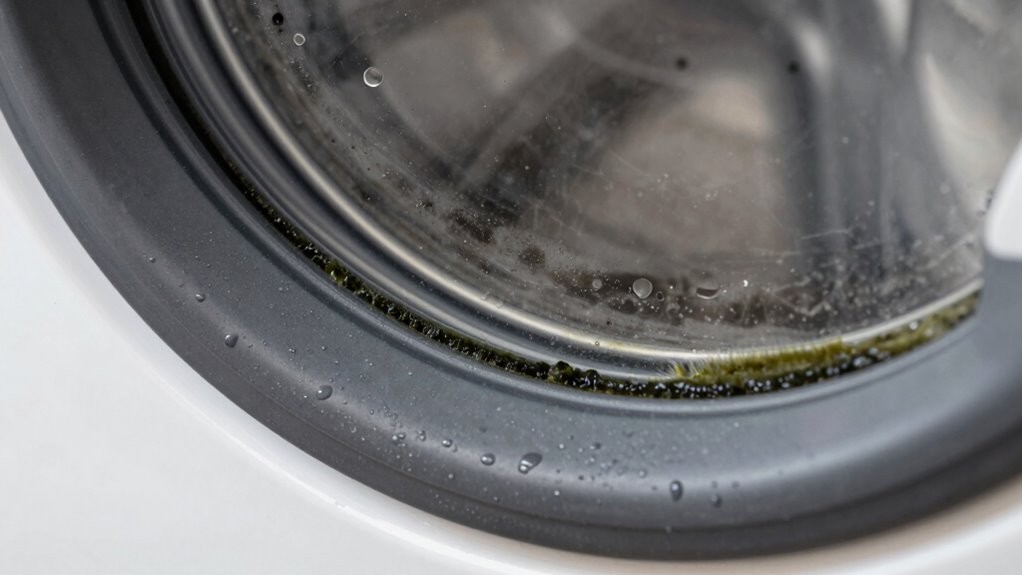

Biofilm buildup inside your washer is a common cause of lingering laundry odors. These slimy layers of bacteria, mold, and soap scum hide in hard-to-see areas like rubber seals and dispensers, creating a breeding ground for bad smells. Without regular cleaning and maintenance, biofilms grow, making your laundry smell musty even after washing. Taking proper care of your washer prevents this issue. Keep exploring to find out effective tips to keep your laundry fresh.
Key Takeaways
- Biofilms inside washers harbor bacteria and mold, causing persistent laundry odors.
- Regular cleaning cycles with washer cleaner or vinegar help eliminate biofilm buildup.
- Leaving the door open after washing promotes drying and prevents moisture that fosters biofilms.
- Wiping down gaskets and drum surfaces reduces soap scum and biofilm formation.
- Proper maintenance and routine hygiene prevent odor-causing biofilms from developing inside the machine.

Have you ever noticed your laundry still smells fresh after washing? If so, you’re not alone. That lingering odor often points to a hidden problem inside your washer: biofilm buildup. Biofilms are slimy layers of bacteria, mold, and soap scum that cling to the surfaces inside your machine. Over time, they create a breeding ground for odor-causing germs, leaving your freshly washed clothes smelling less than clean. To keep your laundry smelling crisp, it’s essential to understand how to combat this issue through proper washer maintenance and odor prevention techniques.
Regular washer maintenance is key to stopping biofilm from forming and causing persistent odors. You should run a cleaning cycle with a washer cleaner or white vinegar once a month, especially if you notice a musty smell. Make sure to leave the door or lid open after every wash to allow the interior to dry out completely. This simple step prevents moisture from lingering, which is a perfect environment for bacteria and mold to thrive. Additionally, check and clean the detergent dispenser and rubber door seals regularly. Soap residue and dirt tend to accumulate in these areas, fostering biofilm growth if left unchecked. Keeping these parts clean reduces the chances of odor buildup and maintains the efficiency of your washer. Proper maintenance also helps prevent the formation of biofilm, which is the root cause of persistent odors.
Odor prevention is all about consistency and good habits. Use the right amount of high-quality detergent—using too much can leave residue that encourages bacteria growth, while too little might not clean your clothes thoroughly. Wash your clothes in hot water when possible, as higher temperatures help kill bacteria and loosen stubborn residues. After each load, wipe down the drum and gaskets with a damp cloth to remove any soap scum or mold that may have formed. If you notice a persistent smell despite these efforts, run an extra rinse cycle or a cleaning cycle with a specialized washer cleaner to eliminate hidden biofilms.
Keeping your washer in top shape requires attention to detail and routine upkeep. This not only prevents odors but also prolongs the life of your machine. Remember, odor prevention isn’t a one-time fix; it’s a continuous process. By staying vigilant with washer maintenance—like cleaning filters, sealing leaks, and running regular cleaning cycles—you keep biofilm at bay. When your machine stays clean and dry, your laundry comes out smelling fresh, and you avoid the frustration of dealing with that stubborn, musty smell that biofilms often cause. Proper care ensures your washer functions efficiently and your clothes smell as clean as they should after every wash.
Frequently Asked Questions
Can Biofilm Buildup Damage My Washing Machine?
Yes, biofilm buildup can damage your washing machine. It promotes machine corrosion by creating a moist environment that accelerates rust and deterioration. Additionally, the biofilm traps detergent residue, which can cause clogs and reduce washing efficiency. Regular cleaning helps prevent these issues, ensuring your machine stays in good shape and functions properly, avoiding costly repairs down the line. Keep your washer clean to protect it from biofilm-related damage.
How Often Should I Run a Cleaning Cycle?
You should run a cleaning cycle once a month to prevent biofilm buildup and maintain your machine. Use a specialized detergent or a mixture of vinegar and baking soda for effective cleaning. Regular machine maintenance, like leaving the door open after cycles and wiping down seals, helps prevent odor-causing biofilms. This routine keeps your washer fresh, extends its lifespan, and guarantees your laundry stays odor-free.
Are Certain Detergents Better at Preventing Biofilms?
Certain detergents are better at preventing biofilms because they contain ingredients like enzymes and antimicrobial agents that target the buildup. Look for detergents with active ingredients designed to break down biofilm and improve rinse cycle effectiveness. These help eliminate residues where biofilms form, reducing odors and keeping your washer cleaner. Using the right detergent regularly can make a significant difference in preventing biofilm formation over time.
Does Water Temperature Affect Biofilm Formation?
Did you know that bacteria can grow 10 times faster in warm water? Water temperature markedly impacts biofilm development; higher temps promote faster bacterial growth and biofilm formation, making odors worse. Using cold water can slow down this process, reducing biofilm buildup inside your washer. So, when fighting laundry odors, opting for cooler washes helps keep biofilms at bay and keeps your clothes fresher longer.
Can Biofilms Cause Health Issues Beyond Odors?
Yes, biofilms can cause health issues beyond odors. They promote mold growth and allergen buildup inside your washer, which can trigger allergies, asthma, or respiratory problems. When biofilms are present, they create a breeding ground for mold spores and other harmful microbes that may transfer to your clothes. Regularly cleaning your washer and running hot water cycles help prevent biofilm formation and reduce these health risks.
Conclusion
To keep your laundry smelling fresh, you need to tackle the hidden fortress of biofilm inside your washer. Think of it as an unseen army clinging to every surface, causing that stubborn odor. Regular cleaning and proper maintenance are your shields against this microscopic invasion. By staying vigilant, you’ll prevent your washer from turning into a breeding ground, ensuring your clothes come out crisp and clean—like a gust of fresh air after a storm.