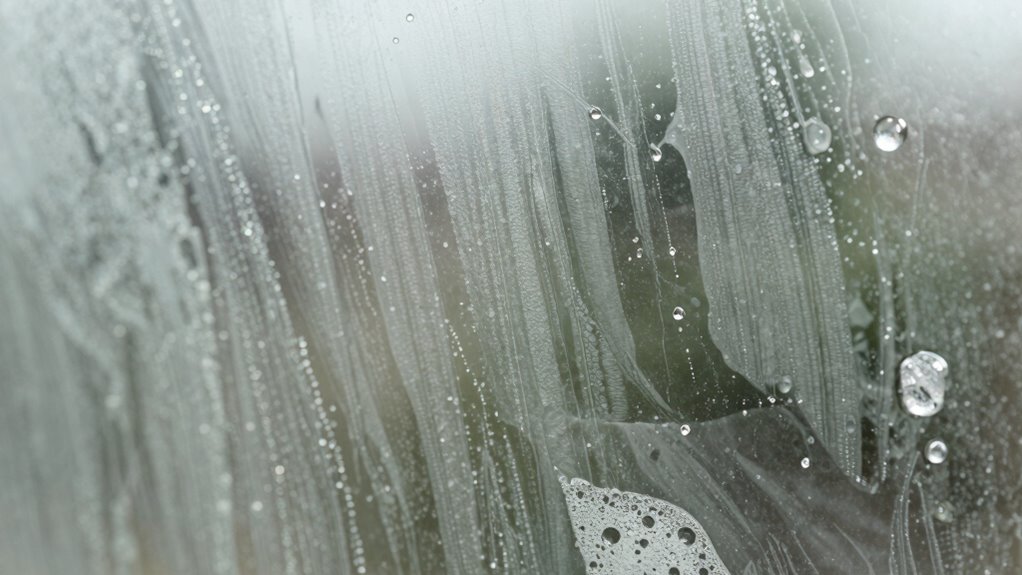

When you use soap with hard water, minerals like calcium and magnesium react with the soap, forming insoluble compounds called soap scum. This reaction prevents the soap from dissolving properly, which causes it to stick to surfaces and leave a stubborn film behind. As a result, your cleaning efforts are less effective and surfaces look dull. If you keep exploring, you’ll discover simple ways to combat this issue and restore your surfaces’ shine.
Key Takeaways
- Hard water contains minerals like calcium and magnesium that react with soap, forming insoluble soap scum.
- Minerals in hard water prevent soap from lathering properly, leaving a film on surfaces.
- Soap reacts with mineral ions in hard water, creating stubborn deposits instead of rinsing away cleanly.
- Mineral deposits from hard water can cling to surfaces, causing cloudy or streaked appearances.
- Using hard water-specific cleaners or water softening systems reduces soap scum formation and improves cleaning effectiveness.
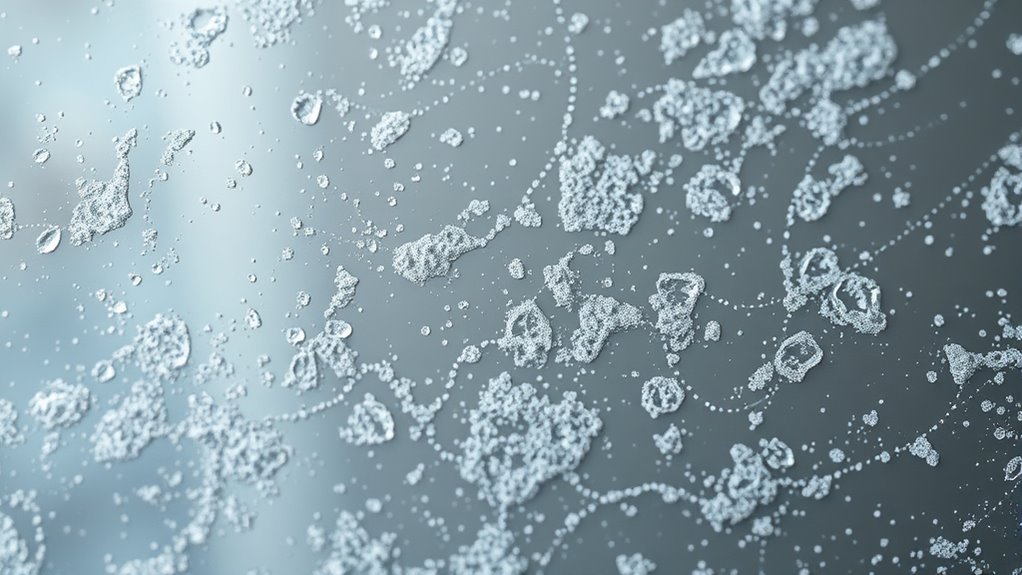
Have you ever noticed soap scum lingering on your fixtures or mineral deposits on your glassware? If so, you’re likely dealing with the effects of hard water. Hard water contains high levels of dissolved minerals, primarily calcium and magnesium, which can cause all sorts of cleaning headaches. One common issue is soap residue, which tends to stick stubbornly to surfaces, creating a film that’s difficult to remove. When you wash your hands or dishes, soap reacts with these minerals, forming insoluble compounds known as soap scum. This residue isn’t just unsightly; it also reduces the effectiveness of your cleaning efforts, making surfaces look dull and feel filmy.
The problem worsens with mineral deposits, which are the tiny crystalline residues left behind after water evaporates. These deposits cling to your fixtures, glassware, and even fabrics, leaving a cloudy or streaked appearance. Because hard water’s minerals are constantly present, soap doesn’t dissolve as easily, and instead of rinsing away cleanly, it combines with minerals to create that stubborn film. You might notice that even after scrubbing, soap residue remains, or that your glassware looks cloudy despite thorough washing. This film isn’t just a cosmetic issue; over time, mineral deposits can cause buildup that affects appliance efficiency and shortens their lifespan.
To combat soap residue and mineral deposits, you need to understand the chemistry behind hard water. Regular soap, which is designed to react with softer water, doesn’t work as well in hard water. The minerals cause the soap to form soap scum instead of lathering properly. That’s why many people turn to alternative cleaning products, like liquid detergents or specially formulated hard water cleaners, which are less likely to leave behind a film. Using vinegar or lemon juice as a natural rinse aid can also help dissolve mineral deposits, breaking down the crystalline buildup and restoring the shine to your fixtures and glassware.
Another effective strategy involves water softening systems, such as salt-based ion exchange units. These systems replace calcium and magnesium ions with sodium, making your water less prone to forming soap scum and mineral deposits. This simple step can markedly improve your cleaning results, making soap more effective and reducing the need for scrubbing and heavy-duty cleaning solutions. Additionally, choosing a high-quality projector with features like adjustable contrast ratios can further enhance image clarity when watching films at home. In the end, understanding how hard water interacts with soap and minerals helps you choose the right products and methods to keep your home sparkling and free of that unappealing film.
Frequently Asked Questions
Can Hard Water Damage My Plumbing System Over Time?
Yes, hard water can damage your plumbing system over time. The mineral buildup from hard water causes pipe corrosion and clogs, reducing water flow and increasing the risk of leaks. As minerals accumulate inside your pipes, they weaken the material, leading to potential damage. To protect your plumbing, consider installing a water softener or regular maintenance to minimize mineral buildup and extend the lifespan of your pipes.
What Are the Best Water Softeners for Household Use?
You should consider salt-based, salt-free, or dual-tank water softeners for household use. Salt-based models are most effective at removing minerals, while salt-free options prevent scale buildup without using salt. When choosing, look for easy installation tips like ensuring proper space and access to plumbing. Consider your water hardness level and household size to select the right water softener type, making maintenance straightforward and ensuring your water remains soft.
How Does Hard Water Affect Skin and Hair Health?
Hard water can harm your skin and hair, causing dryness and breakage. You might notice your skin feels tight or flaky after showers, while your hair becomes brittle and prone to breakage. The minerals in hard water strip away natural oils, leaving your skin dehydrated and your hair weak. To protect yourself, consider using moisturizing skincare products and a water softener to reduce mineral buildup.
Are There Natural Ways to Reduce Soap Scum in Hard Water?
Yes, you can reduce soap scum with natural remedies and DIY solutions. Try mixing equal parts white vinegar and water to create a spray, then apply it to affected surfaces; vinegar breaks down mineral deposits. Baking soda dissolved in water makes a gentle scrub. Additionally, wiping down surfaces with a lemon juice and water solution helps prevent buildup. These natural remedies are effective and safe for your home environment.
Does Boiling Hard Water Remove Minerals Responsible for Soap Scum?
Like a knight in shining armor, boiling your hard water won’t banish mineral deposits causing soap scum. It changes water chemistry only slightly, often leaving minerals like calcium and magnesium intact. These minerals are responsible for soap scum, so boiling won’t eliminate them. To effectively reduce mineral deposits, you need specialized filters or softening methods, rather than just boiling. This way, your water stays cleaner and your soap doesn’t leave a film.
Conclusion
So, next time you notice soap leaving that pesky film, remember it’s not just about your cleaning routine but also the water’s hard nature. It’s funny how the mineral deposits seem to show up right when you’re trying to get things spotless. Sometimes, it’s like the water’s own way of reminding you to switch to softer options or use additives. After all, a little awareness can make your cleaning efforts much more effective—and maybe even a bit more enjoyable.