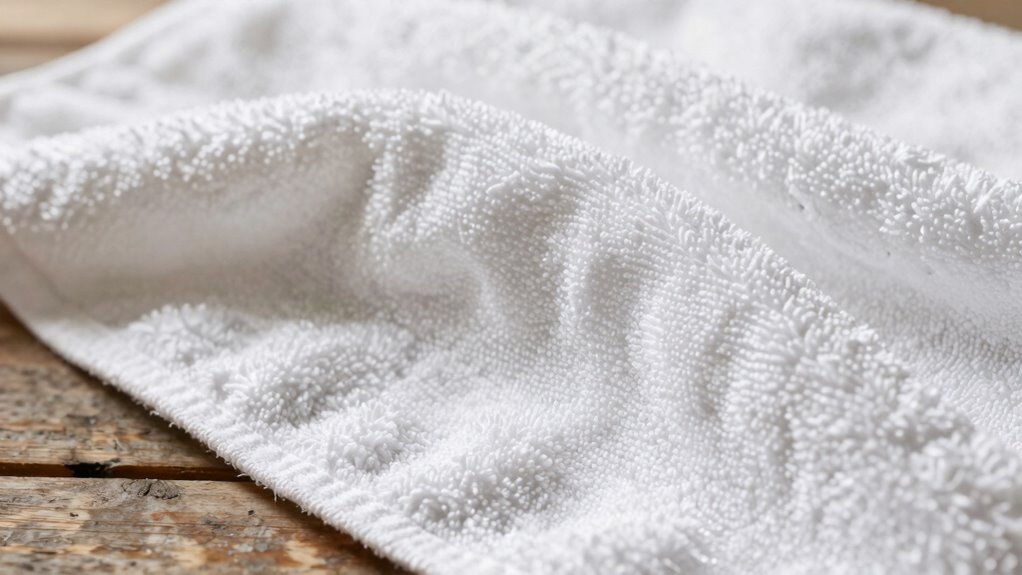
Fabric softeners leave chemical residues that coat towel fibers, creating a thin layer that prevents them from absorbing water effectively. Over time, these residues build up, making your towels feel limp and less functional. This coating also hampers quick drying and can cause skin irritation. If you want to keep your towels soft and absorbent, it’s best to avoid these chemicals. Explore more about how to protect your towels and their natural absorbency for better results.
Key Takeaways
- Fabric softeners leave a chemical residue that coats towel fibers, blocking their ability to absorb water effectively.
- The buildup creates a barrier that hampers towel porosity, reducing drying and absorbency over time.
- Chemical coatings from softeners diminish towel fibers’ natural water-absorbing properties, making towels less functional.
- Residue accumulation decreases towel softness and absorbency, leading to longer drying times and less efficient drying.
- Regular use of fabric softeners can permanently damage towel fibers, impairing their ability to soak up moisture properly.
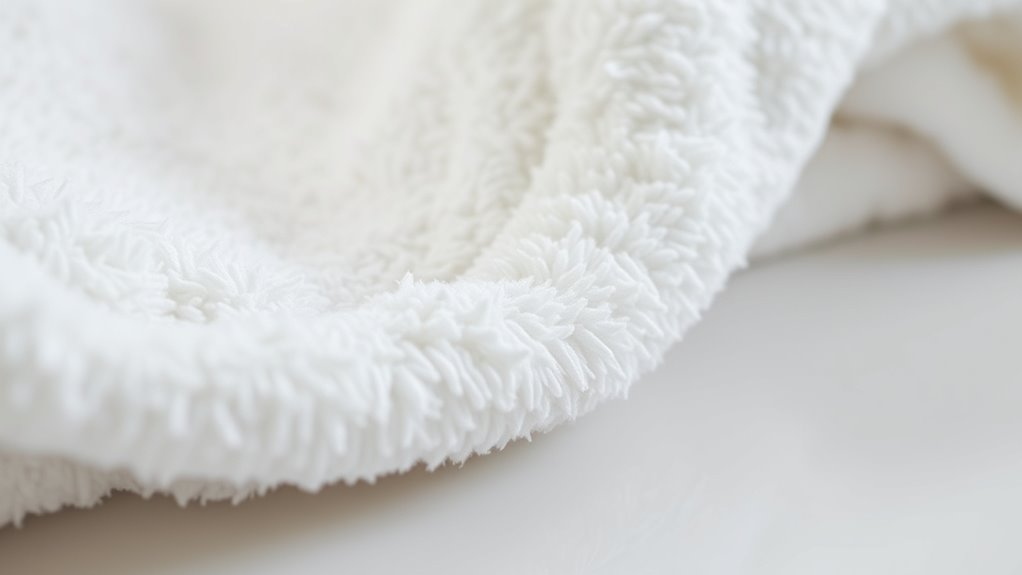
Have you ever wondered how to keep your clothes feeling soft and smelling fresh after every wash? Many people turn to fabric softeners to achieve that cozy, just-laid-out feel. But what you might not realize is that these products can do more harm than good, especially when it comes to your towels. Fabric softeners contain chemical residues that cling to fabric fibers, creating a thin layer that makes towels feel plush but actually hampers their ability to absorb water effectively. Over time, these residues build up, reducing the towel’s natural absorbency and making drying less efficient. When you use fabric softener regularly, you’re not only compromising your towels’ performance but also introducing chemicals into your home environment. These residues can linger on your skin and in your laundry, potentially causing irritation or allergic reactions, especially for sensitive skin.
Fabric softeners build up residues, reduce absorbency, and may cause skin irritation over time.
Beyond the impact on your towels, there’s a broader concern about the environmental impact of fabric softeners. Many of these products contain synthetic chemicals that don’t easily break down in water treatment systems. When washed down the drain, they can pollute waterways, affecting aquatic life and disrupting ecosystems. The production and packaging of fabric softeners also contribute to environmental degradation through resource use and waste. If you’re environmentally conscious, you might prefer to skip chemical-laden softeners altogether, opting instead for eco-friendly alternatives that are biodegradable and free from harmful residues.
Using fabric softeners might seem harmless or even beneficial, but they actually mask the true nature of your laundry. They coat fibers with chemicals that give a falsely soft feel, but this coating prevents towels from absorbing water properly. This means that after washing, your towels may feel soft to the touch, but they won’t dry you as efficiently because they can’t absorb moisture as well. Over time, the buildup of residues can make towels feel limp and less effective, forcing you to use more energy and water to dry yourself. It’s a cycle that ultimately wastes resources and diminishes the functionality of your laundry. Additionally, high refresh rates in some softening agents can cause buildup that affects fabric fibers, further reducing their effectiveness.
If you’re looking to maintain soft, fluffy towels without sacrificing their absorbency or harming the environment, consider alternatives like vinegar or baking soda. These natural options clean and soften fabrics without leaving behind chemical residues. Plus, they don’t contribute to environmental pollution, making them a smarter choice for your home and the planet. By avoiding fabric softeners, you preserve your towels’ natural qualities and reduce the chemical footprint of your laundry routine.
Frequently Asked Questions
Can Fabric Softener Be Used on All Types of Towels?
You shouldn’t use fabric softener on all types of towels, especially those made from natural fibers like cotton or linen. Softener can coat the fibers, reducing their absorbency over time. For synthetic towels, it might be less harmful, but it’s still best to avoid softeners if you want your towels to stay fluffy and absorbent. Always check the towel material and follow care instructions for the best results.
How Often Should I Avoid Using Fabric Softener on Towels?
You should avoid using fabric softener on your towels every 3 to 4 washes to maintain ideal towel maintenance. Excessive softener buildup can clog the towel fibers, reducing their absorbency. Instead, use it sparingly or opt for natural alternatives like vinegar. By limiting the frequency of softener, you help preserve your towels’ ability to dry effectively and stay fluffy, ensuring they last longer and perform better over time.
Are There Natural Alternatives to Commercial Fabric Softeners?
Yes, there are natural alternatives to commercial fabric softeners. You can try DIY solutions like adding a half cup of white vinegar or baking soda to your wash cycle, which naturally softens fabrics without harming towel absorbency. Plant-based options, such as using essential oils like lavender or eucalyptus mixed with vinegar, also work well to keep your towels soft and fresh without the chemicals found in store-bought softeners.
Does Fabric Softener Affect Towel Lifespan?
Fabric softener can definitely damage your towels’ durability over time. As you repeatedly use softener, it causes buildup that weakens fibers, making towels more prone to wear and tear. This buildup reduces towel lifespan, diminishing their softness and absorbency. To protect your towels, consider skipping softeners and opting for natural alternatives, which help maintain fabric integrity and extend their lifespan, ensuring your towels stay plush and practical longer.
What Are the Signs My Towels Need Replacing Due to Softener?
You’ll notice your towels need replacing when they have fiber buildup, which makes them feel rough or stiff. Decreased absorbency is another sign, as softener residue coats the fibers, preventing water from soaking in effectively. If your towels no longer dry you quickly or feel less plush after washing, it’s time to think about replacing them to restore their softness and absorbency.
Conclusion
By now, you know that fabric softener can considerably reduce your towels’ absorbency. In fact, studies show that using fabric softener can decrease towel absorbency by up to 30%. That means your once plush, quick-drying towel might now take longer to dry and feel less effective. So, next time you do laundry, skip the softener to keep your towels fluffy, absorbent, and truly effective for everyday use. Your towels—and your comfort—will thank you.