
To improve ventilation with the “pressure balance” trick, you’ll want to manage vents and openings so air flows smoothly throughout your home. Close or open vents strategically, seal leaks around windows and doors, and use exhaust fans and intake vents effectively. This balance prevents pressure differences that cause drafts or poor airflow. Mastering these simple adjustments can enhance your indoor air quality—stick around to find out more effective techniques.
Key Takeaways
- Adjust vent openings strategically to create balanced pressure zones, promoting optimal airflow and reducing drafts.
- Seal leaks around windows and doors to maintain consistent indoor pressure and prevent unwanted airflow disruption.
- Use exhaust fans and intake vents in tandem to establish a steady, well-balanced airflow cycle.
- Monitor airflow patterns and pressure differences with gauges or sensors for precise adjustments.
- Regularly review and modify vent settings and sealing to sustain effective pressure balance and ventilation efficiency.
Understand How Indoor Airflow and Pressure Work

To understand how indoor airflow and pressure work, it’s essential to recognize that air moves from areas of high pressure to low pressure. This movement is driven by airflow dynamics, which depend on pressure differentials within your space. When a room has a higher pressure relative to its surroundings, air will naturally flow toward lower-pressure areas. Factors like open windows, doors, and ventilation systems influence these pressure differentials, creating patterns of airflow. By understanding these basic principles, you can better predict how air moves inside your home. Recognizing how pressure differences affect airflow allows you to optimize ventilation, reduce drafts, and improve indoor air quality. Mastering these concepts forms the foundation for more effective control of your indoor environment. Additionally, understanding the contrast ratio of your ventilation setup can help you assess how well it handles varying levels of indoor and outdoor air quality.
Discover What Pressure Balance Means for Ventilation
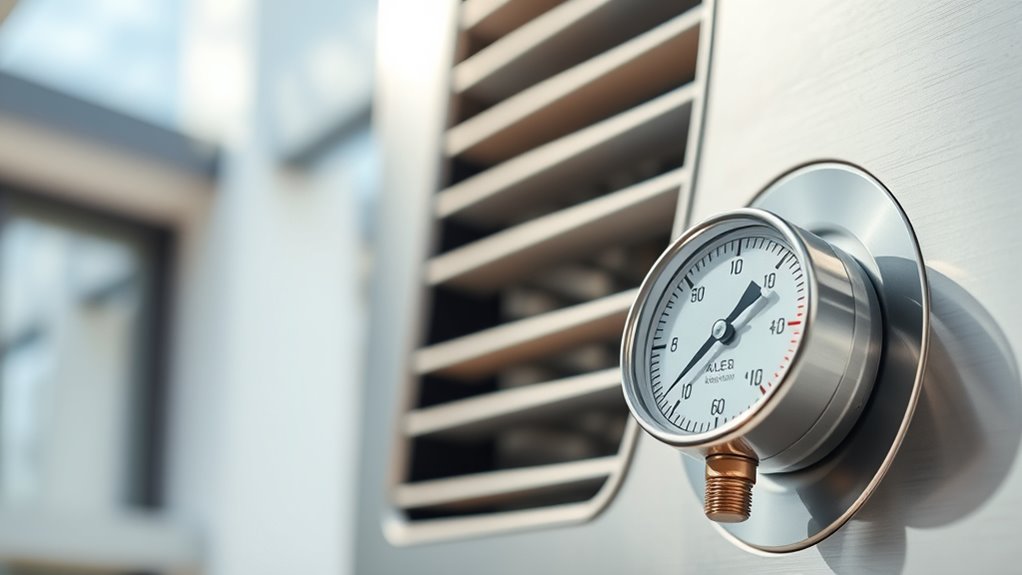
Understanding what pressure balance means for ventilation is key to creating a comfortable and healthy indoor environment. It involves managing air pressure and airflow dynamics so that fresh air flows in while stale air exits efficiently. When your indoor space is in pressure balance, the air pressure inside matches the outside environment, preventing drafts or unwanted infiltration. This balance ensures that airflow moves smoothly, without turbulence or uneven distribution. By maintaining proper pressure balance, you control where air enters and leaves, optimizing ventilation and reducing issues like humidity buildup or indoor pollutants. Fundamentally, pressure balance helps you create a steady, predictable airflow, making your home more comfortable and healthier. Recognizing what pressure balance entails is the first step toward mastering effective ventilation. Proper pressure management plays a crucial role in ensuring consistent airflow and indoor air quality.
Spot Signs of Imbalanced Indoor Air Pressure
Imbalanced indoor air pressure can often be subtle, but recognizing the signs early helps prevent discomfort and poor air quality. One common indicator is uneven indoor humidity levels—rooms feeling damp or dry despite proper ventilation. Poor air circulation may also cause stagnant air, leading to stuffiness or lingering odors. You might notice doors or windows that are difficult to open or close, as pressure differences create resistance. Another sign is an increase in dust or allergens settling quickly, showing airflow issues. If you see these signs, it’s a clear signal that your indoor air pressure isn’t balanced, affecting comfort and air quality. Paying attention to indoor humidity and how air circulates helps you catch imbalances before they escalate. Understanding air pressure balance is essential for maintaining a healthier indoor environment.
Learn How to Achieve Proper Pressure Balance
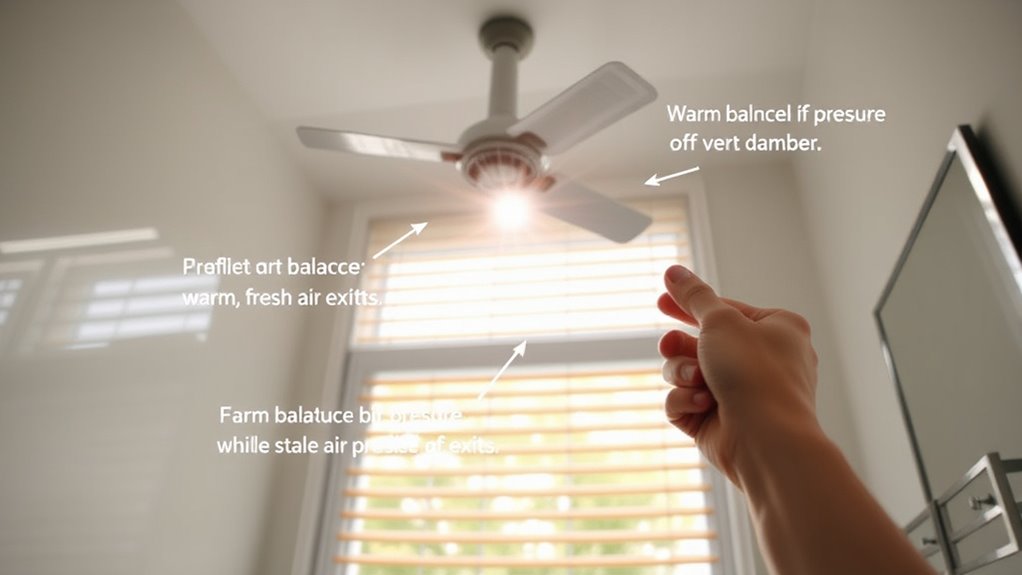
To achieve proper pressure balance, you need to control airflow paths and prevent unwanted leaks. Sealing gaps around windows and doors helps maintain consistent pressure, while placing vents strategically ensures even airflow. Focus on balancing these elements to create a healthier, more comfortable indoor environment. Additionally, understanding airflow dynamics can help you optimize your ventilation setup for better efficiency and comfort.
Balance Airflow Paths
Achieving proper pressure balance starts with carefully mapping out your airflow paths to guarantee they work in harmony. You need to understand airflow dynamics within your space, ensuring air moves smoothly from supply points to exhaust outlets without creating imbalances. By analyzing how pressure differentials develop between rooms or zones, you can identify potential trouble spots where air may stagnate or cause drafts. Adjusting the placement and size of vents, fans, and intakes helps equalize these pressure differences. The goal is to create a balanced system where airflow flows naturally and efficiently, reducing strain on your ventilation equipment. When airflow paths are properly aligned, your ventilation system maintains steady pressure, improves air quality, and minimizes energy waste. proper pressure balance is essential for sustainable and secure ventilation solutions that optimize indoor air quality and energy efficiency.
Seal Unwanted Leaks
Sealing unwanted leaks is essential for maintaining proper pressure balance in your ventilation system. Leaks in your air ducting can cause uneven airflow, making it harder to control indoor humidity. When leaks exist, outside air can infiltrate or conditioned air can escape, disrupting the system’s efficiency. Use sealant or mastic to close gaps around joints, fittings, and seams in your ductwork. Properly sealed air ducting ensures consistent airflow, helping you achieve better humidity control and energy efficiency. Additionally, sealing leaks prevents unwanted drafts and reduces noise. Regularly inspect your ducting for small holes or cracks and address them promptly. Understanding pressure balance in your ventilation system is crucial for optimal performance. This simple step safeguards your ventilation system, improves indoor air quality, and supports a balanced, comfortable environment.
Use Proper Vent Placement
Placing vents correctly is essential for maintaining a balanced pressure in your ventilation system. Proper vent placement influences airflow patterns, ensuring fresh air circulates efficiently without creating pressure imbalances. To optimize, position vents to promote smooth airflow and avoid dead zones. Use the table below for guidance:
| Vent Type | Ideal Placement | Purpose |
|---|---|---|
| Intake vents | Low, near windows or doors | Bring in fresh air |
| Exhaust vents | High, on opposite side of intake | Remove stale air |
| Return vents | Central locations | Maintain airflow circulation |
| Diffusers | Near ceiling for cool air | Distribute air evenly |
| Registers | Near floors or walls | Control airflow direction |
Focus on strategic vent placement to create effective airflow patterns, helping balance pressure and improve ventilation overall. Additionally, considering home security systems can help protect your property while optimizing ventilation, ensuring safety and comfort go hand in hand.
Use Vents and Openings to Keep Airflow in Check
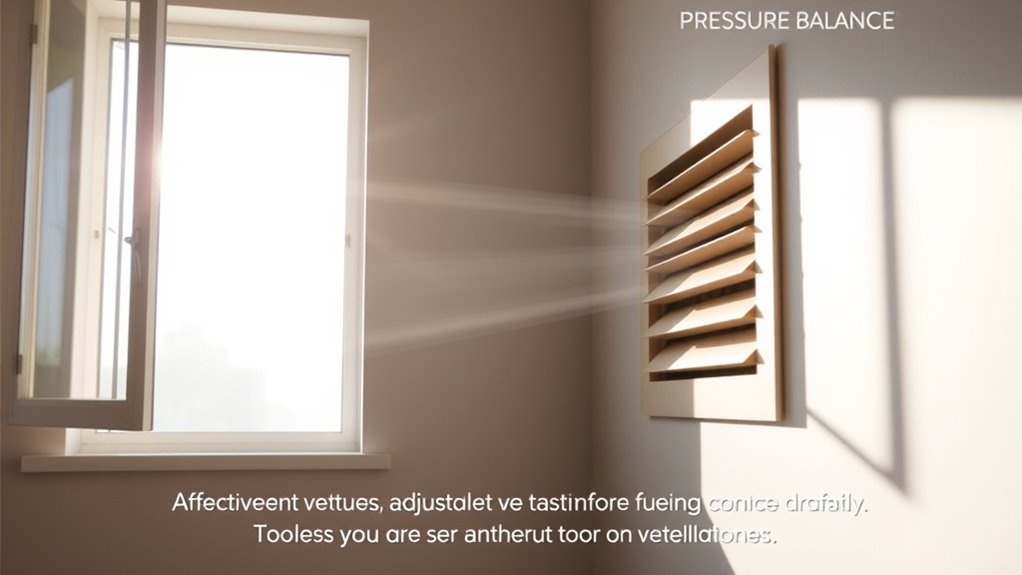
Vents and openings are your tools for maintaining balanced airflow, so it’s important to use them wisely. Proper placement and adjustment help control airflow patterns and prevent pressure zones from forming. When you open or close vents, you influence how air moves through the space, impacting overall ventilation efficiency. You can create a smoother airflow, reducing drafts or stagnant areas. To optimize this, consider these strategies:
- Adjust vents to direct airflow toward areas needing better circulation
- Open additional vents to relieve high-pressure zones
- Close vents in areas with excessive airflow or pressure buildup
- Use openings strategically to balance the pressure between different zones
- Understanding airflow dynamics can help you make more effective adjustments for optimal ventilation.
See How Exhaust Fans and Intake Vents Help Balance Air
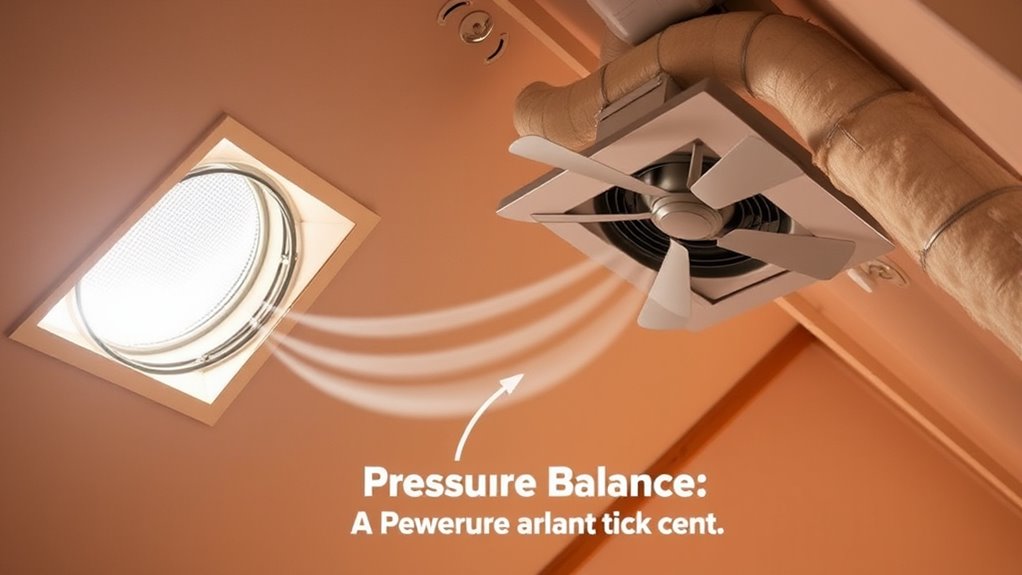
Exhaust fans and intake vents work together to regulate indoor air pressure and guarantee proper ventilation. They create airflow pathways that allow stale air to exit while fresh air enters, maintaining balance. When the exhaust fan pulls air out, it lowers indoor pressure, prompting the intake vent to draw in fresh air. This coordinated action ensures steady airflow and prevents pressure build-up. Imagine the airflow pathways as a simple system:
| Exhaust Fan | Indoor Air | Intake Vent |
|---|---|---|
| Removes air | Creates low-pressure zone | Brings in fresh air |
| Establishes airflow | Balances pressure | Ensures continuous exchange |
| Maintains pressure | Prevents negative pressure | Supports ventilation |
| Vent pulls air out | Keeps air moving | Supplies fresh air |
| Overall airflow | Stabilizes indoor environment | Completes the cycle |
This synergy keeps your home properly ventilated and comfortable. Additionally, understanding how air pressure balance is maintained can help optimize your ventilation system for better indoor air quality.
Troubleshoot and Fine-Tune Your Ventilation System
To get your ventilation system working perfectly, you need to check the airflow balance and make adjustments as needed. Inspect for leaks and seal them to prevent pressure loss, ensuring consistent performance. Fine-tuning the settings helps maintain proper air circulation and keeps your home comfortable. Additionally, staying aware of airflow patterns can help you identify issues before they affect your home’s safety and comfort.
Check Airflow Balance
If your ventilation system isn’t working as expected, checking the airflow balance is a crucial first step. Start by inspecting airflow sensors to ensure they’re functioning correctly, providing accurate readings. Use pressure gauges to measure air pressure at different points in your system, helping identify imbalance issues.
- Verify that supply and exhaust vents have equal airflow rates to prevent pressure buildup.
- Adjust dampers or vents to fine-tune airflow, ensuring even distribution.
- Check for blockages or leaks that could disrupt airflow balance.
- Use pressure gauges at key locations to confirm pressure consistency across the system.
Balancing airflow prevents pressure differences that can cause inefficiency and discomfort. Regularly verifying sensor accuracy and pressure readings keeps your system operating smoothly and ensures proper ventilation.
Adjust Ventilation Settings
Adjusting your ventilation settings is essential for optimizing airflow and ensuring your system operates efficiently. By fine-tuning these settings, you can better manage airflow dynamics and maintain balanced pressure zones throughout your space. Start by increasing or decreasing fan speeds to control air movement and prevent pressure imbalances. Pay attention to how changes affect the pressure zones—if certain areas feel stuffy or too drafty, adjust vents or dampers accordingly. Small modifications can markedly improve airflow distribution, helping to eliminate hot or cold spots. Remember, the goal is to create a steady, balanced airflow that respects the natural pressure zones within your space. Regularly reviewing and adjusting your ventilation settings keeps your system responsive, improving overall comfort and energy efficiency.
Inspect and Seal Leaks
Inspecting your ventilation system for leaks is a crucial step in ensuring peak airflow and pressure balance. Leak detection helps identify where air escapes, disrupting your system’s efficiency. Start by walking around your home, feeling for drafts or using smoke sticks to spot leaks. Focus on areas like windows, doors, and duct joints. Seal identified leaks with weatherstripping, caulk, or tape to prevent unwanted air escape. Remember, even small leaks can impact your air pressure and overall ventilation performance. Properly sealing these gaps maintains consistent airflow, improving air quality and energy efficiency. Regular inspections keep your system functioning at its best, saving you money and ensuring a healthier indoor environment. Don’t overlook leak detection; it’s key to fine-tuning your ventilation system.
Enjoy Better Air Quality With Pressure Balance Tricks
Maintaining the right pressure balance in your home guarantees that fresh air flows in smoothly while contaminants are kept out, considerably improving indoor air quality. By doing so, you support effective humidity control, preventing excess moisture that can lead to mold or dust mites. Proper pressure balance also enhances air purification, allowing your ventilation system to work efficiently by removing pollutants and allergens. When your home’s pressure is balanced, stale air doesn’t stagnate, and pollutants are less likely to settle. Simple tricks like adjusting exhaust fans or using supply vents help maintain this balance. These steps ensure a healthier environment, making your indoor air cleaner and fresher, and reducing allergy triggers and respiratory issues.
Frequently Asked Questions
Can Pressure Imbalance Cause Long-Term Structural Damage?
Yes, pressure imbalance can cause long-term structural damage. When pressure fluctuations occur, they put stress on your building’s structural integrity, leading to cracks, warping, or weakened materials over time. These issues often develop gradually, making it essential to maintain proper ventilation and pressure balance. By controlling pressure fluctuations, you help protect your property from potential damage, ensuring structural stability and safety for years to come.
What Tools Are Best for Measuring Indoor Air Pressure?
Ever wonder how to accurately measure indoor air pressure? You should use pressure gauges or airflow meters, which are the best tools for this purpose. Pressure gauges help you detect subtle differences in pressure, while airflow meters measure the movement of air directly. These tools give you precise data, helping you optimize ventilation and ensure balanced indoor pressure. With them, you can identify issues before they cause long-term damage.
How Often Should Ventilation Systems Be Checked for Pressure Issues?
You should check your ventilation systems every 6 to 12 months using pressure sensors to monitor indoor air pressure. Regular inspections help guarantee proper airflow balancing, preventing pressure issues that can compromise ventilation efficiency. If you notice uneven airflow or discomfort, perform checks more frequently. Routine maintenance keeps your system functioning at its best, improving air quality and energy efficiency, and reducing the risk of pressure imbalances that could lead to indoor air quality problems.
Are There Specific Weather Conditions That Affect Pressure Balance?
Weather patterns and seasonal changes definitely impact pressure balance in your ventilation system. For instance, high winds or rapid temperature shifts can cause pressure fluctuations, making it harder to maintain proper airflow. During extreme weather, you might notice drafts or poor ventilation. To keep your system working effectively, monitor these conditions closely and adjust vents or seek professional checks when significant weather changes occur.
Can DIY Adjustments Fix All Pressure-Related Ventilation Problems?
Sure, DIY adjustments can seem like magic, but they won’t fix all pressure-related ventilation issues. You need accurate pressure sensors and airflow testing to truly diagnose the problem. Relying solely on makeshift fixes might just create a charming circus act of leaks and imbalances. For real results, invest in proper tools and professional advice—otherwise, you’re just rearranging deck chairs on the Titanic.
Conclusion
By understanding and maintaining proper pressure balance, you can substantially improve your indoor air quality. It might seem simple, but balancing vents and airflow actually supports healthier, more comfortable living spaces. Some say that perfect balance is impossible, but with a few tweaks, you can prove that theory wrong. Keep experimenting, troubleshoot regularly, and enjoy the fresh, clean air that a well-ventilated home provides. Your lungs—and your comfort—will thank you.