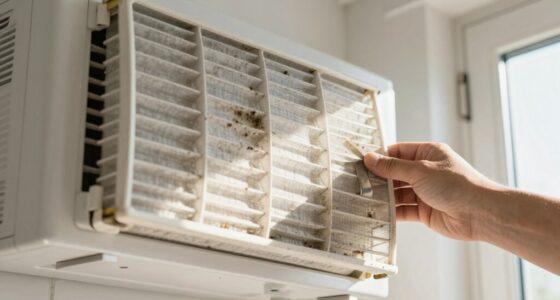
Your bedroom air impacts your health and sleep more than you realize. Poor airflow, pollutants, and allergens can cause respiratory issues, allergies, and disrupt restful sleep, leaving you tired and groggy. Hidden mold, chemical residues from household products, and dust mites linger in the air, making breathing difficult. Maintaining good air quality helps improve overall well-being. Keep exploring to discover simple steps that can make a real difference for your bedroom environment.
Key Takeaways
- Clean bedroom air reduces allergens and pollutants, preventing respiratory issues and improving sleep quality.
- Proper ventilation controls humidity, preventing mold growth and related health problems.
- Air quality influences overall well-being by decreasing allergy symptoms and enhancing energy levels.
- Eliminating chemical fumes from furniture, cleaning products, and air fresheners minimizes long-term health risks.
- Using air purifiers and plants helps maintain a healthy, toxin-free environment for restorative sleep and daily comfort.
How Indoor Air Quality Affects Your Health

Indoor air quality directly impacts your health, especially in a space where you spend a significant amount of time—your bedroom. Good air circulation helps remove stale air and reduces the buildup of indoor pollutants, keeping the air fresh and easier to breathe. Proper air flow also prevents mold growth by reducing excess moisture. Humidity control is equally important; too much humidity fosters mold and dust mites, while too little can cause dry skin and respiratory irritation. By maintaining balanced humidity levels and ensuring continuous air circulation, you create a healthier environment. Regular ventilation practices and air quality management are essential to removing pollutants and maintaining optimal conditions. This reduces allergy symptoms, improves sleep quality, and supports your overall well-being. Focus on good ventilation and humidity management to protect your health every night in your bedroom.
What Pollutants Lurk in Your Bedroom Air?

You might be surprised to learn that your bedroom air contains chemicals from furniture, paints, and cleaning products. Dust mites also thrive in bedding and carpets, triggering allergies. Knowing what’s lurking can help you take steps to improve your sleep environment. Additionally, air quality can be affected by these pollutants, impacting your overall health and well-being.
Indoor Chemical Off-Gassing
Even when your bedroom looks clean, it can still harbor harmful chemicals that off-gas from everyday items. These VOC emissions and chemical residues slowly seep into your air, often unnoticed. Items like furniture, carpets, paints, and even bedding release toxic compounds over time, creating a silent threat to your health. Breathing in these fumes can cause headaches, respiratory issues, or worse, long-term health problems. You might not realize how much these chemicals accumulate in your space. Additionally, indoor air quality can be significantly impacted by these invisible pollutants, emphasizing the importance of proper ventilation and air purification. Be aware of these hidden dangers:
- Toxic fumes from new furniture or paint
- Residues from cleaning products
- Off-gassing from synthetic bedding
- Volatile chemicals lurking in air fresheners
Your bedroom could be a chemical trap—it’s time to take action.
Dust Mite Allergens
Have you ever considered that tiny creatures might be polluting your bedroom air? Dust mites are invisible to the naked eye but are major allergen triggers. These microscopic creatures thrive in your bedding, pillows, and curtains, feeding on dead skin cells. Their waste particles and body fragments become airborne, making it easy for you to inhale them while you sleep. Exposure to dust mite allergens can cause sneezing, congestion, itchy eyes, and asthma flare-ups. Regular cleaning, using allergen-proof covers, and washing bedding at high temperatures help reduce their presence. Ventilating your room and maintaining low humidity levels also make it harder for dust mites to survive. Understanding air quality and how dust mites contribute to it can help you better manage your environment. By managing these allergen triggers, you can improve your bedroom air quality and breathe easier every night.
How Allergens Disrupt Your Sleep and Breathing

Allergens like dust mites, pet dander, and mold spores can easily accumulate in your bedroom. When you’re exposed to these, your breathing may become more difficult, especially at night. This can lead to disrupted sleep and feelings of fatigue the next day. Additionally, using an air purifier can significantly reduce the concentration of airborne allergens and improve overall sleep quality.
Common Indoor Allergens
Did you know that common indoor allergens can considerably disrupt your sleep and breathing? These invisible intruders—dust mites, pet dander, mold spores, and pollen—can cause inflammation and congestion, making restful sleep impossible. When allergens build up, you might wake up feeling exhausted and stuffy, unaware of what’s triggering your discomfort. To combat this, consider using air purifiers that trap airborne particles and improve air quality. Regular air quality testing helps identify hidden allergens lurking in your bedroom. Removing clutter, washing bedding frequently, and controlling humidity also reduce allergen buildup. Protect your sleep environment by understanding these common allergens, so you can breathe easier and enjoy restorative rest every night. Understanding indoor allergens is key to creating a healthier sleeping space. Your bedroom’s air quality truly impacts your health and well-being.
Breathing Disruptions at Night
When allergens accumulate in your bedroom, they can directly interfere with your breathing during sleep. Airborne bacteria and dust mites settle into your bedding and air, triggering congestion and irritation. These allergens can cause disruptions like snoring, asthma symptoms, or even sleep apnea. Poor odor control worsens the problem by trapping musty smells that irritate your nasal passages. As you breathe in contaminated air, your airways become inflamed, making it harder to get restful, uninterrupted sleep. Regular cleaning, ventilation, and using air purifiers can help clear allergens and odor, creating a healthier environment that promotes easier breathing and more restful nights. Additionally, choosing energy-efficient fans with good airflow can improve ventilation and reduce indoor air stagnation.
Are Mold and Mildew Hidden Dangers in Your Room?

Mold and mildew often hide in places you might not notice, turning your bedroom into a potential health hazard. These invisible threats can cause allergies, respiratory issues, and worsen asthma. Regular mold detection is vital to catch these dangers early. Mildew prevention starts with controlling moisture—fix leaks, ventilate well, and keep humidity low. Be alert for musty odors or visible spots, as these are signs of hidden mold. Ignoring these signs increases health risks and damages your home’s structure. Protect yourself by staying vigilant and taking proactive steps. Remember, mold and mildew aren’t just unsightly—they’re dangerous. Addressing these issues promptly can greatly improve your bedroom’s air quality and your overall well-being. Regularly checking for home safety and maintaining proper ventilation can further reduce the risk of mold growth. Don’t wait until it’s too late; your health depends on it.
What Fumes From Household Products Could Be Harmful?

Many household products release fumes that can harm your indoor air quality without you even realizing it. Chemical fumes from cleaning supplies, air fresheners, and personal care items often contain VOC emissions that can linger in your bedroom. These VOCs, or volatile organic compounds, can cause headaches, respiratory issues, and long-term health problems if inhaled regularly. Even products labeled as “natural” or “unscented” may emit chemical fumes. When you use sprays, aerosols, or strong cleaners, the fumes can accumulate in your space, especially if ventilation is poor. It’s important to read labels carefully and opt for low-VOC or fragrance-free options. Properly storing and limiting the use of these products helps reduce harmful VOC emissions and keeps your bedroom air safer. Additionally, understanding your privacy policy and how your data is managed can help you make informed choices about online product labels and safety information.
How Can Bad Air Quality Keep You Awake at Night?

Poor air quality in your bedroom can disrupt your sleep by irritating your respiratory system and causing discomfort. When air circulation is poor, pollutants and allergens linger, making it harder to breathe easily. Insufficient humidity control can lead to dry or stuffy air, which irritates your throat and nasal passages. These issues can keep you tossing and turning, preventing restful sleep. You might wake up feeling exhausted or groggy, unable to fully recharge. The discomfort caused by bad air quality creates a cycle of frustration and fatigue. Additionally, poor air quality can affect the overall air circulation, compounding sleep disturbances.
Easy Ways to Improve Your Bedroom’s Air Quality

Improving your bedroom’s air quality doesn’t have to be complicated. Start by using air quality sensors to monitor pollutants and identify problem areas. These devices help you track changes and make informed decisions. Adding bedroom plants is another simple step; they naturally filter toxins and boost oxygen levels. Select plants like snake plants or pothos, which thrive indoors and require minimal maintenance. Keep your space well-ventilated by opening windows regularly, especially when weather permits. Avoid clutter that can trap dust and allergens. Regularly wash bedding and vacuum to reduce dust mites. Together, these easy strategies create a healthier environment, helping you breathe easier and sleep better. Small adjustments can make a significant difference in your bedroom’s air quality.
Do Air Purifiers and Ventilation Help You Breathe Easier?

Air purifiers and proper ventilation are effective tools for making it easier to breathe in your bedroom. They improve air quality by reducing pollutants, allergens, and odors. When choosing an air purifier, consider its efficiency to ensure it filters out harmful particles effectively. Ventilation strategies, like opening windows or using exhaust fans, help circulate fresh air and prevent stagnation.
Imagine waking up refreshed, breathing deeply without coughing or sneezing. Feel the relief as your space transforms into a haven of clean, breathable air. Know that your efforts in maintaining good airflow and filtering out pollutants directly impact your health and comfort.
- Experience the peace of knowing your air is cleaner and healthier
- Feel energized every morning, ready to face the day
- Savor the comfort of a fresh, allergen-free environment
- Reclaim your restful, revitalizing sleep
Why Keeping Your Bedroom Air Clean Benefits You Long-Term

Maintaining a clean bedroom environment offers lasting health benefits by reducing exposure to allergens, pollutants, and irritants that can accumulate over time. Using bedroom plants can naturally improve air quality, as they absorb toxins and release oxygen. Additionally, air quality monitors help you stay aware of pollutant levels, so you can take action before problems escalate. Keeping your air clean can reduce the risk of respiratory issues, allergies, and long-term health complications. Regularly monitoring and enhancing your air quality creates a healthier space that promotes better sleep and overall well-being. Over time, these small steps contribute to a sustained environment that supports your health, energy levels, and comfort in the long run.
Frequently Asked Questions
Can Poor Bedroom Air Quality Cause Long-Term Health Problems?
Yes, poor bedroom air quality can cause long-term health problems. You might be exposing yourself to indoor allergens like dust, mold, or pet dander, which can worsen respiratory issues over time. Breathing contaminated air regularly strains your lungs and weakens your immune system. To protect your health, make certain there is proper ventilation, use air purifiers, and keep your bedroom clean to reduce indoor allergens and improve air quality.
How Often Should I Change My Air Filters for Optimal Air Quality?
Think of your air filter as the gatekeeper of fresh air. You should change your filter every 1 to 3 months to keep air quality standards high. Regular filter replacement prevents dust, mold, and allergens from sneaking in, ensuring your bedroom stays a healthy sanctuary. By sticking to this schedule, you maintain ideal air quality and breathe easier each night. Don’t wait—your lungs will thank you!
Are Air Purifiers Effective Against All Types of Indoor Pollutants?
Air purifiers are effective against many indoor pollutants, but they do have limitations. They excel at capturing airborne particles like dust, pollen, and pet dander, while chemical filtration effectiveness varies by model. Some pollutants, such as gases and odors, may require specialized filters. So, while an air purifier can markedly improve your indoor air quality, it might not eliminate every pollutant completely. Consider combining it with proper ventilation for best results.
What Natural Remedies Can Improve Bedroom Air Without Chemicals?
Think of your bedroom air as a garden waiting to bloom. You can naturally refresh it with herbal infusions like lavender and chamomile, which add a calming scent. Indoor plants such as snake plants or pothos act as living air filters, absorbing toxins and releasing oxygen. These remedies work together to create a healthier, chemical-free environment, making your bedroom a peaceful oasis where you breathe easier and sleep better.
Does Bedroom Air Quality Influence Mental Health and Mood?
Yes, your bedroom air quality impacts your mental health and mood. Poor air can disrupt sleep hygiene, making it harder to rest and recover. When air is clean and well-ventilated, you’ll notice improved mood regulation and reduced stress. Good air quality supports restful sleep, which is essential for emotional stability. Prioritizing fresh, toxin-free air in your bedroom helps you feel calmer, more focused, and better equipped to handle daily challenges.
Conclusion
Just like breathing fresh mountain air rejuvenates your body, clean bedroom air refreshes your mind and health. Imagine waking up refreshed after a good night’s sleep, free from sneezing fits or lingering odors—that’s the power of good air quality. Don’t let hidden pollutants be the silent thief of your well-being. By taking simple steps, you can turn your bedroom into a sanctuary where every breath fuels your liveliness and peace of mind.