
TL;DR

Prime made for students and young adults
- Fast, free delivery for dorm and study essentials
- Prime Video and Amazon Music included
- Member-only deals
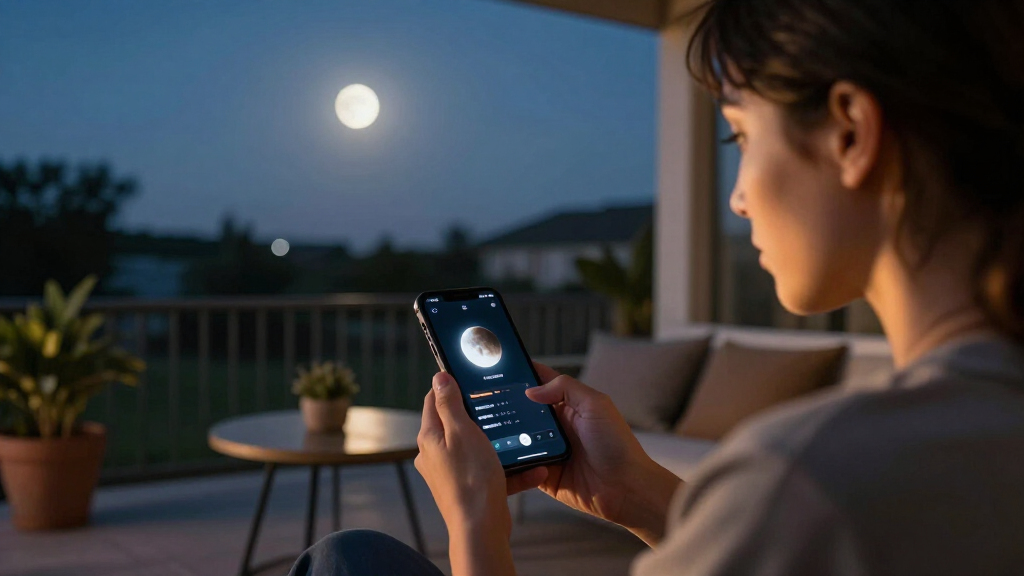
A lunar eclipse will be visible tonight in many parts of the United States. The eclipse is expected to begin around 9:00 p.m. local time, with maximum visibility at approximately 10:30 p.m., and will conclude by midnight. Viewers should check local timings for precise viewing.
A lunar eclipse is expected to occur tonight across much of the United States, with timings confirmed by NASA and other astronomical agencies. The event will see the Moon pass through Earth’s shadow, creating a reddish hue known as a ‘blood moon.’ This phenomenon is visible to viewers in regions with clear skies, and the specific timing of the eclipse has been precisely calculated.
The lunar eclipse will begin at approximately 9:00 p.m. local time, with the penumbral phase starting as the Earth’s shadow begins to darken the Moon’s surface. The partial eclipse phase will commence around 9:30 p.m., when a noticeable shadow will start covering the Moon. The maximum eclipse, when the Moon is most deeply immersed in Earth’s shadow, is expected at roughly 10:30 p.m., offering the most dramatic visual effect. The entire event is forecasted to conclude by midnight, with the Moon fully emerging from Earth’s shadow.
Experts from NASA confirm that this eclipse will be visible across most of the continental U.S., weather permitting. The timing may vary slightly depending on local time zones and geographic location, so viewers are advised to check specific local timings for optimal viewing. The event is part of a series of lunar eclipses occurring in 2026, making it a notable astronomical event for skywatchers.
Why Tonight’s Lunar Eclipse Is a Prime Viewing Opportunity
This lunar eclipse is significant because it offers a rare visual display visible to the naked eye, especially in regions where clear skies are forecasted. Such events are scientifically valuable for studying Earth’s atmosphere and the interaction of sunlight with our planet’s shadow. For the general public, it provides an accessible, awe-inspiring experience that connects viewers with celestial phenomena. Additionally, tonight’s eclipse is part of a broader series of lunar events in 2026, making it an important date for astronomy enthusiasts and educators alike.
As an affiliate, we earn on qualifying purchases.
Previous Lunar Eclipses and Upcoming Viewing Opportunities
This is not the first lunar eclipse of 2026; earlier in the year, viewers in some regions observed penumbral and partial eclipses. Historically, lunar eclipses occur approximately two to four times annually, depending on celestial alignments. The upcoming eclipse tonight is classified as a partial eclipse, when the Earth’s shadow partially covers the Moon, creating the reddish ‘blood moon’ effect. Experts note that such events are predictable with high precision, with NASA and other observatories providing detailed timings well in advance.
In recent years, advances in astronomical technology and increased public interest have led to more widespread viewing of lunar eclipses, often accompanied by educational outreach and live broadcasts. The 2026 series is anticipated to be particularly visible in North America, with some parts of South America and Africa also able to observe the event.
“Timing is crucial for optimal viewing. The peak around 10:30 p.m. is when the eclipse will be most dramatic, so plan to be outdoors then.”
— John Miller, skywatching expert
night sky binoculars for lunar eclipse
As an affiliate, we earn on qualifying purchases.
As an affiliate, we earn on qualifying purchases.
Weather Conditions Could Affect Visibility
While the timings of the eclipse are confirmed, weather remains a key factor. Cloud cover, fog, or rain could obstruct the view in many regions, and forecasts vary across different areas. No major atmospheric disturbances are currently predicted, but local conditions could impact visibility. Viewers are advised to monitor their local weather reports to confirm whether the sky will be clear during the eclipse hours.
moon phase flashlight for astronomy
As an affiliate, we earn on qualifying purchases.
As an affiliate, we earn on qualifying purchases.
Next Lunar Eclipses and How to Prepare for Viewing
Following tonight’s eclipse, the next visible lunar eclipse in the series is expected in August 2026, with further partial and penumbral events scheduled throughout the year. Astronomy organizations recommend using binoculars or telescopes for a closer view, especially during the maximum phase. Public observatories and astronomy clubs may host viewing events, which are often free and open to the public. Checking local event listings or online live streams can also enhance the experience for those unable to view it directly.
As an affiliate, we earn on qualifying purchases.
Key Questions
What time does the lunar eclipse start tonight?
The lunar eclipse begins around 9:00 p.m. local time, with the maximum phase at approximately 10:30 p.m., and ends by midnight.
Will I be able to see the eclipse from my location?
Most of the continental U.S. will have a good view if skies are clear. Check your local timings and weather forecast for the best experience.
Do I need special equipment to see the eclipse?
No special equipment is necessary to see the eclipse with the naked eye, but binoculars or a telescope can provide a closer view.
Why does the Moon turn reddish during a lunar eclipse?
The reddish hue occurs because Earth’s atmosphere filters sunlight, allowing only the red wavelengths to reach the Moon during the eclipse.
Will this eclipse be visible worldwide?
No, visibility depends on your geographic location. It will be visible mainly in North America, with some parts of South America and Africa also able to observe it.
Source: google-trends
Halloween Picks
halloween
As an affiliate, we earn on qualifying purchases.