
TL;DR

Prime made for students and young adults
- Fast, free delivery for dorm and study essentials
- Prime Video and Amazon Music included
- Member-only deals
Apple announced the Mac Studio with up to 512GB of unified memory, allowing local running of frontier-scale AI models. While capable of loading large models, its throughput and speed are limited compared to data center GPUs, making it ideal for experimentation rather than large-scale deployment.
Apple has announced the Mac Studio equipped with up to 512GB of unified memory, claiming it can run frontier-scale AI models locally without cloud reliance. This marks a significant development for AI researchers and small teams seeking local experimentation with large models, but performance limitations mean it is not a replacement for data center GPUs.
The Mac Studio was unveiled on August 25, 2026, in two configurations: the M5 Max with 128GB of memory and the M5 Ultra with 512GB of unified memory. The latter features a custom chip built by linking two M5 Max chips via Apple’s UltraFusion interconnect, creating a processor with up to 80 GPU cores and 1.2 terabytes per second of memory bandwidth.
The key feature is the 512GB of unified memory, which allows loading large models directly into memory, enabling local inference of frontier-scale models that previously required cloud or datacenter resources. Apple claims up to 4.3x faster AI performance than its M3 Ultra predecessor, though these figures are based on specific benchmarks and may vary with workload.
Pricing starts at $5,499 for the Ultra configuration, with the full 512GB memory model costing over $10,000, due to Apple’s pricing structure for memory upgrades. Preorders are open, with general availability on September 22, and the high-memory model expected in late October.
While the hardware enables loading large models, actual inference speed depends heavily on memory bandwidth and compute power. Experts caution that this machine is suited for experimentation and small-scale inference, not for serving many users or large-scale deployment, due to bandwidth and throughput limitations.
Implications of Mac Studio’s Large Memory for AI Work
This development signifies a step toward personal and small-team AI experimentation with models previously confined to datacenter environments. The large unified memory allows loading and experimenting with models of hundreds of billions of parameters locally, fostering privacy and control. However, the machine’s throughput and speed limitations mean it cannot replace scalable GPU clusters for production or high-volume inference. It highlights a shift in AI hardware accessibility but also underscores the ongoing performance gap between desktop and datacenter hardware.
Apple Mac Studio with 512GB memory
As an affiliate, we earn on qualifying purchases.
As an affiliate, we earn on qualifying purchases.
Background on AI Hardware and Local Model Running
Until now, running frontier-scale models locally was largely limited to specialized datacenter hardware with multiple high-end GPUs and extensive memory. Consumer-grade hardware rarely supported such large models due to memory constraints and bandwidth limitations. The advent of Apple Silicon with unified memory architecture has begun to challenge this paradigm, offering a new avenue for local AI experimentation. Previous efforts focused on smaller models or cloud-based solutions, but recent hardware advances aim to bridge this gap.
This announcement follows a trend of increasing local AI capabilities, driven by improvements in hardware integration, memory capacity, and software tooling. Apple’s approach, combining high memory capacity with efficient chip design, marks a notable shift in making frontier-scale models more accessible outside of large data centers.
“While the Mac Studio with 512GB memory can load large models, its throughput limits mean it’s suited mainly for experimentation, not large-scale deployment.”
— Thorsten Meyer
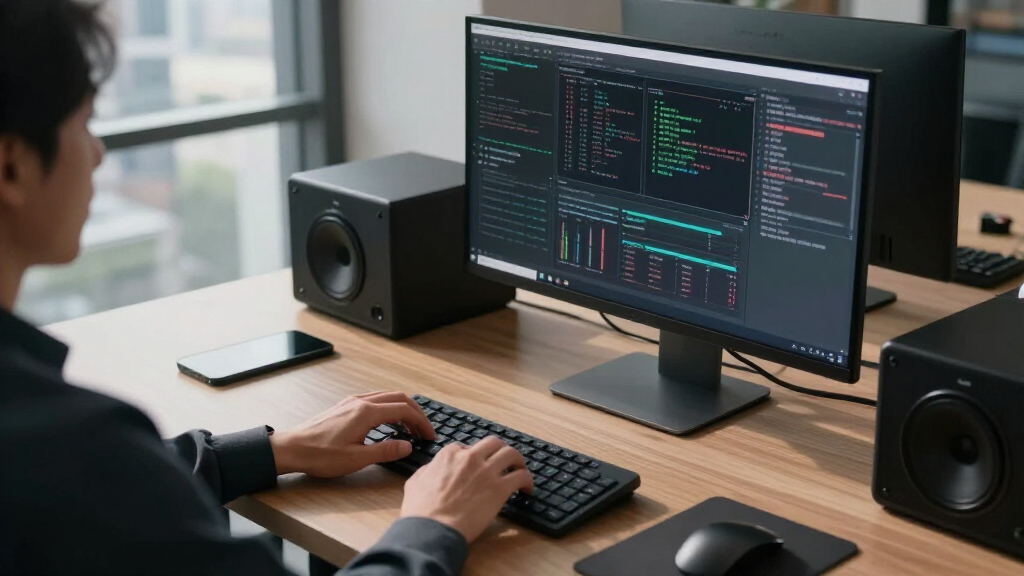
AI development workstation with large memory
As an affiliate, we earn on qualifying purchases.
As an affiliate, we earn on qualifying purchases.
Performance Limits and Practical Use Cases
While the hardware can load frontier-scale models, the actual inference speed and throughput are limited by memory bandwidth and compute power. Benchmarks on real workloads are awaited, and the actual performance for diverse AI tasks remains to be verified. It is not yet clear how well the machine performs outside controlled testing environments, especially for sustained, high-volume inference.
high-performance desktop for AI experimentation
As an affiliate, we earn on qualifying purchases.
As an affiliate, we earn on qualifying purchases.
Upcoming Benchmarks and Software Ecosystem Development
Expect independent benchmarks testing real-world inference workloads on the Mac Studio with 512GB memory. Software compatibility and tooling improvements will also influence how effectively users can leverage this hardware for AI research and development. The arrival of the high-memory model in late October will expand possibilities but also clarify its practical limits for different AI tasks.
Further updates may include software optimizations, community experiments, and potential hardware revisions to improve throughput and performance for AI workloads.
As an affiliate, we earn on qualifying purchases.
Key Questions
Can the Mac Studio replace a GPU cluster for AI inference?
Not entirely. While it can load large models locally, its throughput and speed are limited compared to datacenter GPU clusters, making it suitable mainly for experimentation and small-scale inference rather than production deployment.
What types of AI models can run on the Mac Studio?
It can load and run models with hundreds of billions of parameters, such as frontier-scale open models, but performance will vary based on workload complexity and software optimization.
Is the 512GB memory configuration available now?
The 512GB model is expected to be available in late October 2026, with preorders open now and general release scheduled for September 22, 2026.
Does this mean I can run AI models privately at home?
Yes, for small-scale experiments and development, but high-throughput, multi-user serving remains outside its practical capabilities due to bandwidth and compute constraints.
Source: ThorstenMeyerAI.com
Halloween Picks
halloween
As an affiliate, we earn on qualifying purchases.