📊 Full opportunity report: The Financial Engine Fueling AI Growth: Billions Raised And Bottlenecks on ThorstenMeyerAI.com — validation score, market gap, and execution plan.

Prime made for students and young adults
- Fast, free delivery for dorm and study essentials
- Prime Video and Amazon Music included
- Member-only deals
TL;DR
The AI sector is raising billions through debt markets and private credit, fueling unprecedented growth. However, structural bottlenecks and opaque financing methods pose risks to the sustainability of this funding cycle.
AI companies and hyperscalers are raising over $200 billion in 2026 through debt markets and private credit, reflecting significant capital inflows supporting industry expansion. This activity is driven by the need to finance large-scale infrastructure projects, estimated at over three trillion dollars, which require substantial investment from multiple sources. The development illustrates the evolving financial structures underpinning industry growth and raises questions about long-term sustainability and systemic risk.
According to industry analysis, AI-related firms and hyperscalers issued between $200 billion and $300 billion in investment-grade debt last year, with expectations of similar or higher volumes in 2026. Notably, AI bonds now constitute roughly 14 percent of the investment-grade bond index, surpassing some traditional sectors like US banks. This indicates a shift where compute infrastructure has become a significant component of corporate debt markets.
Much of this funding is channeled through complex financial engineering, notably via special purpose vehicles (SPVs). Over the past eighteen months, more than $120 billion of datacenter investments have been moved off corporate balance sheets into SPVs, often backed by long-term lease contracts. These structures allow tech companies to defer liabilities while lenders secure long-duration, contract-backed cash flows, often rated as investment grade.
Most of the remaining financing is provided by private credit funds, which have increased from near zero to over $200 billion in loans to AI companies in recent years. Industry projections suggest private credit could fund more than half of global datacenter construction by 2028, with an additional $800 billion expected in the next two years. This shift reduces direct bank exposure but raises concerns about opacity and risk concentration in private credit markets.
At the lower end of the credit spectrum, structures such as GPU-collateralized loans and high-yield bonds are emerging, often secured by chips and customer contracts. These high-risk loans, with interest rates around 9%, reflect increasing complexity and potential fragility in the funding landscape.
The buildout is past $3 trillion, and not even the richest companies on Earth can pay for it out of pocket. So the money is being raised — through every instrument the capital markets know, and a few dusted off from 2007. To see where this cycle breaks or holds, study the paper, not the models.
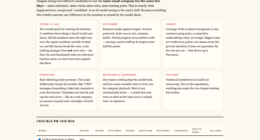
▲ Opinion & analysis · not investment adviceFour layers, descending in safety and ascending in cleverness. The senior layer is the healthiest; everything below exists because it cannot carry $3 trillion alone.
How more than $120 billion left the balance sheets while everyone reported cleaner numbers.
Where I think the machinery creaks, held alongside the case for it rather than instead of it.
Not the model launches — the covenants.
is a promise about a technology that has never once held still.
Implications of Massive AI Funding on Financial Stability
The large-scale capital raising for AI infrastructure indicates significant industry growth. While current financing structures facilitate expansion, their complexity, opacity, and reliance on private credit introduce potential systemic risks. If these structural vulnerabilities materialize, they could impact the sustainability of AI development and broader financial stability.
AI infrastructure data center equipment
As an affiliate, we earn on qualifying purchases.
As an affiliate, we earn on qualifying purchases.
Historical and Market Context of AI Capital Expansion
The AI buildout is often described as one of the largest peacetime investment projects, with capital requirements exceeding three trillion dollars solely for datacenter infrastructure. Historically, such investments have relied on a combination of equity, debt, and innovative financial arrangements. Recent years have seen a shift toward debt markets and private credit as primary sources of funding, driven by the need for large, long-term capital to support AI's growth. This transition introduces new risks associated with complex and less transparent financing structures.
"The AI buildout is now the largest peacetime investment project in history, with over three trillion dollars needed just for datacenters. No single company can finance this alone, so various funding instruments are being utilized."
— Thorsten Meyer
As an affiliate, we earn on qualifying purchases.
Uncertainties Surrounding Long-Term Sustainability
While current data shows significant capital inflows into AI infrastructure, the long-term sustainability of these financing arrangements remains uncertain. The reliance on private credit, complex SPV structures, and high-yield loans presents potential vulnerabilities, particularly if market conditions change or asset valuations decline. The full scope of systemic risk is not yet fully understood, and regulatory oversight continues to evolve.
As an affiliate, we earn on qualifying purchases.
Upcoming Developments and Monitoring Points
Industry analysts and regulators will observe the performance of private credit loans and SPV structures in the coming months. Key indicators include default rates, refinancing activity, and the health of underlying assets such as datacenters and chip suppliers. Increased transparency and data sharing could influence risk management strategies, while signs of financial stress may prompt further regulatory review. Policymakers may consider additional oversight measures as the scale of AI infrastructure financing expands.
As an affiliate, we earn on qualifying purchases.
Key Questions
Why is private credit becoming so important in AI infrastructure funding?
Private credit provides flexible, large-scale financing options that are often faster to deploy than traditional bank loans. As AI infrastructure costs rise, private credit fills a funding gap, often backed by long-term contracts or physical assets like chips.
What are the risks associated with these complex financing structures?
The main risks include lack of transparency, potential over-leverage, and market illiquidity. If asset values decline or refinancing becomes difficult, losses could concentrate in private credit markets, which may have broader financial implications.
Could these funding methods lead to a financial crisis?
While current exposures are limited, reliance on private credit and complex structures introduces systemic vulnerabilities that could become problematic during market downturns. The overall impact remains uncertain and depends on future market developments.
How much of the AI infrastructure is funded through debt versus equity?
The majority of current funding is debt-based, including bonds, SPVs, and private credit loans. Equity investments constitute a smaller portion of the total capital raised.
What should regulators do about this rapid growth in AI financing?
Regulators may need to enhance transparency requirements, monitor private credit exposures, and develop frameworks to address potential systemic risks associated with large-scale AI infrastructure investments.
Source: ThorstenMeyerAI.com
Fall Picks
fall essentials
As an affiliate, we earn on qualifying purchases.