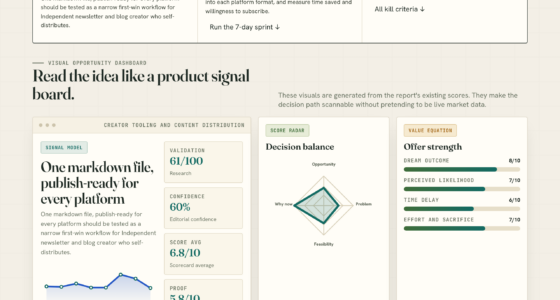

🔍 Read the full analysis: Is AI Ready For Longer Tasks? A Team Guide To Time Horizons on ThorstenMeyerAI.com

Prime made for students and young adults
- Fast, free delivery for dorm and study essentials
- Prime Video and Amazon Music included
- Member-only deals
TL;DR
METR’s public benchmark record puts Claude Mythos Preview’s 80% time horizon at 185.9 minutes, based on results dated April 7, 2026. The measure estimates the length of tasks skilled people complete that an AI agent can finish reliably; it does not mean the model works for that many hours. The benchmark is limited, and performance on less clearly specified work may be lower.
A November 18 guide from ThorstenMeyerAI.com uses METR’s task-duration benchmark to argue that teams should judge AI agents by the length and reliability of work they complete, not by impressive demonstrations. METR’s latest public result cited in the guide gives Claude Mythos Preview an 80% time horizon of 185.9 minutes, or about three hours, on its benchmark tasks. The figure is a planning reference, not a guarantee for a particular job or workplace.
METR, an independent research nonprofit, defines a time horizon as the duration of tasks, measured by skilled human completion time, at which an AI agent is predicted to succeed at a specified reliability level. The guide focuses on the 80% measure: roughly four successful attempts out of five. It says the benchmark’s Time Horizon 1.1 suite contains 228 tasks, with professionals in fields including software engineering, machine learning and cybersecurity establishing task times.
METR runs agents on tasks multiple times and estimates how success changes as tasks get longer. The guide says METR conducts six independent runs per task and treats cheating detected in transcripts as failure. The 80% horizon is where the fitted success curve crosses that reliability level; the corresponding 50% horizon describes a less reliable point.
The result is about task difficulty, not how long the AI spends working. The guide says agents can complete successful tasks several times faster than people. METR’s results file lists earlier milestones including 0.89 minutes for GPT-4 in March 2023, 29.98 minutes for o3 in April 2025 and 66 minutes for GPT-5.2 in December 2025. The guide reports that the April 2026 Mythos Preview result has a wide confidence interval, from 97.3 to 398.5 minutes. It also says METR’s public results page was no longer actively updated as of September 8, 2026.
How Teams Can Use the Horizon
The benchmark gives managers a more concrete way to discuss which tasks might be suitable for AI assistance: estimate how long a skilled person would take, define what counts as a correct result, and account for the chance of failure. The guide recommends assigning AI bounded, testable work first, breaking larger projects into pieces that take hours and setting explicit acceptance checks.
Reliability changes the practical meaning of the headline number. For the same model, the guide reports a 50% horizon of 1,044.8 minutes, about 17.4 hours, compared with 185.9 minutes at 80%. That longer estimate is not equivalent to dependable completion: it describes a point where success is much less likely, and METR warns that measurements above 16 hours are unreliable with its current task suite.
Teams also need to budget time for review. The source cites a 2025 METR trial in which experienced developers working with AI were 19% slower while believing they were 20% faster. It also cites a separate study in which reviewers caught only 31% of errors that required applying task-specific rules. These results do not establish that every team will see the same outcomes, but they underline why the time saved on generation cannot be counted as net productivity without checking.
Popular right now

Bose QuietComfort Wireless Noise-Cancelling Headphones, Twilight Blue

KitchenAid Artisan Series 5-Quart Tilt-Head Stand Mixer, Juniper (KSM150PS)

Bose QuietComfort Ultra Headphones (2nd Gen), Wireless Noise-Cancelling Over-Ear Headphones, Driftwood Sand
As an affiliate, we earn on qualifying purchases.
What METR Measures and Omits
The time-horizon approach is intended to replace the broad question “Can AI do this?” with two narrower ones: how long would a skilled person need, and how often does an agent finish work of that length? Human working time gives a common scale across tasks, while repeated runs provide an estimate of reliability rather than a single showcase result.
The guide warns that METR’s benchmark tasks are relatively clean and well specified. It cites a METR comparison in which messier tasks reduced the horizon by almost a factor of three. That finding makes the benchmark relevant but not a direct forecast for a company’s backlog, where requirements, codebases and review standards can differ.
The guide also describes a projected doubling of the measured horizon every three to seven months, depending on the analysis and period selected. It estimates that an eight-hour workday at the 80% level could fall between September 2026 and November 2027 under different trend fits. Those dates are forecasts, not observed results; the guide says no public measurements after April 2026 were available for its analysis.
Limits of the Three-Hour Figure
The reported 185.9-minute estimate has a wide confidence interval, and the benchmark’s public page is described as no longer actively updated. It is not clear from the supplied material whether METR will publish updated results, when they might appear or how its benchmark will change. The guide says its public record stops at April 2026; newer internal capabilities cannot be established from that public series.
There is also no basis for assuming the score transfers unchanged to every company’s software, research or administrative work. Task clarity, tools, evaluation rules and the cost of an error can all differ. The cited studies on developer speed and error review are specific research findings, not universal estimates for all teams. The proposed dates for an eight-hour horizon depend on trend assumptions and should not be treated as a schedule.
Measure Results on Team Work
The guide recommends that teams run their own evaluations on representative tasks and repeat the measurements quarterly. A useful pilot would set clear success criteria, record how much human time the task normally takes, track the agent’s completion rate across attempts and include the time required to inspect and correct its work.
Teams can then compare task types and models rather than relying on a single headline horizon. The next public METR update, if one is released, would help show whether benchmark performance has moved beyond the April 2026 result. Until then, the guide’s central recommendation is to treat the three-hour figure as a limited benchmark reference and plan around local evidence and human review.
Key Questions
What does an AI time horizon measure?
It estimates the length of a task, based on how long skilled people take, at which an AI agent reaches a specified success rate. The guide uses METR’s 80% reliability measure for planning.
Does a three-hour horizon mean an AI works for three hours?
No. It refers to the difficulty of tasks that take skilled people about three hours, not the AI’s working time. According to the guide, agents may complete successful tasks faster than people.
What is the latest public result cited?
The guide reports an 80% horizon of 185.9 minutes for an early Claude Mythos Preview, dated April 7, 2026 in METR’s results file. Its confidence interval is wide, and the public results page was described as no longer actively updated.
Can teams apply the benchmark directly to their own work?
Not without testing. The guide says benchmark tasks are clean and well specified, while messier tasks performed worse in a METR comparison. It recommends evaluating representative company tasks and including review time.
Source: ThorstenMeyerAI.com