TL;DR

Get school and study supplies delivered free — and shop member deals
- Fast, free delivery on millions of items
- Access to Prime Big Deal Days deals on October 6–7
- Prime Video, Amazon Music and more included
A total solar eclipse occurred today, visible in parts of North America. Thousands watched as the moon blocked the sun, creating a rare celestial event. The eclipse’s full path and future occurrences remain key points of interest, which can be explored on the interactive eclipse map.
A total solar eclipse was visible today across specific regions of North America, including parts of the United States and Canada. The event was confirmed by astronomical organizations and attracted thousands of viewers, especially as many searched for solar eclipse viewing tips. This eclipse is part of a rare celestial alignment that temporarily darkens the sky and offers a unique viewing experience.
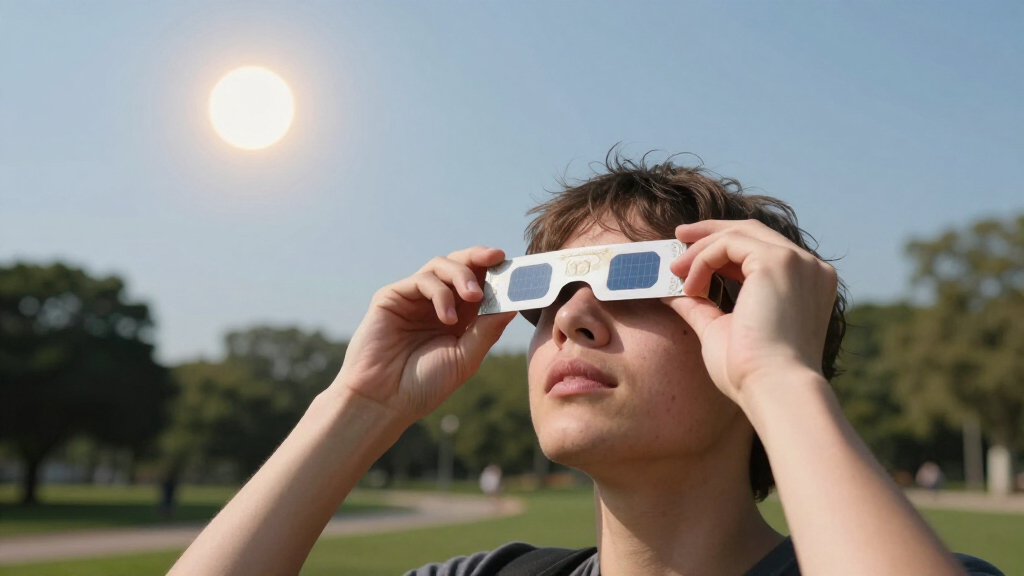
The eclipse began around 10:30 a.m. EDT and reached totality approximately an hour later, lasting up to 4 minutes in the most affected areas. According to the American Astronomical Society, the eclipse was visible in a narrow corridor stretching from Texas to the northeastern U.S. and southeastern Canada. Observers used special solar viewing glasses, and live broadcasts attracted millions online.
Scientists and astronomers confirmed the event through multiple observation points, with no significant technical issues reported. The eclipse’s path was precisely mapped, and local authorities issued safety warnings about eye protection during the event. The next similar eclipse is expected in 2026, but this event was notable for its visibility in densely populated regions.
Why This Total Solar Eclipse Matters to Viewers and Scientists
This eclipse provides a rare opportunity for both the public and scientists to observe a celestial event that occurs infrequently in specific locations. It offers insights into solar and lunar dynamics, and it can inspire interest in astronomy and science education. For the general public, witnessing totality is a memorable experience that underscores the importance of space science.
Additionally, the event allows researchers to study the sun’s corona and solar activity, which can impact satellite communications and power grids. The widespread media coverage and public participation highlight the event’s cultural and educational significance.
As an affiliate, we earn on qualifying purchases.
Background and Previous Solar Eclipses in North America
Solar eclipses occur approximately every 18 months somewhere on Earth, but total eclipses visible from the same location are rare, often spaced decades apart. The last total solar eclipse visible in parts of the U.S. was in August 2017, which drew millions of viewers. The path of this year’s eclipse was carefully predicted by NASA and international space agencies, based on lunar and solar orbital calculations.
Historically, eclipses have been observed and recorded for centuries, with modern technology enabling precise predictions and safe viewing practices. The upcoming eclipse in 2026 will be visible across parts of the Arctic, Greenland, Iceland, and Spain, but not as widely as today’s event.
“Experiencing totality is breathtaking. Seeing the sun disappear behind the moon is a reminder of the vastness and wonder of our universe.”
— John Miller, Amateur Astronomer
As an affiliate, we earn on qualifying purchases.
Unconfirmed Reports of Technical Issues or Sightings Outside Predicted Path
While the event was widely confirmed in the designated viewing areas, there are unverified reports of sightings outside the predicted path, which are currently unconfirmed. Some viewers in adjacent regions reported partial views or unusual atmospheric conditions, but these have not been officially validated.
It is also unclear if any technical issues affected live broadcasts or observation equipment in certain locations, though no major disruptions have been reported so far.
As an affiliate, we earn on qualifying purchases.
Upcoming Solar Eclipses and Continued Scientific Observation
The next total solar eclipse visible from North America is scheduled for August 12, 2026, primarily visible from the Arctic and parts of Greenland. Scientists will analyze data collected during today’s event to better understand solar corona activity and improve eclipse prediction models.
Public interest is expected to remain high, with many planning future viewing events and educational activities. Space agencies and observatories will continue to monitor solar phenomena, contributing to ongoing research.
solar eclipse safe viewing equipment
As an affiliate, we earn on qualifying purchases.
As an affiliate, we earn on qualifying purchases.
Key Questions
When is the next total solar eclipse visible in North America?
The next total solar eclipse visible from North America will occur on August 12, 2026, mainly in the Arctic, Greenland, and parts of Iceland and Spain.
How can I safely view a solar eclipse?
Use approved solar viewing glasses that meet international safety standards. Never look directly at the sun without proper eye protection, especially during partial phases. During totality, it is safe to look directly at the eclipse for a brief period.
What causes a solar eclipse?
A solar eclipse occurs when the moon passes between the Earth and the sun, blocking sunlight either partially or completely in certain areas.
Why do eclipses happen so rarely in the same location?
Eclipses depend on precise alignments of the sun, moon, and Earth. The orbital planes and cycles mean that total eclipses occur in the same location only about once every 300 years on average.
Will climate or weather affect the visibility of the eclipse?
Yes, cloud cover and atmospheric conditions can obstruct the view. Clear skies are ideal for observing the eclipse, and viewers are advised to check local weather forecasts.
Source: google-trends
Fall Picks
fall essentials
As an affiliate, we earn on qualifying purchases.