📊 Full opportunity report: Improve On-Camera Speaking With Practice For Business Owners on IdeaNavigator AI — validation score, market gap, and execution plan.

Prime made for students and young adults
- Fast, free delivery for dorm and study essentials
- Prime Video and Amazon Music included
- Member-only deals
TL;DR
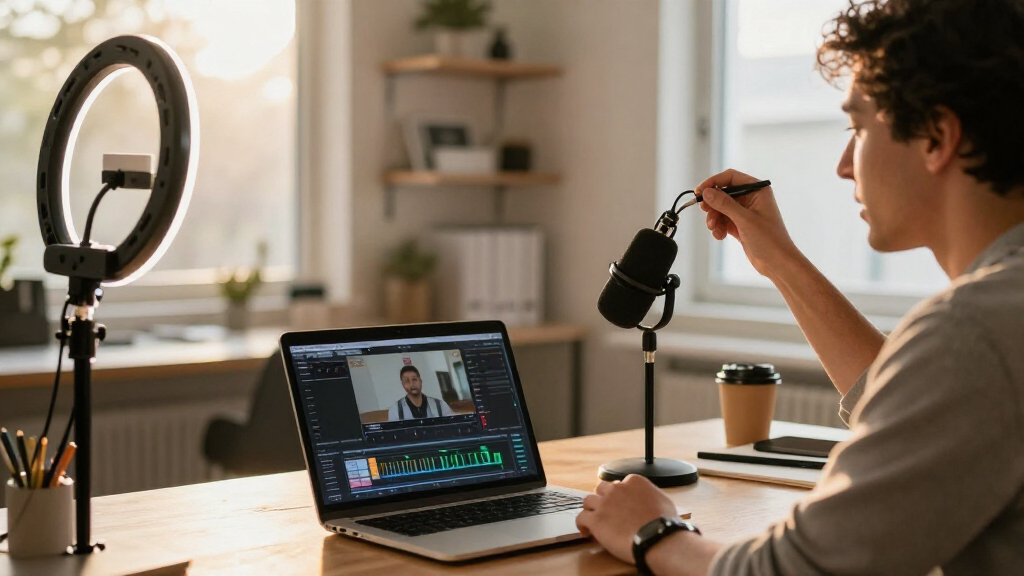
IdeaNavigator AI has outlined a proposed practice app for business owners who struggle to record videos, but no launched product or test results are reported. Its suggested validation is a 30-day cohort of 100 owners, measuring who publishes a first video by day 45 against a waitlist control.
IdeaNavigator AI has proposed testing a practice app for business owners who know video could support their marketing but freeze when recording. The concept focuses on brief daily exercises and private feedback, with a proposed cohort study to test whether participants go on to publish a real video.
These details come from IdeaNavigator AI’s published concept page; the page describes a proposal, not a launched product or completed study.
According to IdeaNavigator AI’s concept page, the proposed app is aimed at a specific audience: owners who avoid recording because of camera anxiety, including stumbling, self-criticism and repeated takes. The idea argues that broad public-speaking training may not address the distinct experience of speaking alone to a camera. That distinction is the product premise, not a finding from a reported study.
The concept page describes a suggested minimum viable product with two-minute prompted exercises each day, beginning with reading and progressing to speaking more freely. It would assess pace, filler words, eye line and energy, show changes over time, and encourage users to move from practice exercises to recording actual business content. The proposal also mentions confidence streaks as a way to track continued practice.
For validation, IdeaNavigator AI recommends a 30-day cohort of 100 business owners. The proposed measure is how many participants publish their first real video by day 45, compared with a waitlist control group. The concept also suggests a consumer subscription and a team tier for agencies that coach clients, but provides no pricing, product launch, recruitment details or results.
Business Video · Product Concept
Improve On-Camera Speaking With Practice For Business Owners
A proposed app pairs brief daily camera exercises with private delivery feedback, aiming to help business owners move from repeated takes to published video.
IdeaNavigator AI describes a concept and suggested evaluation plan. No launch, working product, or study results are reported.
The idea focuses on stumbling, self-criticism, and repeated takes that can interrupt recording.
01 / The product idea
From camera hesitation to useful practice
The proposal narrows communication training to owners who record alone and want to make business content. Its premise is specific; its effectiveness remains untested.
Business owners who freeze
Designed for people who see potential value in video but struggle with stumbling, self-criticism, or repeated takes.
Short, guided repetitions
Two-minute prompts would begin with reading and gradually invite users to speak more freely to the camera.
Track delivery over time
Proposed AI feedback would cover pace, filler words, eye line, and energy, alongside confidence streaks.
02 / Proposed user journey
A gradual path toward real content
The exercises are intended to connect private repetition with an outcome that matters to a business: publishing a real video.
Start with a brief, structured exercise.
Build toward less scripted camera practice.
See proposed measures and changes over time.
Move from exercises to a publishable video.
03 / Suggested validation
Measure publishing, not just practice
The proposed test asks whether participants publish a first real video, while a waitlist group provides a comparison point.
Practice for 30 days, then assess first-video publication by day 45.
Compare that outcome with a waitlist control group. No results or start date are reported.
04 / What remains unknown
Important questions before the concept is proven
A proposed feedback loop raises questions about measurement quality, video handling, and whether users will keep practicing or pay for the service.
How reliable is the analysis?
No model or method is identified for calculating pace, filler words, eye line, or energy, and no accuracy checks are reported.
How are recordings handled?
The proposal does not describe consent, storage, safeguards, or deletion for users’ video recordings.
Will customers pay?
A consumer subscription and agency team tier are suggested, but no pricing, willingness-to-pay evidence, or commitments are given.
Traceability / proposal logic
From a stated barrier to a testable outcome
The chain captures the concept’s reasoning. Each step is proposed; none is presented as a demonstrated result.
The question mark matters: the concept page reports no completed trial, user outcomes, or evidence that the app improves publication rates.
Key questions
What the published concept does—and does not—say
These answers reflect IdeaNavigator AI’s concept page and its proposed plan.
Is the app available now?
No launch or availability is reported. The page describes a product concept, not a released app.
Who is it intended for?
Business owners who want to use video but struggle to record themselves, especially when hesitation leads to repeated takes or self-criticism.
What would users do?
Try two-minute daily prompts that progress from reading to freer speech, with proposed feedback on delivery.
Has the test produced results?
No. A 30-day cohort of 100 owners and a day-45 comparison with a waitlist group are suggested, but no findings are reported.
From Camera Practice to Published Videos
The proposal targets a practical gap between knowing video may be useful and actually publishing it. If owners repeatedly abandon recordings before sharing them, a tool focused on the solo-camera setting could address a different barrier than training built around speeches or live presentations. Whether it does so is still an open question.
The suggested test gives the idea a measurable outcome: publishing a first video by day 45, rather than simply completing practice sessions or reporting greater confidence. That could help distinguish whether users find the exercises engaging from whether the app changes their behavior. A comparison with a waitlist group would offer a reference point, though the proposal does not specify how participants would be selected or how results would be analyzed.
For small businesses, the potential relevance is direct: regular video production can demand time and comfort speaking on camera, while many owners have limited access to individual coaching. For agencies, a team tier could provide a way to support multiple clients. Those are possible use cases, not evidence of demand or commercial viability.
Popular right now

Bose QuietComfort Ultra Wireless Noise-Cancelling Headphones with Spatial Audio, Black

Bose QuietComfort True Wireless Noise-Cancelling Earbuds, Black

Bose QuietComfort Wireless Noise Cancelling Headphones, Sandstone
As an affiliate, we earn on qualifying purchases.
Why Solo Recording Is the Focus
IdeaNavigator AI frames the concept around increasing pressure on businesses of different sizes to use video in marketing. It identifies a sequence of obstacles—hesitation, multiple takes and harsh self-evaluation—that may prevent an owner from making a recording at all. The concept page includes no survey, market-size estimate or independent research quantifying how common those problems are.
Its proposed response is a private feedback loop supported by multimodal AI. The app would examine aspects of delivery such as speaking pace, filler words, eye line and energy. The proposal does not identify a specific model or explain how each measure would be calculated, checked for reliability, or presented to users. Nor does it report a working prototype.
The idea sits within communication-skills training, but narrows the use case to the moment when a business owner records alone and is trying to produce usable content. That narrow framing could make an initial test easier to define than a general public-speaking product. It does not, by itself, establish that the app would outperform existing coaching, video tools or self-guided practice.
Product and Trial Details Missing
IdeaNavigator AI’s concept page reports no app launch, completed trial or user results. It does not name a developer, give a release date, confirm that the AI feedback has been built, or provide evidence that the suggested exercises improve recording confidence or publication rates.
Several details of the proposed evaluation remain unspecified, including how the 100 owners would be recruited, what the waitlist group would receive, how a “published” video would be verified, and whether participants would be followed after day 45. The plan also does not describe safeguards for video data, consent, storage or deletion. Those questions matter for a product that would analyze recordings of users.
Commercial assumptions are also untested. Subscription pricing, willingness to pay, agency demand and the cost of delivering individualized feedback are not provided. The proposal describes a possible business model rather than confirmed revenue or customer commitments.
A Proposed 45-Day Test
IdeaNavigator AI’s concept page identifies as a possible next step a 30-day cohort and comparison of first-video publication by day 45 with outcomes among a waitlist control group. No start date, enrollment link or commitment to conduct the test is given, so it is not clear whether recruitment is planned or underway.
If a trial proceeds, its results would help show whether participants move from short practice prompts to publishing real content. Useful reporting would include participation and completion rates, the comparison group’s outcome, how publication was defined, and whether the app’s feedback was considered accurate and helpful. Until those details and results are available, the app remains a proposed product concept rather than a proven solution.
Key Questions
Is the on-camera practice app available now?
No availability or launch is reported. IdeaNavigator AI describes a product concept and a suggested way to test it, not a released app.
Who is the proposed app for?
According to IdeaNavigator AI’s concept page, it is designed for business owners who want to use video but struggle to record themselves, particularly those held back by stumbling, self-criticism or repeated takes.
What would users do in the app?
The concept page proposes two-minute daily exercises that progress from reading to speaking more freely. AI feedback would assess delivery measures such as pace, filler words, eye line and energy.
How would the idea be tested?
IdeaNavigator AI proposes a 30-day cohort of 100 owners, measuring how many publish a first real video by day 45 and comparing that outcome with a waitlist control group. No results have been reported.
What is still unknown about the product?
Based on the published proposal, it is not clear whether a prototype exists, when testing might begin, how video recordings would be handled, or whether users and agencies would pay for the service. The proposal supplies no trial findings or pricing.
Source: IdeaNavigator AI