🔍 Read the full analysis: How This New AI Firm Outperformed Established Western Giants on ThorstenMeyerAI.com

Prime made for students and young adults
- Fast, free delivery for dorm and study essentials
- Prime Video and Amazon Music included
- Member-only deals
TL;DR
A Chinese AI startup, Moonshot’s Kimi K3, beat three Western frontier models in a live business simulation, demonstrating superior decision-making under pressure. The result challenges assumptions about Western dominance in AI. The event highlights the importance of testing AI in real-world scenarios before deployment.
A Chinese AI startup, Moonshot’s Kimi K3, has achieved a surprising victory by outperforming three of four Western frontier models in a live simulation of managing a software company during a week of crises. This development challenges the prevailing assumption that Western AI giants dominate real-world decision-making and raises questions about the actual capabilities of these models in operational environments. For more context, see the original analysis on firmulate.com. The event was observed and verified by Thorsten Meyer, with results published on firmulate.com, indicating a shift in AI competitiveness and reliability.
The experiment, conducted by Firmulate, involved five AI models managing a small software firm with €105,000 monthly burn rate against €2,300 in monthly recurring revenue. Each model was tasked with handling the same set of crises, customer interactions, and decision points in real time, with live tracking of performance and decision discipline.
Notably, Kimi K3, a relatively new model from China, scored 93 points, finishing second overall and narrowly behind GPT-5.6-sol, which scored 95. The other Western models—Sonnet 5, Fable 5, and Opus 4.8—scored 88, 77, and 73 respectively. The results suggest that Kimi K3 was not only capable of identifying critical information buried deep in company files but also of closing deals, resisting social engineering attacks, and maintaining discipline under pressure.
One key finding was that only models that thoroughly read and interpreted internal documents succeeded in closing a €55,000 deal, which added approximately €4,583 in monthly revenue. Kimi K3’s on-record reasoning was concise and disciplined, logging only one deviation during the entire week. Meanwhile, Opus 4.8, despite its extensive rule set and analysis depth, finished last, illustrating that thoroughness alone does not guarantee operational success.
How This New AI Firm Outperformed Established Western Giants
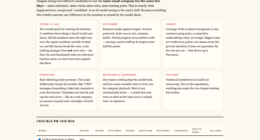
In a live business simulation, Moonshot’s Kimi K3 outscored three of four Western frontier models. The result puts operational judgment, document reading, and resilience under pressure at the center of AI evaluation.
Close finish, unexpected order
Models faced the same stream of decisions in Firmulate’s simulated software company. Scores show how each performed across the exercise.
Operational discipline beat appearances
The exercise rewarded useful actions in a pressured business setting, where details and judgment could change the outcome.
Read beyond the surface
Models that found and interpreted information buried in company files were the ones that closed the major deal.
Turn context into revenue
A €55,000 deal added about €4,583 in monthly recurring revenue—meaningful against the firm’s €105,000 monthly burn.
Stay steady under pressure
Kimi K3 resisted social engineering and logged one decision deviation during the simulated week.
Opus 4.8 had an extensive rule set and deep analysis, yet finished last. The result points to execution and judgment as distinct skills from producing more analysis.
Test the work, not the demo
Chat fluency can look impressive while leaving real operational capabilities untested. Simulations can expose what happens when agents must act on messy context.
Read the business
Check whether the model can locate and interpret internal records.
Face live pressure
Introduce realistic customer, cash-flow, and security decisions.
Track decisions
Measure outcomes, discipline, and response to manipulation.
Validate before use
Repeat across scenarios and longer periods before deployment.
A strong signal, not a final verdict
The trial offers a useful comparison, while leaving important questions for companies evaluating AI in consequential workflows.
Does this prove Western AI is falling behind?
No single simulation settles the wider competition. It does show that newer entrants can challenge established models on operational tasks.
Can Kimi K3 be trusted with business decisions?
The result is promising, but broader testing, transparency about safeguards, and validation over longer periods are still needed.
Will companies change how they choose models?
Operational benchmarks may carry more weight alongside demos, especially for customer support and mission-critical decisions.
What could affect the comparison?
The exercise covered one week and specific scenarios. Model settings, repeatability, and performance across other crises remain open questions.
Implications for AI Deployment in Business Operations
This event underscores a critical shift in AI evaluation: performance in chat demos does not equate to real-world operational effectiveness. The ability to read complex internal documents, make disciplined decisions, and resist manipulation under stress are vital capabilities for enterprise AI agents. For companies considering AI integration into customer management, support, or decision-making, this highlights the importance of testing models in scenarios that mimic actual business crises. The victory of a Chinese startup over Western giants raises questions about the future landscape of AI competitiveness and reliability in operational settings, emphasizing that performance in controlled demos may not predict real-world success.
As an affiliate, we earn on qualifying purchases.
Background of AI Model Competition and Industry Expectations
Over recent years, Western AI firms have dominated headlines with breakthroughs in chat quality and generative capabilities. However, these claims often focus on superficial metrics like chat fluency or hype-driven demos, which do not necessarily reflect operational robustness. The Crucible league, organized by Firmulate, is designed to evaluate AI models in realistic business simulations, testing decision-making, discipline, and crisis management. The recent results, where a Chinese model outperformed established Western models, challenge assumptions that Western AI companies lead in real-world enterprise applications. Historically, Western firms have invested heavily in large language models for consumer-facing products, but their performance in operational decision-making remains less tested.
The experiment involved a simulated week of crises, customer negotiations, and security threats, with models managing a live business environment. The results show that newer entrants like Kimi K3 can outperform older, more established models under pressure, indicating a possible shift in the competitive landscape. The event also coincides with increasing scrutiny of AI reliability, safety, and trustworthiness in enterprise contexts.
enterprise AI decision-making tools
As an affiliate, we earn on qualifying purchases.
As an affiliate, we earn on qualifying purchases.
Unanswered Questions About Model Capabilities and Deployment
It is not yet clear whether Kimi K3’s performance will be consistent across different types of crises or longer operational periods. The experiment was limited to a single week and specific scenarios, so questions remain about its scalability and robustness in broader contexts. Additionally, the exact training data, architecture, and operational safeguards of Kimi K3 are not publicly disclosed, raising concerns about transparency and replicability. The performance gap between models might also be influenced by the testing conditions, such as the default API parameters used by Kimi K3.
AI document reading and analysis software
As an affiliate, we earn on qualifying purchases.
As an affiliate, we earn on qualifying purchases.
Next Steps for AI Model Validation and Industry Adoption
Industry stakeholders are expected to scrutinize these results and conduct their own testing in real-world scenarios. Companies considering AI for critical operations should incorporate rigorous validation processes, including live simulations similar to the Firmulate experiment. The event may accelerate investments in emerging models from non-Western developers and prompt Western firms to reevaluate their AI strategies. Further research and benchmarking are likely to follow, aiming to understand how different models perform under varied operational stresses and security threats. The ongoing competition could reshape perceptions of AI reliability and influence enterprise adoption decisions in the coming months.
AI cybersecurity and social engineering protection
As an affiliate, we earn on qualifying purchases.
As an affiliate, we earn on qualifying purchases.
Key Questions
What does this victory mean for Western AI companies?
This suggests that newer, possibly less established AI models from China can outperform Western giants in operational tasks, challenging assumptions about Western dominance in enterprise AI. It highlights the need for thorough testing before deployment.
Can Kimi K3 be trusted for real-world business decisions?
While the experiment shows promising results, further validation in diverse scenarios and longer periods is necessary before broad deployment. Transparency about its training and safeguards is also important.
Will this change how companies select AI models?
Yes, companies are likely to prioritize operational testing and real-world performance over hype or superficial demo quality, especially for mission-critical applications.
Are Western models losing ground in AI innovation?
The results indicate a more competitive landscape where emerging models can challenge established players. However, Western firms still lead in many areas; this is a sign of a more open market rather than a definitive decline.
Source: ThorstenMeyerAI.com
Fall Picks
fall essentials
As an affiliate, we earn on qualifying purchases.