
🔍 Read the full analysis: 15 AI Workflow Automation Tools Shaping 2026’S Business Landscape on ThorstenMeyerAI.com

Prime made for students and young adults
- Fast, free delivery for dorm and study essentials
- Prime Video and Amazon Music included
- Member-only deals
TL;DR
In 2026, fifteen AI workflow automation tools are significantly influencing business operations by streamlining tasks, boosting productivity, and integrating seamlessly with existing systems. This article reviews the leading solutions, their features, and what organizations need to consider when choosing the right platform.
Fifteen AI workflow automation tools have gained prominence in 2026, transforming how businesses streamline repetitive tasks and enhance productivity. These solutions are distinguished by their ability to integrate with existing systems, offer user-friendly interfaces, and provide scalable automation capabilities, making them central to modern enterprise operations. The rapid adoption of these tools reflects a strategic shift toward AI-driven automation across diverse industries.
Leading the pack is AutoFlow Pro, praised for its robust automation features and intuitive design, enabling both technical and non-technical users to create complex workflows efficiently. Zapier AI stands out for its extensive integration library, connecting hundreds of apps to facilitate seamless automation across platforms. AI TaskMaster offers powerful no-code options, making automation accessible to non-technical staff, and is favored for small to medium-sized enterprises seeking quick deployment.
Industry analysts note that the core advantage of these tools lies in their ability to combine AI-driven decision-making with simple interfaces, reducing the technical barrier for adoption. Cost considerations vary: premium platforms provide advanced customization and scalability, while more affordable options serve smaller teams with basic needs. The tradeoff often involves balancing ease of use against feature depth, with some solutions favoring flexibility over simplicity.
According to Thorsten Meyer, a leading industry analyst, “The top-performing AI workflow tools are those that strike a balance between automation power and user accessibility, enabling organizations to scale their digital transformation efforts efficiently.” Companies are increasingly prioritizing platforms that support extensive integrations, customizable workflows, and strong support ecosystems to maximize ROI.
The 15 picks
- 1
 Agentic Coding with OpenAI Codex CLIView on Amazon →
 - 2
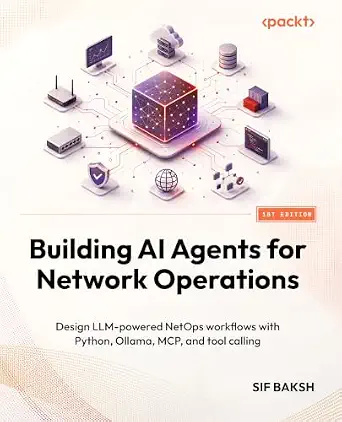 Building AI Agents for Network OperationsView on Amazon →
 - 3
 50 AI Workflows for Engineers: From Debugging to System Design, Code Review &…View on Amazon →
 - 4
 The AI-Powered Accountant: How to Use ChatGPT, AI Tools and Smart Automation…View on Amazon →
 - 5
 OpenCode Custom Workflows: Building Intelligent Automation with AI AgentsView on Amazon →
 - 6
 The No-BS Guide to AI Agents & Automation: Build AI Workflows, Automate Your…View on Amazon →
 - 7
 Practical AI Workflow Automation: A Beginner-Friendly Guide to No-Code ToolsView on Amazon →
 - 8
 Generative AI Workflows and Practical Automation: Mastering ChatGPT, Claude,…View on Amazon →
 - 9
 AI Workflow Automation for BloggersView on Amazon →
 - 10
 AI Workflow Mastery: 100 Practical AI Workflows to Save Hours Every Week, Aut…View on Amazon →
 - 11
 Claude Cowork Automation: Build AI-Powered Workflows, Delegate Repetitive Tas…View on Amazon →
 - 12
 Claude AI Automation & Monetization: Build AI-Powered Systems, Automate Workf…View on Amazon →
 - 13
 Google AI Studio Guide 2026: Build Intelligent AI Workflows and Scalable Auto…View on Amazon →
 - 14
 AI for Workflow Automation (Makola Practical AI Mastery, Book 9)View on Amazon →
 - 15
 Claude Mastery: Claude AI for Beginners – Build Prompts, Skills, and AI Agent…View on Amazon →
Why AI Workflow Tools Are Critical in 2026 Business Operations
The adoption of these 15 AI workflow automation tools marks a pivotal shift in how organizations operate. By automating repetitive and time-consuming tasks, businesses can redirect human resources toward strategic initiatives, improving overall efficiency and competitiveness. These tools also enable real-time data processing and decision-making, which are vital in a fast-paced digital economy. As companies face mounting pressure to innovate and reduce operational costs, AI-driven automation becomes a strategic necessity rather than a luxury.
Furthermore, the ability to seamlessly integrate with existing enterprise systems means that organizations can implement automation without overhauling their entire infrastructure. This reduces deployment time and costs, accelerating digital transformation efforts. For stakeholders, this translates into faster product cycles, improved customer service, and enhanced agility in responding to market changes. As such, these tools are not just technological upgrades—they are fundamental enablers of competitive advantage in 2026.
Popular right now
Dyson Car+Boat Cordless Handheld Vacuum

Ninja Flip Toaster Oven and Air Fryer, 8-in-1, Stainless Steel, SP151

Dyson Ball Animal 2 Plus Corded Vacuum
As an affiliate, we earn on qualifying purchases.
Evolution of AI Automation in Business Since 2024
Since 2024, the landscape of AI workflow automation has rapidly expanded, driven by advances in AI capabilities, increased cloud adoption, and a growing need for operational efficiency. Early solutions focused on simple task automation, but recent developments have introduced sophisticated AI models capable of handling complex, multi-step workflows. Major tech companies and startups alike have launched specialized platforms, emphasizing ease of use, integration, and scalability.
Industry reports from 2025 indicated a surge in enterprise adoption, with companies across sectors such as finance, healthcare, and manufacturing investing heavily in automation tools. The market has seen notable innovations, including no-code and low-code platforms, which democratize automation for non-technical users. As a result, organizations of all sizes now leverage these tools to optimize customer engagement, supply chain management, and internal operations.
Leading analysts like Thorsten Meyer highlight that “2026 marks a maturity point for AI workflow automation, with a clear shift toward platforms that combine advanced AI with user-centric design, making automation accessible and scalable for diverse business needs.”
Remaining Questions About 2026 AI Workflow Adoption
While the top 15 tools are gaining traction, it remains unclear how widespread their adoption will become across different industries and organizational sizes. Specific challenges such as data security, compliance, and integration complexity still pose hurdles for some enterprises. Additionally, the long-term scalability and adaptability of these platforms as business needs evolve are areas under ongoing evaluation. Experts caution that rapid technological change could lead to new entrants or features altering the current landscape, and some organizations may encounter unforeseen implementation issues.
Future Developments in AI Workflow Automation for 2026 and Beyond
Moving forward, industry leaders anticipate continued innovation in AI capabilities, including more sophisticated decision-making and predictive analytics embedded within automation platforms. Vendors are likely to expand their integration ecosystems and enhance user interfaces to further democratize automation. Additionally, regulatory developments around data security and privacy could influence platform features and deployment strategies. Organizations should monitor these trends and prepare for incremental upgrades, scaling their automation infrastructure to support evolving operational demands. The upcoming quarters will reveal how these tools adapt to real-world challenges and drive further transformation in business processes.
Key Questions
What are the top features to look for in AI workflow automation tools in 2026?
Key features include extensive integration options, user-friendly interfaces, scalability, customizable workflows, and robust security measures. AI capabilities such as predictive analytics and decision support are also increasingly important.
Can small businesses benefit from these AI automation tools?
Yes, many platforms offer tiered pricing and simplified interfaces suitable for small to medium-sized enterprises, enabling them to automate tasks without extensive technical resources.
What are the main risks associated with adopting AI workflow automation?
Risks include data security vulnerabilities, compliance challenges, over-reliance on automation, and potential integration difficulties. Proper planning and vendor evaluation are essential to mitigate these issues.
How do organizations ensure successful implementation of AI automation tools?
Successful implementation involves thorough planning, staff training, clear process mapping, and selecting platforms that align with existing systems and future growth plans.
Source: ThorstenMeyerAI.com